
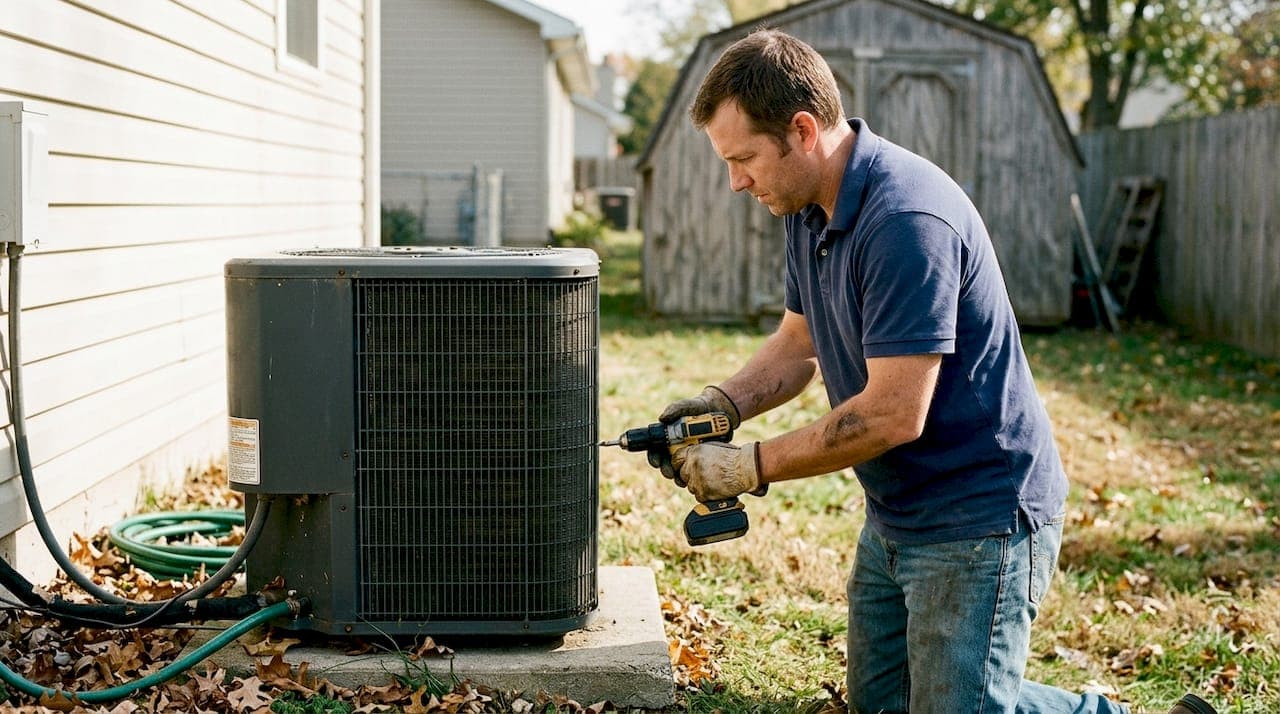
It's 104°F outside in Rancho Cucamonga, and your AC just stopped blowing cold air. The house is heating up fast, the kids are miserable, and you have no idea where to start. That kind of moment is stressful, but it doesn't have to spiral into an expensive emergency call if you know what to check first. This guide walks you through the most common air conditioner problems Inland Empire homeowners face, gives you a clear step-by-step plan to diagnose them yourself, and tells you exactly when it's time to put down the screwdriver and call a licensed technician.
Table of Contents
- What you need before you troubleshoot
- Step-by-step air conditioner troubleshooting
- Common mistakes and what not to do
- When to call a professional for your AC
- Why ignoring small AC problems can cost Inland Empire homeowners more
- Get expert AC help in the Inland Empire
- Frequently asked questions
Key Takeaways
| Point | Details |
|---|---|
| Start with simple checks | Verify settings, filters, and breakers before moving to complex troubleshooting. |
| Know your limits | Tasks involving refrigerant or electrical issues must be handled by certified professionals. |
| Avoid common mistakes | Never attempt refrigerant charging or use risky substitutes to prevent accidents and legal issues. |
| Take action early | Addressing AC problems quickly prevents costly breakdowns and keeps you comfortable during Inland Empire heat. |
What you need before you troubleshoot
Before you touch anything on your AC system, gather what you need. Rushing in without the right tools or safety awareness is how small problems turn into big ones. Taking five minutes to prepare can save you hours of frustration.
Here's what to have on hand:
- A replacement air filter (check your unit's size first)
- A flashlight for inspecting dark areas around the air handler
- A non-contact voltage tester
- Work gloves and safety glasses
- A notepad to document what you find
- A standard screwdriver set
| Tool or supply | Purpose |
|---|---|
| Replacement filter | Restore airflow, prevent freeze-ups |
| Non-contact voltage tester | Confirm power is off before inspecting |
| Flashlight | Inspect coils, drain lines, and wiring |
| Work gloves | Protect hands from sharp metal edges |
| Notepad | Record symptoms for your technician |
Before opening any panel, turn off power to the unit at the breaker box. This is non-negotiable. Even if the system appears off, live circuits inside can cause serious injury.
"Calling a professional is required for refrigerant leaks, burning smells, or persistent problems." Always respect these limits when reviewing the Air Conditioning Resource Guide.
If you notice ice building up on the outdoor unit, smell something burning near the air handler, or detect a sharp chemical odor that could signal a refrigerant leak, stop immediately. These are situations where DIY troubleshooting ends and professional help begins. You can browse real repair scenarios in our problem solving gallery to see what different failure types look like before you begin.
Pro Tip: Always shut off power at the breaker, not just at the thermostat. The thermostat only controls the signal, not the actual electrical supply to the unit.
Step-by-step air conditioner troubleshooting
With your tools ready and power safely off, work through these steps in order. Start with the simplest checks and move toward more complex ones only if the basics don't solve it.
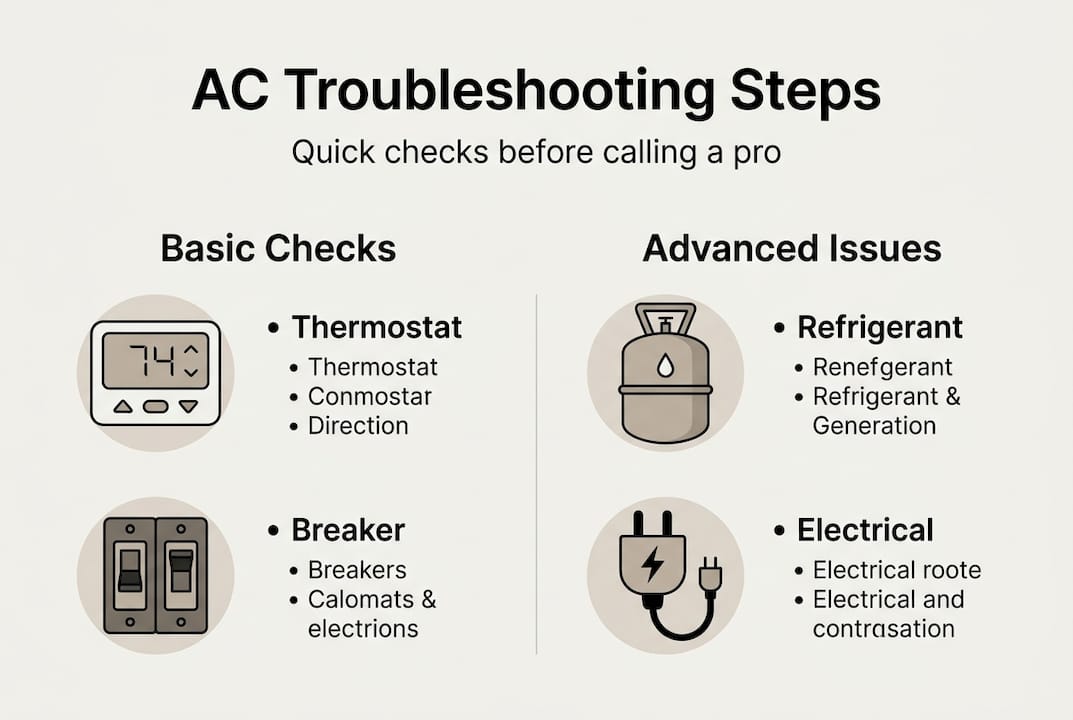
- Check the thermostat. Make sure it's set to "cool" and the target temperature is below the current room temperature. Someone may have accidentally switched it to "fan only" or "heat."
- Verify power at the breaker. A tripped breaker is one of the most common causes of a non-functioning AC. Reset it once. If it trips again immediately, stop and call a pro.
- Inspect and replace the air filter. A clogged filter restricts airflow so severely that the system can't cool effectively. If it looks gray and dense, swap it out before anything else.
- Check all supply and return vents. Make sure none are blocked by furniture, rugs, or closed dampers. Restricted vents force the system to work harder and can cause freezing.
- Look at the outdoor unit. Clear away any debris like leaves or grass clippings around the condenser. Make sure the fan is spinning when the system runs.
- Inspect the evaporator coils. If you see ice on the indoor coil, turn the system off and run only the fan for an hour to let it thaw. Ice usually means low refrigerant or severely restricted airflow.
Statistic callout: The majority of persistent AC failures are traced to a lack of regular maintenance, including dirty filters and neglected coil cleaning.
Pro Tip: Never attempt to top off your own refrigerant. EPA rules require certified technicians for any refrigerant handling, and using the wrong type can permanently damage your system. Contact E320 Air if you suspect a refrigerant issue.
Common mistakes and what not to do
Even with a solid plan, homeowners make avoidable errors that turn a fixable problem into a costly one. Knowing what not to do is just as important as knowing what to do.
Here are the most common mistakes to avoid:
- Skipping filter changes. This is the single most preventable cause of AC failure. A dirty filter starves the system of airflow and causes the evaporator coil to freeze.
- Ignoring early warning noises. Grinding, squealing, or banging sounds are your AC telling you something is wrong. Waiting until the system dies completely almost always costs more.
- Attempting a refrigerant top-off yourself. This is not a DIY task. It requires specialized equipment, certification, and knowledge of which refrigerant your system uses.
- Using flammable refrigerant substitutes. Products marketed as DIY refrigerant replacements, including some labeled R-22a, are flammable and not approved for residential AC systems. They create serious fire and explosion risks.
- Resetting a tripped breaker repeatedly. If your breaker keeps tripping, there's an underlying electrical fault. Forcing it back on can cause a fire.
Never attempt refrigerant work on your own. It violates federal law and puts your household at serious risk. Refrigerant handling requires EPA-certified professionals for both safety and legal compliance.
If your system has any history of heater-related issues as well, those should be handled with equal caution. Our heater repair page covers what homeowners should know about combined HVAC system faults. For a visual reference on what different types of damage look like, the problem solving gallery is a helpful resource.
When to call a professional for your AC
Some AC problems are genuinely DIY-friendly. Others are not, and the difference matters a lot when you're dealing with Inland Empire summer heat.
| DIY-friendly symptoms | Call a professional immediately |
|---|---|
| Clogged or dirty air filter | Burning smell from vents or unit |
| Tripped breaker (first time only) | Ice buildup on coils or refrigerant lines |
| Blocked vents or registers | Repeated circuit breaker trips |
| Thermostat set incorrectly | Warm air despite correct thermostat settings |
| Debris around outdoor unit | Buzzing or humming from electrical components |
Here are the specific signs that require a licensed technician right away:
- You smell burning plastic or electrical components near the air handler.
- Ice is forming on the refrigerant lines or indoor coil.
- The circuit breaker trips every time you reset it.
- Your system blows warm air even after you've checked the filter, thermostat, and vents.
- You hear loud grinding, banging, or screeching during operation.
Certain conditions like refrigerant leaks, electrical issues, ice on coils, and persistent problems must be handled by certified professionals. In the Inland Empire, where temperatures regularly push past 100°F, a failing AC during a heat wave is a health risk, not just a comfort issue. Older units are especially vulnerable because they work harder in extreme heat and have less tolerance for deferred maintenance.
Variable-speed AC systems and correct unit sizing reduce long-term troubleshooting issues significantly, which is worth considering if your current system is aging. Our problem solving gallery and HVAC installation pages can help you explore what an upgrade might look like.
Pro Tip: Before the technician arrives, write down exactly what you noticed: unusual sounds, smells, when the problem started, and what the thermostat read. This information speeds up diagnosis and can reduce your service time.
Why ignoring small AC problems can cost Inland Empire homeowners more
Here's something most troubleshooting guides won't tell you: the most expensive AC repairs we see aren't caused by sudden failures. They're caused by small problems that were ignored for one more week, then one more month.
A slightly dirty coil reduces efficiency and makes the compressor work harder. A compressor running under stress in 105°F heat doesn't last as long as one that runs clean. What started as a $150 coil cleaning becomes a $2,500 compressor replacement because the homeowner didn't want to schedule a maintenance visit.
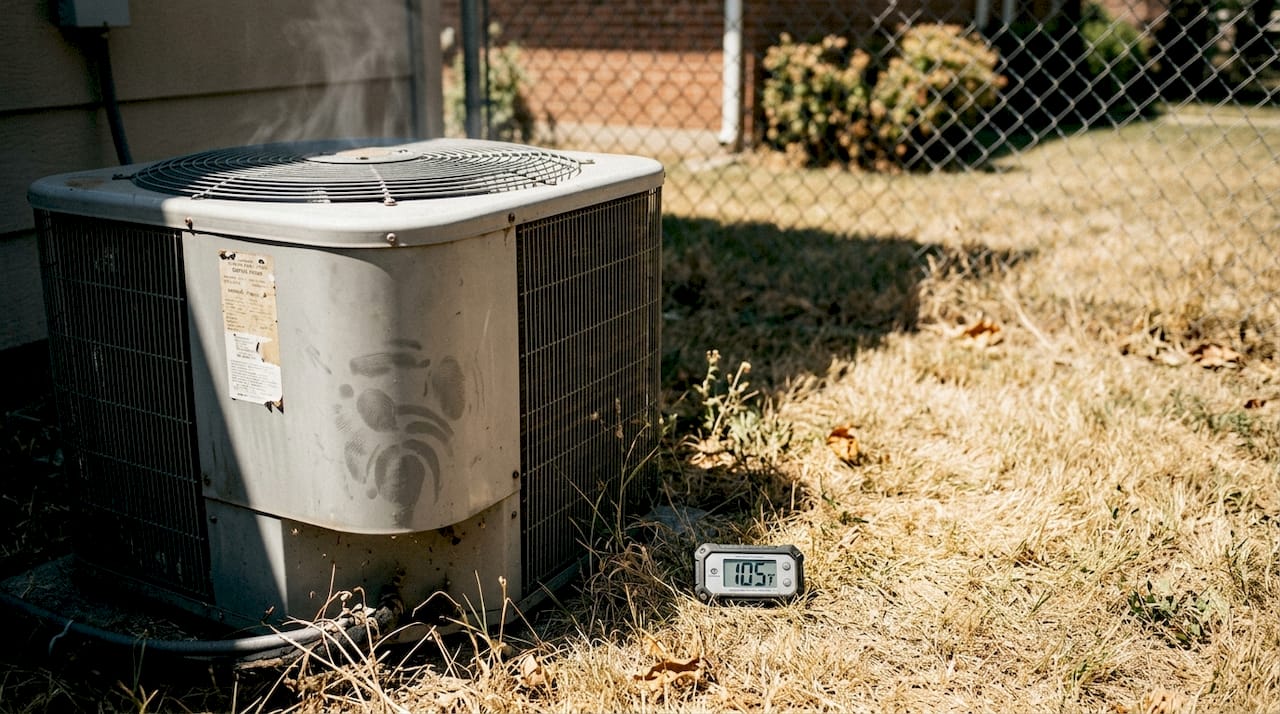
We've seen this scenario play out repeatedly in the Inland Empire. A homeowner notices the AC isn't quite keeping up with the heat but figures it's just the weather. By the time they call us, the system has been struggling for weeks, and the damage is done.
The uncomfortable truth is that reactive repair almost always costs more than proactive maintenance. A quick check of your problem solving gallery can show you what early-stage problems look like before they escalate. Small investments in time now, like replacing a filter or scheduling an annual tune-up, can prevent a surprise full-system replacement later. In a climate as demanding as the Inland Empire's, your AC doesn't get the benefit of the doubt.
Get expert AC help in the Inland Empire
If you've worked through this guide and still have a system that isn't performing, or if you've hit one of those "call a pro" checkpoints, we're here to help.
E320 Air is a licensed HVAC contractor serving Inland Empire homeowners with AC repairs, maintenance, and full system installations. Our certified technicians handle everything from refrigerant issues to complete system replacements safely and legally. Whether you need a fast diagnosis on a struggling unit or want to explore a more efficient upgrade, our HVAC installation page walks you through your options. You can also browse our problem solving gallery to see real examples of the issues we resolve every day. Don't wait until a small problem becomes a big one.
Frequently asked questions
What is the first thing to check if my AC stops working?
Always check your thermostat settings, electrical breakers, and air filter first before moving on to more advanced troubleshooting. These three items account for a large share of no-cooling calls.
Can I add refrigerant to my AC myself?
No. The EPA requires certified technicians for any refrigerant handling due to safety and environmental regulations. Attempting it yourself is illegal and can damage your system.
Why does my AC freeze up on hot Inland Empire days?
AC freezing is usually caused by low refrigerant, poor airflow, or a dirty filter. When coils are iced over, an expert should diagnose the root cause rather than simply thawing and restarting the unit.
Is it safe to use R-22a or other DIY refrigerants?
No. Flammable substitutes like R-22a are not legal replacements for approved refrigerants and create real fire and explosion hazards in residential systems.