
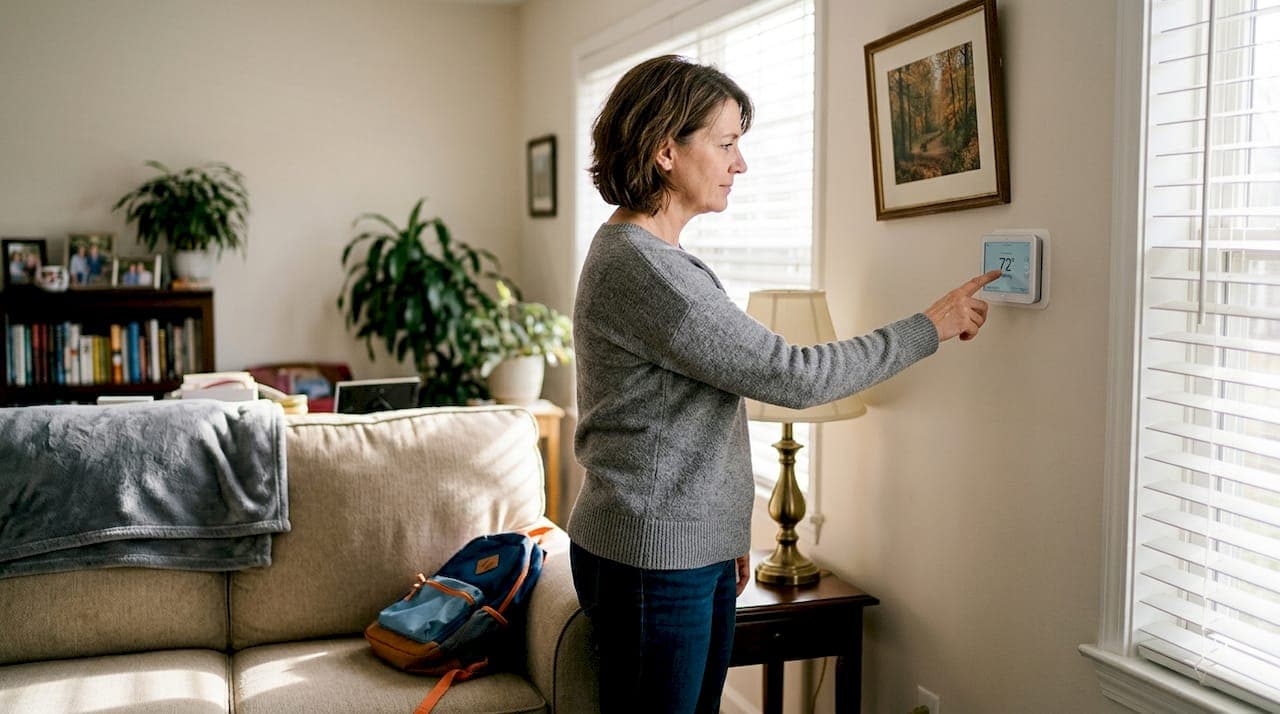
Nearly one in ten heat pumps installed across the country is oversized due to poor sizing practices, and that mistake costs homeowners real money every month. In the Inland Empire, where summers regularly push past 100°F, an improperly sized system doesn't just waste energy. It fails to keep your home comfortable when you need it most. This guide walks you through what HVAC sizing actually means, what goes wrong when it's off, why it matters specifically for Southern California homes, and exactly how to make sure your next system is sized correctly from day one.
Table of Contents
- What does HVAC system sizing mean?
- The risks of improper HVAC sizing
- Why proper sizing matters for Inland Empire homes
- How to ensure your HVAC system is sized correctly
- Our take: What most homeowners miss about HVAC sizing
- Ready to upgrade? Get HVAC sizing done right
- Frequently asked questions
Key Takeaways
| Point | Details |
|---|---|
| Proper sizing saves money | An accurately sized HVAC system reduces installation costs and lowers energy bills. |
| Comfort depends on correct sizing | Both oversized and undersized systems fail to maintain consistent indoor temperature and humidity. |
| Sizing is not one-size-fits-all | Every home needs a custom load calculation based on its unique characteristics. |
| California rebates require it | For many state incentives, proof of proper HVAC sizing is mandatory. |
What does HVAC system sizing mean?
HVAC sizing isn't about the physical dimensions of a unit. It refers to the heating and cooling capacity a system is rated to deliver, measured in BTUs (British Thermal Units) per hour or in tons (one ton equals 12,000 BTUs per hour). A 3-ton air conditioner, for example, can remove 36,000 BTUs of heat per hour from your home. Getting that number right for your specific home is the entire goal of sizing.
Many contractors still use a shortcut called the "square footage rule," where they estimate capacity based only on floor area. This approach ignores nearly everything that actually matters. Two homes with identical square footage can have wildly different cooling needs depending on insulation quality, ceiling height, window size and orientation, local climate, and even how many people live there.
The correct method is called a Manual J load calculation. This is the industry standard developed by the Air Conditioning Contractors of America (ACCA). It accounts for dozens of variables specific to your home and location, producing a precise load number that tells a contractor exactly what size system to install. Unfortunately, 10% of heat pumps are still oversized because contractors skip this step.
Here are the key factors a proper Manual J calculation considers:
- Square footage and ceiling height
- Insulation levels in walls, attic, and floors
- Number, size, and direction of windows
- Local climate data and sun exposure
- Number of occupants and internal heat sources
- Ductwork condition and layout
Pro Tip: Before signing any HVAC contract, ask the contractor to show you their Manual J report. If they can't produce one, that's a major red flag. Proper HVAC installation basics always start with this calculation.
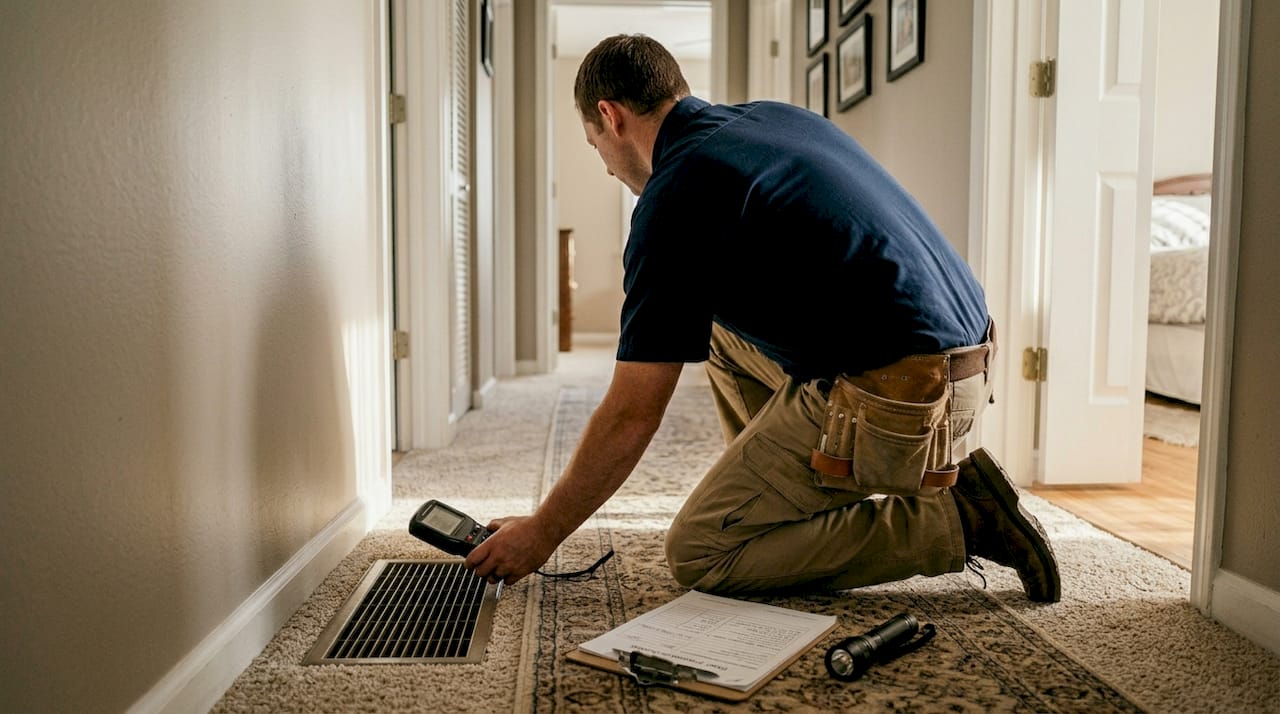
Skipping Manual J isn't just lazy. It's a gamble with your comfort and your wallet. A system that's even half a ton off can create problems that compound over years of use.
The risks of improper HVAC sizing
When sizing goes wrong, it goes wrong in two directions: too big or too small. Both cause serious problems, but they show up differently in your home.
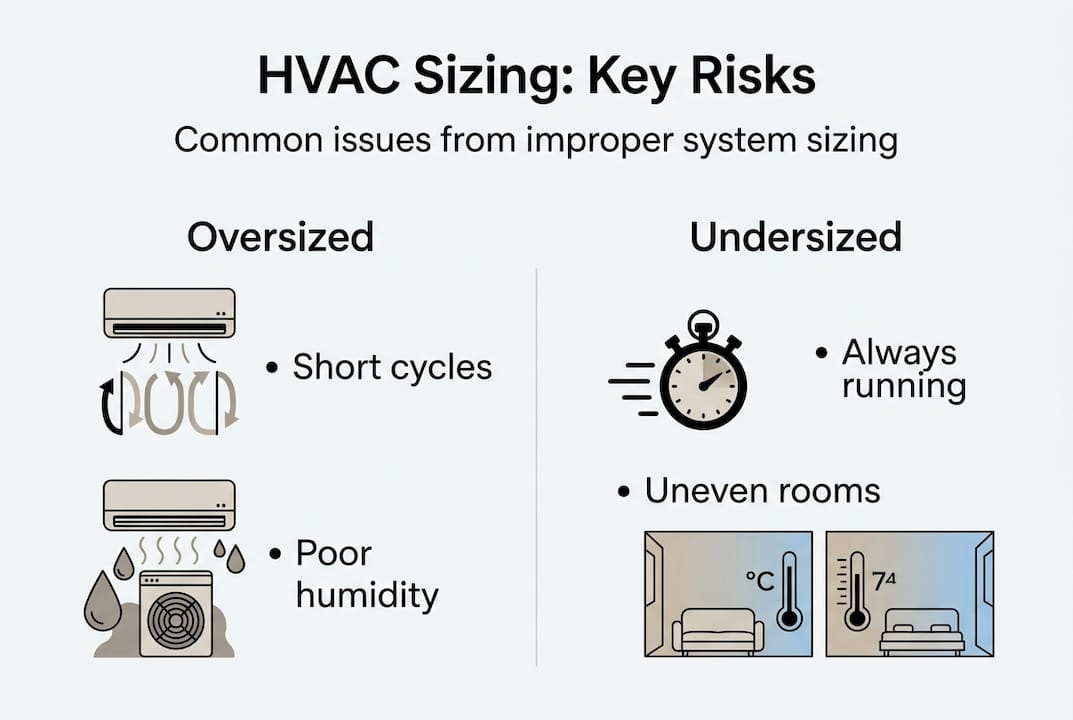
Oversized systems are actually the more common and more damaging mistake. A unit that's too large cools or heats your home so quickly that it shuts off before completing a full cycle. This is called short cycling. The system turns on, blasts cold or warm air, hits the thermostat setpoint fast, then shuts down, only to start again minutes later. Short cycling puts enormous stress on the compressor, which is the most expensive component in the system.
Worse, short cycles don't run long enough to properly dehumidify the air. In the Inland Empire, where monsoon moisture rolls in during late summer, a home with an oversized AC can feel clammy and uncomfortable even when the thermostat reads 72°F. High indoor humidity also encourages mold growth.
"Oversized equipment increases installation costs by up to 24% and lowers operating efficiency, costing homeowners more upfront and every month after."
Undersized systems have the opposite problem. They run constantly, struggling to reach the target temperature on a 108°F afternoon in Rancho Cucamonga or San Bernardino. Continuous operation wears out components faster and drives up electricity bills. On the hottest days, the system simply can't keep up.
| Problem | Oversized system | Undersized system |
|---|---|---|
| Cycling behavior | Short cycles frequently | Runs almost nonstop |
| Humidity control | Poor, air feels clammy | Acceptable but strained |
| Energy bills | Higher than necessary | Very high on peak days |
| Equipment wear | Compressor stress from cycling | Wear from constant operation |
| Comfort on hot days | Uneven, inconsistent | Falls short of setpoint |
Both scenarios lead to premature equipment failure. Homeowners who've seen these real-world HVAC solutions firsthand know that a replacement that comes five years early is far more expensive than doing the sizing right the first time. Addressing sizing errors early, including through heater repair when heating components are stressed, can save thousands over the life of the system.
Why proper sizing matters for Inland Empire homes
The Inland Empire has one of the most demanding HVAC climates in California. Cities like Fontana, Ontario, Riverside, and Redlands regularly see summer highs above 100°F, while winter nights can dip into the 30s. That swing of 70 or more degrees means your system has to perform at both extremes.
This climate puts sizing accuracy under a magnifying glass. A system sized for a milder coastal climate will fall short here. Conversely, a system oversized "just to be safe" will short cycle constantly during the long cooling season, burning through energy and wearing out fast.
Proper sizing also unlocks access to California's energy rebate programs. Proper sizing helps meet California rebate and energy standards, and many utility rebates through Southern California Edison or SoCalGas require documentation proving the system was sized using Manual J or an equivalent method. Without that paperwork, you could lose hundreds of dollars in available rebates.
Here's a side-by-side look at what correct versus incorrect sizing delivers:
| Factor | Correctly sized | Incorrectly sized |
|---|---|---|
| Monthly energy cost | Optimized | 15 to 30% higher |
| Comfort on peak days | Consistent | Uneven or insufficient |
| Rebate eligibility | Qualifies | Often disqualified |
| Equipment lifespan | Full manufacturer warranty | Shortened by stress |
| Indoor humidity | Well controlled | Poorly managed |
Here's how to make sure sizing works in your favor:
- Choose a contractor who uses industry-recommended sizing methods, not rules of thumb.
- Confirm your home's insulation and window specs are included in the calculation.
- Request the Manual J report before installation begins.
- Verify your system qualifies for available California rebates before purchase.
- Schedule a post-installation check to confirm the system is performing as designed.
Pro Tip: If you're replacing an existing system, don't assume the old unit was the right size. Many older installs were done with shortcut methods. A fresh Manual J before proper HVAC installation is always worth the time.
How to ensure your HVAC system is sized correctly
Knowing that sizing matters is one thing. Making sure it actually happens correctly is another. Here's a practical framework for protecting yourself through the process.
Start by asking the right questions. Before any contractor gives you a quote, ask them directly: "Will you perform a Manual J load calculation for my home?" A reputable contractor will say yes without hesitation. If they hedge or say they'll "use their experience" to estimate, walk away. Correct sizing practices avoid the wasted costs identified in field studies, and experienced contractors know this.
Request documentation. After the calculation is complete, ask for a written copy of the Manual J report. This document should list your home's square footage, insulation values, window areas, local design temperatures, and the resulting load in BTUs. It should also show the recommended system size. Keep this for your records, especially if you plan to apply for rebates.
Here are the steps to follow for a properly sized installation:
- Get at least two contractor quotes, both including Manual J calculations.
- Compare the recommended sizes. If they're close, that's a good sign. If one is dramatically different, ask why.
- Verify the contractor is licensed with the California Contractors State License Board (CSLB).
- Confirm the proposed system model matches the calculated load, not just the next size up.
- Ask about duct testing, since leaky ducts can undermine even a perfectly sized system.
Watch for red flags. A contractor who quotes a system size in the first five minutes without visiting your home hasn't done a proper assessment. Pressure to "go bigger just in case" is another warning sign. Bigger is not safer. It's a path to the short cycling and humidity problems described above.
Pro Tip: If you already own a system and suspect it was sized wrong, an HVAC problem solving assessment can identify the issue before it causes a full breakdown. Catching it early saves money.
For reliable HVAC sizing, the process should feel thorough and transparent. If it feels rushed, it probably was.
Our take: What most homeowners miss about HVAC sizing
After years of troubleshooting HVAC issues across the Inland Empire, the pattern is clear: most homeowners assume undersizing is the main risk. They worry their system won't be powerful enough for a brutal July afternoon. So when a contractor suggests going one size up "just to be safe," it sounds reasonable.
It isn't. Oversizing is the most common and most costly mistake we see. It creates problems that feel unrelated to sizing, like sticky indoor air, rooms that never feel quite right, and systems that need repairs years ahead of schedule. Homeowners spend months troubleshooting what they think is a mechanical problem when the real issue was baked in on installation day.
We've seen local case studies where a homeowner saved over $400 per year after a professional re-sizing replaced an oversized unit with the correctly calculated size. The new system was actually smaller, but it ran efficiently, controlled humidity properly, and kept every room at a consistent temperature.
The lesson: partner with a contractor who treats Manual J as non-negotiable, not optional. That single step separates a system that performs for 20 years from one that frustrates you for 10.
Ready to upgrade? Get HVAC sizing done right
If your home has uneven temperatures, high energy bills, or a system that seems to run constantly or cycle too often, sizing could be the root cause. Getting it right from the start, or correcting it now, makes a measurable difference in comfort and monthly costs.

At E320 Air, every installation starts with a proper Manual J load calculation. We serve homeowners across the Inland Empire and take sizing seriously because we've seen what happens when it's skipped. Browse our success stories to see real results from properly sized systems, or visit our professional HVAC installation page to learn what a correct install looks like. When you're ready to talk, the trusted local experts at E320 Air are here to help.
Frequently asked questions
How can I tell if my HVAC system was sized incorrectly?
Common signs include uneven temperatures between rooms, frequent on-and-off cycling, high energy bills, or a system that can't keep up during extreme heat. Oversized systems cycle too often and increase operating costs, while undersized units run nonstop without reaching your setpoint.
Does a bigger HVAC system mean better cooling or heating?
No. Oversized equipment increases cost and reduces comfort by short cycling and failing to control indoor humidity, which makes your home feel less comfortable even at the right temperature.
What is a Manual J load calculation?
Manual J is the industry-standard method for calculating a home's exact heating and cooling needs, factoring in square footage, insulation, windows, local climate, and other variables to determine the correct system size.
Does proper sizing affect California HVAC rebates?
Yes. Proper sizing helps meet California rebate requirements, and many utility programs require documentation showing your system was sized using Manual J or an equivalent standard before approving any rebate payment.