

TL;DR:
- Selecting the right HVAC system in 2026 depends on home size, insulation, and ductwork condition.
- Heat pumps are the leading energy-saving choice, offering year-round efficiency and rebates.
- Proper installation and timely rebate application are critical to maximize savings and system performance.
Replacing your HVAC system in 2026 is one of the biggest home investments you'll make, and the stakes are higher than ever. Energy costs in California's Inland Empire keep climbing, summer heat is relentless, and a wave of new incentive programs means the right system choice could save you thousands. But those savings windows close fast. Some programs are already reserved. Choosing the wrong system, or waiting too long, costs you real money. This guide breaks down the best 2026 HVAC replacement options, compares costs and rebates side by side, and gives you the expert tips you need to make a confident decision.
Table of Contents
- How to choose your 2026 HVAC system: Key evaluation criteria
- Heat pumps: The 2026 leader for California energy savings
- High-efficiency AC and furnace combos for traditional comfort
- Ductless mini-splits: Flexible solutions for unique spaces
- 2026 HVAC replacement options: Head-to-head comparison
- Our take: What most 2026 HVAC buyers overlook in California
- Ready to upgrade? Get professional HVAC help for your Inland Empire home
- Frequently asked questions
Key Takeaways
| Point | Details |
|---|---|
| Act early for rebates | Incentive funds can run out fast in 2026, so timing your upgrade matters. |
| Consider all options | Heat pumps, high-efficiency combos, and mini-splits each suit different needs in Inland Empire homes. |
| Stack incentives | Combining state, federal, and utility rebates could save you up to 50% on new systems. |
| Professional installation is key | Correct sizing and setup affect long-term comfort and efficiency as much as the equipment itself. |
How to choose your 2026 HVAC system: Key evaluation criteria
Before you start comparing brands or chasing the biggest rebate number, you need to get clear on what your home actually requires. A system that works perfectly for your neighbor's 1,400-square-foot stucco house may be completely wrong for your 2,800-square-foot two-story with a sunbaked west-facing wall.
Here are the core factors every Inland Empire homeowner should evaluate before committing:
- Home size and layout: Square footage, ceiling height, and number of zones all affect what size and type of system you need.
- Insulation and air sealing: Poor insulation forces any system to work harder, reducing efficiency and shortening its lifespan.
- Sun exposure: West and south-facing homes in the IE heat up fast. Your system's cooling capacity needs to account for this.
- Existing ductwork: Good ducts support central systems. Leaky or undersized ducts can cancel out efficiency gains.
- Available incentives: Energy rebate programs like HEEHRA, TECH Clean CA, and the federal 25C tax credit are available in 2026, though some are already fully reserved. Knowing which programs still have funds changes your system decision.
- System type fit: Heat pumps, hybrid systems, and ductless mini-splits each have different sweet spots depending on your home's profile.
Efficiency ratings matter too. SEER2 (cooling efficiency) and HSPF2 (heating efficiency for heat pumps) are the 2026 standards. Higher numbers mean lower operating costs, but only if the system is properly sized and installed. That last point is critical. An oversized unit short-cycles, wastes energy, and wears out faster. An undersized unit runs constantly and never quite keeps up on a 110-degree July afternoon.
The HVAC installation process itself is as important as the equipment you choose. Proper load calculations, refrigerant line sizing, and airflow balancing determine whether you actually get the efficiency the spec sheet promises.
Pro Tip: Start your rebate research and contractor outreach at least 60 days before you plan to install. Incentive funds move fast, and getting on a contractor's schedule during peak season takes time you may not have.
Heat pumps: The 2026 leader for California energy savings
If there's one system type dominating HVAC conversations in California right now, it's the heat pump. And for good reason. These systems handle both heating and cooling using a single electric unit, making them the centerpiece of California's push toward home electrification.
Here's what makes heat pumps stand out in 2026:
- Year-round efficiency: Modern air-source heat pumps reach SEER2 ratings above 18, cutting your cooling costs significantly compared to older systems.
- Heating included: Instead of running a separate furnace, a heat pump reverses its cycle to pull heat from outside air, even in cooler weather.
- Rebate stacking: TECH Clean CA offers $1,000 to $4,000 for qualifying heat pumps, and utility rebates from SCE or LADWP may add up to $2,500 per ton on top of that.
- Lower carbon footprint: All-electric operation fits California's long-term energy goals and may protect you from future gas-related regulations.
- Ductless options: Mini-split heat pumps work without any ductwork at all, making them ideal for older homes or additions.
The Inland Empire's climate is actually well-suited to heat pumps. Our winters are mild enough that a heat pump handles heating efficiently without needing a gas backup in most homes. Summer performance is where the SEER2 rating really pays off.
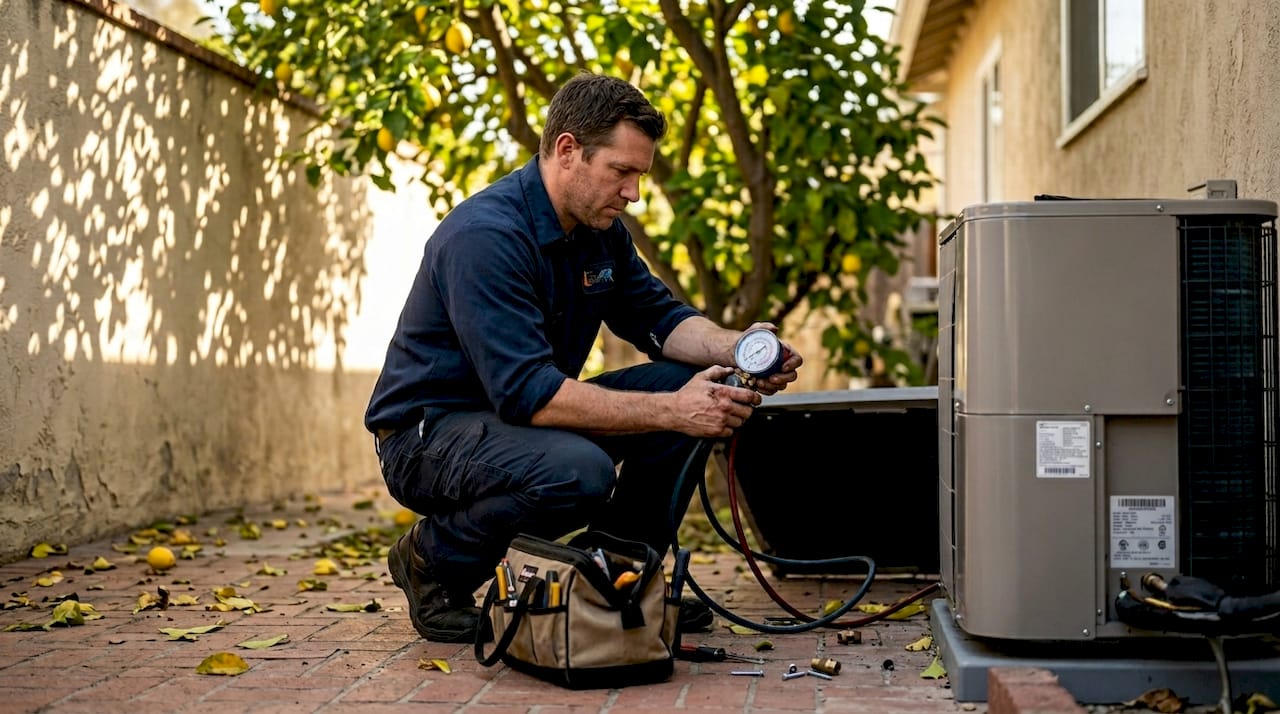
Pro Tip: Make sure your contractor is heat pump certified. These systems require specific refrigerant handling and electrical knowledge that not every HVAC tech has. You can see how professional installation makes a real difference in system performance and longevity.
For homeowners interested in energy-efficient HVAC solutions that qualify for the most incentives, heat pumps are the strongest starting point in 2026.
High-efficiency AC and furnace combos for traditional comfort
Not every homeowner is ready to go all-electric, and that's completely valid. High-efficiency split systems, pairing a central air conditioner with a gas furnace, remain a strong option in 2026, especially for homes with solid existing ductwork.
Here's what the latest AC and furnace combos bring to the table:
- High SEER2 ratings: Top models now exceed SEER2 16, with some reaching 20 or higher, delivering real energy savings over older 13-SEER units.
- Ultra-quiet operation: Variable-speed compressors and blowers run at lower speeds most of the time, reducing noise dramatically.
- Gas backup reliability: A furnace gives you peace of mind during cold snaps, even though Inland Empire winters rarely push into extreme territory.
- Tax credit eligibility: The federal 25C tax credit provides up to $2,000 for qualifying high-efficiency central AC and furnace combos in 2026.
- Best for existing duct systems: If your ductwork is in good shape, a split system upgrade is often the most cost-effective path.
"The best system is the one that fits your home, your budget, and your lifestyle, not just the one with the highest rebate attached to it."
Keep in mind that HEEHRA rebates prioritized all-electric systems, so combos with gas furnaces don't qualify for that program. But the 25C credit and some utility rebates still apply, making these systems financially competitive.
Regular furnace maintenance extends the life of your investment significantly. And when you're ready to move forward, system upgrades with proper sizing and installation make all the difference in real-world performance.
Ductless mini-splits: Flexible solutions for unique spaces
Some homes just don't fit the mold for traditional central HVAC. If you have an addition, a garage conversion, an accessory dwelling unit (ADU), or a home without existing ductwork, ductless mini-splits deserve serious consideration in 2026.
Here's why mini-splits are gaining ground fast:
- No ductwork needed: Installation requires only a small hole in the wall for refrigerant lines, making it far less disruptive than adding ducts.
- Individual zone control: Each indoor head unit operates independently. You cool the bedroom without cooling an empty living room, saving energy automatically.
- High efficiency: Many mini-split systems carry SEER2 ratings above 20, outperforming most ducted systems on paper.
- Rebate eligibility: TECH Clean CA rebates and the federal 25C tax credit both apply to ductless mini-split heat pumps, and stacking them delivers substantial savings.
- Scalable systems: You can start with one zone and add more indoor heads later as your needs or budget allow.
Mini-splits are also a smart complement to an existing central system. If one room in your home is always too hot or too cold, a single-zone mini-split can solve that problem without replacing your whole system.
Pro Tip: Use a mini-split in combination with your central system for zoned comfort. Run the central unit for common areas and the mini-split for bedrooms or problem rooms. You'll see real energy savings without a full system replacement.
For unusual HVAC projects like ADUs, older homes, or custom builds, mini-splits often provide the cleanest and most efficient solution available.
2026 HVAC replacement options: Head-to-head comparison
Here's a side-by-side look at the three main system types to help you narrow your decision based on your priorities.
| Feature | Heat pump | AC and furnace combo | Ductless mini-split |
|---|---|---|---|
| Price range (installed) | $6,000 to $14,000 | $5,000 to $12,000 | $3,000 to $10,000 |
| Max rebates and credits | Up to $6,500+ | Up to $2,000 | Up to $6,500+ |
| Energy savings | High (SEER2 18+) | Moderate to high (SEER2 16+) | Very high (SEER2 20+) |
| Ductwork required | Yes (central) | Yes | No |
| Gas backup | Optional (hybrid) | Yes | No |
| Best for | Most IE homes | Homes with good ducts | ADUs, additions, retrofits |
As stacking rebates and tax credits can reduce net HVAC replacement costs by 30 to 50% in 2026, your actual out-of-pocket cost depends heavily on which incentives you qualify for and act on quickly.
The installation benefits of working with a certified contractor go beyond equipment. Proper sizing, load calculations, and commissioning ensure you actually get the performance and savings the table above promises.
Our take: What most 2026 HVAC buyers overlook in California
Here's something we see constantly: homeowners spend weeks comparing SEER2 ratings and brand names, then lose $2,000 or more in rebates simply because they waited too long to apply. Some major incentive programs ran out of funds in early 2026. Timing is not a footnote. It's a core part of the financial decision.
The second thing most buyers overlook is installation quality. A heat pump with a SEER2 of 20 installed incorrectly will perform like a SEER2 12 system. We've seen it. The spec sheet means nothing if the refrigerant charge is off, the airflow is unbalanced, or the system is oversized for the home. Chasing the highest rebate on the most expensive system, then cutting corners on installation, is a losing strategy.
Our honest advice: prioritize long-term performance over short-term sticker price. A mid-range system installed perfectly by a licensed, experienced contractor will outperform a premium system installed carelessly every single time. You can see unexpected HVAC results from both ends of that spectrum in real homes.
Work with contractors who show you actual load calculations and rebate documentation, not just a quote and a handshake.
Ready to upgrade? Get professional HVAC help for your Inland Empire home
You now have a clear picture of what 2026's best HVAC systems offer and what it takes to maximize your savings. The next step is putting that knowledge to work with a team that knows the Inland Empire inside and out.

At E320 Air, we handle everything from system selection and rebate paperwork to trusted HVAC installation and post-install performance checks. We'll match your home's specific needs to the right system, help you stack every available incentive, and make sure your new equipment actually delivers what it promises. Want to see results from real local projects before you commit? We've got those too. Schedule your consultation today and lock in your 2026 savings before the best incentive windows close.
Frequently asked questions
What are the top rebates for HVAC replacement in California in 2026?
The strongest available rebates include TECH Clean CA ($1,000 to $4,000), the federal 25C tax credit (up to $2,000), and SCE or LADWP utility rebates up to $2,500 per ton. HEEHRA is fully reserved as of early 2026 and no longer accepting new applications.
Can you stack multiple HVAC incentives in 2026?
Yes, combining state, federal, and utility rebates is allowed on qualifying systems, and stacking can reduce costs by 30 to 50% depending on the system type and your utility provider.
What should I do if HEEHRA funds are already reserved?
Focus on TECH Clean CA, the federal 25C credit, and your local utility rebates. These programs remain available for many Inland Empire homeowners and can still deliver significant savings on heat pumps and high-efficiency systems.