
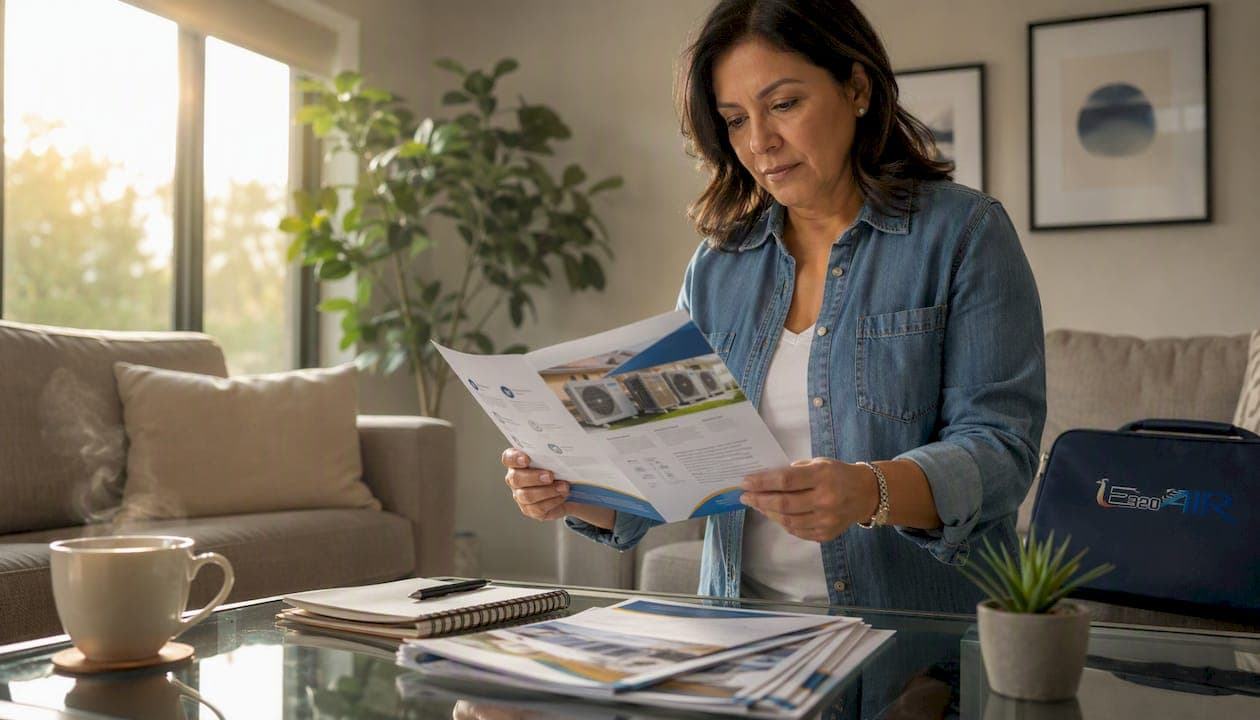
For Inland Empire homeowners and property managers searching for reliable local HVAC services, the most practical options are:
- E320air — recommended local contractor for residential and commercial repairs, maintenance, installations, and upgrades in the Inland Empire
- Manufacturer-certified dealer networks (Carrier, Trane) — best for warranty-backed equipment installs with factory-trained technicians
- Online marketplaces (Angi, Thumbtack) — fastest way to collect multiple quotes from local contractors
- Yelp — useful for reading verified customer reviews and checking response times
- Trade referral services — vetted contractor recommendations from neighbors, property management networks, or real estate professionals
Before calling anyone, pull the contractor's C-20 license number on CSLB. California law requires every HVAC contractor to hold an active C-20 classification, and workers' compensation insurance is mandatory. Skipping this step can leave you financially responsible for on-site injuries.
Pro Tip: Get the license number during your first phone call, then verify it at CSLB's Check a License tool before scheduling a site visit. Takes two minutes and eliminates the biggest risk.
CSLB recommends collecting at least three written, itemized bids before signing anything. Each bid should list equipment model numbers, SEER2 ratings, permit fees, and warranty terms — both parts and labor. A bid missing any of those items is incomplete, and a bid that comes in dramatically lower than the others almost always excludes permits or required HERS testing. That gap catches up with you at inspection time.

For local context: Inland Empire summers push systems hard, and emergency response time matters when temperatures spike. Confirm whether your contractor offers same-day or emergency service before you need it.
Table of Contents
- How to negotiate contract terms and payment schedules securely
- How to resolve disputes with HVAC contractors in California
- Key Takeaways
- Why local credentials matter more than a low price
- E320air serves the Inland Empire with licensed, documented HVAC work
- Useful sources for verifying HVAC contractors in California
How to negotiate contract terms and payment schedules securely
Never pay the full project cost upfront. California law limits deposit amounts for home improvement contracts, and CSLB guidance recommends including a 3-day right to cancel in any home improvement agreement. Structure payments in stages tied to verified milestones: deposit at signing, a progress payment after equipment delivery, and the final balance only after the system passes inspection and you confirm it runs correctly.
Get every scope item in writing before work starts. That means the specific equipment model, SEER2 rating, permit line items, and the warranty period for both parts and labor. Verbal promises about upgrades or extended coverage are unenforceable. If a contractor resists putting permit fees in the written contract, treat that as a signal they plan to skip the permit entirely. Contractors who skip permits shift the compliance risk onto you as the property owner.
Check the contractor's business address of record on CSLB before signing. A contractor operating only from a vehicle with no verifiable address is difficult to hold accountable for warranty work or callbacks.
How to resolve disputes with HVAC contractors in California
Start with a written complaint to the contractor. Document everything: photos, dates, the original contract, and any communications. If the contractor does not respond or the work remains deficient, file a complaint directly with the CSLB. The board investigates complaints against licensed contractors and can impose disciplinary action, including license suspension.
For unlicensed contractors, your options narrow considerably. Hiring an unlicensed worker often leaves homeowners with limited legal recourse and potential liability for injuries on their property. Small claims court handles disputes up to $12,500 in California, which covers most repair and maintenance disagreements. For larger installation disputes, consult a contractor-law attorney or contact the California Department of Consumer Affairs.
Key Takeaways
Verify the C-20 license, require itemized written bids, and confirm insurance before any payment — those three steps eliminate the majority of HVAC hiring risk in California.
| Point | Details |
|---|---|
| Verify C-20 license first | Check license status and disciplinary history at CSLB before scheduling a site visit. |
| Require itemized written bids | Each bid must list equipment model, SEER2 rating, permit fees, and parts and labor warranty. |
| Watch for red flags | Unusually low bids, no permit line items, and no verifiable business address are all warning signs. |
| Collect three bids minimum | CSLB recommends at least three written quotes to spot omitted work or missing safety steps. |
| E320air for Inland Empire work | E320air provides licensed residential and commercial HVAC repairs, installs, and maintenance locally. |
Why local credentials matter more than a low price
The most common mistake Inland Empire homeowners make is treating HVAC bids like commodity shopping. The lowest number on the page rarely reflects the full scope. Permits get dropped. HERS testing gets skipped. The equipment model in the bid gets swapped for a lower-efficiency unit at installation — something a written, itemized bid with the model number and SEER2 rating prevents directly.
Local experience also matters in ways that don't show up on a quote sheet. The Inland Empire's climate puts systems under sustained stress, and a contractor who knows the region's load requirements, local inspection offices, and permit timelines moves faster and avoids the callbacks that cost you more in the long run.
E320air's approach to every job starts with a documented bid: equipment model, SEER2 rating, permit fees, and warranty terms in writing before any work begins. That's not a differentiator — it's the minimum standard. What separates a reliable contractor from a risky one is whether they'll put it all in writing and stand behind it after the job closes.
E320air serves the Inland Empire with licensed, documented HVAC work
Angi, Thumbtack, and manufacturer dealer networks all have their place for gathering quotes and comparing options. But when you need a licensed local contractor who pulls permits, documents every bid line, and backs the work with written warranty terms, E320air is the direct option for Inland Empire homeowners, landlords, and property managers.
E320air handles residential and commercial repairs, routine maintenance, full system replacements, and equipment upgrades. Before your appointment, have your current system's model number ready, note any symptoms (unusual noise, uneven cooling, high energy bills), and ask for the CSLB license number and proof of insurance upfront. For HVAC installation projects, request a written bid that includes the equipment model, SEER2 rating, permit fees, and both parts and labor warranty terms. Contact E320air to schedule a site visit and get a written estimate.
Useful sources for verifying HVAC contractors in California
Use these resources to confirm credentials, compare bids, and escalate complaints.
| Resource | What it covers |
|---|---|
| CSLB Check a License | Verify license status, C-20 classification, complaint history, and workers' comp |
| CSLB Hiring Guide | Step-by-step guidance on bids, permits, insurance, and red flags |
| CSLB HVAC Consumer Guide | Homeowner protections including 3-day cancellation rights and permit requirements |
| CA.gov License Lookup | State portal for contractor license and Home Improvement Salesperson verification |
- File a complaint: Visit the CSLB website and submit a complaint form against any licensed contractor for deficient work, contract violations, or insurance issues.
- HERS testing: Required for many new installations in California; confirm your contractor includes it in the bid when applicable.
- Permit verification: Contact your local building department to confirm permits were pulled and inspections passed after work is complete.