
TL;DR:
- Upgrading to a high-efficiency HVAC system saves homeowners money due to regional climate and rising energy costs.
- California's SEER2 standards ensure real-world efficiency, making modern systems more effective and cost-efficient.
- Proper sizing, installation, and selecting systems with features like variable-speed motors maximize comfort and savings.
Most Inland Empire homeowners assume that upgrading to a newer, more efficient HVAC system is a luxury expense that pays off slowly, if ever. That assumption is costing real money every month. California's SEER2 rating standards are among the strictest in the nation, which means older systems installed just five or ten years ago are already falling behind in efficiency. Add in the region's punishing summer heat, rising electricity rates, and homes that run their HVAC for more months than almost anywhere else in the state, and an efficiency upgrade stops being optional. This guide breaks down exactly why upgrading makes financial sense and what it takes to choose the right system.
Table of Contents
- Why energy efficiency matters for Inland Empire homeowners
- What makes an HVAC system energy efficient?
- Real-world benefits: Cost savings, comfort, and air quality
- How to choose the right system for your Inland Empire home
- The truth about energy efficient HVAC systems in California
- Upgrade to energy efficiency with E320 Air
- Frequently asked questions
Key Takeaways
| Point | Details |
|---|---|
| Major monthly savings | Switching to an energy efficient HVAC can cut your bills dramatically over time. |
| Comfort in every season | Efficient systems keep every room in your home more evenly comfortable year-round. |
| Regulations matter | California’s SEER2 rules mean older HVAC units are quickly becoming outdated. |
| Right features pay off | Choosing the right SEER2 rating and system type speeds up your return on investment. |
Why energy efficiency matters for Inland Empire homeowners
The Inland Empire's climate is not forgiving. Summer temperatures in cities like Riverside and San Bernardino regularly push past 100°F, and even spring and fall can bring warm stretches that keep your air conditioner running. Unlike coastal California, you don't get much natural cooling from ocean breezes. That means your HVAC system works harder, runs longer, and costs more per square foot than in most other parts of the state.
Electricity rates in California have climbed sharply in recent years, and Southern California Edison customers in the Inland Empire are not immune. When you combine high usage hours with rising rates, even a modest improvement in system efficiency translates into a meaningful drop in your monthly bill. Heating and cooling account for up to half of total home energy use, making your HVAC the single biggest lever you have to reduce costs.
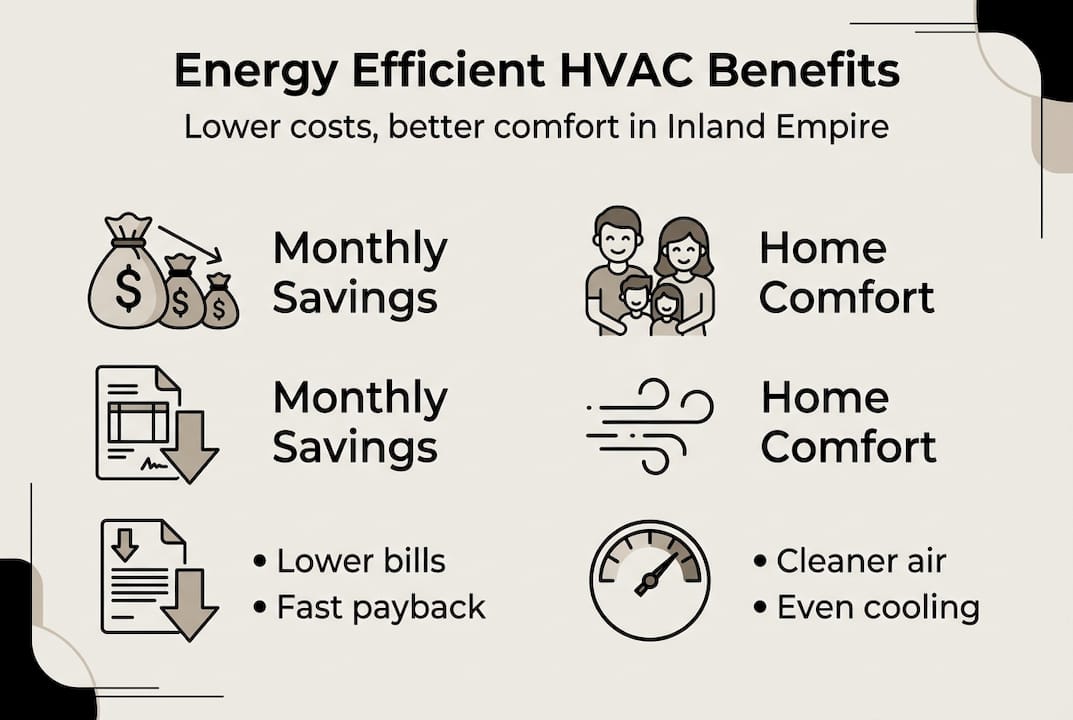
California's updated standards set a 15.2 SEER2 minimum for residential HVAC systems, leading the nation in real-world efficiency requirements. SEER2 (Seasonal Energy Efficiency Ratio 2) measures how much cooling you get for every unit of electricity used, under realistic operating conditions. If your current system was installed before 2023, it almost certainly doesn't meet this standard.
Here's what makes this especially relevant for Inland Empire homeowners:
- Year-round usage: Unlike regions with short summers, your system runs for eight or more months a year.
- Peak demand charges: Utilities often charge more during high-demand hours, magnifying the cost of an inefficient system.
- Older homes: Many homes in the region have aging ductwork and original equipment that compounds energy waste.
- Policy momentum: California rebates and incentive programs are increasingly tied to SEER2 compliance, meaning older units may disqualify you from savings programs.
"The CPUC's 2025 study forecasts significant HVAC savings potential across California homes, with the greatest gains in regions with high cooling loads like the Inland Empire."
If you're exploring what systems make sense for this region, reviewing top HVAC replacements available for California homes in 2026 is a practical starting point.
What makes an HVAC system energy efficient?
Not all high-efficiency labels mean the same thing. The clearest way to measure a system's efficiency is its SEER2 rating. The old SEER standard was tested under idealized lab conditions. SEER2 tests under higher external static pressure, which more closely matches what happens inside your actual home and ductwork. A system rated 15.2 SEER2 will genuinely perform at that level in most real installations, not just in a lab.
For Inland Empire homeowners, SEER2 ratings of 16 to 18 represent the sweet spot between upfront cost and long-term savings. Going above 18 can make sense for large homes with very high cooling loads, but the returns diminish past a certain point.
Beyond the rating itself, modern efficient systems include features that older units simply don't have:
- Variable-speed motors: Instead of running at full blast or shutting off entirely, these motors adjust output to match demand, using far less electricity during mild conditions.
- Two-stage or inverter compressors: Similar idea — they modulate capacity rather than cycling on and off, reducing wear and energy spikes.
- Smart thermostats: Integrated controls let you schedule cooling around your schedule and avoid wasting energy on an empty house.
- Advanced filtration: Higher-efficiency systems often pair with better filter options, improving air quality while protecting equipment.
Here's a quick comparison of what separates a standard system from a high-efficiency one:
| Feature | Standard system | High-efficiency system |
|---|---|---|
| SEER2 rating | 14.0 to 15.0 | 16.0 to 20.0+ |
| Compressor type | Single-stage | Two-stage or inverter |
| Motor | Single-speed | Variable-speed |
| Smart thermostat | Optional add-on | Often integrated |
| Estimated monthly savings vs. old unit | Minimal | 20 to 40 percent |
Heat pumps deserve special mention here. Because Inland Empire winters are mild, a heat pump can provide efficient heating without relying on a gas furnace. They move heat rather than generate it, which means they deliver more energy output than they consume. Learning about HVAC zoning can also help you get even more from a high-efficiency system by directing conditioned air where it's actually needed.
Pro Tip: Choosing a system rated just two or three points above the California minimum, like a 17 or 18 SEER2 unit, often cuts your energy bills noticeably without a massive jump in upfront cost. The payback period on that difference is typically under three years in high-usage climates like the Inland Empire. Don't overlook filter selection either — the right filter protects efficiency and air quality at the same time.
Real-world benefits: Cost savings, comfort, and air quality
Efficiency ratings are useful benchmarks, but the real question is what they mean for your monthly budget and your daily comfort. Let's look at actual numbers.
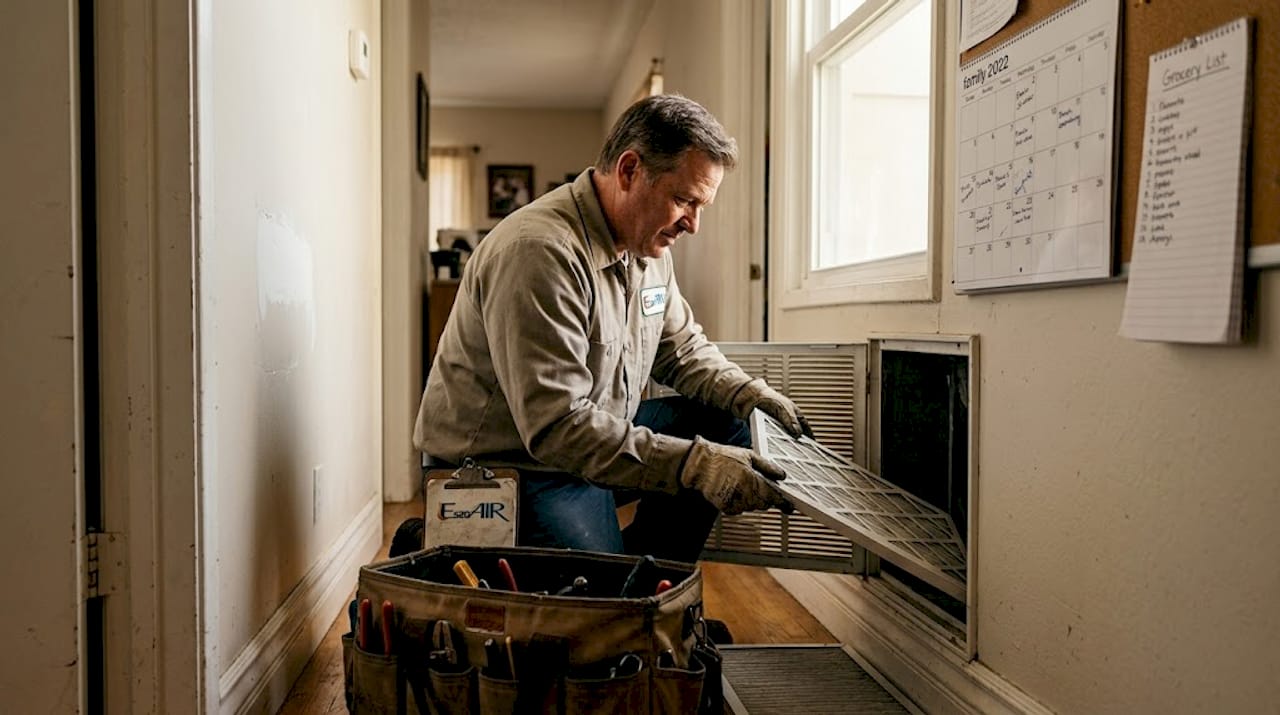
| SEER2 rating | Estimated monthly savings vs. 13-SEER unit | Approximate payback period |
|---|---|---|
| 15.2 (minimum) | $20 to $40 | 7 to 9 years |
| 17 to 18 | $50 to $80 | 4 to 6 years |
| 20+ | $90 to $130 | 5 to 8 years |
These estimates are based on average Inland Empire usage patterns and current electricity rates. Your actual savings will depend on your home's size, insulation quality, and how often you run the system.
Beyond the bill, here's what homeowners typically notice after upgrading:
- Lower monthly bills that compound into thousands of dollars saved over the system's lifespan.
- More consistent temperatures throughout the home, with fewer hot spots in upstairs rooms or south-facing areas.
- Better indoor air quality, especially with systems that use high-efficiency filtration. Learn how HVAC improves indoor air quality for a deeper look at this benefit.
- Quieter operation, since variable-speed systems run at lower capacity most of the time and produce far less noise than older single-stage units.
One often-overlooked point: heat pumps in California's mild winters can deliver heating at two to three times the efficiency of a standard gas furnace, because they transfer heat rather than burn fuel. That dual efficiency covers both seasons and accelerates your payback.
Pro Tip: Many utility companies and the state of California offer rebates for qualifying high-SEER2 systems. These rebates can offset hundreds to over a thousand dollars of upfront cost. Factor that in before assuming a premium system is out of budget. Also consider that high-efficiency systems often need fewer repairs, which adds to the real-world savings. Proper sizing matters here too — an oversized unit will short-cycle and waste energy no matter how high its SEER2 rating.
How to choose the right system for your Inland Empire home
Choosing a system doesn't need to be intimidating. Breaking the decision into five steps makes it manageable.
- Assess your home's size and layout. Square footage matters, but so does ceiling height, the number of stories, and how your floor plan is arranged. A load calculation by a licensed contractor gives you an accurate sizing recommendation.
- Consider your local climate conditions. Inland Empire summers are intense and long. You need a system sized and rated to handle peak days, not just average ones.
- Compare SEER2 ratings honestly. California's minimum is 15.2, but high-SEER2 heat pump systems in the 17 to 20 range are often the best fit for this region's heating and cooling demands.
- Factor in air quality and special needs. If anyone in your household has allergies or asthma, advanced filtration should be non-negotiable.
- Plan your total budget. Include the unit, installation, any duct modifications, and offset with available rebates.
When shopping, look for these features specifically:
- SEER2 rating of 16 or above
- Variable-speed or inverter-driven compressor
- Programmable or smart thermostat compatibility
- Manufacturer warranty of at least 10 years on the compressor
- ENERGY STAR certification
Choose a heat pump if your home currently uses electric resistance heating or if you want a single system for both heating and cooling. Stick with a traditional central air system paired with a gas furnace if your home already has a high-efficiency furnace and you want to minimize upfront changes.
Pro Tip: The best unit on the market will underperform in a poor installation. Always verify that your contractor performs a proper Manual J load calculation before recommending a system size. Professional installation and correct commissioning are what turn a good unit into a great-performing system. For a broader look at current options, the replacement options available in California cover the most practical choices for 2026 buyers.
The truth about energy efficient HVAC systems in California
Here's something we hear often: "Our winters are mild, so heating efficiency doesn't really matter here." That thinking is costing Inland Empire homeowners real money every year.
The Inland Empire does have mild winters compared to the northeast or the mountain states. But mild does not mean free. Nights regularly drop into the 30s and 40s from December through February, and a heat pump handling that load at twice the efficiency of a gas furnace adds up fast. Even seasonal HVAC strategies for Riverside County homeowners reflect how much variation this region actually experiences.
The bigger insight is this: high-efficiency systems pay for themselves faster in the Inland Empire, not slower. A longer cooling season means more hours of savings accumulating. A heat pump covering both heating and cooling compounds that advantage across every month of the year.
Older homes in the region with original ductwork see some of the largest gains. Leaky ducts can waste 20 to 30 percent of conditioned air before it ever reaches a room. Combine a high-efficiency unit with sealed ducts and even modest insulation improvements, and you can see energy bills drop dramatically. Even smaller upgrades, like switching to a better filter or installing a smart thermostat, add measurable value in this climate. Don't fall into the trap of thinking premium efficiency is only for homeowners in harsher climates. Here, it often pays for itself faster than almost anywhere else.
Upgrade to energy efficiency with E320 Air
Ready to make your Inland Empire home more efficient and comfortable? The right system makes a real difference, and so does working with a contractor who understands local climate demands and current California efficiency standards.
E320 Air specializes in sizing and installing the latest high-efficiency HVAC systems for homes throughout the Inland Empire. Whether you're replacing an aging unit or upgrading to a heat pump for the first time, we match the right system to your home's specific needs. Browse real local projects in our problem-solving gallery to see how we've helped neighbors like yours. When you're ready to take the next step, reach out for a custom assessment or request a quote for expert HVAC installation from a team that knows this region.
Frequently asked questions
What does SEER2 mean, and why is it important in California?
SEER2 measures how efficiently an HVAC unit cools your home under real-world conditions. California's 15.2 SEER2 minimum for split systems means your new unit must perform efficiently in actual installations, not just in a lab setting.
How much can I reduce my energy bills with an efficient HVAC system?
Upgrading to a high-SEER2 system can lower heating and cooling costs by 20 to 40 percent, depending on your old unit and usage. The CPUC's 2025 potential study confirms significant savings potential across California homes.
Are heat pumps a good fit for Inland Empire homes?
Yes. Heat pumps are ideal for this region because they efficiently handle both the hot summers and the mild but real winters. Dual heating and cooling efficiency is a particular advantage in California's climate.
What features should I look for in a new energy efficient HVAC system?
Prioritize a SEER2 rating above 15.2, variable-speed motors, programmable thermostats, ENERGY STAR certification, and high-quality air filtration for best overall performance.
Will upgrading my HVAC system improve my home's air quality?
Yes. New efficient systems typically include better filtration that captures more indoor pollutants and allergens. Pairing your upgrade with the right filter for air quality makes the improvement even more noticeable.