
TL;DR:
- Proper HVAC filters protect indoor air quality and prevent system damage, especially in dusty areas.
- MERV ratings indicate filtration effectiveness, with MERV 8-13 suitable for most homes.
- Regular filter replacement every 1-3 months maintains system efficiency and reduces energy bills.
Most homeowners treat HVAC filters like an afterthought, swapping them out whenever they remember or skipping changes entirely. That mindset costs you money and puts your family's health at risk, especially in Moreno Valley where dust, smoke, and allergens cycle through homes year-round. The right filter traps contaminants before they reach your lungs or clog your system. This guide walks you through how filters work, which ratings matter, how often to replace them, and how clean filtration directly lowers your energy bills.
Table of Contents
- What HVAC filters actually do
- Filter types and MERV ratings explained
- Maintenance: When and how to replace your filter
- How filters impact energy efficiency and comfort
- Why filter choice and maintenance matter more than most experts say
- Get expert solutions for HVAC filter upgrades and maintenance
- Frequently asked questions
Key Takeaways
| Point | Details |
|---|---|
| Health and system protection | HVAC filters safeguard your family's health and prevent costly system damage by trapping harmful particles. |
| Choose the right MERV | Selecting the proper MERV rating ensures a balance between clean air and efficient system performance. |
| Timely maintenance matters | Regular filter checks and changes boost indoor air quality and lower energy bills for Moreno Valley homes. |
| Don't over-filter | High-efficiency filters aren't always better; choose based on specific home needs and local air conditions. |
What HVAC filters actually do
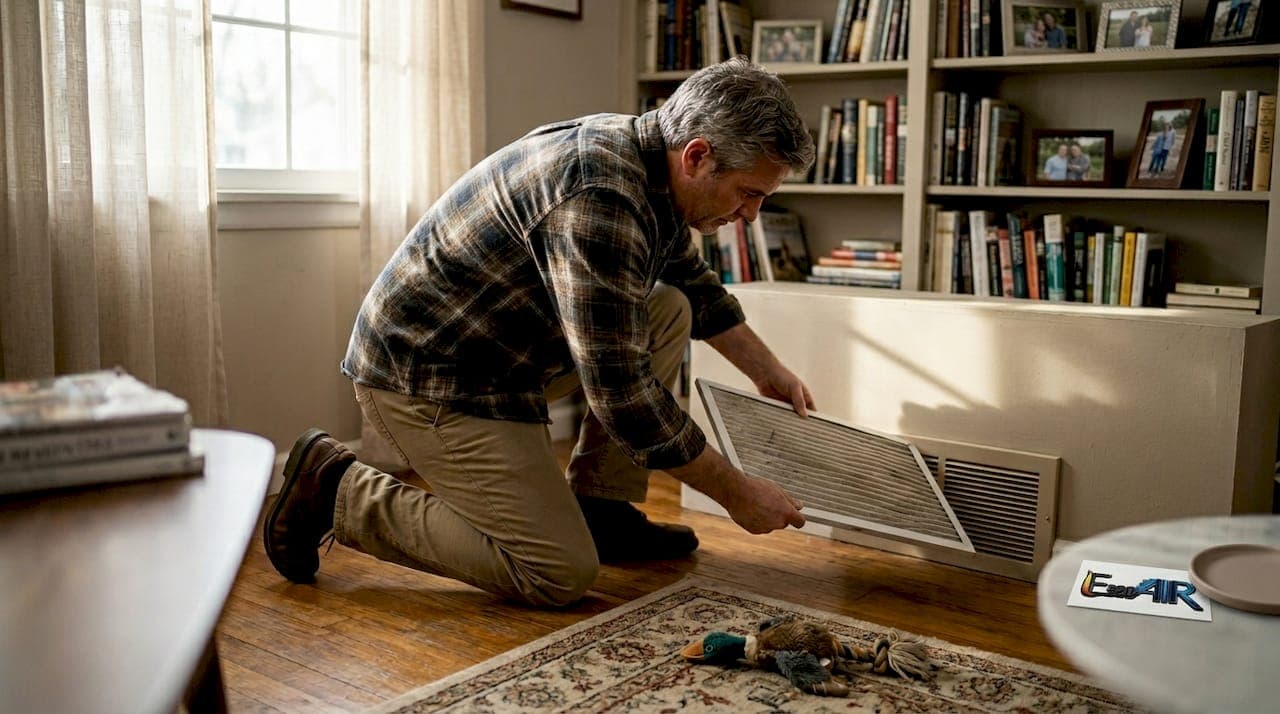
Your HVAC filter sits at the point where air enters the system, and it does two jobs at once. First, it protects the people inside your home by capturing airborne particles before they circulate. Second, it protects the equipment itself by keeping debris off coils, fans, and blowers.
Without a functioning filter, contaminants build up on internal components. Dirty coils lose heat transfer efficiency. Clogged blower wheels work harder and draw more power. Over time, that buildup shortens the life of your system and leads to expensive repairs. Think of the filter as a gatekeeper: when it works well, everything downstream stays clean.
In Moreno Valley, this matters even more. The region sits in an area prone to dry, dusty conditions and seasonal wildfire smoke. Those factors push more fine particles into your home than you'd find in coastal or heavily vegetated areas. Filters here earn their keep faster.
Here's what a quality HVAC filter captures on a daily basis:
- Dust and dirt particles
- Pollen from trees, grasses, and weeds
- Pet dander and hair
- Mold spores
- Bacteria and some viruses
- Fine wildfire smoke particles and PM2.5
"A filter that's matched to your home's needs does more than clean air. It keeps the mechanical heart of your HVAC system running the way it was designed to, protecting your investment and your family at the same time."
For homeowners curious about how filtration connects to overall system design, understanding HVAC installation steps gives useful context on where filters fit into the bigger picture. You can also find practical indoor air quality tips that go beyond just filter selection.
Filter types and MERV ratings explained
Not all filters are built the same, and the rating system used to compare them is called MERV, which stands for Minimum Efficiency Reporting Value. The MERV scale runs 1 to 20, with higher numbers capturing smaller particles more effectively. Most residential homes do well with filters rated between MERV 8 and MERV 13.
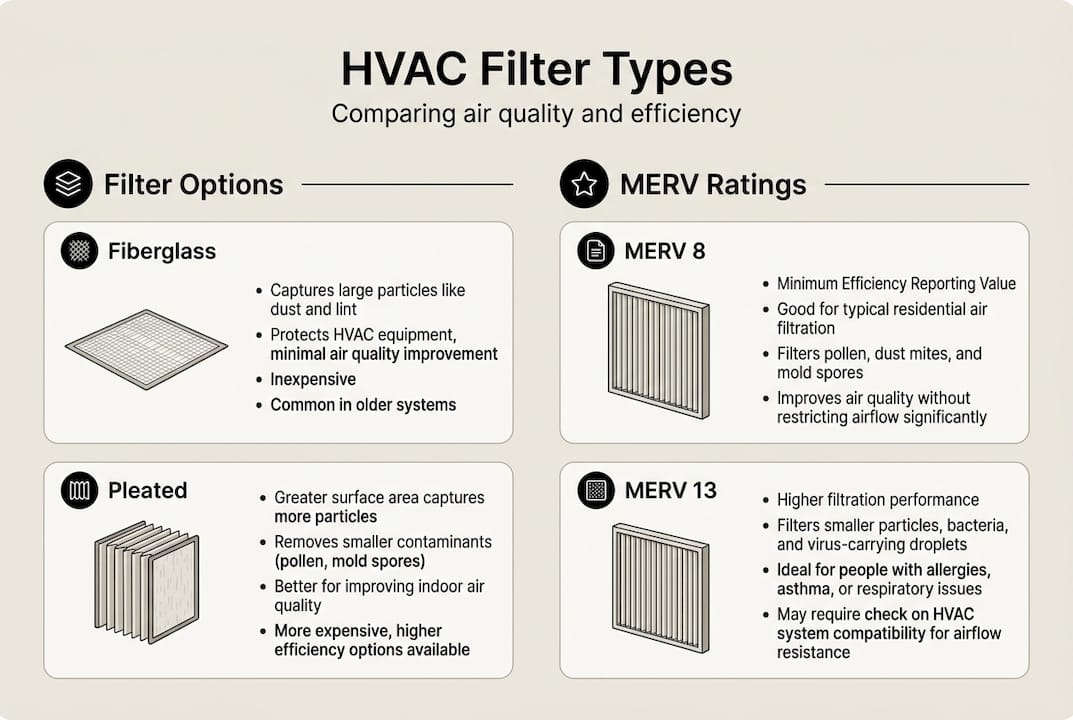
Here's a quick comparison of the two most common residential options:
| Feature | MERV 8 | MERV 13 |
|---|---|---|
| Particle size captured | 3 to 10 microns | 0.3 to 1 micron |
| Best for | Dust, pollen, lint | Smoke, bacteria, fine allergens |
| Airflow impact | Minimal restriction | Moderate restriction |
| Replacement cost | Lower | Higher |
| Recommended for | Most standard homes | Allergy or asthma households |
Going above MERV 13 in a standard residential system can actually hurt performance. Filters rated MERV 16 or higher are typically designed for hospitals and commercial buildings with more powerful blowers. Forcing that level of filtration on a home system strains the motor and reduces airflow, which ironically makes air quality worse.
Here are the main filter types you'll encounter:
- Fiberglass: Cheap and basic. Catches large particles but misses most fine ones. Not ideal for health-focused homes.
- Pleated: The most popular choice. More surface area means better filtration without choking airflow. Usually rated MERV 8 to 12.
- HEPA: High-efficiency particulate air filters. Excellent filtration but rarely compatible with standard residential ductwork.
- Electrostatic: Uses static charge to attract particles. Washable versions exist but require consistent cleaning to stay effective.
- Washable or reusable: Lower MERV ratings, but cost-effective long term if maintained properly.
For guidance on matching filter choice to your system's capacity, reviewing HVAC sizing for filter selection is a smart starting point. Businesses with different airflow demands may want to explore commercial filter options. If you're weighing whole-home filtration against room-by-room solutions, this comparison of central air vs individual filtration is worth reading.
Pro Tip: Don't assume the highest MERV filter is the best choice for your home. If your system wasn't designed for dense filtration media, a MERV 11 pleated filter often delivers better overall results than a MERV 16 that restricts airflow.
Maintenance: When and how to replace your filter
Knowing which filter to buy is only half the job. Replacing it on the right schedule is what keeps your system performing and your air clean. Residential filters need changing every one to three months under normal conditions, and more often when air quality is poor.
Here's how to check and replace your filter correctly:
- Turn off your HVAC system before opening the filter compartment.
- Locate the filter slot, usually near the air handler or return air vent.
- Slide out the old filter and hold it up to light. If you can't see light through it, it's time to replace it.
- Check the size printed on the filter frame and buy the exact match.
- Insert the new filter with the airflow arrow pointing toward the blower, not away from it.
- Note the date on the filter frame with a marker so you know when it was installed.
- Restart the system and monitor for any unusual sounds or reduced airflow.
Replacement timing varies based on your specific situation:
| Condition | Recommended replacement interval |
|---|---|
| Standard household, no pets | Every 90 days |
| Household with pets | Every 60 days |
| Allergy or asthma in household | Every 30 to 45 days |
| Active wildfire season | Every 2 to 4 weeks |
| Vacation home, low use | Every 6 months |
A pressure gauge called a magnehelic gauge gives the most accurate reading of filter loading, but for most homeowners, a visual check works fine. The key is building the habit. Wildfire season in the Inland Empire is the most common time filters get overlooked, and that's exactly when they're working hardest.
For more guidance on timing decisions, check out these replacement timing tips or browse our filter maintenance solutions. If your system is showing other symptoms, our troubleshooting HVAC issues guide can help you diagnose what's going on.
How filters impact energy efficiency and comfort
A dirty filter doesn't just affect air quality. It directly increases what you pay to heat and cool your home. When airflow is restricted, your system runs longer cycles trying to reach the set temperature. That means more electricity consumed, more wear on the motor, and a shorter lifespan for the equipment.
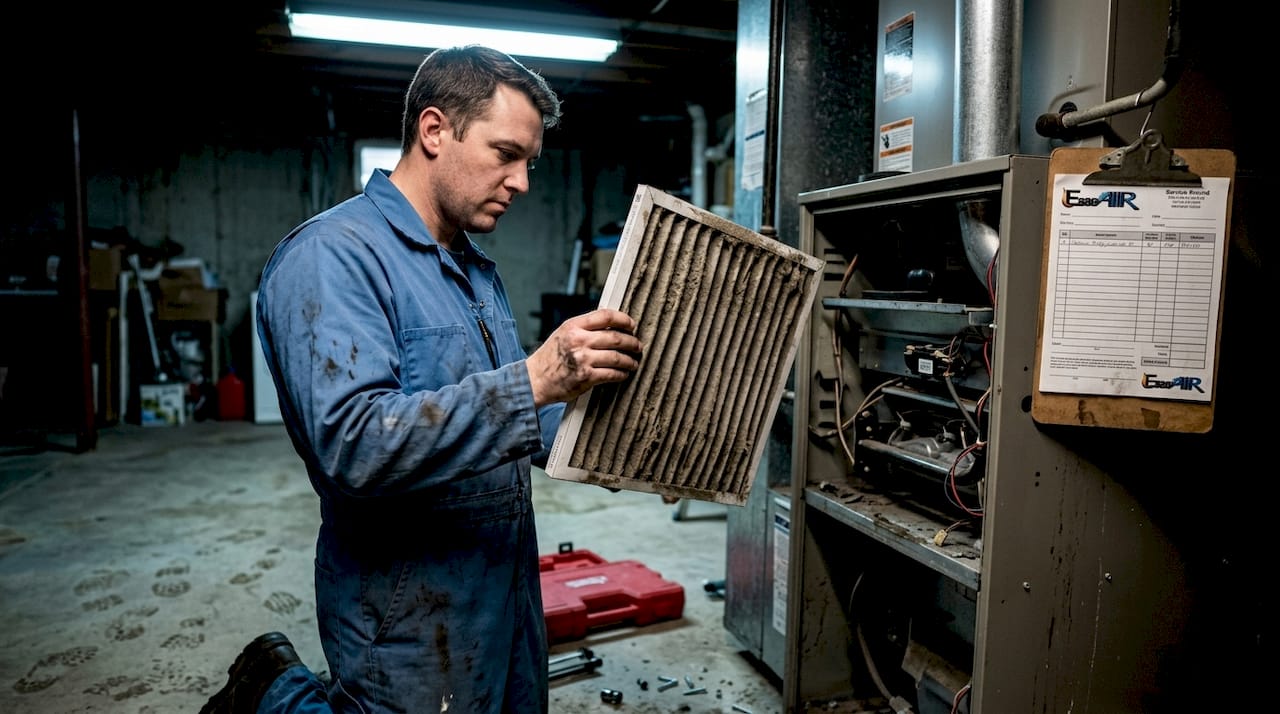
The relationship between filtration and energy use is straightforward. A clean filter allows air to move freely, so the blower doesn't strain. The coils stay clean, which means heat exchange happens efficiently. The system reaches your target temperature faster and shuts off sooner.
On the flip side, a MERV 13 filter isn't always better than a MERV 8 if it chokes your system's airflow. Over-filtration creates the same problem as a clogged filter: restricted airflow, longer run times, and higher bills.
Here's what you gain from keeping your filter clean and properly rated:
- Lower monthly energy bills from shorter, more efficient run cycles
- Fewer repair calls because coils and motors stay cleaner
- More consistent temperatures throughout the home
- Better humidity control since the system operates as designed
- Longer equipment life with less mechanical stress on every component
In Moreno Valley, where summer temperatures push systems to run nearly nonstop, the compounding benefit of clean filtration is significant. Dust and smoke load filters faster here than in milder climates, making regular changes more impactful on your bill.
Pro Tip: After replacing a neglected filter, check your thermostat's run time over the next week. Many homeowners notice the system cycles off faster, which shows up as real savings on the next utility bill.
For homes with heating systems, understanding the heating system filter impact is just as important as cooling season maintenance. You can also explore why clean air inside your home matters beyond just comfort.
Why filter choice and maintenance matter more than most experts say
Here's a perspective that doesn't get enough attention: the standard advice to "upgrade to MERV 13" or "change your filter every 30 days" isn't wrong, but it's incomplete. Blanket recommendations ignore the single most important variable, which is your specific system's design and your home's actual air quality.
We've seen homes in Moreno Valley where a MERV 8 pleated filter, changed every six weeks, outperformed a MERV 13 that was changed every 90 days. The higher-rated filter loaded up faster in the dusty local conditions and restricted airflow long before the homeowner thought to replace it.
The EPA and ASHRAE recommend MERV 13+ for superior indoor air quality, but residential HVAC experts consistently caution against applying commercial-grade filtration to systems not built for it. The result is often worse air quality and higher bills, not better.
Flexible, observation-based maintenance beats rigid schedules every time. Check your filter more often during wildfire events. Ease up during mild spring months when windows stay closed and air is cleaner. Match your filter to your system's actual capacity, and use the right filter selection tips to make an informed choice rather than defaulting to the highest number on the shelf.
Get expert solutions for HVAC filter upgrades and maintenance
Choosing the right filter and staying on top of maintenance is easier when you have a local expert who knows Moreno Valley's air quality challenges firsthand. Our team helps homeowners identify the best filter for their specific system, whether that means upgrading to a better MERV rating or simply building a smarter replacement schedule.
We offer professional guidance on everything from filter selection to full system upgrades. If you're ready to improve your home's air quality and lower your energy costs, schedule HVAC installation or explore our problem-solving gallery to see how we've helped homeowners just like you get more from their HVAC systems.
Frequently asked questions
What contaminants do HVAC filters capture in residential homes?
HVAC filters capture dust, pollen, pet dander, mold spores, bacteria, viruses, and fine smoke particles. Higher MERV-rated filters handle the smaller, more dangerous particles like PM2.5 and airborne bacteria.
How often should I change my HVAC filter?
Most homeowners should replace filters every one to three months, but during wildfire season or in dusty conditions, every two to four weeks is more appropriate.
Does a higher MERV rating always mean better air quality?
Not always. A high-MERV filter can restrict airflow in systems not designed for dense media, which strains the motor and reduces overall performance. Balance filtration quality with your system's airflow capacity.
How do I know if my HVAC filter needs replacing?
Hold the filter up to light. If you can't see through it, replace it. You can also track pressure drop with gauges or simply follow the manufacturer's recommended interval as a baseline.