

TL;DR:
- HVAC zoning provides independent temperature control for different home areas, improving comfort and efficiency.
- It reduces energy bills by directing conditioned air only where needed, saving up to 30%.
- Proper design, installation, and maintenance are essential for maximum benefits and avoiding system issues.
If you've ever argued over the thermostat or noticed one bedroom feels like a sauna while another stays freezing, you already know the limits of a single-thermostat HVAC system. Moreno Valley homes face intense summer heat and wide temperature swings that make uneven comfort a daily frustration. HVAC zoning solves this by giving you independent control over different areas of your home, so you stop wasting energy on empty rooms and start enjoying the temperature you actually want, where you actually want it. This guide breaks down exactly what zoning is, how it works, and whether it makes sense for your house.
Table of Contents
- Understanding HVAC zoning: The basics
- How HVAC zoning works: A step-by-step look
- Comparing HVAC zoning to traditional HVAC systems
- Is HVAC zoning right for your home?
- Common challenges and troubleshooting tips for HVAC zoning
- Our take: What most HVAC zoning guides leave out
- Ready to optimize your comfort? Next steps with E320 Air
- Frequently asked questions
Key Takeaways
| Point | Details |
|---|---|
| What HVAC zoning is | It divides your home into separate temperature zones controlled individually for better comfort and efficiency. |
| How zoning works | Zoning uses dampers and thermostats to direct heating and cooling only where and when it's needed. |
| Value vs. traditional systems | Zoning can reduce energy waste and boost comfort, especially in larger or multi-story homes. |
| Who benefits most | Homes with varied usage patterns or heat gain issues gain the most from a zoning system. |
| Maintenance matters | Regular inspections keep zones running smoothly and help avoid costly repairs. |
Understanding HVAC zoning: The basics
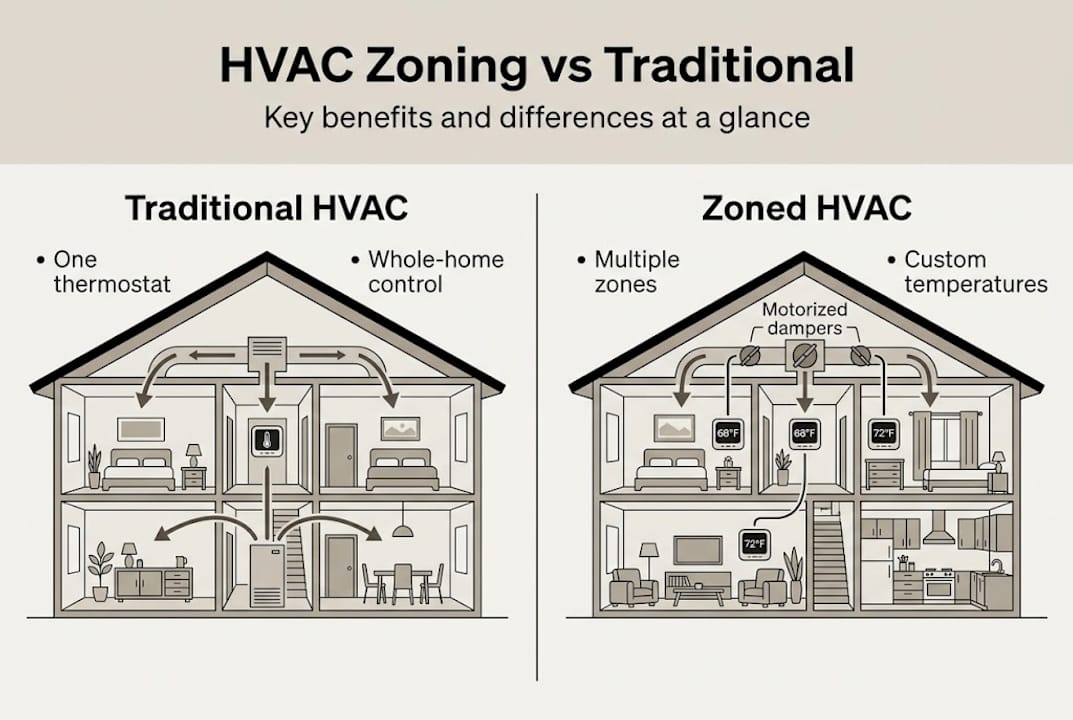
HVAC zoning is exactly what it sounds like. Your home gets divided into separate "zones," and each zone gets its own thermostat and its own temperature settings. Instead of one thermostat trying to balance the entire house, you control each area independently. The U.S. Department of Energy confirms that HVAC zoning divides a home into independently controlled areas for better comfort and energy savings.
Three main components make zoning work:
- Motorized dampers: These are installed inside your ductwork and open or close to direct airflow to specific zones.
- Zone thermostats: Each zone gets its own thermostat, so your bedroom can be set to 68°F while the living room stays at 72°F.
- A central control panel: This is the brain of the system. It reads signals from each thermostat and tells the dampers what to do.
Traditional HVAC systems use a single thermostat, usually placed in a central hallway. That thermostat reads the temperature at one spot and adjusts the whole house based on that reading alone. If your upstairs bedrooms trap heat or your home office faces west and bakes in afternoon sun, a single thermostat can't compensate for those differences.
Zoning is especially valuable for two-story homes, rooms with large windows, additions, or households where family members have genuinely different comfort preferences.
Zoning also supports improving indoor air quality by allowing more targeted airflow management throughout the home. When your system isn't overworking to balance an uneven house, it runs cleaner and more efficiently. For Moreno Valley homeowners dealing with triple-digit summer temperatures, that efficiency matters more than most people realize.
How HVAC zoning works: A step-by-step look
Visualizing the daily operation of a zoning system makes it much easier to appreciate its value. Here's how it actually works from the moment you set your thermostat:
- You set your desired temperature on each zone's thermostat. Each one monitors its specific area independently.
- The thermostat detects a difference between your set temperature and the actual room temperature.
- A signal goes to the control panel, which determines which zones need heating or cooling.
- The control panel activates the dampers in the ductwork, opening them for zones that need conditioning and closing them for zones that don't.
- Your HVAC system runs and delivers air only where it's needed, then shuts down once the zone reaches its target temperature.
As Energy Star notes, zoning systems use motorized dampers and thermostats to deliver heating or cooling only to targeted areas, which is what makes them so much more efficient than blanket whole-home conditioning.
Modern zoning systems pair beautifully with smart thermostats. You can set schedules for each zone, adjust temperatures remotely from your phone, and even let the system learn your habits over time. That level of control is a major upgrade from manually adjusting a single dial.
| Feature | Traditional HVAC | Zoned HVAC |
|---|---|---|
| Temperature control | One setting for whole home | Independent per zone |
| Energy use | Conditions entire home always | Conditions only active zones |
| Smart thermostat support | Limited | Full integration |
| Comfort flexibility | Low | High |
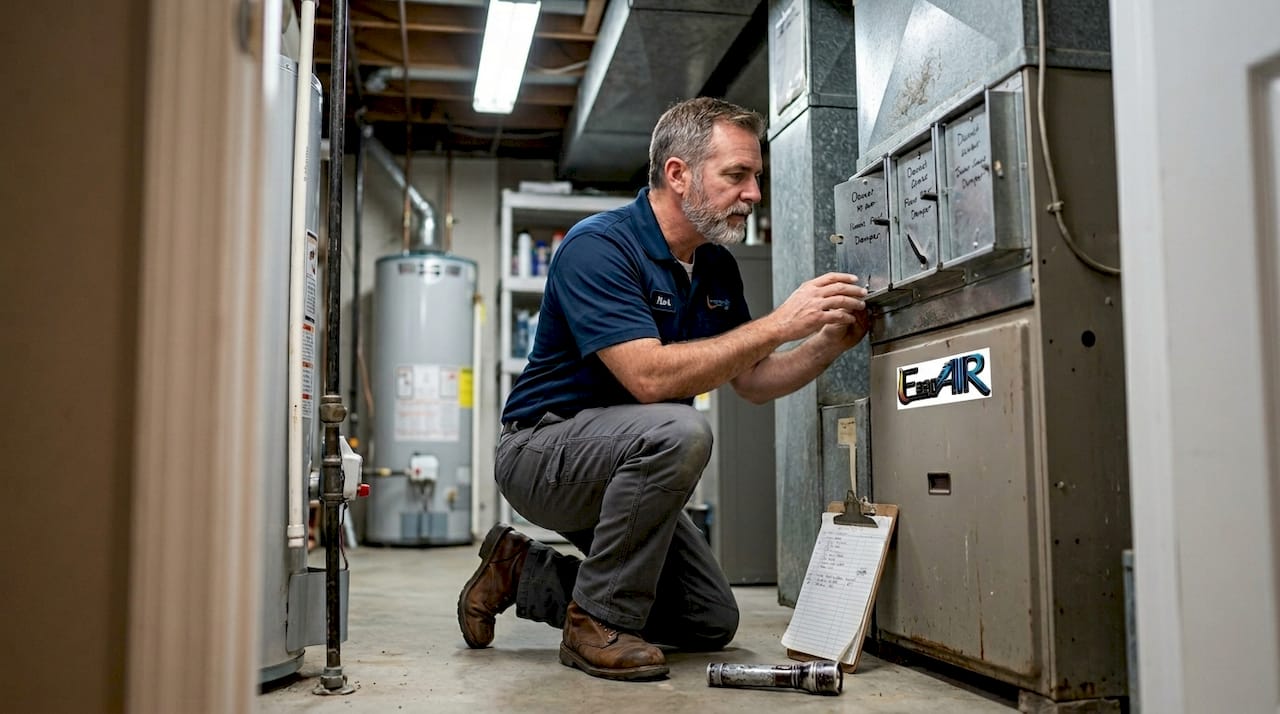
Pro Tip: Have your dampers inspected every year. Stuck or partially closed dampers are one of the most common causes of uneven temperatures and higher energy bills. Pairing damper checks with proper HVAC sizing reviews ensures your system is neither overworked nor underperforming.
Comparing HVAC zoning to traditional HVAC systems
Understanding the mechanics of zoning sets the stage for an honest comparison with traditional setups. The differences go beyond comfort and touch directly on your wallet.
The biggest advantage of zoning is energy efficiency. When you're at work all day, your system doesn't need to cool your home office. When everyone's asleep upstairs, the living room doesn't need to stay at 72°F. Traditional systems condition everything regardless. Zoned HVAC systems can reduce energy usage by up to 30% in some homes, which translates to real savings on monthly utility bills.
Let's put that in perspective. If your current energy bill averages $200 per month during Moreno Valley's hot season, a 30% reduction saves you $60 a month, or $720 a year. Over five years, that's $3,600 back in your pocket, which goes a long way toward offsetting installation costs.
Here's a direct comparison:
| Category | Traditional HVAC | Zoned HVAC |
|---|---|---|
| Upfront cost | Lower | Higher ($2,000 to $5,000+) |
| Monthly energy cost | Higher | Lower (up to 30% savings) |
| Comfort customization | Minimal | Full zone control |
| System complexity | Simple | Moderate |
| Best for | Small, simple layouts | Multi-story or varied homes |
Zoning does come with a higher upfront investment and more components to maintain. But for homes with multiple stories, additions, or rooms that behave very differently from each other, the comfort and savings case is strong. Exploring your HVAC replacement options alongside zoning upgrades can also maximize your return on investment.
The households that benefit most from zoning are those where family members constantly disagree on the thermostat setting. Instead of one person winning and the other suffering, everyone gets their zone set the way they like it.
Is HVAC zoning right for your home?
Not every home needs zoning, but many Moreno Valley homes are strong candidates. Multi-story homes, open floor plans, or rooms with unique needs often see the most benefit from zoning. Here's how to think through whether it fits your situation.
Your home is likely a good fit for zoning if:
- You have two or more stories, since heat naturally rises and upper floors are almost always warmer
- You have rooms with large windows that face south or west and absorb intense afternoon sun
- Your home includes an addition, sunroom, or finished basement that never quite matches the rest of the house
- Family members consistently disagree about the thermostat setting
- You have rooms that sit empty for most of the day and don't need constant conditioning
- Your current energy bills feel disproportionately high for your home's square footage
On the cost-benefit side, ask yourself a few honest questions before committing. How long do you plan to stay in this home? If the answer is five or more years, zoning is much easier to justify financially. Are your current comfort complaints consistent and predictable? Zoning works best when the problem is structural, not just seasonal.
Pro Tip: Before you invest in a zoning system, schedule a professional assessment. A qualified HVAC technician can evaluate your existing ductwork, identify which zones make the most sense for your layout, and give you a realistic cost estimate. Thinking about retrofitting zoning systems into an existing setup? A pro can tell you exactly what's involved and whether your current equipment is compatible.
Common challenges and troubleshooting tips for HVAC zoning
Knowing common issues equips you for smoother operation and more value from your investment. Zoning systems are reliable, but like any mechanical system, they have their quirks.
Here are the four most common problems and what to do about each:
- Stuck dampers: A damper that won't open or close properly causes one zone to get too much air while another gets too little. Check for debris around the damper or a failed motor. This is usually a straightforward fix for a technician.
- Thermostat wiring issues: Loose or corroded wiring between a zone thermostat and the control panel can cause erratic behavior or a zone that won't respond. Check connections at both ends before assuming the thermostat itself has failed.
- Comfort imbalance between zones: If one zone is consistently too hot or cold even when the system is running, the issue may be duct leakage or a damper that's calibrated incorrectly. A duct inspection usually reveals the cause quickly.
- Control panel errors: The control panel occasionally loses communication with one or more thermostats. Resetting the panel often resolves this, but recurring errors suggest a wiring or compatibility problem.
As Family Handyman points out, issues like stuck dampers, faulty thermostats, and imbalance can often be fixed with routine checks, which is exactly why annual maintenance matters so much.
For general troubleshooting air conditioning issues, many steps overlap with zoning diagnostics. But when the problem involves the control panel, damper motors, or zone wiring, it's time to call a professional. Understanding what HVAC contractors handle helps you know exactly when DIY ends and professional service begins.
Our take: What most HVAC zoning guides leave out
Here's what we see constantly in Moreno Valley and what most guides won't tell you directly: zoning isn't a luxury upgrade reserved for large custom homes. We've installed zoning in modest two-bedroom homes where one south-facing bedroom made summer nights unbearable. The system paid for itself in under four years through energy savings and the simple fact that the family stopped fighting over the thermostat.
What matters more than the system itself is how the zones are designed. Most guides focus on hardware, but the real value comes from mapping zones to how your family actually lives. A zone that follows a floor plan rather than actual daily habits wastes money. We've seen homeowners get mediocre results from expensive systems because the zones weren't customized to their routines.
Installation quality and ongoing maintenance are also far more important than most articles admit. A poorly installed damper or a mismatched control panel erases the efficiency gains fast. Browse our real zoning solutions to see how thoughtful zone design makes the difference between a system that performs and one that frustrates.
Ready to optimize your comfort? Next steps with E320 Air
If uneven temperatures and high energy bills have been a constant frustration, HVAC zoning is worth a serious look. The right system, designed around your home's actual layout and your family's real habits, can change how comfortable your house feels every single day.

At E320 Air, we specialize in HVAC zoning installation tailored to Moreno Valley homes. We assess your existing system, design zones that match how you live, and handle every part of the installation. Want to see what's possible? Check out our problem-solving success stories and then reach out to schedule your consultation. We'll help you figure out exactly what your home needs.
Frequently asked questions
How much does it cost to install HVAC zoning in an existing home?
Installing HVAC zoning in an average home typically costs between $2,000 and $5,000, depending on system complexity and home size.
Can HVAC zoning really save on energy bills?
Yes, zoning can cut energy use by up to 30% by only heating or cooling occupied areas, which adds up significantly over a full year.
Is HVAC zoning worth it for small homes?
Smaller homes may see fewer benefits, but zoning still helps if you have rooms with different use patterns, sun exposure, or occupants with different comfort needs.
What maintenance does an HVAC zoning system require?
Zoning systems need annual checks for dampers, thermostats, and wiring to catch small issues before they become expensive repairs.
Can I add zoning to my existing HVAC, or do I need a new system?
Many existing systems can be retrofitted with zoning, but compatibility depends on your ductwork and equipment, so a professional assessment is the safest first step.
Recommended
- Why proper HVAC sizing maximizes comfort and savings
- How HVAC improves indoor air quality: a homeowner's guide
- HVAC filter essentials: improve air quality and efficiency
- HVAC Installation — E320 Air
- Why upgrade your HVAC system? Enhance comfort and efficiency
- Automation in HVAC: Boosting Revenue and Efficiency