
TL;DR:
- HVAC contractors do more than repairs; they handle installation, maintenance, air quality, and system upgrades.
- Proper installation, sizing, and routine maintenance extend system lifespan and improve home comfort.
- Always verify licensing, insurance, local experience, and reviews to choose a qualified HVAC professional.
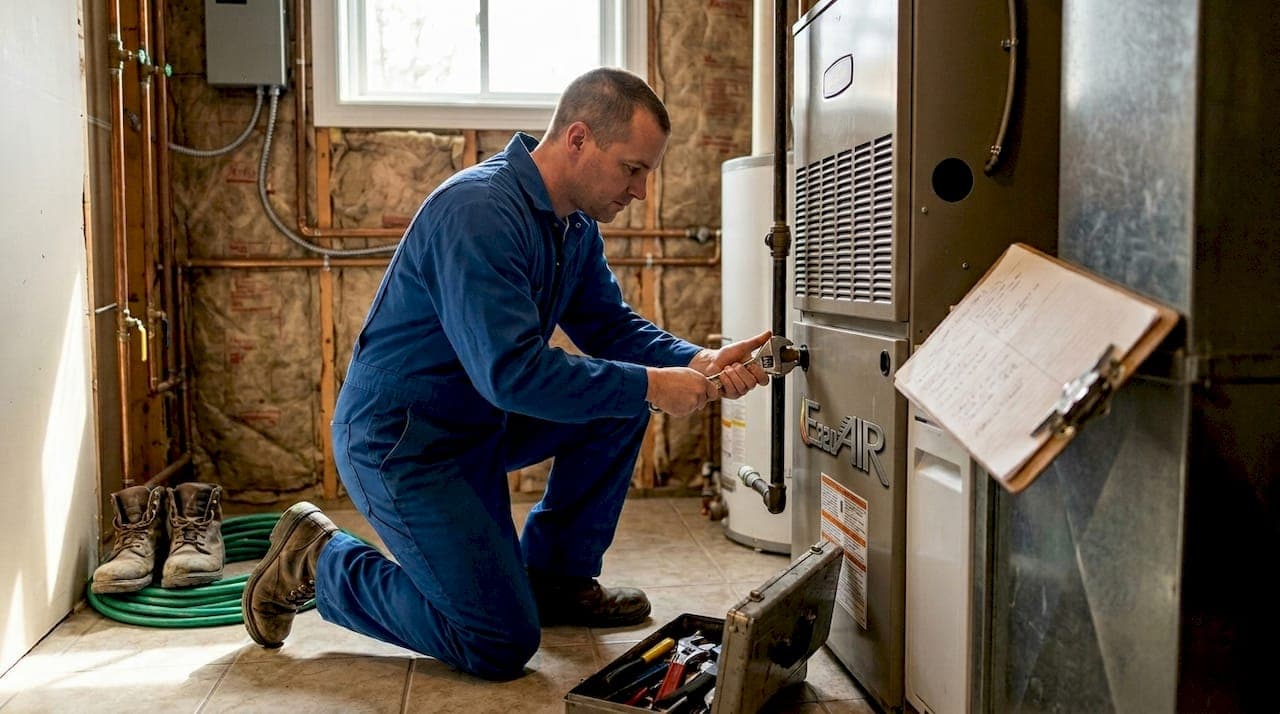
Most homeowners call an HVAC contractor only when something breaks. The AC stops blowing cold air on a 105-degree Riverside afternoon, and suddenly you need help fast. But that emergency-only mindset is costing you money and comfort. A professional HVAC contractor covers far more ground than repairs alone, handling everything from new system installations and seasonal tune-ups to air quality improvements and equipment upgrades. Understanding the full scope of what these professionals do helps you make smarter decisions, avoid expensive surprises, and get more years out of your home's heating and cooling systems.
Table of Contents
- The core responsibilities of an HVAC contractor
- HVAC system installation: What to expect
- Routine maintenance and repairs: More than just fixing breakdowns
- Choosing the right HVAC contractor: Qualifications and red flags
- The reality most homeowners miss about hiring HVAC contractors
- Get professional HVAC solutions for your home
- Frequently asked questions
Key Takeaways
| Point | Details |
|---|---|
| Full-service expertise | HVAC contractors handle installation, repairs, and ongoing maintenance to keep your home comfortable. |
| Professional installation matters | Correct sizing and quality installation prevent future problems and improve efficiency. |
| Routine maintenance pays off | Regular checkups by a contractor can extend equipment life and protect indoor air quality. |
| Choose certified pros | Hiring licensed contractors reduces risk and ensures work meets local codes and standards. |
The core responsibilities of an HVAC contractor
Now that we've set the stage for why understanding an HVAC contractor's role matters, let's look at what these professionals actually do on the job.
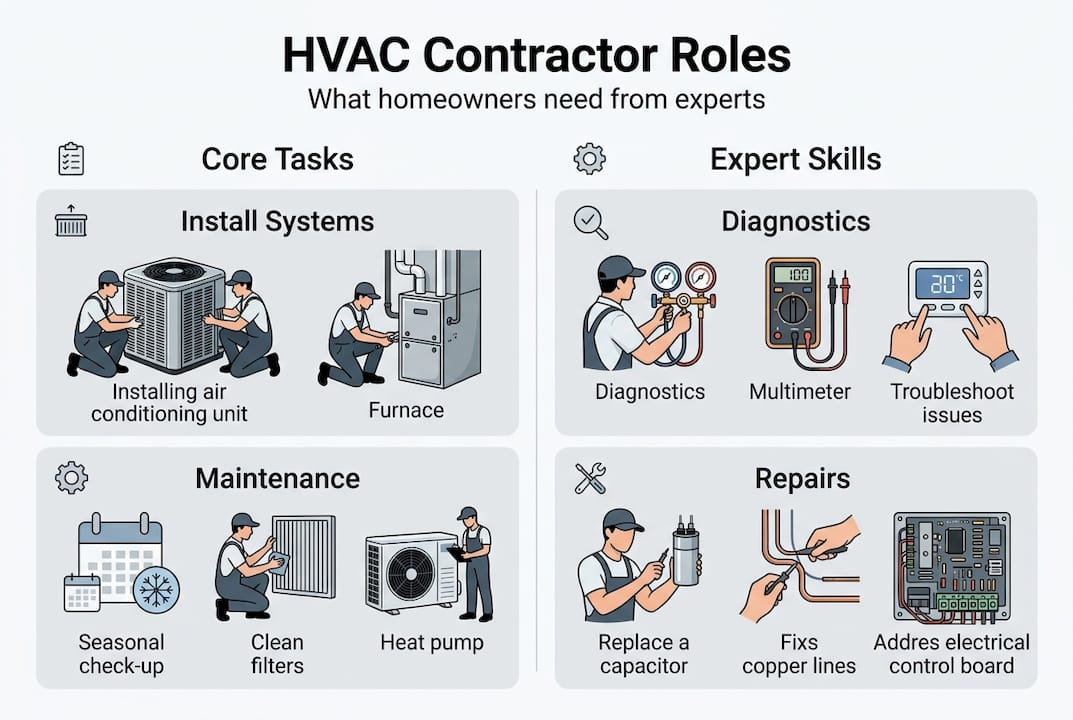
HVAC stands for heating, ventilation, and air conditioning. It covers every system in your home that moves air, controls temperature, and manages humidity. According to the U.S. Bureau of Labor Statistics, HVAC contractors handle installation, repair, and maintenance of heating, ventilation, and air conditioning systems. That's a broad mandate, and it means your contractor is part technician, part diagnostician, and part advisor.
Residential HVAC work focuses on single-family homes and smaller multi-unit buildings. Commercial work involves larger, more complex systems in offices or retail spaces. Most homeowners in Riverside and San Bernardino counties deal with residential contractors, though the underlying skills overlap significantly.
Studies show that nearly half of all mechanical system failures trace back to skipped or incomplete maintenance. That's not bad luck. That's a preventable problem.
Here's what a qualified HVAC contractor handles on a regular basis:
- System inspections and diagnostics to catch problems before they become failures
- New equipment installations for replacements or first-time setups, including HVAC installation planning and execution
- Refrigerant checks and recharges to keep cooling systems performing correctly
- Safety inspections for gas furnaces, heat pumps, and electrical connections
- Air quality assessments including duct inspections and filtration upgrades
- Thermostat calibration and smart thermostat setup
- Seasonal tune-ups before summer and winter demand peaks
Licensing matters more than most homeowners realize. California requires HVAC contractors to hold a C-20 license, which means they've passed exams on trade knowledge, safety codes, and business practices. Continued training keeps them current on newer refrigerants, energy efficiency standards, and local building codes.
Pro Tip: A contractor who works specifically in Riverside and San Bernardino counties understands the local climate demands, common equipment issues in desert heat, and county permit requirements. That local knowledge saves time and avoids costly code violations.
HVAC system installation: What to expect
Knowing the scope of these responsibilities, it's important to understand what happens during an HVAC installation.
Installing a new system isn't just swapping out old equipment. It's a multi-step process that requires planning, technical skill, and attention to detail. Here's how a professional installation typically unfolds:
- Pre-installation inspection: The contractor evaluates your home's square footage, insulation levels, duct condition, and existing equipment.
- System selection: Based on the inspection, they recommend the right size and type of equipment. Oversized units short-cycle and waste energy. Undersized units run constantly and wear out faster.
- Permits and compliance: A licensed contractor pulls the required permits before any work begins. This protects you legally and ensures the job meets local codes.
- Removal of old equipment: The old system is safely disconnected and removed, including proper refrigerant recovery.
- New system installation: Equipment is mounted, connected, and tested. Ductwork modifications are made if needed.
- Final walk-through: The contractor tests every function, explains the system to you, and provides documentation for warranty purposes.
As noted in research on HVAC sizing and savings, correct sizing, quality equipment, and professional installation all directly impact home comfort and long-term savings. Getting any one of those wrong undermines the other two.
| Factor | DIY installation | Licensed contractor |
|---|---|---|
| Equipment warranty | Often voided | Fully protected |
| Code compliance | High risk of failure | Guaranteed |
| Safety | Refrigerant and electrical hazards | Managed professionally |
| Long-term cost | Higher due to errors | Lower with proper setup |
| Permit handling | Typically skipped | Included in process |
Many homeowners assume DIY saves money. In reality, an improperly installed system can void your manufacturer warranty, fail inspection, and cause damage that costs far more to fix than the original install. If you're weighing your options, reviewing replacement options for California homes is a smart starting point.
Pro Tip: Always ask your contractor to show proof of permits pulled before installation begins. If they skip that step, it's a serious warning sign.
Routine maintenance and repairs: More than just fixing breakdowns
While installation is a big job, much of a contractor's role centers on keeping systems running day-to-day with expert maintenance and repair.
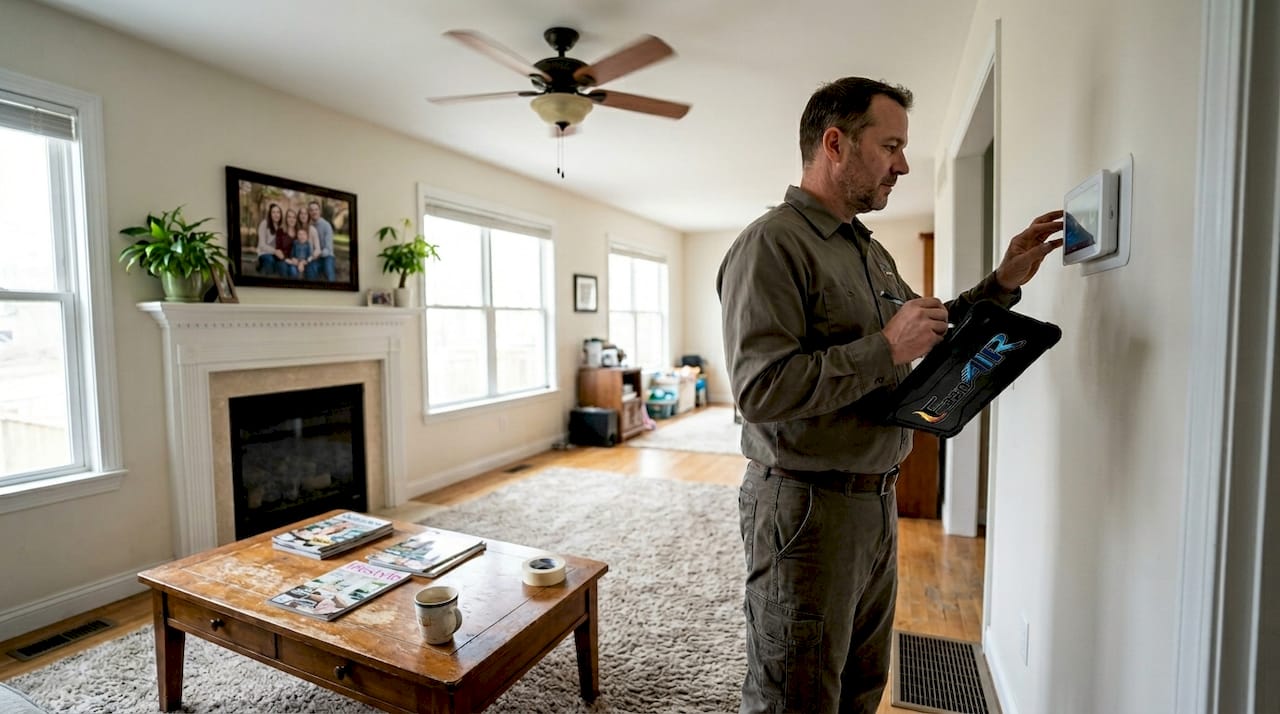
Maintenance isn't glamorous, but it's the single most effective thing you can do to protect your investment. Regular HVAC maintenance improves indoor air quality and extends equipment life. That matters a lot in the Inland Empire, where summer temperatures regularly push past 100 degrees and your AC runs hard for months at a stretch.
Common maintenance tasks include:
- Air filter replacement: Replacing air filters optimizes airflow and reduces system strain, which directly lowers your energy bill
- Duct inspection and cleaning to remove dust, debris, and potential mold growth
- Thermostat calibration to ensure accurate temperature readings
- Refrigerant level checks to confirm your system is charged correctly
- Electrical connection tightening to prevent safety hazards
- Condensate drain clearing to prevent water damage and humidity problems
Top signs your HVAC system needs maintenance right now:
- Uneven temperatures between rooms
- Unusual noises like rattling, banging, or squealing
- Higher-than-normal energy bills without a change in usage
- Weak airflow from vents
- Musty or burning smells when the system runs
- The system cycles on and off too frequently
Repairs go beyond the obvious. A skilled technician doesn't just replace the part that failed. They diagnose why it failed, which often reveals a deeper issue. A refrigerant leak, for example, isn't just a low-charge problem. It can indicate a corroded coil that will leak again in six months if not properly addressed. For furnace and heater repair, the same principle applies. A cracked heat exchanger can look minor but poses a real carbon monoxide risk.
Pro Tip: Ask your contractor for a written maintenance checklist after every service call. This gives you a record of what was done, what was found, and what to watch for next time.
Choosing the right HVAC contractor: Qualifications and red flags
With the technical aspects covered, the next step is picking the right contractor for your needs.
Not all contractors are equal. The U.S. Department of Energy confirms that certified HVAC contractors follow best practices, carry insurance, and stay current on codes. Here's how to vet one properly:
- Verify their California C-20 license through the Contractors State License Board website
- Confirm they carry liability insurance and workers' compensation
- Ask for local references from jobs in Riverside or San Bernardino counties
- Request a written estimate that itemizes parts, labor, and any permit fees
- Check online reviews on Google and the Better Business Bureau
| Criteria | Qualified contractor | Non-qualified contractor |
|---|---|---|
| Licensing | Valid C-20 license | No license or expired |
| Insurance | Full liability and workers' comp | None or minimal |
| Warranty | Manufacturer and labor warranty | No warranty offered |
| Reviews | Verified local reviews | Few or unverifiable |
| Local experience | Familiar with county codes | No local track record |
Red flags to watch for: a contractor who gives a quote over the phone without seeing your home, pushes you to decide same-day, asks for full payment upfront, or can't show a license number. These are common tactics that signal either inexperience or dishonesty.
Key questions to ask during your first call: How long have you worked in this area? Can you provide permit documentation? What does your warranty cover? Do you offer maintenance plans? Transparent answers to these questions separate professionals from shortcuts. Understanding proper system sizing and being familiar with choosing replacement systems will help you evaluate whether a contractor's recommendations actually make sense for your home.
The reality most homeowners miss about hiring HVAC contractors
Having seen how to choose a trustworthy contractor, here's what most guides won't tell you from an insider's view.
The biggest risk isn't a broken system. It's a bad repair done cheaply that hides a bigger problem. We've seen cases where a homeowner paid a low-cost technician to recharge refrigerant three summers in a row without anyone checking why the charge kept dropping. By the time they called us, the evaporator coil was corroded beyond repair and the system needed full replacement. That's thousands of dollars that routine diagnostics would have caught early.
The lowest bid almost never represents the best value. A qualified contractor invests in proper tools, ongoing training, and quality parts. Those costs show up in their pricing, and they're worth it. Our problem solving experience shows that what looks like a simple service call often reveals issues that an untrained eye misses entirely.
The contractors who charge a fair price and explain what they find are the ones saving you money over time. The ones who rush through a job to keep their rate low are the ones you'll be calling back in six months.
Get professional HVAC solutions for your home
If you're ready to take action, here's where Riverside and San Bernardino homeowners can get expert help for any HVAC need.
Local, certified HVAC help isn't just a convenience. It's how you protect your home, your family's comfort, and your investment in your equipment. E320 Air brings hands-on experience with full-service HVAC installation, repairs, and maintenance to homeowners throughout the Inland Empire.

Whether you need a new system, a seasonal tune-up, or fast repair solutions, our team is ready to help. As your Riverside and San Bernardino HVAC experts, we provide honest assessments, transparent pricing, and work backed by real warranties. Reach out today to schedule a consultation or get a written estimate for your home.
Frequently asked questions
What tasks do HVAC contractors perform that homeowners can't do themselves?
HVAC contractors handle specialized tasks like system sizing, refrigerant management, code compliance, and complex diagnostics that require training and licensing most homeowners simply don't have.
How often should I schedule HVAC maintenance?
Homeowners should schedule professional HVAC maintenance at least once a year for optimal performance, though twice yearly is ideal in climates with both heavy cooling and heating seasons.
Can HVAC contractors help lower my energy bills?
Yes. Proper installation and maintenance improve system efficiency, reduce energy waste, and can meaningfully lower your monthly utility costs over time.
What qualifications should I look for in an HVAC contractor?
Look for a valid California C-20 license, liability insurance, positive local reviews, and proven experience in your area, as certified contractors follow best practices and stand behind their work.