
TL;DR:
- Riverside's climate requires properly sized, seasonally maintained HVAC systems for year-round comfort.
- Spring and fall are ideal for HVAC inspections to prevent costly breakdowns in peak seasons.
- Using heat pumps for winter and implementing seasonal maintenance saves energy and extends equipment lifespan.
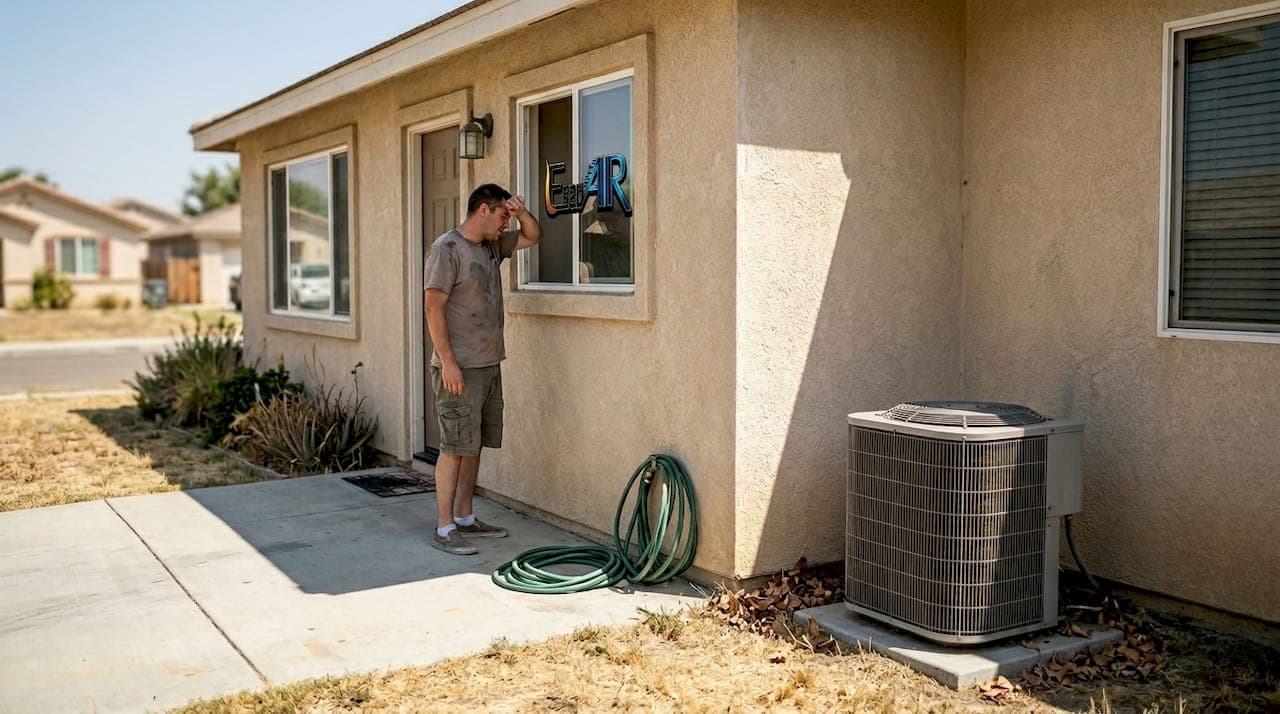
Riverside County throws two extremes at your HVAC system every year. Summers push past 94°F while winters stay mild and dry, and that combination creates a unique challenge most homeowners underestimate. Run your system too hard without seasonal prep and you face surprise breakdowns. Ignore the mild winters and you miss easy efficiency gains. This guide walks you through exactly what your HVAC system needs in every season, from spring tune-ups to winter heat pump strategies, so you stay comfortable year-round without overpaying on your energy bill.
Table of Contents
- How Riverside County's climate shapes your HVAC needs
- Spring and fall: The ideal times for HVAC inspection and tune-ups
- Summer: Keeping cool efficiently in Riverside's heat
- Winter and cool weather: Efficient comfort without overpaying
- Why 'seasonal' thinking is the secret to year-round comfort (and savings))
- Ready to upgrade or optimize your HVAC? E320 Air can help
- Frequently asked questions
Key Takeaways
| Point | Details |
|---|---|
| Seasonal maintenance matters | Twice-yearly HVAC inspections maximize system lifespan and efficiency in Riverside’s unique climate. |
| Summer demands prep | Proactive cooling system checks before Riverside’s heatwaves can prevent breakdowns and high bills. |
| Heat pumps excel in winter | For Riverside’s mild winters, modern heat pumps offer superior efficiency over gas furnaces and qualify for rebates. |
| Rebates lower upgrade costs | State and federal programs make upgrading to high-efficiency systems more affordable for local homeowners. |
| Plan for all seasons | Having a year-round HVAC schedule reduces emergencies and ensures comfort no matter the weather. |
How Riverside County's climate shapes your HVAC needs
Riverside County's climate is not like most of California. You are dealing with a hot semi-arid environment where summer highs average 94°F in July and August, with lows around 65°F. Winters are genuinely mild, with January highs near 68°F and lows around 44°F. Rainfall is minimal and mostly confined to winter months. That range means your HVAC system has to shift roles dramatically between seasons, and a system tuned only for summer will leave money on the table in cooler months.
Understanding local climate factors is the first step toward smarter HVAC decisions. Most homeowners make two recurring mistakes. First, they underestimate the cooling load during peak summer, running undersized or poorly maintained systems that struggle to keep up. Second, they skip winter prep entirely because the weather feels comfortable enough. Both habits quietly drain efficiency and shorten equipment life.
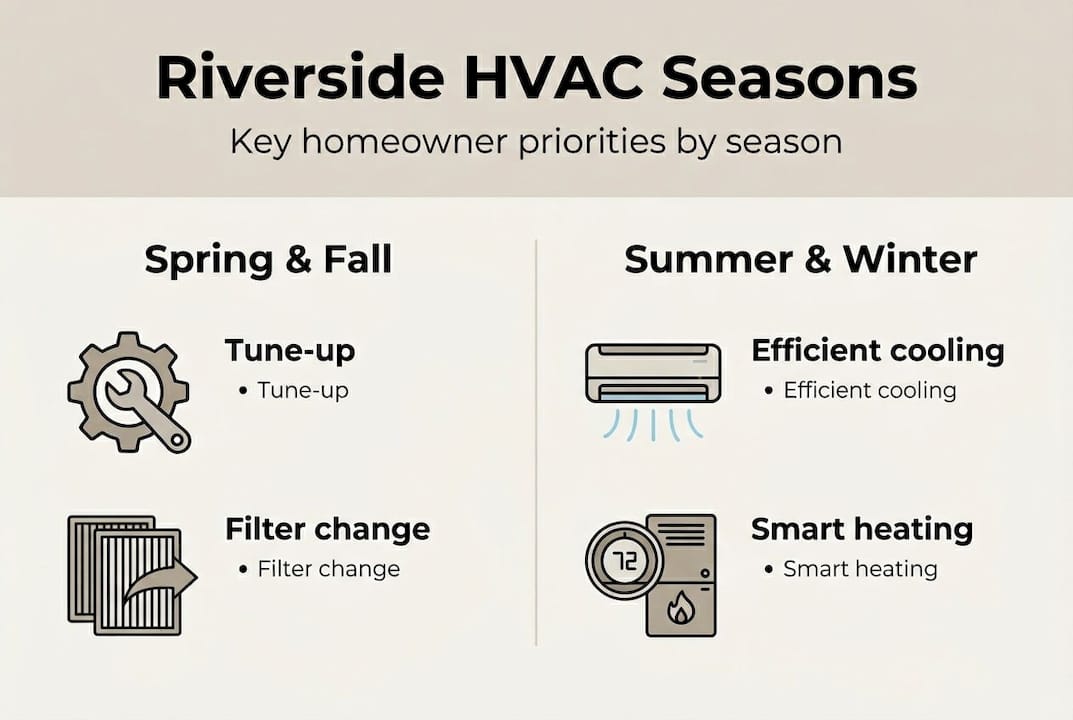
Here is a snapshot of what Riverside's climate actually demands from your system across the year:
| Season | Avg High | Avg Low | Primary HVAC demand |
|---|---|---|---|
| Summer (Jul/Aug) | 94°F | 65°F | Heavy cooling, dehumidification |
| Spring (Mar/Apr) | 78°F | 52°F | Transitional, ideal for maintenance |
| Fall (Oct/Nov) | 80°F | 55°F | Transitional, ideal for maintenance |
| Winter (Dec/Jan) | 68°F | 44°F | Light heating, efficiency focus |
System sizing matters more here than in most regions. A unit that is too small runs constantly and never reaches your set temperature on the hottest days. A unit that is too large short-cycles, meaning it turns on and off too quickly to properly remove humidity from the air. Proper HVAC sizing accounts for your home's square footage, insulation, window placement, and local climate data, not just a rough estimate.
A system sized for a generic California home is not sized for Riverside. The desert heat here demands precise load calculations, not guesswork.
Filtration and smart controls round out the picture. Riverside's dry, dusty air accelerates filter clogging, which restricts airflow and forces your system to work harder. Programmable or smart thermostats let you match your system's output to actual occupancy patterns, cutting waste without sacrificing comfort.
Spring and fall: The ideal times for HVAC inspection and tune-ups
Now that you understand Riverside's climate realities, let's pinpoint when and why HVAC maintenance makes the biggest difference. The answer is not July, when your AC is already struggling. It is April and October, when temperatures are mild and your system is not under peak load.
Scheduling tune-ups during these shoulder seasons gives technicians the chance to find and fix problems before they become emergencies. Professional inspections twice a year can improve efficiency by 10 to 30% and meaningfully extend your system's lifespan. That is not a minor benefit. On a system that costs several thousand dollars to replace, even a few extra years of reliable service adds real value.
Here is what a thorough biannual inspection should cover:
- Ductwork: Check for leaks, gaps, or disconnected sections that waste conditioned air
- Evaporator and condenser coils: Clean coils transfer heat efficiently; dirty ones waste energy
- Electrical connections: Loose or corroded connections cause failures and safety hazards
- Refrigerant levels: Low refrigerant signals a leak and reduces cooling capacity
- Thermostat calibration: An inaccurate thermostat means your system runs longer than needed
- Drain lines: Clogged condensate drains cause water damage and humidity problems
- Air filters: Inspect and replace to protect improving indoor air quality and system airflow
Not everything requires a pro. You can handle filter replacements, clearing debris around the outdoor unit, and checking vents for blockages on your own. But coil cleaning, refrigerant checks, and electrical inspections need a licensed technician. Mixing up those roles leads to either missed problems or accidental damage.
Understanding HVAC filter essentials is one of the simplest ways to protect your system between professional visits. In Riverside's dusty environment, filters can clog faster than the manufacturer's recommended schedule suggests. Check them monthly during high-use periods.
Pro Tip: Keep a simple log of what each seasonal inspection finds. Over two or three years, patterns emerge. If your coils are dirty every spring, that tells you something about your filtration or duct sealing that needs a longer-term fix.
Summer: Keeping cool efficiently in Riverside's heat
Spring and fall are for prevention, but summer is when your HVAC faces its biggest test. With summer highs averaging 94°F in Riverside, your air conditioner is not just a comfort tool. It is a health and safety system. Heatwaves can push cooling demand 20% above average, and a system that was not prepped in spring will feel every degree of that extra load.
Before temperatures climb, run through these critical summer prep steps:
- Confirm refrigerant charge is correct (a technician must do this)
- Clean or replace the air filter
- Clear at least two feet of space around the outdoor condenser unit
- Test the thermostat and verify it responds accurately
- Check all supply and return vents for blockages
- Inspect the condensate drain line for clogs
Once summer arrives, energy management becomes your main tool. Set your thermostat to 78°F when you are home and higher when you are away. Every degree lower than 78°F adds roughly 3% to your cooling costs. Use ceiling fans to create a wind-chill effect so you feel comfortable at a higher set point. Close blinds and curtains on south and west-facing windows during peak afternoon hours to reduce solar heat gain.
Running your AC at 72°F all day in a Riverside summer is not comfort. It is an expensive habit that wears out your system faster.
Know the warning signs that your AC is struggling. Warm air from vents, weak airflow, unusual noises, ice forming on the unit, and skyrocketing energy bills are all red flags. Do not wait for a full breakdown. Early AC troubleshooting often catches problems that cost far less to fix than a mid-summer emergency repair.
Smart thermostats add another layer of efficiency. They learn your schedule, adjust automatically, and let you control settings remotely. If a heat wave hits while you are at work, you can pre-cool your home before you arrive without running the system all day.
Winter and cool weather: Efficient comfort without overpaying
After a punishing summer, winter in Riverside brings its own opportunities for energy-smart comfort. The temperatures are mild by most standards, but your home still needs heating on cold mornings and evenings. The question is how to deliver that heat as efficiently as possible.
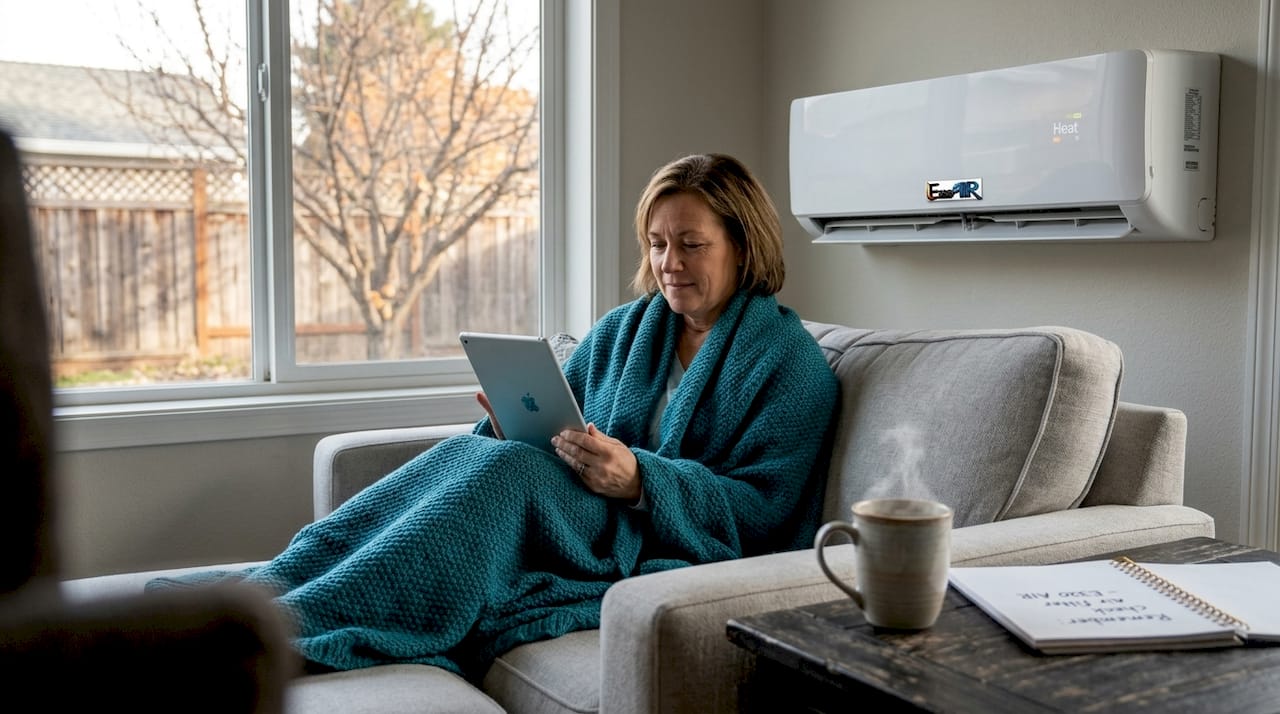
Heat pumps are the clear answer for Riverside winters. California's 2026 standards push heat pumps as the preferred option, and for good reason. In mild climates like Riverside's, heat pumps operate at 3 to 4 times the efficiency of gas furnaces. They move heat rather than generate it, which uses far less energy when outdoor temperatures stay above freezing.
| Feature | Heat pump | Gas furnace |
|---|---|---|
| Efficiency in mild climate | 300-400% | 80-98% |
| Cooling capability | Yes | No |
| Fuel source | Electricity | Natural gas |
| Rebate eligibility (2026) | Yes (SEER2 17+) | Limited |
| Best for Riverside winters | Yes | Less ideal |
To explore your HVAC replacement options before committing to a new system, compare total operating costs over five years, not just the purchase price.
Here is how to prep your system for cool weather:
- Switch your thermostat from cooling to heating mode and test it before the first cold front
- Check and replace filters if they were not changed at the fall tune-up
- Inspect heating elements or heat pump components for wear
- Seal any drafts around windows and doors to reduce the heating load
- Confirm that all vents are open and unobstructed
Rebates make upgrades more affordable. Systems rated SEER2 17 or higher qualify for incentives through TECH Clean California and the federal 25C tax credit. Ask about these during your consultation before scheduling a professional HVAC installation.
Pro Tip: Do not wait for the first cold night to switch to heat mode. Test your heating system at least two weeks before you expect to need it. Problems found in October are far easier to fix than problems discovered on a cold December morning.
Why 'seasonal' thinking is the secret to year-round comfort (and savings)
Here is a perspective most homeowners never hear: the biggest HVAC wins do not happen in July. They happen in April and October, when nobody is thinking about their system.
The industry often talks about summer as the critical season, and yes, peak cooling matters. But the homeowners who see the lowest energy bills and fewest breakdowns are the ones who treat HVAC maintenance as a year-round rhythm, not a crisis response. They schedule spring and fall tune-ups before problems develop. They size their systems correctly using real load calculations. They switch to heat mode before the first cold front, not after.
There is also a financial argument that rarely gets made clearly. Skipping a $150 seasonal tune-up to save money is a false economy when it leads to a $1,200 compressor repair or a full system replacement five years early. Proper HVAC system sizing and consistent maintenance are not premium upgrades. They are the baseline for getting full value from your equipment.
Think of your HVAC system the way you think about your car. You would not skip oil changes and then wonder why the engine failed. The same logic applies here, and in Riverside's demanding climate, the stakes are even higher.
Ready to upgrade or optimize your HVAC? E320 Air can help
If you want local experts to handle your HVAC planning and upgrades, here's how to get started. At E320 Air, we work with Riverside County homeowners every season, from spring tune-ups and summer emergency repairs to fall inspections and winter heat pump installations. We know this climate, and we know what your system needs to perform reliably all year.
Whether you are ready to schedule a maintenance visit, explore a new professional HVAC installation, or just want to understand your options, our team is here to help. Browse our real HVAC solutions to see the kind of work we do for homeowners just like you. Reach out today and let's build a comfort plan that works for every season.
Frequently asked questions
How often should I schedule HVAC maintenance in Riverside County?
You should schedule professional HVAC maintenance twice a year, once in spring and once in fall. Biannual inspections catch issues early and can improve efficiency by 10 to 30%.
Are heat pumps better than gas furnaces for Riverside winters?
Yes. In Riverside's mild winters, heat pumps run 3 to 4 times more efficiently than gas furnaces and qualify for state and federal rebates under 2026 California standards.
What is the biggest mistake Riverside homeowners make with their HVAC systems?
Skipping biannual maintenance is the most common and costly mistake. Missing seasonal tune-ups leads to reduced efficiency, higher energy bills, and unexpected breakdowns during peak seasons.
Are there rebates for high-efficiency HVAC upgrades in Riverside County?
Yes. Homeowners can access rebates for systems rated SEER2 17 or higher through the TECH Clean California program and the federal 25C tax credit.