
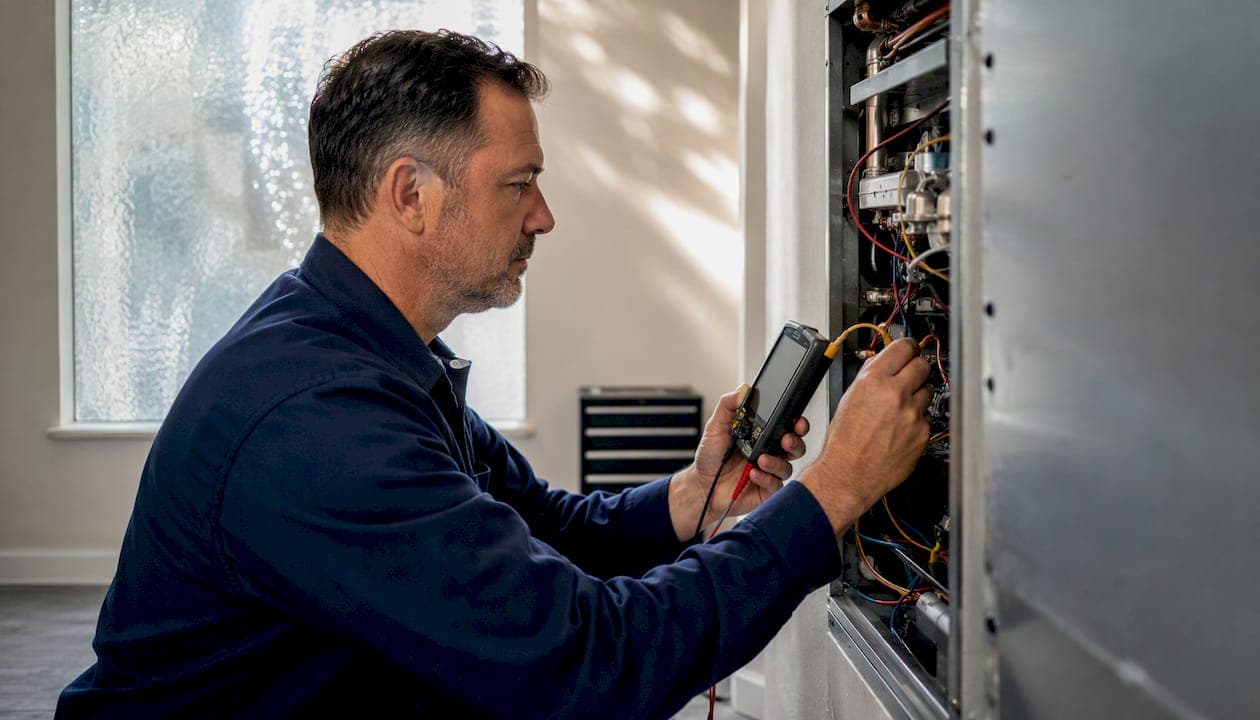
If your heater is doing anything beyond needing a filter swap, hire a licensed HVAC contractor. Gas connections, electrical components, and refrigerant lines carry real risks of carbon monoxide exposure, fire, and code violations that only a certified technician is trained and legally permitted to handle. Any repair involving refrigerant also requires EPA Section 608 certification by law.
Before you call, gather a few basics so the technician can help you faster:
- Your system's make, model, and approximate age
- What's happening (no heat, strange smell, odd noise, short cycling) and when it started
- Any maintenance records or past repair history you have on hand
- Whether you've noticed any safety signs, like a gas smell or soot near the vents
Key Takeaways
Hiring a licensed HVAC contractor for heater repair protects your home from gas, electrical, and carbon monoxide risks that no homeowner fix can safely address.
| Point | Details |
|---|---|
| Hire licensed, not DIY | Gas, electrical, and refrigerant work requires a certified technician under EPA Section 608 and state licensing. |
| Verify credentials first | Check license, insurance, and NATE certification before scheduling any repair work. |
| Demand a written estimate | Itemized labor, parts, taxes, and permit fees let you compare bids fairly, not just by price. |
| Know your emergency signs | Gas odor, CO symptoms, or sparking mean immediate evacuation and a call to emergency services, not a routine appointment. |
| Consider E320air for the full job | E320air handles diagnosis, repair, maintenance plans, and replacement under one documented service relationship. |
Table of Contents
- What Does a Licensed Heater Repair Do It Yourself Approach Actually Mean?
- Which Credentials Should You Verify Before Hiring?
- What Should You Ask, and What Belongs on the Estimate?
- How Much Does Heater Repair Cost, and How Long Does It Take?
- When Is a Heater Problem a Safety Emergency?
- Why Choose E320air for Heater Repair?
- Promotional Section
- Frequently Asked Questions
- Sources
What Does a Licensed Heater Repair Do It Yourself Approach Actually Mean?
Here's the thing about "heater repair do it yourself" as most homeowners understand it: the real DIY move isn't grabbing a wrench, it's taking ownership of the hiring process. That means researching your contractor, asking sharp questions, and reading the estimate line by line instead of just signing whatever gets handed to you. A five-phase process is what separates a professional visit from a guess-and-replace job. Knowing that sequence lets you spot a rushed technician before they touch your system.
- Scheduling and intake. A good dispatcher asks about your system's age, symptoms, and history before a truck ever leaves the shop.
- On-site diagnosis. Technicians use manifold gauges, a multimeter, and often a combustion analyzer to check airflow, voltage, and gas combustion rather than guessing at the failure point.
- Written estimate and authorization. You should see a price and a description of the fix before any billable work starts, per ENERGY STAR's contractor hiring guidance.
- Repair execution. This includes sourcing parts, often weighing OEM components against aftermarket alternatives for cost and warranty coverage.
- Verification and documentation. The technician retests the system and should leave you with a written record of what was done.
This sequence matches what industry guides describe as the standard structure of an HVAC service call, and it holds whether the fix is a $200 capacitor swap or a full heat exchanger replacement.
Pro Tip: Ask the technician to explain their diagnosis in plain language before they start swapping parts. A contractor who can't explain the "why" behind a repair is often the one who ends up replacing parts that didn't need replacing.
Which Credentials Should You Verify Before Hiring?
Paperwork isn't busywork here. It's the difference between a technician who's accountable to a licensing board and someone working out of a van with no recourse if things go wrong. Check these before any tools come out:
- State contractor license and liability insurance. Confirm both are active and ask about coverage limits, especially for larger commercial jobs.
- NATE certification. North American Technician Excellence certification is a recognized measure of technician competence, and Money's contractor guide flags it as one of the first things to ask about.
- EPA Section 608. Required for anyone touching refrigerant, whether that's a heat pump or a furnace paired with an AC coil.
- Permits. Ask who pulls them, since your municipality may require a permit for gas line or major electrical work, and the contractor should handle that paperwork, not you.
- References and recent project examples. A contractor confident in their work will hand these over without hesitation.
What Should You Ask, and What Belongs on the Estimate?
Price comparisons only work when you're comparing the same scope of work. That means asking the right questions upfront and demanding a written estimate that spells things out, not a verbal ballpark.
Ask each contractor:
- How will you confirm the diagnosis before starting the repair?
- What parts will you use, and are they OEM or aftermarket?
- What's the expected timeline, including parts availability?
- What warranty covers the labor and the parts separately?
- Who is the technician assigned to my job, and are they NATE certified?
A solid written estimate itemizes labor, parts (noting OEM versus aftermarket), taxes, permit fees, and any allowances, plus a realistic schedule. Money's reporting on hiring HVAC contractors recommends collecting multiple estimates and weighing warranty terms and efficiency gains, not just the bottom-line number.
A useful rule of thumb: if a single repair estimate approaches $5,000 on a furnace that's already 12 to 15 years old, that's usually the point to seriously discuss replacement instead of another patch job.
How Much Does Heater Repair Cost, and How Long Does It Take?
Costs and timelines swing widely depending on what's actually broken. A basic service call, separate from any repair, typically covers diagnosis. From there:
- Quick fixes like a failed capacitor or a stuck contactor often wrap up in under an hour once diagnosed.
- Moderate repairs, such as a bad ignitor or a failing inducer motor, usually take a few hours and may need a part pulled from a supply house.
- Major repairs, like a cracked heat exchanger or a failed compressor on a heat pump system, can stretch into multiple days while parts are ordered, and sometimes point toward replacement instead.
Several factors push a job toward the longer, pricier end: system age, how accessible the unit is, and refrigerant type. Older systems using R-22 face a phased-out refrigerant supply, which raises repair costs significantly compared to newer R-410A systems. When cumulative repair costs start rivaling the price of a new, more efficient unit, replacement becomes the more sensible math, not just the easier answer.
When Is a Heater Problem a Safety Emergency?
Some heater problems aren't repair jobs. They're emergencies, and treating them like an ordinary maintenance call can be dangerous.
Watch for these red flags:
- A gas odor, often described as a rotten-egg smell, near the furnace or vents
- Headaches, dizziness, or nausea affecting multiple people in the house at once, which can signal carbon monoxide
- A visibly cracked or corroded heat exchanger
- A burning electrical smell or visible sparking near the unit
If you smell gas or suspect carbon monoxide, get everyone out of the house, shut off the gas supply if you can safely reach the valve, and call your gas utility or 911 before calling anyone else. For issues like electrical burning or sparking, cut power at the breaker if it's safe to do so, then call an emergency HVAC line. Expect faster arrival windows for true emergencies, often paired with higher after-hours rates, which is a fair trade for a same-night response.
Pro Tip: Never try to relight a pilot light or reset a furnace after a suspected gas leak. Wait for a professional to clear the system, even if the smell seems to fade.
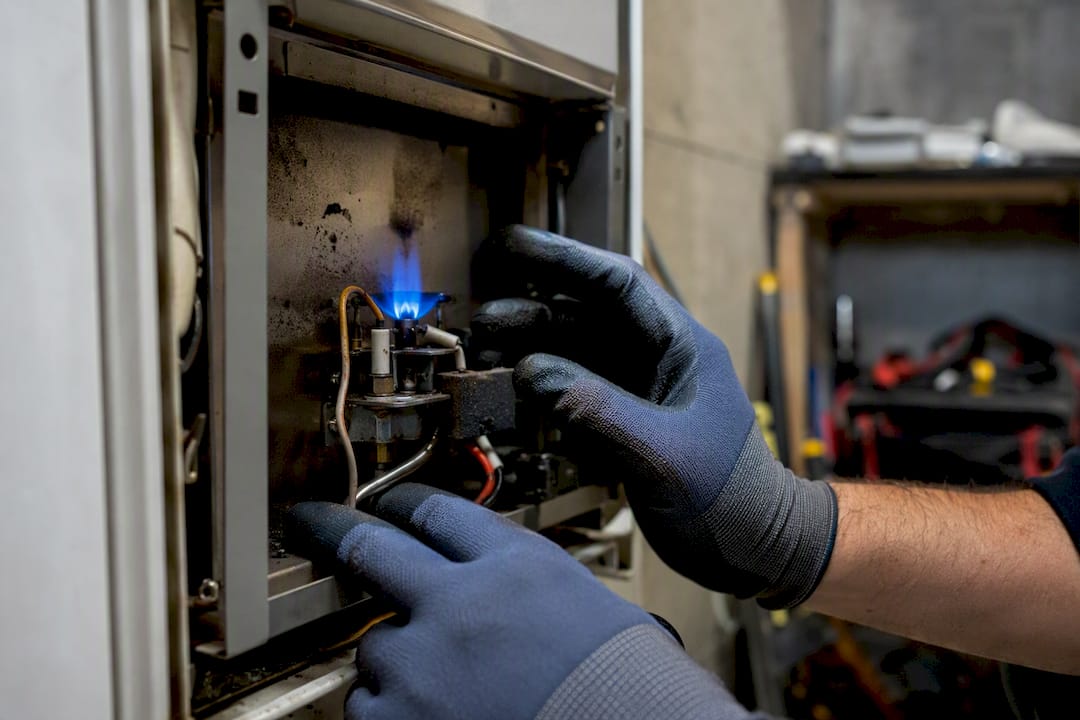
Why Choose E320air for Heater Repair?
E320air handles residential and commercial heating repair, routine maintenance, equipment sales, and full installations, which means the same team that diagnoses your furnace can also handle a replacement if that turns out to be the smarter move. Every visit is backed by documentation you can actually keep.
- Diagnosis, itemized parts list, and labor breakdown provided in writing
- Warranty terms explained before any authorization is signed
- Maintenance plan options to reduce the odds of a repeat emergency call
- Service records kept on file for future reference or resale disclosures
You can review examples of past repair work through E320air's problem-solving case studies or request a written estimate directly through the heater repair service page.
Field Note From Edward: What Techs Find That Homeowners Miss
. The tip I give homeowners most often: before you assume the furnace itself has failed, check your return-air grilles and filter. Restricted airflow gets misdiagnosed as a dead furnace more than almost anything else, and a sharp technician checks temperature split before touching major components. If your heater's acting up and you're not sure what you're looking at, reach out to E320air and we'll walk through it with you.
Promotional Section
E320air is the direct alternative to guessing your way through a furnace problem or gambling on an unlicensed handyman. You get a licensed, NATE-aware technician who diagnoses before replacing, a written estimate before any billable work starts, and documentation you keep afterward, whether the job is a same-day capacitor swap or a full system replacement.

E320air covers repair, maintenance, equipment sales, and installation, which matters if your furnace inspection turns into a replacement conversation. There's no need to vet a second company for that step. Homeowners weighing a costly repair against a new system can start with HVAC installation options, while property managers or business owners managing multiple units can look at commercial HVAC service for ongoing coverage. If you're ready to get a straight answer on what your heater needs, request a written estimate through E320air's main site and get a technician scheduled.
Frequently Asked Questions
Is "heater repair do it yourself" ever actually safe to attempt at home? Basic tasks like replacing a filter or clearing a vent are fine. Anything involving gas lines, electrical components, or refrigerant should go to a licensed contractor because of safety risk and code requirements.
How do I confirm a contractor's NATE certification? Ask the company directly and request the technician's certification number, or check with North American Technician Excellence for verification guidance.
What's a fair timeline for a standard heater repair? Simple fixes like a capacitor or contactor often finish quickly. Ignitor or inducer motor repairs usually take a few hours, while major component failures may take longer if parts need ordering.
Should I repair or replace an aging furnace? If a single repair estimate nears $5,000 on a unit over a decade old, replacement usually makes more financial sense than another patch, especially with efficiency gains factored in.
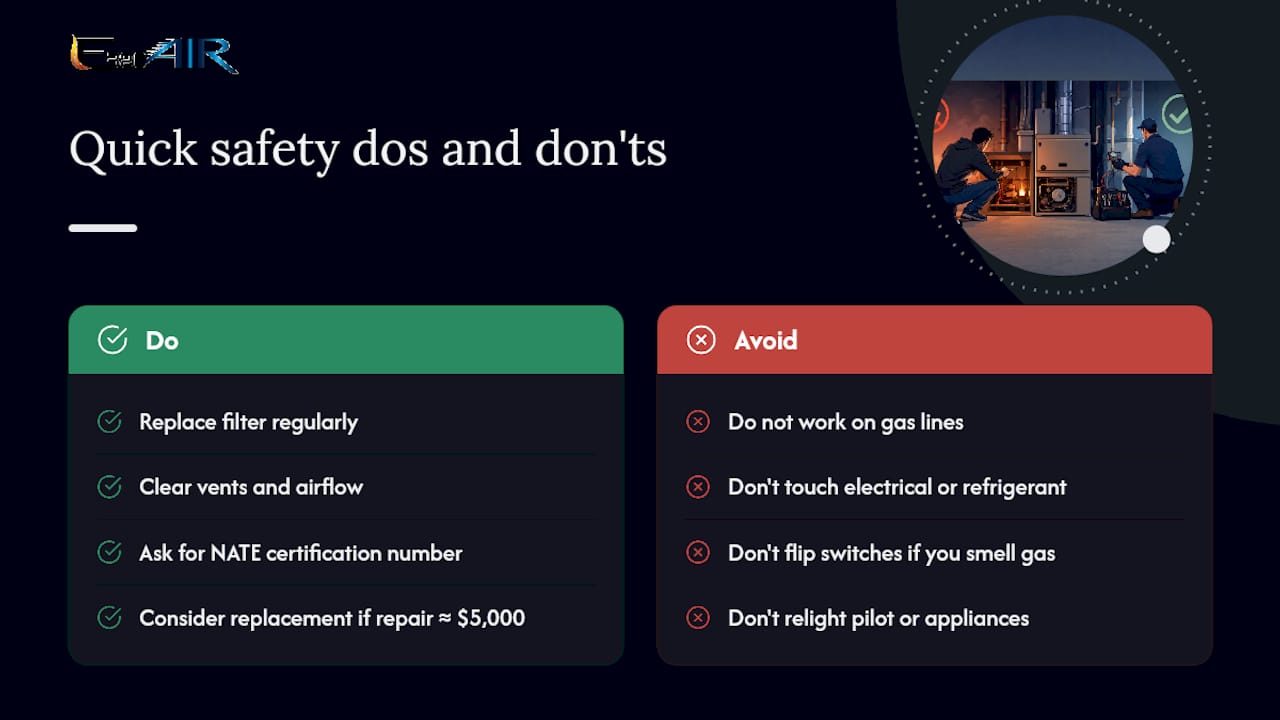
What should I do if I smell gas near my furnace? Leave the house immediately, avoid flipping switches, and call your gas utility or 911 before contacting a contractor. Do not attempt to relight anything yourself.
Sources
- 10 Tips for Hiring a Heating and Cooling Contractor — ENERGY STAR
- How to choose an HVAC contractor — Money (June 3, 2026)
- What to Expect During an HVAC Repair Service Call — HVAC Repair Authority