
TL;DR:
- Most HVAC breakdowns are preventable with routine maintenance and early repairs.
- Qualified technicians with proper certifications are essential for safe, effective HVAC service.
- Repairing or replacing depends on system age, repair costs, and efficiency; maintenance is key.
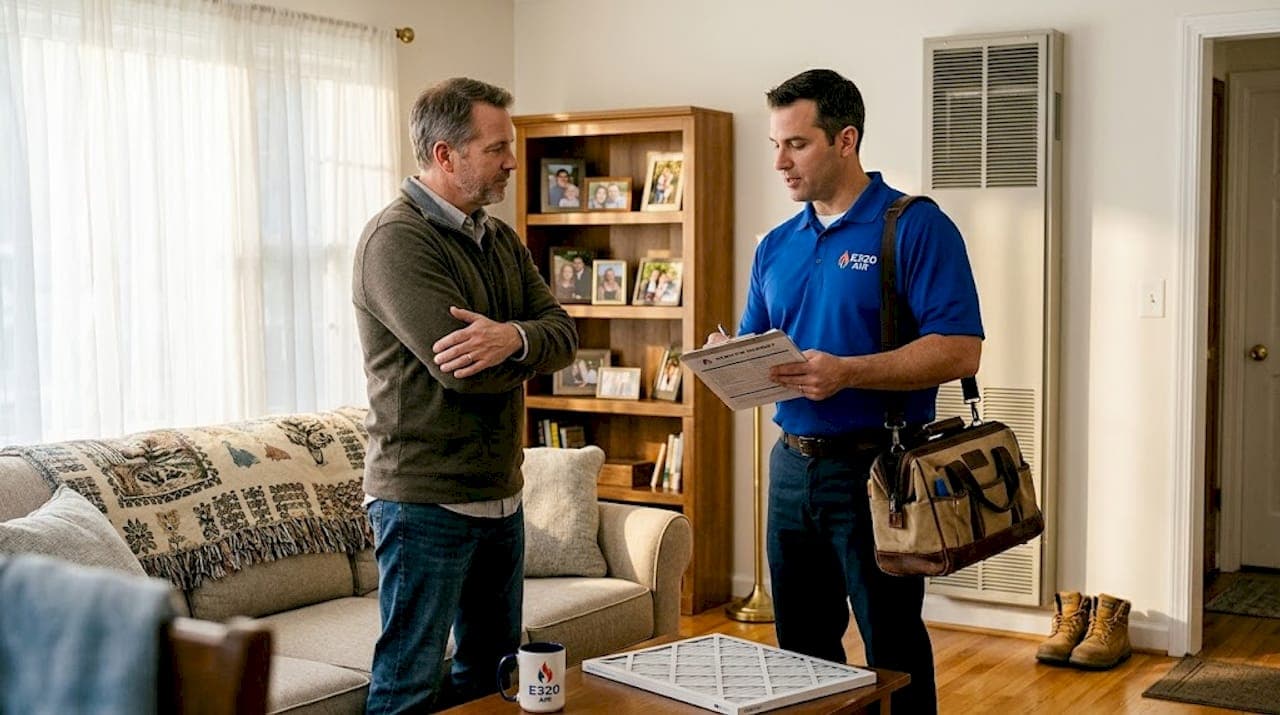
Four out of five HVAC breakdowns are entirely preventable. That single fact should change how every Southern California homeowner thinks about their heating and cooling system. Most people call for repairs only when the air stops blowing cold on a 100-degree August afternoon in the Inland Empire, but by that point, a small problem has already become an expensive emergency. This guide walks you through everything you need to know about HVAC repair services, from understanding what a service call actually covers, to choosing a qualified technician, to deciding whether repair or full replacement makes more financial sense for your home.
Table of Contents
- What does HVAC repair actually cover?
- Technician qualifications and industry standards
- Repair versus replacement: When to fix, when to upgrade
- Preventative maintenance: The foundation of reliable HVAC performance
- Benchmarks for choosing a reliable HVAC repair service
- Why our approach to HVAC repair prioritizes transparency and prevention
- Get expert HVAC repair and maintenance for your home
- Frequently asked questions
Key Takeaways
| Point | Details |
|---|---|
| HVAC repairs explained | Know what types of repairs to expect, from minor fixes to emergency service calls. |
| Technician standards matter | EPA and NATE certifications ensure quality, code-compliant HVAC repair in your home. |
| Repair vs replace framework | Evaluate system age, efficiency, and repair frequency to decide whether fixing or upgrading is best. |
| Prevent breakdowns | Annual maintenance prevents most HVAC issues and adds years to your system’s life. |
| Choose wisely | Use benchmarks for close rates and average costs to pick a reliable repair service. |
What does HVAC repair actually cover?
Let's start with the basics: what does it really mean to call for HVAC repair?
Most homeowners picture a technician swapping out a broken part and leaving. In reality, HVAC repair is a spectrum of services that ranges from a 30-minute diagnostic visit to a multi-day emergency repair involving refrigerant recovery, coil replacement, and system recommissioning. Understanding that spectrum helps you set realistic expectations and budget accordingly.
Common HVAC repair service types include:
- Diagnostics and inspection: The technician identifies the root cause of the problem using gauges, meters, and visual inspection. This is often billed separately and typically runs $75 to $150 in Southern California.
- Capacitor and contactor replacement: These small electrical components fail frequently in hot climates. Capacitor repairs run $150 to $500, making them one of the most affordable fixes.
- Fan motor replacement: Outdoor condenser fan motors and indoor blower motors wear out over time. Expect to pay $400 to $900 for parts and labor.
- Refrigerant recharge and leak repair: If your system is low on refrigerant, a technician must find and fix the leak before recharging. Costs range from $300 to $2,400 depending on severity.
- Compressor replacement: The compressor is the heart of your air conditioner. Replacing one costs $1,200 to $2,900, which often prompts the repair vs. replacement conversation.
- Evaporator coil replacement: A cracked or corroded coil is a serious repair, running $1,000 to $5,000 depending on system size and coil location.
| Repair type | Typical cost range | Urgency level |
|---|---|---|
| Capacitor replacement | $150 to $500 | Moderate |
| Fan motor replacement | $400 to $900 | High |
| Refrigerant recharge/leak | $300 to $2,400 | High |
| Compressor replacement | $1,200 to $2,900 | Critical |
| Evaporator coil replacement | $1,000 to $5,000 | Critical |
One repair category that catches Southern California homeowners off guard is R-22 refrigerant service. Older systems manufactured before 2010 often use R-22, a refrigerant that the EPA phased out due to its environmental impact. Because it is no longer produced domestically, R-22 now costs $90 to $150 per pound, compared to about $20 to $30 per pound for modern R-410A. If your older system develops a refrigerant leak, that repair bill can escalate fast.
Pro Tip: Before any technician starts work, ask for a written estimate that separates labor, parts, and refrigerant costs. This prevents surprise charges and gives you a clear picture of where your money is going.
For a deeper look at diagnosing cooling problems before the technician arrives, the air conditioner repair guide covers common symptoms and what they typically indicate.
Technician qualifications and industry standards
Beyond understanding the types of repairs, knowing who is qualified to handle your system is crucial.
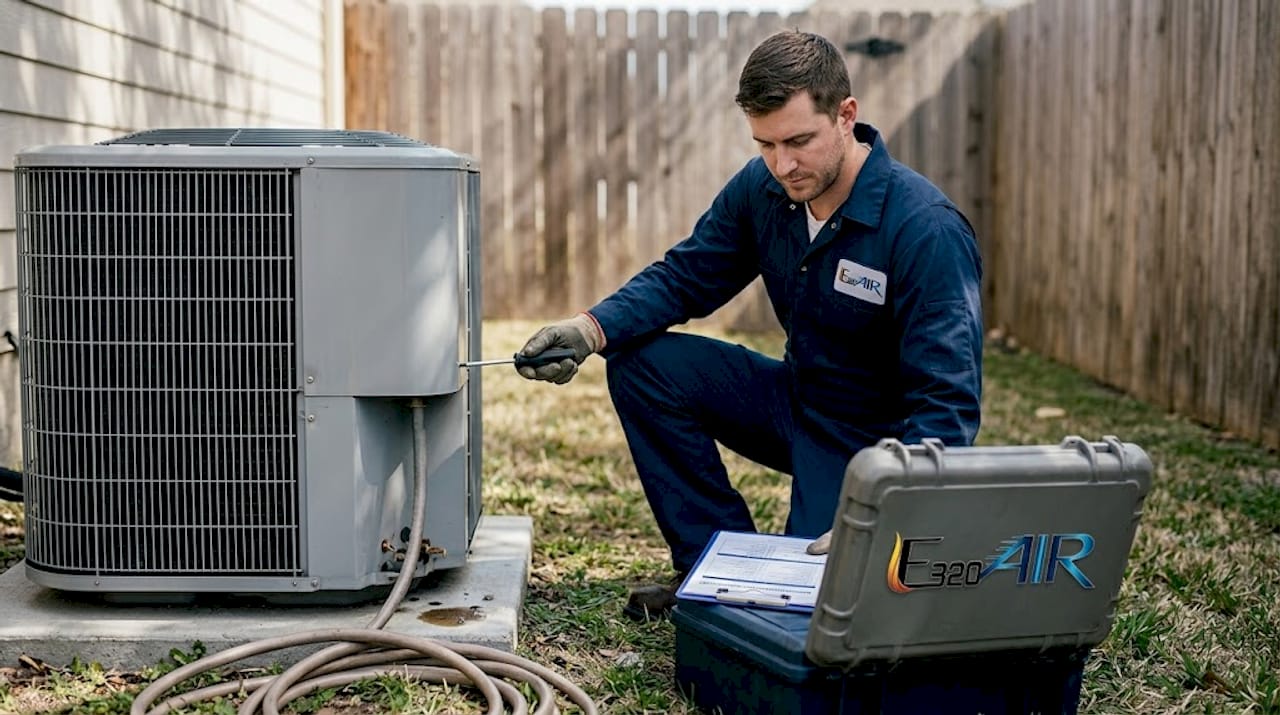
Not every person with a set of gauges and a service van is qualified to work on your home's HVAC equipment. In California, the bar for legitimate HVAC work is set by a combination of federal certifications, state licensing, and local code requirements. Skipping verification on these credentials can leave you with shoddy work, voided equipment warranties, and potential safety hazards.
What to look for in a qualified HVAC technician:
- EPA Section 608 certification: Federal law requires that any technician who handles refrigerants must hold this certification. It is not optional. A technician without it cannot legally recharge your system or recover old refrigerant.
- NATE certification (preferred): The North American Technician Excellence credential is the industry's gold standard for technical competency. NATE-certified technicians pass rigorous exams covering installation, service, and troubleshooting across multiple equipment types.
- California C-20 contractor license: In California, HVAC work must be performed by or under the supervision of a licensed C-20 Warm-Air Heating, Ventilating, and Air-Conditioning contractor.
- Local permit compliance: Many repairs and all installations require permits from your city or county building department. A reputable contractor pulls permits. One cutting corners skips them.
| Credential | Issued by | What it covers |
|---|---|---|
| EPA Section 608 | U.S. EPA | Refrigerant handling and recovery |
| NATE certification | NATE | Technical HVAC service and installation |
| C-20 contractor license | California CSLB | HVAC contracting in California |
| Local permits | City/county | Code-compliant installation and repair |
One standard that is reshaping the industry right now is the DOE's SEER2 efficiency requirement. As of January 2023, new air conditioning equipment sold in the Southwest must meet a minimum 15 SEER2 rating (Seasonal Energy Efficiency Ratio, version 2). This affects which replacement parts and systems a technician can legally install in your home. An unqualified technician may install non-compliant equipment, which creates problems when you sell your home or file an insurance claim.
Repair versus replacement: When to fix, when to upgrade
Once you know what repairs are needed and who should perform them, the next question is whether repair or replacement is the best investment.
This is where homeowners most often feel stuck. The repair quote sounds high, but a new system sounds even higher. The truth is that the math is usually clearer than it feels in the moment.
Factors that favor repair:
- Your system is less than 10 years old
- The repair cost is less than 30 to 40 percent of a new system's price
- The system has a strong efficiency rating (14 SEER or higher)
- You have had no major repairs in the past two years
- The failed component is a minor part like a capacitor or contactor
Factors that favor replacement:
- Your system is 15 years old or older
- You are facing a compressor or evaporator coil failure on an aging unit
- The system uses R-22 refrigerant, making future repairs increasingly expensive
- Your energy bills have been climbing despite no change in usage habits
- You have had two or more significant repairs in the past three years
The efficiency gap between old and new systems is striking. A pre-2006 system might carry a SEER rating of 10, while a modern unit runs at SEER17 or higher, cutting cooling costs by 30 to 40 percent annually. In Southern California, where air conditioners run six to eight months a year, that savings adds up quickly. Utility rebates from Southern California Edison and SoCalGas can also offset $300 to $1,500 of the replacement cost depending on the equipment you choose.
Statistic to know: Replacing a 10-SEER system with a 17-SEER unit can reduce your annual cooling costs by up to 40 percent. Over a 15-year equipment lifespan, that translates to thousands of dollars in savings.
Pro Tip: Use the "5,000 rule" as a quick gut check. Multiply the system's age by the repair cost. If the result exceeds $5,000, replacement is almost always the smarter financial move.
Exploring your HVAC replacement options in California is worth doing before you commit to a major repair. And if you are unsure what a contractor's role actually covers during a replacement project, the HVAC contractor guide breaks it down clearly.
Preventative maintenance: The foundation of reliable HVAC performance
To maximize the value of any repair or installation decision, routine maintenance cannot be ignored.
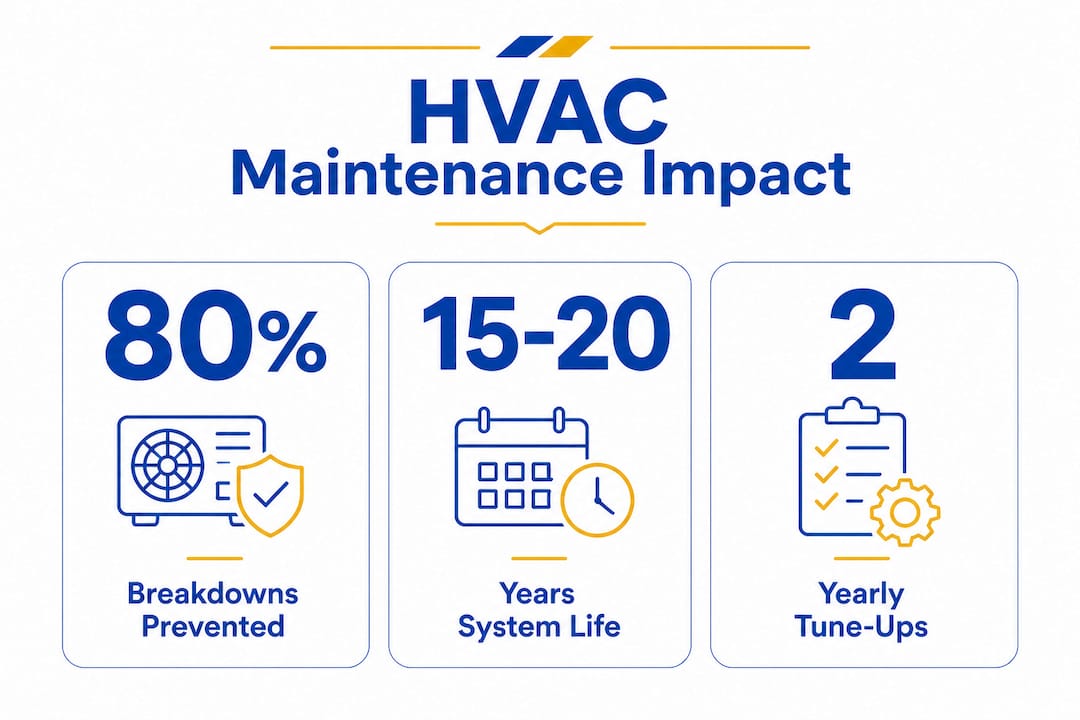
Annual maintenance prevents 80% of breakdowns and extends system life to 15 to 20 years. That is not a sales pitch. It is the most well-supported statistic in the HVAC industry. Yet most homeowners skip annual tune-ups until something breaks.
In Southern California, the climate creates specific maintenance pressures that homeowners in other regions do not face. Dust, pollen, and wildfire smoke clog filters faster. High summer temperatures push systems to their limits for months at a time. Coastal humidity near the beach accelerates corrosion on outdoor coils. All of these factors make regular maintenance more important here than in most of the country.
A practical maintenance checklist for SoCal homeowners:
- Replace or clean air filters every 1 to 3 months depending on air quality and pet ownership
- Clear debris (leaves, dirt, shrubs) from around the outdoor condenser unit
- Check and clean condensate drain lines to prevent water damage and mold
- Inspect and clean evaporator and condenser coils annually
- Test thermostat calibration and battery function each season
- Lubricate blower motor bearings if applicable to your system type
- Inspect electrical connections, capacitors, and contactors for wear
- Verify refrigerant levels and check for signs of leaks
- Test system airflow and static pressure across the duct system
- Schedule a professional tune-up before summer and before winter
"The best time to find out your air conditioner has a problem is in April, not July." This is something we tell every homeowner we work with, because a spring tune-up almost always costs less than an emergency call in peak summer heat.
Good maintenance also directly improves HVAC indoor air quality, which matters especially in homes with allergy sufferers or young children. Preparing your system for each season is equally important, and the seasonal HVAC preparation guide for Riverside County homeowners covers that in detail. For a focused look at one of the simplest and most impactful tasks, the filter maintenance tips article is a great starting point.
Pro Tip: Sign up for a maintenance agreement with a local HVAC contractor. Most agreements include two tune-ups per year, priority scheduling, and discounts on parts. The annual cost is usually $150 to $300, which is far less than a single emergency repair call.
Benchmarks for choosing a reliable HVAC repair service
Finally, knowing what to expect from repair companies helps you make the most informed decision.
Not all HVAC companies operate the same way, and the difference between a trustworthy provider and an unreliable one is not always obvious from a website or a phone call. Industry benchmarks give you a useful frame of reference.
| Benchmark | What good looks like |
|---|---|
| Emergency repair close rate | 85 to 95 percent |
| Non-emergency repair close rate | 60 to 80 percent |
| Average repair ticket | $280 to $450 |
| Breakdown prevention with maintenance | Up to 80 percent |
According to industry close rate data, reputable HVAC companies close emergency repair calls at an 85 to 95 percent rate, meaning they arrive with the parts and expertise to fix the problem in one visit. A company that consistently requires multiple return visits or cannot provide same-day emergency service is a red flag.
Questions to ask before hiring an HVAC repair company:
- Are your technicians EPA Section 608 certified and NATE certified?
- Do you pull permits for repairs and installations that require them?
- Can you provide a written, itemized estimate before starting work?
- Do you offer a warranty on parts and labor?
- How quickly can you respond to emergency calls?
- Do you have verifiable local reviews or a portfolio of completed work?
Red flags to watch for include technicians who pressure you into immediate decisions, quotes that seem unusually low (which often means corners are being cut), and companies that cannot provide proof of licensing or insurance. Reviewing repair service outcomes from a local provider gives you a concrete sense of what quality work looks like before you commit.
Why our approach to HVAC repair prioritizes transparency and prevention
Stepping back, here's our big-picture view based on years of work with Southern California homeowners.
The HVAC industry has a trust problem. Too many homeowners have been told they need a $3,000 compressor when a $200 capacitor would have solved the issue. Too many have been sold a new system when a repair and a maintenance plan would have kept the old one running for another decade. We have seen both scenarios play out, and they are avoidable.
Our philosophy is simple: an educated homeowner is our best customer. When you understand what your system actually needs, you make smarter decisions, you do not panic during emergencies, and you are not vulnerable to upselling. That is why we invest in guides like this one rather than just running ads.
The most expensive HVAC outcomes we see are almost never caused by bad luck. They are caused by deferred maintenance, ignored warning signs, and decisions made in a panic without enough information. A capacitor that costs $200 to replace will destroy a compressor worth $2,500 if the warning signs are ignored long enough. That is not a hypothetical. It happens every summer across the Inland Empire and the San Gabriel Valley.
Transparency also means being honest about when replacement makes more sense than repair. We would rather tell you that your 18-year-old system is not worth fixing and help you find the right replacement considerations than patch it together for another season just to collect a repair fee. Long-term relationships with homeowners are built on honest advice, not short-term revenue.
Get expert HVAC repair and maintenance for your home
If you're ready to take the next step for your home's comfort, here's how to connect with the right professionals.
Now that you understand what HVAC repair really covers, what qualifications matter, and how to decide between repair and replacement, the next move is finding a local provider you can actually trust. That means someone who shows up on time, explains what they found, gives you a written estimate, and backs their work with a real warranty.

At E320 Air, we serve Southern California homeowners with repairs, maintenance, and full system installations. Whether you need an emergency fix or want to get ahead of problems with a seasonal tune-up, our certified technicians are ready to help. Browse our HVAC installation services to see what a full system upgrade looks like, review our see HVAC repair results to see real work from real jobs, or go ahead and book trusted HVAC repair directly. Your home's comfort is worth getting right.
Frequently asked questions
What certifications should an HVAC technician have for repairs?
Technicians must hold EPA Section 608 certification for refrigerant handling; NATE certification is the preferred standard for overall technical expertise and service quality.
How much do common HVAC repairs cost in Southern California?
Capacitor repairs run $150 to $500, fan motors $400 to $900, refrigerant leaks or recharge $300 to $2,400, compressors $1,200 to $2,900, and evaporator coil replacement $1,000 to $5,000.
Does regular HVAC maintenance really prevent breakdowns?
Yes, annual maintenance prevents up to 80 percent of HVAC breakdowns and can extend your system's useful life to 15 to 20 years.
How do I know if I should repair or replace my HVAC system?
Repairs make sense for newer systems with minor issues; replacement is the smarter investment when your system is old, uses R-22 refrigerant, or has needed repeated major repairs in recent years.