
TL;DR:
- Consistent filter changes, professional bi-annual maintenance, and proper airflow management can significantly extend HVAC system lifespan. Keeping outdoor units clear, sealing ducts, and monitoring performance help prevent premature failures and costly repairs. Regular upkeep and informed replacement decisions ensure optimal system efficiency and longevity.
The most effective ways to extend HVAC lifespan combine disciplined preventative maintenance with smart daily operating habits that reduce wear before it compounds into failure. A well-maintained central split system lasts 12 to 20 years, but neglected units often fail well before the decade mark. The difference between a system that hits 20 years and one that dies at 10 almost always comes down to filter changes, coil cleaning, and airflow management. For homeowners and property managers alike, these habits translate directly into lower repair bills and fewer emergency replacements.
1. Replace air filters every 1 to 3 months
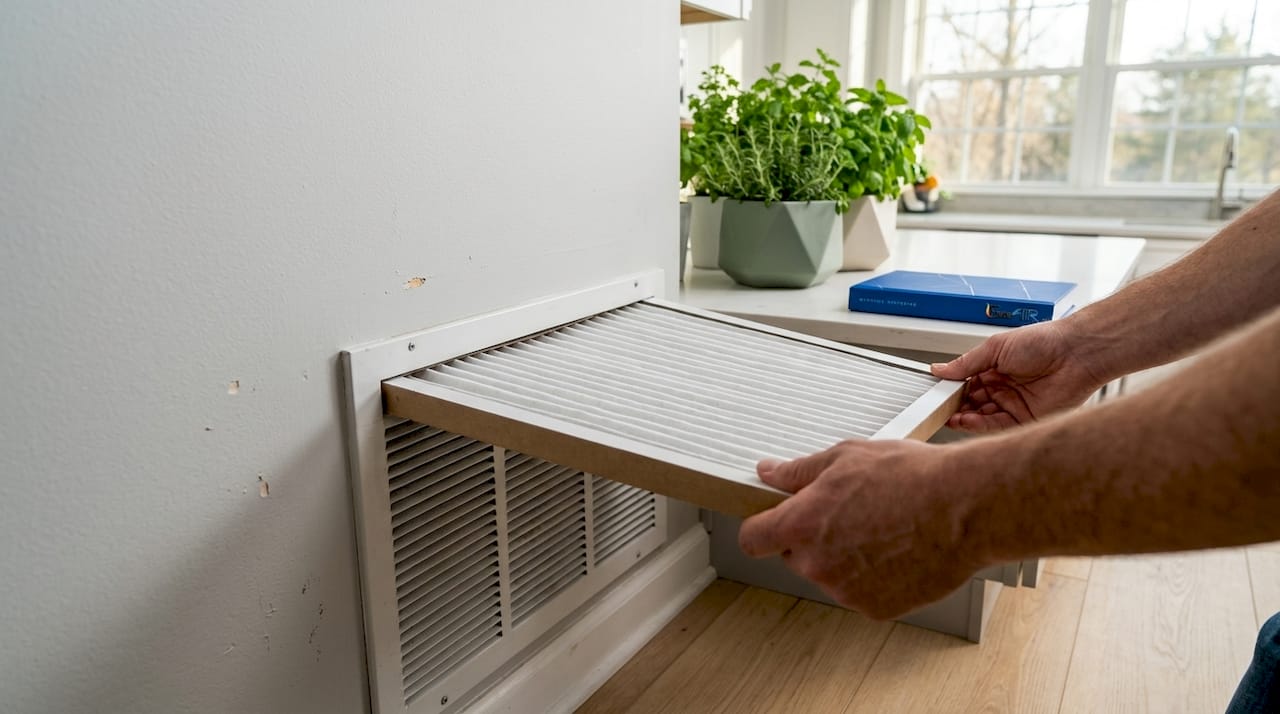
Air filter replacement is the single highest-return maintenance task you can perform on any HVAC system. A clogged filter forces the blower motor to work harder, restricts airflow across the evaporator coil, and accelerates wear on every moving component downstream. Energy.gov recommends checking filters monthly during peak cooling season and replacing them on a schedule tied to your specific household conditions.
The right replacement interval depends on several factors:
- Pets in the home: Pet dander clogs filters faster. Replace every 30 to 45 days.
- Allergy sufferers: Higher-MERV filters trap more particles but also restrict airflow more quickly. Check monthly.
- Low-traffic homes or vacation properties: Every 90 days is typically sufficient.
- Dusty climates or recent renovation work: Replace immediately after construction dust settles, then return to your normal schedule.
Filter type matters too. Fiberglass filters are cheap but offer minimal filtration. Pleated filters with a MERV rating between 8 and 13 balance air quality with airflow. Your HVAC contractor can recommend the right MERV rating for your specific equipment, since going too high can actually restrict airflow and stress the system.
Pro Tip: Set a recurring calendar reminder on the first of each month to check your filter. It takes 60 seconds and prevents the kind of slow-building damage that costs thousands to fix.
2. Schedule professional maintenance twice a year
Bi-annual professional servicing adds 3 to 7 years to HVAC lifespan and cuts energy consumption by 10 to 30%. That is not a marginal improvement. It is the difference between a system that runs efficiently into its second decade and one that starts failing in year 12. The two ideal service windows are spring (before cooling season) and fall (before heating season).
A thorough professional tune-up covers:
- Inspect and clean evaporator and condenser coils
- Check and adjust refrigerant charge
- Lubricate motors and moving parts
- Test electrical connections and capacitors
- Inspect and clean the condensate drain line
- Measure airflow across the coil
- Straighten bent condenser fins with a fin comb
Each of those tasks addresses a specific failure mode. Dirty coils reduce heat transfer efficiency. Low refrigerant causes the compressor to overwork. A clogged condensate drain causes water damage and mold. Catching any one of these issues during a tune-up costs far less than the repair it prevents. You can read more about seasonal tune-up benefits and what each visit should include.
Pro Tip: Book your spring tune-up in February or March, before HVAC contractors get slammed with summer demand. You get faster scheduling and more thorough attention.
3. Keep outdoor condenser units clear of debris
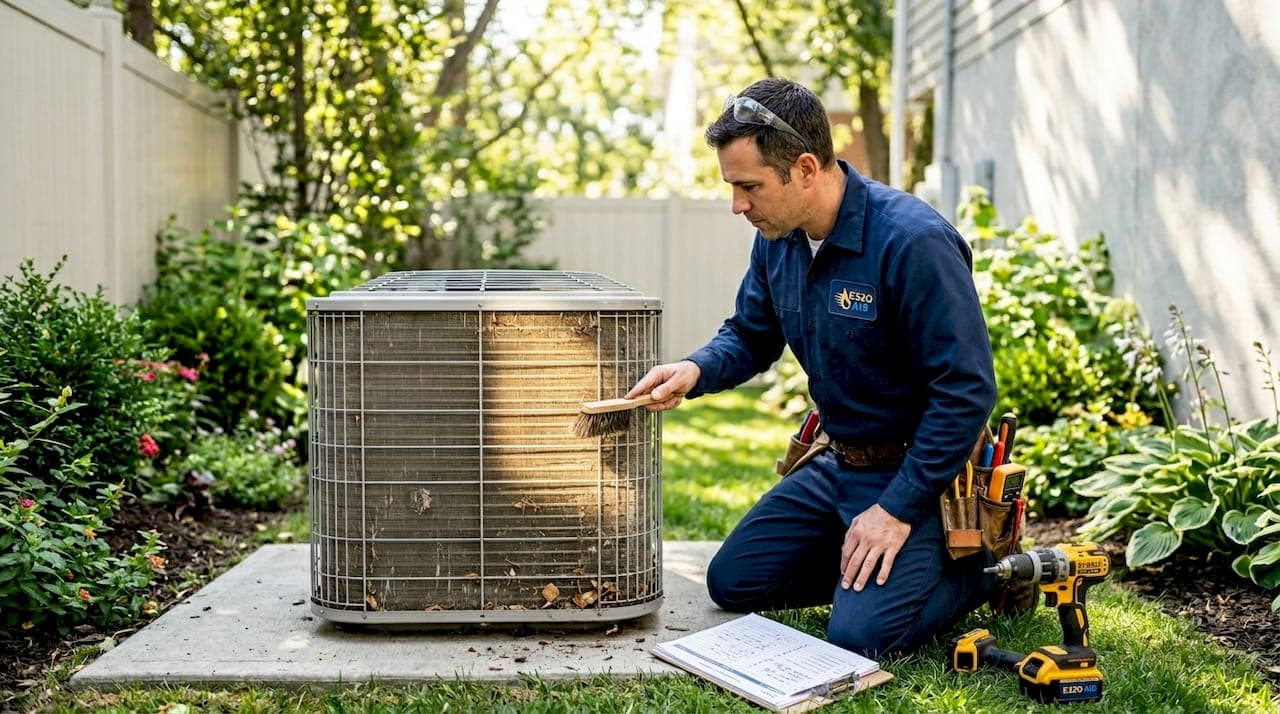
The outdoor condenser unit needs unrestricted airflow to reject heat from your home. When airflow is blocked, the compressor runs hotter and longer, which shortens its life faster than almost any other factor. Maintaining at least two feet of clearance around all sides of the unit is the standard recommendation from HVAC professionals.
Practical steps to protect your outdoor unit:
- Clear debris after storms: Leaves, grass clippings, and seed pods pack into the coil fins and block airflow within hours of a heavy wind event.
- Trim vegetation regularly: Shrubs and vines grow toward the unit over a season. Keep all plants at least two feet back.
- Check for snow and ice in winter: Ice accumulation on the unit can damage fins and restrict airflow. Clear it carefully without sharp tools.
- Avoid enclosing the unit: Decorative fencing or screens placed too close trap heat and defeat the purpose of the condenser entirely.
- Level the pad annually: Ground settling can tilt the unit, causing refrigerant and oil distribution problems inside the compressor.
One underappreciated mistake is planting fast-growing ornamental grasses directly beside the unit for aesthetic reasons. They look fine in spring and become a dense airflow barrier by August.
4. Seal ductwork and tighten your home's envelope
Leaky ducts force your HVAC system to run longer to reach the thermostat setpoint, adding unnecessary runtime hours to every component. Sealing duct leaks and gaps in the building envelope directly reduces system strain and extends equipment life. This is one of the most overlooked factors affecting HVAC lifespan, especially in older homes.
Common leakage points to address:
- Duct connections at registers and plenums: These joints loosen over time. Mastic sealant or metal-backed tape (not standard duct tape) holds them reliably.
- Attic and crawlspace duct runs: Ducts in unconditioned spaces lose significant heating and cooling energy before it reaches living areas.
- Door and window weatherstripping: Gaps here let conditioned air escape and force the system to compensate.
- Recessed lighting and electrical penetrations in ceilings: These are surprisingly large sources of air leakage in most homes.
Homeowners can handle basic weatherstripping and visible duct connections themselves. For attic or crawlspace ductwork, hiring a professional for a duct leakage test and sealing is worth the investment. A well-sealed home lets your HVAC system run shorter cycles, which reduces wear on the compressor, blower motor, and heat exchanger simultaneously. Learn more about how ductwork affects efficiency and what a professional inspection covers.
5. Use a programmable or smart thermostat
Smart thermostat use reduces system strain by preventing the large temperature swings that force your HVAC to run at maximum capacity for extended periods. When a home sits at 85°F because the system was off all day, the unit has to work extremely hard to pull the temperature down to 72°F quickly. That kind of thermal recovery cycle is hard on compressors and blower motors.
Devices like the Google Nest Thermostat, Ecobee SmartThermostat, and Honeywell Home T6 Pro all offer setback scheduling that keeps your home within a narrower temperature band throughout the day. A setback of 4 to 7 degrees while you are away is enough to save energy without creating a recovery spike that stresses the system. For property managers overseeing multiple units, smart thermostats with remote access also prevent tenants from running systems at extreme settings that accelerate wear.
The practical rule is simple: gradual, consistent temperature management is easier on your equipment than large swings and full-blast recovery cycles.
6. Clean evaporator coils annually
Even with regular filter changes, dust and mold bypass the filter over time and accumulate on the evaporator coil. Annual coil cleaning prevents the buildup that causes coil icing, reduced heat transfer, and premature failure. A frozen coil is one of the most common causes of summer service calls, and it is almost always preventable.
Coil cleaning is a job for a licensed technician. The evaporator coil sits inside the air handler, often in a tight space, and cleaning it requires proper coil cleaner, a condensate drain check, and fin inspection. Attempting to clean it yourself with a garden hose or household cleaner can damage the fins and void equipment warranties. Your twice-yearly professional tune-up should include coil inspection, but if your system runs in a dusty environment or you have had mold issues, a dedicated coil cleaning visit between tune-ups is worth scheduling.
7. Monitor and document system performance
Tracking filter changes, coil cleaning dates, and any airflow issues gives you a maintenance record that is genuinely useful when diagnosing problems or deciding between repair and replacement. Property managers with multiple units benefit especially from this practice, since it turns reactive guesswork into data-driven decisions.
A simple spreadsheet or a free app like Centriq or HomeZada works well for homeowners. Log the date, filter type, any unusual sounds or smells, and the technician's notes from each service visit. When a repair comes up, that history tells you whether you are dealing with an isolated issue or a pattern of declining performance. Industry experts recommend using recent performance and maintenance history over age alone to decide whether to repair or replace a system.
8. Inspect and clean condensate drain lines
The condensate drain line removes moisture that the evaporator coil pulls from your indoor air. When it clogs with algae or debris, water backs up into the drain pan, overflows, and can damage your air handler, ceiling, or flooring. Beyond the water damage risk, a backed-up drain creates the humid conditions that accelerate mold growth on the coil itself.
Flushing the drain line with a cup of diluted white vinegar every three months prevents algae buildup in most climates. In humid regions like Florida or the Gulf Coast, monthly flushing is more appropriate. Many modern air handlers include a float switch that shuts the system down when the drain pan fills, which prevents overflow but also means your cooling stops working on the hottest day of the year. Proactive drain maintenance avoids that scenario entirely.
9. Plan for system age and set replacement expectations
No maintenance program makes an HVAC system last forever. Central split systems average 12 to 20 years with proper care, and knowing where your system sits in that range helps you make smarter financial decisions. A 14-year-old system that needs a $1,800 compressor replacement is a different calculation than the same repair on a 6-year-old unit.
The general industry guideline is to weigh repair costs against 50% of the replacement cost of a new system. If a repair exceeds that threshold on an older unit, replacement is usually the better investment. Staying ahead of this decision, rather than reacting to a complete failure in July, gives you time to compare equipment options, get multiple quotes, and schedule installation on your timeline rather than an emergency basis.
Key takeaways
Extending HVAC system life requires consistent filter replacement, bi-annual professional servicing, and proactive attention to airflow, ductwork, and operating habits.
| Point | Details |
|---|---|
| Filter replacement frequency | Replace every 1 to 3 months based on pets, allergies, and home conditions. |
| Bi-annual professional service | Twice-yearly tune-ups add 3 to 7 years to system life and cut energy use by up to 30%. |
| Outdoor unit clearance | Keep at least two feet of clearance around the condenser to prevent compressor stress. |
| Duct sealing reduces wear | Sealing leaky ducts lowers runtime hours and extends the life of every major component. |
| Document maintenance history | Service records help distinguish cost-effective repairs from systems ready for replacement. |
What I've learned from years of HVAC service calls
The most common pattern I see at E320air is homeowners who do everything right for the first five years and then stop. Life gets busy, the system seems fine, and the filter goes unchanged for six months. That is exactly when the slow damage starts. Dirty coils, stressed motors, and restricted airflow do not announce themselves loudly. They just quietly shorten the system's life by years.
The second thing I notice is that people treat repair versus replacement as a binary, emotional decision made under pressure. A compressor fails in August, the house is 90°F, and suddenly they are making a $5,000 decision in 20 minutes. The homeowners who handle this well are the ones who kept records and had a realistic sense of their system's age and condition before the crisis hit.
My honest recommendation is to treat your HVAC the way you treat your car. You would not skip oil changes for three years and then wonder why the engine failed. The same logic applies here. Schedule the tune-ups, change the filters, and keep a simple log. The cost of that discipline is minimal. The cost of skipping it is a premature replacement that could have waited another five years.
— Edward
Keep your HVAC system running longer with E320air
E320air provides professional HVAC maintenance, repair, and installation services for homeowners and property managers across the region. Whether you need a bi-annual tune-up, a coil cleaning, or guidance on whether to repair or replace an aging system, the E320air team brings the hands-on expertise to make the right call. For property managers overseeing multiple units, E320air also offers commercial HVAC services built around the kind of scheduled, documented maintenance that protects your investment long-term. Schedule your next service visit or explore professional HVAC installation options at E320air today.
FAQ
What is the average HVAC equipment lifespan?
Central split systems last 12 to 20 years with consistent maintenance. Systems that miss regular filter changes and professional tune-ups typically fall toward the lower end of that range.
How often should I change my HVAC air filter?
Replace your filter every 1 to 3 months. Homes with pets, allergy sufferers, or dusty conditions should check filters monthly and replace them closer to the 30-day mark.
Does bi-annual maintenance really extend HVAC life?
Yes. Twice-yearly professional servicing adds 3 to 7 years to system lifespan and reduces energy consumption by 10 to 30%, making it one of the highest-return investments in home maintenance.
What factors affect HVAC lifespan the most?
Filter replacement frequency, coil cleanliness, outdoor unit airflow, and duct integrity are the primary factors affecting HVAC lifespan. Operating environment and thermostat habits also play a significant role.
When should I replace instead of repair my HVAC system?
If the repair cost exceeds 50% of the price of a new system and the unit is older than 12 years, replacement is usually the smarter financial decision. Use your maintenance history alongside age to make that call accurately.