
TL;DR:
- Proper AC sizing and regular maintenance are essential for long-term reliability and energy efficiency.
- Ignoring these factors leads to increased repair costs, premature system failure, and discomfort during scorching Moreno Valley summers.
Moreno Valley summers are no joke. When temperatures push past 100°F and your AC stumbles, you're not just uncomfortable. You're looking at potential repair bills and sleepless nights. Most homeowners assume air conditioning reliability comes down to buying a well-known brand. The truth is more interesting. AC systems account for about 12% of household electricity use and cost American homeowners $29 billion annually. What protects that investment isn't the logo on the unit. It's whether the system was sized correctly, installed properly, and maintained consistently.
Table of Contents
- Key takeaways
- Air conditioning reliability starts with correct sizing
- Maintenance practices that protect long-term performance
- Repair or replace: how to decide
- Common pitfalls that shorten AC lifespan
- My take on reliability after years of local HVAC work
- E320air keeps your Moreno Valley home reliably cool
- FAQ
Key takeaways
| Point | Details |
|---|---|
| Sizing determines reliability | An incorrectly sized AC causes short cycling, poor humidity control, and premature component failure. |
| Maintenance prevents breakdowns | Regular filter changes and coil cleaning stop the chain reaction that leads to compressor damage. |
| Repair vs. replace has a clear threshold | When repair costs exceed 50% of a new system's price, replacement is usually the smarter financial move. |
| Airflow is the silent killer | Restricted airflow from dirty filters and coils degrades performance faster than most mechanical failures. |
| Professional sizing documentation matters | Insisting on a Manual J calculation before installation protects long-term AC system durability. |
Air conditioning reliability starts with correct sizing
Most homeowners pick an AC unit based on price, brand, or what the previous owner installed. Very few ask for a Manual J load calculation. That's a mistake that costs years off your system's life.
Manual J is the industry-standard method for calculating exactly how much cooling capacity your home needs. It factors in your square footage, insulation quality, window orientation, local climate data, and even how many people live in the home. Manual J sizing reaches within ±5% accuracy, while the common rule-of-thumb approach carries up to ±30% error. That gap translates directly into reliability problems.
Here's what goes wrong when sizing is off:
- Oversized systems short-cycle. The unit cools the air too fast, shuts off before completing a full run, and restarts constantly. This rapid on-off cycling wears out the compressor, the most expensive component in any AC unit. It also fails to remove humidity properly, leaving your home feeling clammy even when the temperature reads 72°F.
- Undersized systems run non-stop. In Moreno Valley's extreme summer heat, an undersized unit never catches up. It runs at full capacity for hours on end, accelerating wear on every moving part.
- Both scenarios lead to repeat repairs. Oversizing causes poor dehumidification and persistent discomfort that homeowners often misread as a refrigerant problem or thermostat issue.
Moreno Valley's dry heat adds another layer. Low humidity makes oversizing less obvious than it would be in a coastal climate, so homeowners sometimes live with a short-cycling system for years without realizing it's destroying their equipment.
Pro Tip: Before any new AC installation, ask your contractor for a written Manual J report. If they quote a replacement unit without ever measuring your home or asking about insulation, that's a red flag. Proper HVAC system sizing is not optional. It is the foundation of everything else.
Maintenance practices that protect long-term performance
Sizing gets your system started on the right foot. Maintenance keeps it there. The good news is that the most impactful maintenance tasks are simple, and you can handle several of them yourself.
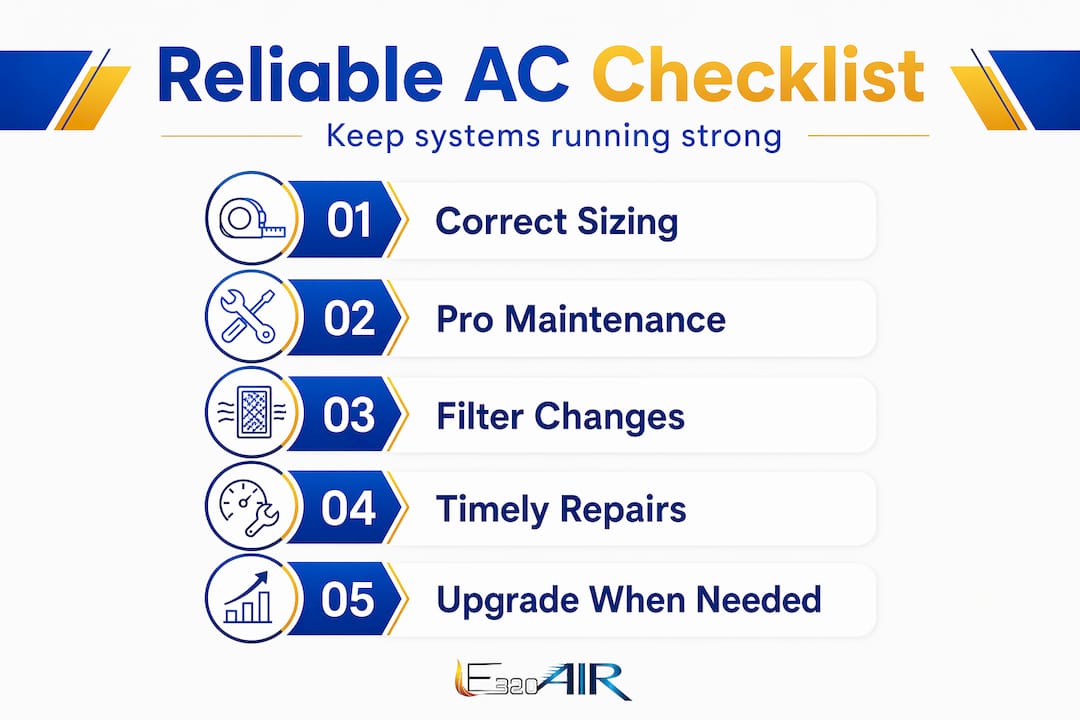
Here's a prioritized approach to how to maintain air conditioning for lasting performance:
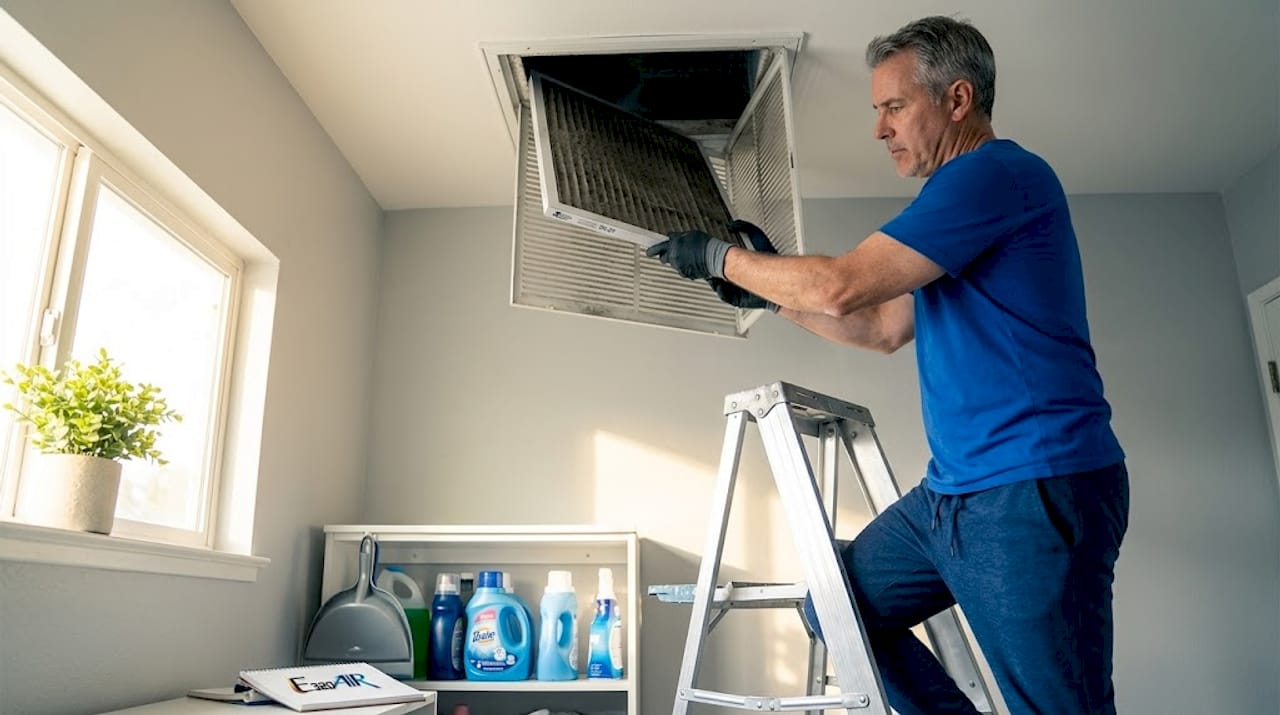
- Replace your air filter on schedule. A clogged filter restricts airflow across the evaporator coil. Filter restrictions trigger a chain reaction from fouled coils to compressor strain, which accelerates wear and spikes energy use. In dusty Moreno Valley conditions, check filters monthly and replace them when you see visible loading. A good benchmark: replace when the pressure drop across the filter exceeds 0.5 inches water gauge above its clean baseline.
- Clean the evaporator and condenser coils annually. Dirty coils force your system to work harder to transfer heat, which means the compressor runs longer and hotter. Over a single season, coil fouling can add meaningful hours of extra compressor runtime.
- Flush the condensate drain line. A clogged drain causes water to back up inside the air handler, which can lead to water damage, mold growth, and system shutdowns. Pour a cup of diluted bleach through the drain line every few months during cooling season.
- Schedule a professional refrigerant check every one to two years. Refrigerant doesn't deplete on its own. If levels are low, there's a leak. A licensed technician can find it, repair it, and recharge the system before the low refrigerant causes compressor damage.
- Watch for these warning signs between service calls: ice forming on the refrigerant line or evaporator coil, noticeably weaker airflow from vents, a system that runs continuously without reaching your set temperature, or unusual sounds like grinding or hissing.
Pro Tip: Sign up for a preventive HVAC maintenance schedule with a local contractor. A professional set of eyes twice a year catches the things homeowners miss, particularly refrigerant pressure readings and electrical connection tightness.
ENERGY STAR certified systems lose their efficiency gains quickly without consistent maintenance. A well-maintained standard unit will often outlast a neglected premium one by years.
Repair or replace: how to decide
Every AC system has a lifespan. For most residential units, that's roughly 12 to 15 years with proper care. As systems age, the reliability math changes and so does the repair-versus-replace calculation.
The clearest rule of thumb: when repair costs exceed 50% of a new system's price, replacement is almost always the better investment. A new compressor for an older unit might cost $1,200 to $1,800. If that same unit would cost $3,500 to replace, you're paying more than half the replacement cost to extend a system that may have other aging components waiting to fail.
Here's a side-by-side look at the key decision factors:
| Factor | Repair makes sense | Replace makes sense |
|---|---|---|
| System age | Under 10 years old | 12 years or older |
| Repair cost | Under 30% of replacement cost | Over 50% of replacement cost |
| Repair frequency | First or second repair in two years | Multiple repairs per season |
| Refrigerant type | Uses R-410A or newer | Uses R-22 (phased out, expensive) |
| Energy bills | Stable or improving | Rising despite maintenance |
Additional factors that tip the scale toward replacement:
- Systems using R-22 refrigerant face escalating recharge costs since that refrigerant has been phased out in the U.S. A leak in an R-22 system is often a signal to replace rather than repair.
- Frequent electrical failures or capacitor replacements suggest aging components throughout the system. You're patching individual parts when the whole system is degrading.
- If your current unit was never sized correctly to begin with, replacement gives you the opportunity to correct that mistake and install a properly matched system.
Balancing upfront replacement cost against long-term savings in energy bills and avoided repairs is where a trusted contractor's honest guidance becomes valuable.
Common pitfalls that shorten AC lifespan
Knowing what kills air conditioning reliability is just as useful as knowing what protects it. These are the most common mistakes Moreno Valley homeowners make that lead to early system failure.
- Ignoring dirty filters and coils. Airflow restrictions in hot climates like Moreno Valley are among the biggest silent reliability killers. The damage is gradual, which is exactly why it gets overlooked until a major component fails.
- Accepting rule-of-thumb sizing. A contractor who sizes your system without a Manual J calculation is guessing. Skipping the load calculation creates short-cycling, humidity problems, and faster component wear from day one.
- Delaying refrigerant leak repairs. Homeowners sometimes top off refrigerant repeatedly instead of fixing the actual leak. Running a system on low refrigerant forces the compressor to work under stress, shortening its life significantly.
- Overlooking electrical connections. Loose terminals and corroded contacts create resistance, heat, and intermittent failures. This is something only a technician will catch during an inspection, but it causes premature motor and capacitor failures more often than most homeowners realize.
- Skipping professional installation documentation. When a new system is installed without a Manual J report or commissioning checklist, there's no baseline to troubleshoot against later. Problems that show up in year two or three become much harder to diagnose.
If you want a deeper look at what typically triggers breakdowns, the causes of AC breakdowns guide covers the most common failure patterns in residential systems.
My take on reliability after years of local HVAC work
I've worked on hundreds of AC systems across Moreno Valley and the surrounding areas, and the pattern I see most often isn't dramatic. It's a system that was a bit too large, had its filters changed occasionally instead of consistently, and had a slow refrigerant leak that went unchecked for a season or two. None of those things seem catastrophic on their own. Together, they cut years off a system's life.
What surprises most homeowners is that the silent problems, restricted airflow and dirty coil surfaces, cause more cumulative damage than a sudden mechanical failure. A blown capacitor gets noticed and replaced. A coil that's been running slightly fouled for three years just quietly adds hundreds of extra hours of compressor runtime.
My honest advice: stop thinking about reliability as something that happens to your AC and start treating it as something you actively maintain. The homeowners who get 18 or 20 years out of their systems aren't lucky. They're consistent. They change filters before they're completely clogged. They call for a check when something sounds slightly off rather than waiting for the unit to stop working in July.
Investing in a proper load calculation for AC before you buy a new system, and then following through with twice-yearly maintenance, isn't complicated. It's just the discipline most people skip because the system seems fine right now.
— Edward
E320air keeps your Moreno Valley home reliably cool
When it comes to protecting your comfort and your investment, the details matter. At E320air, every installation starts with a proper Manual J load calculation to match the right equipment to your home's actual needs, not a contractor's best guess. The team handles preventive maintenance programs designed to catch airflow issues, coil fouling, and refrigerant problems before they become emergency calls in the middle of a heat wave.
Whether you're evaluating a repair on an aging unit or planning a full HVAC installation in Moreno Valley, E320air provides honest, experience-backed guidance on what makes the most sense for your home and budget. You can also explore the problem-solving gallery to see how the team has tackled real HVAC reliability challenges in homes just like yours.
FAQ
What most affects air conditioning reliability?
Correct sizing and consistent maintenance have the biggest impact on reliability. A properly sized, well-maintained system will consistently outlast one that was oversized or neglected, regardless of brand.
How often should I replace my AC air filter?
Check your filter monthly and replace it when it shows visible loading. In dusty climates like Moreno Valley, that often means every 30 to 45 days during peak cooling season.
When does it make sense to replace instead of repair?
When repair costs exceed 50% of a new system's price, or if your unit is 12 or more years old with a history of frequent breakdowns, replacement typically offers better long-term value.
What is a Manual J calculation and why does it matter?
Manual J is the industry-standard method for calculating the precise cooling load a home requires. It achieves within ±5% accuracy, compared to ±30% for rule-of-thumb sizing, making it the only reliable basis for selecting the right-sized equipment.
What are signs my AC is losing reliability?
Watch for ice on the refrigerant line, weak airflow from vents, a system that runs continuously without reaching the set temperature, rising energy bills without explanation, and any unusual sounds. These all indicate problems worth addressing before a full breakdown occurs.