
TL;DR:
- Choosing the right system depends on ductwork condition, home size, and seasonal needs.
- Mini-splits are ideal for retrofits, zones, and homes with poor or no ducts.
- Proper sizing and installation are more crucial than brand for system efficiency and longevity.
Summers in the Inland Empire are not gentle. Temperatures in cities like Riverside, San Bernardino, and Fontana regularly climb past 100°F for weeks at a stretch, and your energy bill tends to follow right along. With so many air conditioning unit types on the market, from central air systems to ductless mini-splits to heat pumps, picking the right one can feel like a second job. The good news is that understanding a few key differences makes the decision far simpler, and choosing correctly from the start means real comfort and real savings for years to come.
Table of Contents
- What to consider when choosing an air conditioning unit
- Central air conditioners: Proven cooling for whole-home comfort
- Ductless mini-split systems: Flexible comfort for any room
- Heat pumps: Heating and cooling for year-round efficiency
- Comparing your options: Which AC unit is right for you?
- Our take: Why selection and sizing matter more than the unit brand
- Ready to upgrade? Expert help for Inland Empire homes
- Frequently asked questions
Key Takeaways
| Point | Details |
|---|---|
| Central air best for new homes | Central AC systems work well in new builds with sealed ducts where whole-home cooling is needed. |
| Ductless excels in retrofits | Mini-split systems are highly efficient for add-ons or homes without existing ductwork. |
| Heat pumps offer all-season savings | Heat pumps both heat and cool, providing year-round comfort in California’s climate. |
| Efficiency standards matter | Choosing a unit that meets or exceeds SEER2 15.2 saves energy and money long term. |
| Proper sizing is crucial | Getting the right system size ensures comfort, efficiency, and system lifespan. |
What to consider when choosing an air conditioning unit
Before you compare brands or browse price tags, it pays to think through what your home actually needs. The Inland Empire has one of the hottest climates in California, and that shapes every smart cooling decision.
Efficiency ratings come first. As of 2026, Southern CA minimums require split AC and heat pump systems to carry at least a 15.2 SEER2 rating, and each additional point above that minimum saves roughly 5 to 8% on cooling costs annually. SEER2 (Seasonal Energy Efficiency Ratio 2) is the updated federal standard for measuring how efficiently a system cools your home over an entire season. The higher the number, the less electricity the unit burns for the same amount of cooling.
Here are the other factors that should shape your choice:
- Home size and insulation: A unit that is too small will run constantly and never quite cool your space. One that is too large will cycle on and off so quickly it never removes enough humidity. Proper HVAC sizing is not optional; it is the foundation of comfort.
- Ductwork condition: Leaky or uninsulated ducts can drain 25 to 40% of your cooled air before it ever reaches a room. If your ducts are old or poorly sealed, that changes which system type makes the most sense.
- Budget, upfront versus long-term: A lower-priced unit with a low SEER2 rating may cost more to operate over its lifespan than a higher-priced, more efficient option.
- Zoning and controls: If you want different temperatures in different rooms, or if parts of your home are rarely used, zoning controls can cut waste significantly.
- Seasonal demands: The Inland Empire's seasonal HVAC needs include both intense summer cooling and occasional winter heating, so a dual-function system may deliver more value.
Taking stock of these factors before shopping gives you a clear filter for evaluating every option below.
Central air conditioners: Proven cooling for whole-home comfort
Central air conditioning is the most familiar system type for homeowners, and for good reason. It delivers consistent, whole-home cooling through a network of ducts and vents, controlled by a single thermostat. Understanding how central air works helps you see both its strengths and its limitations.
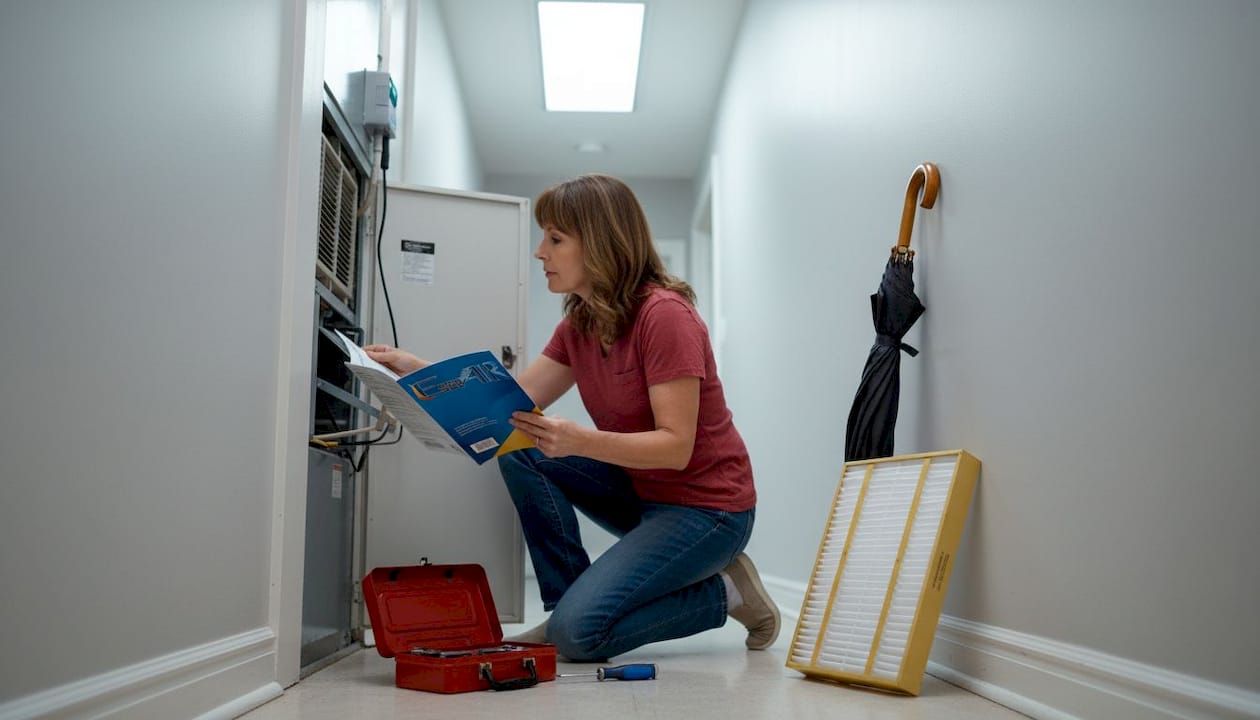
A central system pulls warm air from inside your home, runs it across a refrigerant-filled coil to remove heat, and then pushes the cooled air through ducts into every room. The outdoor condenser unit releases the captured heat outside. This cycle repeats until your home reaches the thermostat's set point.
Where central air excels:
- Whole-home coverage with a single system and single thermostat
- Familiar technology with a wide network of service professionals
- Ideal for new construction or homes with sealed, well-insulated ductwork
- Can be paired with air purification and whole-home humidity control
- Generally lower upfront cost than installing multiple ductless units
Where it falls short:
- Duct losses of 25 to 40% can significantly reduce real-world efficiency, especially in homes with older, unsealed ducts
- Incorrect sizing wastes energy and shortens equipment life
- Requires professional proper system sizing using a Manual J load calculation
- Single thermostat means no easy zone control without added equipment
"If your home already has well-sealed ductwork, central air is a reliable, cost-effective choice. But if your ducts are aging and uninsulated, you may be paying to cool your attic."
Pro Tip: Before investing in a new central air system, have your existing ductwork inspected and pressure-tested. Sealing duct leaks can recover a meaningful portion of your cooling efficiency before you spend a dollar on equipment.
Ductless mini-split systems: Flexible comfort for any room
Not every home has existing ductwork, and not every duct system is worth saving. Ductless mini-split systems solve this problem elegantly. They connect an outdoor compressor unit to one or more indoor air-handling units through a small conduit in the wall, with no ducts required.
Each indoor unit handles a specific zone or room. You control each zone independently, which means you can keep the living room at 72°F while letting a rarely used guest room sit warmer. That kind of precision is genuinely hard to achieve with a ducted system without expensive add-ons.
Why mini-splits are often the smarter choice for retrofits:
- No ductwork means none of the 25 to 40% energy losses that plague older ducted homes
- Systems routinely meet or exceed the 15.2 SEER2 minimum with many models reaching 20 SEER2 or higher
- Perfect for home additions, converted garages, or rooms that a central system does not reach
- Inverter-driven compressors ramp up and down smoothly instead of switching fully on and off, which saves energy and reduces temperature swings
- Both heating and cooling in one system on most models
Potential drawbacks to consider:
- Higher upfront cost per zone compared to a central system serving the whole home
- Multiple indoor units on walls or ceilings change the room's look
- Each unit requires regular filter cleaning to maintain efficiency
- Installation still requires a licensed technician
Pro Tip: If you are cooling three or more zones, get a multi-zone mini-split quote alongside a central air quote. The efficiency gains and the avoidance of duct repairs can make the mini-split the more economical choice over a 15-year lifespan.
Here is a quick comparison of mini-split configurations:
| Configuration | Best for | Typical SEER2 range |
|---|---|---|
| Single-zone mini-split | One room, addition, or garage | 18 to 26 SEER2 |
| Multi-zone mini-split | 2 to 5 rooms, older homes | 16 to 22 SEER2 |
| Ducted mini-split | Homes with short duct runs | 16 to 20 SEER2 |
Explore the top HVAC replacement options available in California to see how current mini-split models compare on efficiency and pricing. Regular upkeep also matters; check out these mini-split maintenance tips to keep your system running at peak performance season after season.
Heat pumps: Heating and cooling for year-round efficiency
Heat pumps often get overlooked in Inland Empire conversations because the focus is so squarely on summer cooling. That is a missed opportunity. A heat pump can both cool your home in summer and heat it in winter, all from a single piece of equipment.
Air-source heat pumps, the most common type in Southern California, work by moving heat rather than creating it. In cooling mode, they pull heat from indoors and release it outside, exactly like a standard air conditioner. In heating mode, they reverse the process, pulling heat from the outdoor air (even when it is cold outside) and bringing it inside. This process uses far less electricity than a traditional gas furnace or electric resistance heater.
Key advantages for Inland Empire homeowners:
- One system handles both heating and cooling, reducing equipment costs
- Highly efficient in mild CA climates where winter temperatures rarely drop below freezing
- Must meet the 15.2 SEER2 requirement for Southern California, and most modern units far exceed it
- Reduces dependence on natural gas for heating, which matters for both energy costs and home electrification goals
- Available in ducted and ductless configurations, giving you layout flexibility
Points to weigh carefully:
- Upfront cost is higher than a standard air conditioner
- In rare extreme cold snaps, supplemental heating may be needed
- Installation still requires professional sizing and setup
Pro Tip: California offers rebates and incentives for heat pump installations through utility programs and state energy initiatives. Ask your HVAC contractor about current offers before you finalize your budget, because the savings can be substantial.
The best heat pump options for California homes balance high SEER2 ratings with reliable heating capacity. For a full picture of how a heat pump fits your annual schedule, reviewing seasonal HVAC planning for Riverside County is a smart step.
Comparing your options: Which AC unit is right for you?
Now that you understand how each system type works, the comparison becomes straightforward. Here is a side-by-side look at the three main options:
| Feature | Central air | Ductless mini-split | Heat pump |
|---|---|---|---|
| Ductwork required | Yes | No | Either |
| Heating capability | No (AC only) | Most models | Yes |
| Typical SEER2 range | 15 to 22 | 16 to 26+ | 15 to 22 |
| Best for | New builds, existing ducts | Retrofits, additions, zones | Year-round efficiency |
| Upfront cost | Moderate | Moderate to high per zone | Moderate to high |
| Long-term savings | Good with sealed ducts | Excellent | Excellent |
Step-by-step decision guide:
- Check your ductwork first. If your ducts are sealed and in good condition, central air or a ducted heat pump makes strong sense. If they are leaking or nonexistent, go ductless.
- Calculate your heating needs. If you currently pay for gas heating, a heat pump may pay for itself faster than a cooling-only system.
- Map your zones. Do you need whole-home cooling, or are there specific rooms that always run hot? Targeted zone cooling with mini-splits can beat a central system on efficiency.
- Get a right HVAC sizing calculation done. Manual J sizing is essential to prevent short-cycling, uneven temperatures, and premature equipment failure. No reputable contractor should skip this step.
- Compare total cost of ownership. Factor in energy costs over 10 to 15 years, not just the installation quote.
Understanding the AC installation process for your area also helps set expectations for timeline, disruption, and what questions to ask your contractor before work begins.
Our take: Why selection and sizing matter more than the unit brand
Here is something we have seen repeatedly over years of working with Inland Empire homeowners: the people most stressed about their AC system are almost never the ones who bought a lesser brand. They are the ones who bought the right brand but the wrong type, or the right type but the wrong size.
Marketing budgets for major AC brands are enormous, and they do a good job of convincing buyers that brand loyalty is the primary decision. In reality, a correctly sized ductless system from a mid-tier brand will outperform an oversized central unit from a premium brand every single time. The importance of proper sizing simply cannot be overstated. A system that is 20% too large will short-cycle constantly, never adequately dehumidify your home, and wear out years ahead of schedule.
We also see ductless options routinely underrepresented in sales conversations, often because central air is a simpler install in homes that already have ducts. But for the majority of Inland Empire homes built before 1990, those existing ducts are lossy and undersized. Manual J calculations paired with an honest duct inspection often reveal that a ductless system is not just more efficient but actually the smarter financial choice over a 15-year horizon.
Our honest advice: interview your contractor about sizing methodology before you discuss brands. If they cannot explain how they calculate load for your specific home, that is a red flag worth taking seriously.
Ready to upgrade? Expert help for Inland Empire homes
Choosing the right air conditioning unit is only half the equation. The other half is getting it installed correctly, sized properly, and set up to perform at its peak for years to come. That is exactly what we do at E320 Air for homeowners across the Inland Empire.
Our team handles the full process, from the initial Manual J load calculation to equipment selection, installation, and follow-up service. We have helped hundreds of local homeowners get more comfort and lower bills from systems that truly fit their homes. Browse our real-world installation solutions to see how we have handled tricky retrofits, older homes, and challenging layouts. When you are ready to move forward, our professional HVAC installation page walks you through exactly what to expect, from first call to final walkthrough.
Frequently asked questions
What is SEER2 and why does it matter for air conditioning units?
SEER2 is an updated efficiency rating that measures how much cooling a system delivers per unit of electricity consumed; California's 2026 standards require at least 15.2 SEER2 for split systems in hot climates, and higher ratings deliver proportionally lower energy bills.
Are ductless mini-splits more efficient than central air?
For most retrofit situations, yes. Mini-splits eliminate the 25 to 40% duct energy losses common in older homes, which means more of every dollar you spend on electricity actually cools your living space.
How do I know what size AC unit my house needs?
A certified HVAC contractor should perform a Manual J load calculation that accounts for your home's square footage, insulation, window placement, and local climate; proper Manual J sizing is the only reliable way to prevent short-cycling and inefficiency.
Can a heat pump provide enough cooling during Inland Empire summers?
Absolutely. Modern air-source heat pumps are engineered to deliver efficient cooling in high-temperature climates and will handle Inland Empire summers effectively when professionally sized and installed.