
TL;DR:
- Central air conditioners move heat outside rather than produce cold air inside.
- Proper maintenance and understanding of the vapor-compression cycle extend system lifespan.
- California mandates minimum efficiency standards and regular upkeep for reliable cooling.
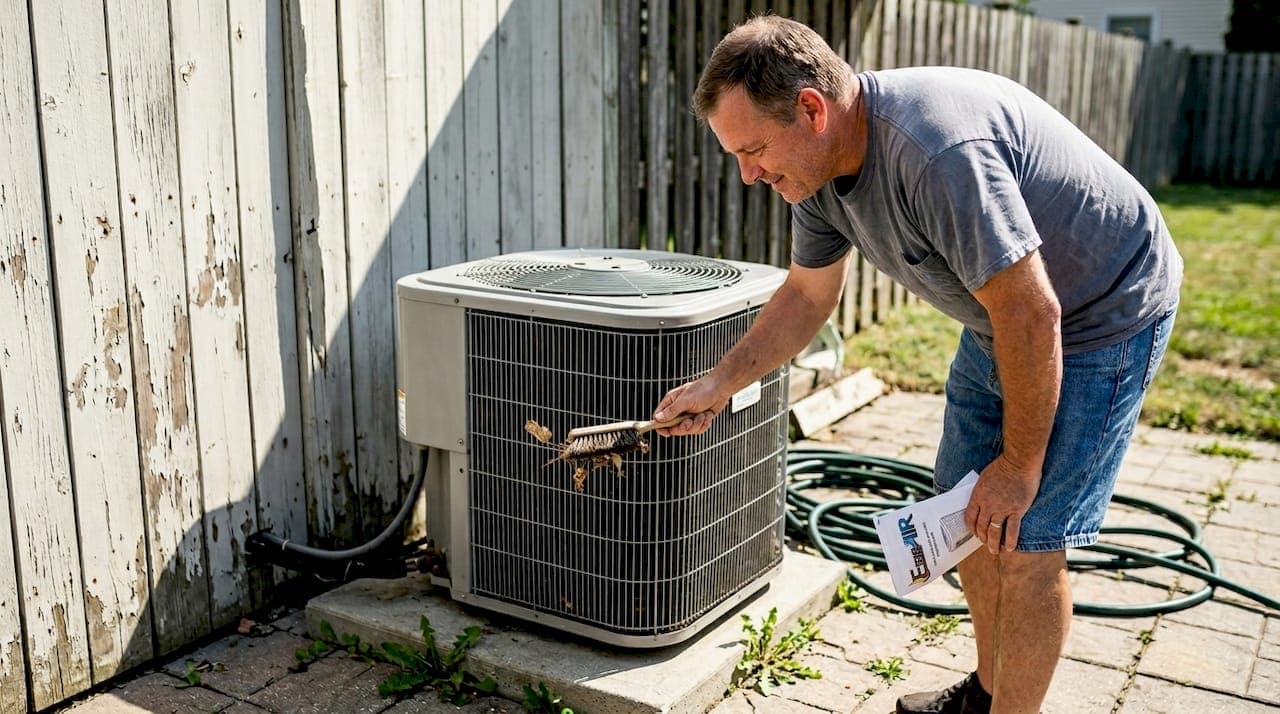
Most people assume their central air conditioner creates cold air and pumps it through the house. It doesn't. Your AC actually pulls heat out of your indoor air and moves it outside, leaving cooler air behind. That distinction matters more than you'd think, especially when something goes wrong and you're trying to figure out why your home feels like a sauna in July. In the Inland Empire, where summer temperatures regularly push past 100°F, understanding how your central air system actually works gives you a real advantage when it comes to installation, maintenance, and avoiding expensive repairs.
Table of Contents
- The science behind central air: Vapor-compression cooling
- Core components: What's inside your central air system
- Choosing the right system: Types, efficiency, and California rules
- Common issues and maintenance: Staying cool year after year
- Our take: What most guides miss about central air in the Inland Empire
- Ready for cool comfort? Expert help for your central air needs
- Frequently asked questions
Key Takeaways
| Point | Details |
|---|---|
| Heat removal, not creation | Central air works by moving heat out of your home—not making cold air. |
| System parts and their roles | Every component, from compressor to filter, plays a vital part in cool comfort and efficiency. |
| Efficiency and compliance | Choosing the right type and SEER2 rating keeps your system legal and lowers utility bills in California. |
| Maintenance prevents problems | Routine filter changes and tune-ups extend the life of your system and cut repair costs. |
| Local climate matters | Dust, heat, and local laws in the Inland Empire mean homeowners need tailored solutions and care. |
The science behind central air: Vapor-compression cooling
Now that we've set the record straight about what your AC is really doing, let's dig into how it achieves cool comfort using a tried-and-true refrigeration cycle.
Your central air system runs on what engineers call the vapor-compression refrigeration cycle. It sounds technical, but the concept is simple: a chemical called refrigerant circulates through your system, absorbing heat indoors and releasing it outdoors. As the vapor-compression cycle shows, this process repeats continuously as long as your system is running.
Central air systems operate by transferring heat from indoors to outdoors using refrigerant, not by generating cold air on their own. The cycle has four stages, and each one has to work correctly for your home to stay comfortable.
"Your air conditioner doesn't manufacture cold. It's a heat pump moving warmth from one place to another. When it stops cooling well, one of those four stages has broken down." — HVAC field technician perspective
Here's a breakdown of each stage and what can go wrong:
| Cycle stage | What it does | What goes wrong |
|---|---|---|
| Evaporation | Refrigerant absorbs heat from indoor air at the evaporator coil | Dirty coil, frozen coil, low refrigerant |
| Compression | Compressor pressurizes refrigerant, raising its temperature | Compressor failure, electrical issues |
| Condensation | Hot refrigerant releases heat outside through the condenser coil | Dirty coil, blocked airflow, fan failure |
| Expansion | Refrigerant pressure drops rapidly, cooling it down again | Expansion valve failure, refrigerant leaks |
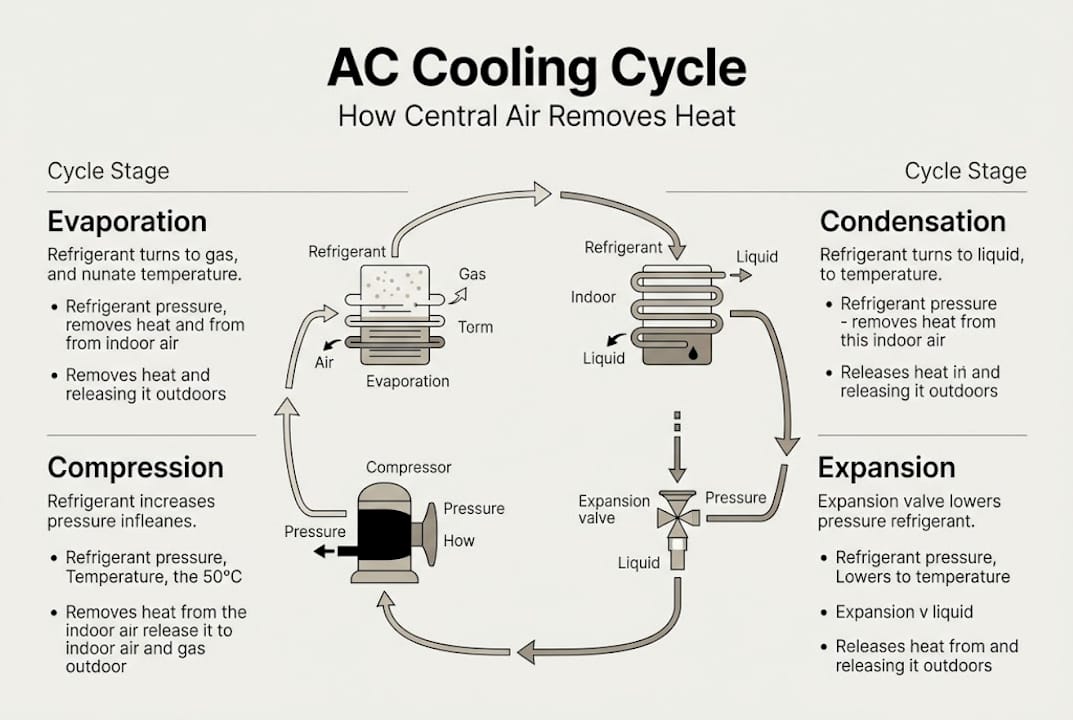
When all four stages run smoothly, your system efficiently handles your seasonal cooling needs without overworking itself. When even one stage falters, the whole cycle suffers. A frozen evaporator coil, for example, doesn't just reduce airflow. It signals that heat absorption has stalled somewhere in the chain.
Understanding this cycle helps you make smarter decisions. If your system blows warm air, the problem isn't that your AC forgot how to make cold. It means heat isn't being moved efficiently, and there's a specific reason why.
Core components: What's inside your central air system
With the cooling process in mind, let's open the hood and explore what parts make up your central air system and how they function together.
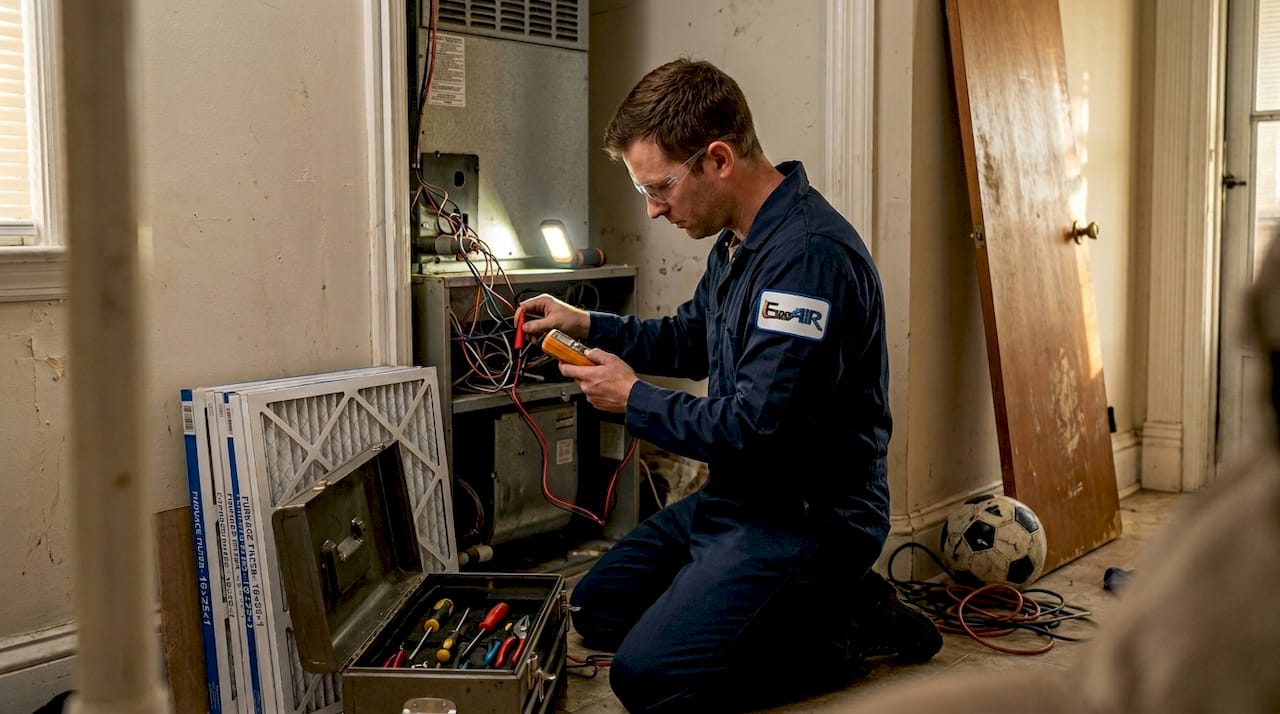
Your central air system is really two units working as one. The outdoor unit handles heat rejection. The indoor unit handles heat absorption. Together, they move heat continuously as long as refrigerant flows between them. According to system component details, each part plays a specific role in that heat transfer chain.
Here's what each major component does and what to watch for:
- Compressor (outdoor): The engine of the system. It pressurizes the refrigerant and drives the entire cycle. The compressor consumes 60-70% of your system's total electrical load. Signs of failure include loud clanking, hard starting, or warm air despite the system running.
- Condenser coil (outdoor): Releases heat from the refrigerant into the outside air. A dirty or blocked coil forces the compressor to work harder and shortens its life.
- Condenser fan (outdoor): Pulls air across the condenser coil to carry heat away. A failed fan can cause the system to overheat and shut down.
- Evaporator coil (indoor): Absorbs heat from your indoor air. When the coil freezes over, airflow drops sharply and cooling stops.
- Blower fan and air handler (indoor): Circulates indoor air across the evaporator coil. Modern ECM blower motors can reduce energy use by up to 75% compared to older PSC motors.
- Refrigerant lines: Connect the indoor and outdoor units. Damaged insulation or leaks cause efficiency loss and potential refrigerant release.
- Thermostat: The brain of the system. A miscalibrated thermostat can cause short cycling or failure to reach setpoint temperatures.
- Air filter: Protects the evaporator coil from dust and debris. A clogged filter is one of the most common causes of system problems.
Knowing these parts also helps you communicate clearly with your HVAC contractor when something goes wrong. If you can describe the symptom and which part seems involved, diagnosis goes faster.
Pro Tip: In the Inland Empire, dust and debris build up on outdoor units faster than in coastal areas. Keep at least two feet of clearance around the unit and rinse the condenser coil gently with a hose once a season. For homes with HVAC zoning, each zone's air handler needs the same attention.
Choosing the right system: Types, efficiency, and California rules
Knowing the parts is just the start. Choosing the right system type and staying energy-legal in California could save you thousands and keep your home comfortable for years.
Most Inland Empire homes use a split system, which places the compressor and condenser outdoors and the evaporator and air handler indoors. Homes with limited mechanical space, like some condos or commercial buildings, may use a packaged unit, where all components sit in a single cabinet outside. Split systems are most common for residential use, while packaged units serve spaces where indoor equipment isn't practical.
| Feature | Split system | Packaged system |
|---|---|---|
| Components | Separate indoor and outdoor units | All-in-one outdoor cabinet |
| Best for | Most single-family homes | Limited indoor space |
| Minimum SEER2 (CA) | 14.3-15.2 SEER2 | 14.3-15.2 SEER2 |
| Installation | More complex, more flexible | Simpler, less flexible |
SEER2 (Seasonal Energy Efficiency Ratio 2) measures how efficiently a system cools relative to the energy it uses. California requires a minimum of 14.3-15.2 SEER2 for all new residential AC installations, depending on the unit type and capacity. This standard is part of California's Title 24 energy code, which governs all new construction and major HVAC replacements. Installing a non-compliant system can result in failed inspections and costly retrofits.
Here are three steps to make a legal, efficient AC choice:
- Confirm your home's load requirements before buying. A system that's too large short-cycles and wastes energy. A system that's too small runs constantly. Review proper sizing benefits before committing to any unit.
- Verify SEER2 compliance with your contractor before installation. Ask for documentation showing the unit meets California's 2026 requirements.
- Check available rebates through your utility provider. Southern California Edison and other local utilities often offer incentives for high-efficiency systems.
Pro Tip: For Inland Empire summers, aim for 16+ SEER2 with variable-speed technology. The upfront cost is higher, but variable-speed systems adjust output continuously rather than cycling on and off, which means more consistent temperatures and lower monthly bills. Check out the top replacement options available for California homeowners this year.
For a deeper look at how efficiency rating requirements apply to Southern California homes, local resources break down the specifics by region.
Common issues and maintenance: Staying cool year after year
Even the best AC system can go wrong, especially in a dusty, hot region like ours. Here's how to spot issues early and keep your cool with regular care.
The Inland Empire's dry heat and airborne dust create conditions that accelerate wear on every part of your system. Common AC failures include dirty filters and coils, low refrigerant from slow leaks, capacitor and electrical failures, short cycling from oversized units or refrigerant issues, and systems that won't turn on due to tripped breakers or thermostat problems. Capacitors typically last around 20 years, but Inland Empire heat shortens that timeline noticeably.
Here's how to sort what you can handle yourself versus when to call a pro:
- DIY checks: Replace or inspect filters monthly during summer. Reset a tripped breaker once. Check thermostat settings and battery. Clear debris from around the outdoor unit.
- Call a professional: Warm air from vents despite the system running. Ice on the refrigerant lines or evaporator coil. Grinding, squealing, or banging sounds. System short-cycling (turning on and off every few minutes). Unexplained spike in your electric bill.
For a full walkthrough of what to check before calling for service, the troubleshooting guide covers the most common scenarios step by step.
Annual tune-ups include cleaning coils and filters, checking refrigerant levels, inspecting electrical connections, and calibrating the thermostat. A well-maintained system targets an 18-22°F temperature differential between supply and return air, which is a good benchmark for healthy performance. Skipping annual service is one of the fastest ways to cut a system's 15-20 year lifespan short.
Pro Tip: Book your spring tune-up in March or April, before the first serious heat arrives. Technicians fill up fast once temperatures spike, and a system that hasn't been serviced going into a 105°F week is a breakdown waiting to happen. Good filter maintenance also directly affects indoor air quality, which matters especially for families with allergies or asthma.
Our take: What most guides miss about central air in the Inland Empire
We've covered the essentials, but after years of field experience, some key lessons stand out for the Inland Empire that rarely make it into the manuals.
Most guides treat AC efficiency as a cost-savings conversation. In the Inland Empire, it's a reliability conversation. A system running at the edge of its capacity through a two-week heat wave isn't just expensive to operate. It fails. We've seen well-maintained, high-efficiency systems outlast poorly maintained lower-efficiency ones by five or more years in this climate.
The single most overlooked issue we see is neglected outdoor units. Overgrown shrubs, packed dust on condenser fins, and debris blocking the fan are behind a huge share of the avoidable service calls we respond to each summer. Most homeowners never think about the outdoor unit until it stops working.
Variable-speed systems also make a bigger real-world difference than most people expect, particularly in multi-story homes or households where someone is home during the hottest part of the day. Consistent output beats on-off cycling every time for both comfort and equipment longevity.
Finally, the annual tune-up isn't a formality. With seasonal HVAC adjustments becoming more critical as heat seasons start earlier and run hotter, that spring checkup is your best insurance against a mid-July breakdown.
Ready for cool comfort? Expert help for your central air needs
Understanding how your central air system works puts you in a much stronger position, but knowledge only goes so far when you're staring down a failing compressor or a compliance question before a new install.
Our team at E320 Air handles everything from emergency repairs to full HVAC installations that meet California's 2026 energy standards. We know the Inland Empire's climate, its dust, its heat, and its regulatory quirks. Whether you need a diagnosis, an upgrade, or just a seasonal tune-up before summer hits, we're ready to help. Browse our problem-solving case studies to see how we've helped homeowners across the region stay cool, compliant, and comfortable year after year.
Frequently asked questions
What is the difference between split and packaged central air systems?
Split systems have separate indoor and outdoor units and are ideal for most homes, while packaged units combine all components into one outdoor cabinet for spaces where indoor equipment isn't practical.
How often should I change my central air filter in the Inland Empire?
Check your filter every month during peak cooling season and replace every 1-3 months, or more frequently if your home is near dusty roads or open land.
What does SEER2 mean for California homeowners?
SEER2 measures AC energy efficiency, and California requires 14.3-15.2 SEER2 minimum for all new residential installations to meet Title 24 energy code compliance.
How do I know if my central air needs repair?
Warm air from vents, weak airflow, unusual noises, short cycling, or a sudden jump in your electric bill are all signs that point to common AC failures that need professional diagnosis.
Why does the outdoor unit need regular cleaning in the Inland Empire?
The dry, dusty Inland Empire climate causes condenser fins and fan blades to clog faster than in coastal areas, restricting airflow and forcing the compressor to work harder until it eventually fails.