
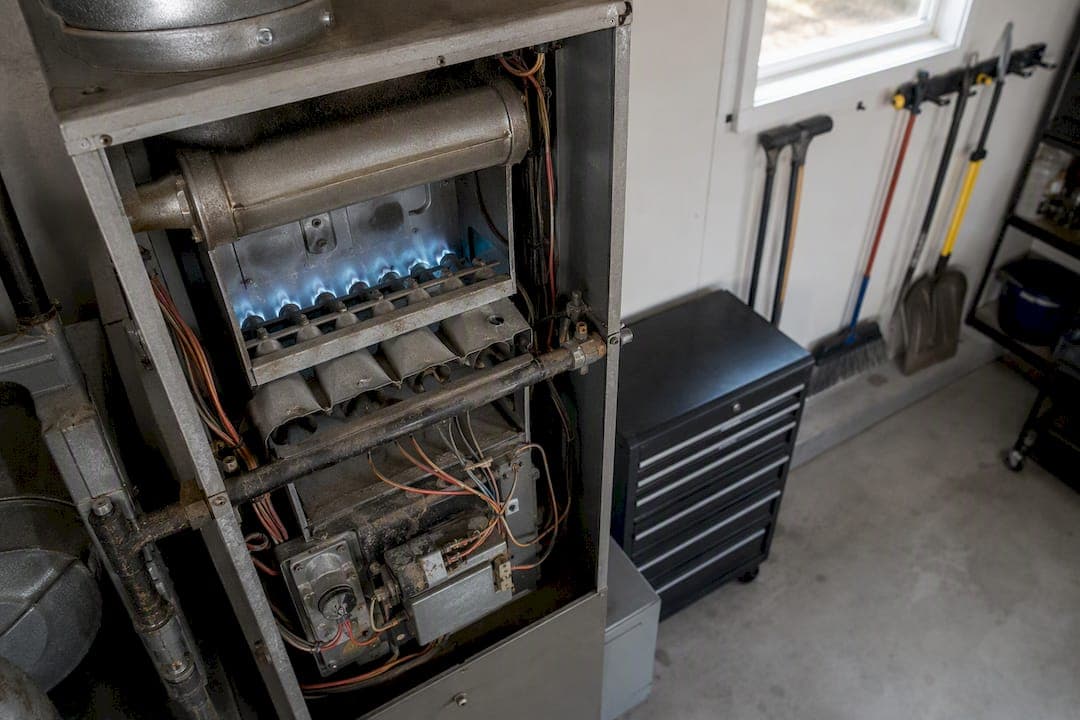
Most of the time, that burning smell is just dust burning off the heat exchanger on your furnace's first run of the season, and it fades within 10 to 30 minutes. But if the odor is sharp, plastic, or metallic and doesn't let up, or if anyone in the house feels dizzy or nauseated, shut the furnace off and call a licensed technician immediately.
TL;DR:
- Dust burning off the heat exchanger causes a short-lived smell that usually fades within 10 to 30 minutes and is common after a furnace's first use of the season.
- A persistent smell that lasts beyond 60 minutes, recurs every cycle, or is accompanied by weaker airflow indicates a possible electrical or blower issue requiring professional inspection.
- Restrictive air filters are one of the most common causes of burning odors, and replacing them is a simple, inexpensive step that can often resolve the problem.
- Smells of gas, oil, or plastic, along with symptoms like dizziness or nausea, require immediate shutdown and professional help due to potential hazards like leaks or electrical faults.
- Regular maintenance, including scheduled tune-ups and filter changes, is crucial for preventing burning odors and identifying issues before they escalate into costly repairs.
Table of Contents
- What's Causing That Burning Smell From Your Furnace?
- Furnace Safety Checklist: When to Shut Off and When to Call for Help
- Quick Checks You Can Safely Run Yourself
- Normal Dust Burnoff or a Real Problem? Here's How to Tell
- Preventing Burning Smells Before They Start
- What Years of Furnace Calls Teach You About That Smell
- Get a Professional Furnace Inspection Before Small Problems Get Expensive
- Sources
What's Causing That Burning Smell From Your Furnace?
Different smells point to different problems, and knowing the difference can save you an unnecessary panic or, worse, a genuine hazard you brushed off as nothing.
Dust burnoff is the most common culprit, especially on the season's first heating cycle. Dust and lint settle on the heat exchanger, burners, and electric elements over months of disuse, and when things heat up, that dust singes. It typically fades within 10 to 30 minutes and barely registers by the second or third cycle.
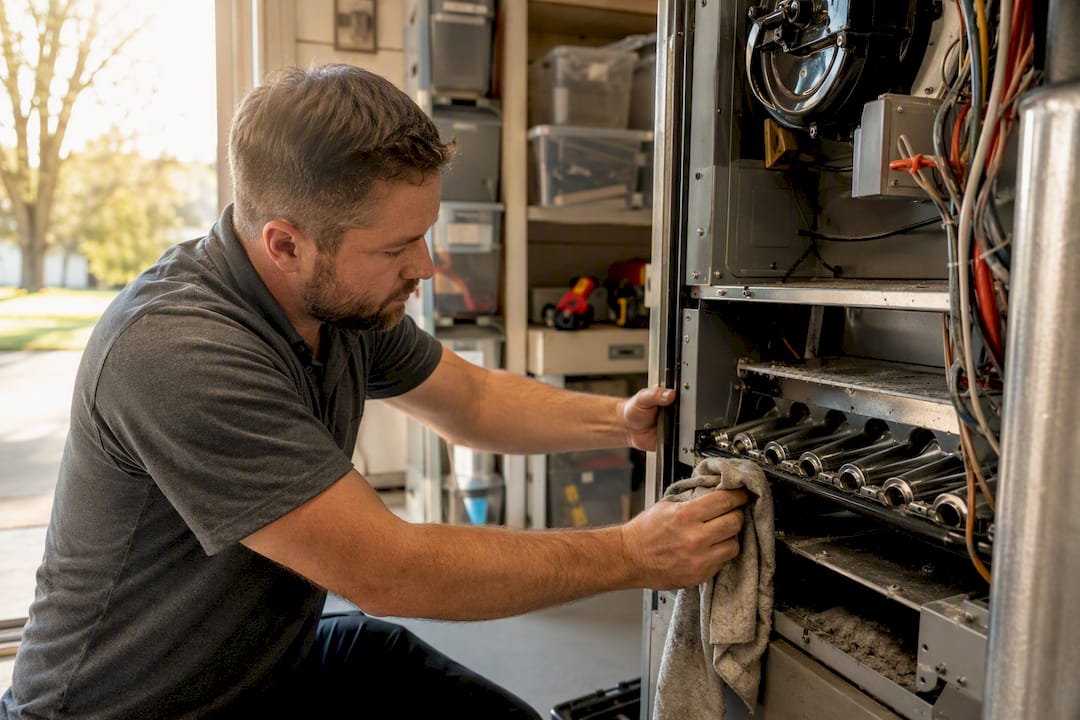
A clogged air filter creates a different problem entirely. When airflow gets restricted, the blower motor works harder against higher resistance, and that extra strain generates heat, sometimes enough to produce a burning smell of its own. A dirty filter is one of the most common causes of this kind of overheating, and it's also one of the easiest to fix.
Other causes to keep on your radar:
- Debris in the ductwork or cabinet. Toys, paper, insulation scraps, even dead insects can land on a hot surface and smolder.
- Electrical overheating. A frayed wire or failing component produces an acrid, plastic, or oddly fishy odor. This is not a wait-and-see situation.
- Oil or gas odors. These smell different from burning dust. A rotten-egg smell signals a gas leak; an oily, sooty smell can point to combustion issues in an oil furnace.
- Musty or bacterial smells. These trace back to moisture in the ductwork or a dirty evaporator coil, not burning at all, though they're often confused with it.
Persistent, acrid, or metallic smells that don't fade quickly usually mean electrical overheating or debris contacting a hot component, and that calls for a technician, not a wait-and-see approach.
Furnace Safety Checklist: When to Shut Off and When to Call for Help
Not every burning smell demands the same response. Match your action to the warning sign.
- Shut off the furnace and cut power at the breaker if you smell acrid plastic, see smoke, or notice sparking or arcing near the unit.
- Evacuate and call 911 if anyone develops a headache, nausea, dizziness, or your carbon monoxide alarm sounds. Carbon monoxide is odorless, so those symptoms, not the smell itself, are the real red flag.
- Leave the house and call your gas utility from outside if you smell rotten eggs, a sign of a gas leak.
- Call a licensed HVAC technician for anything else that lingers past 60 minutes, recurs every cycle, or seems localized to one spot.
Heating equipment is a common source of home fires, and NFPA's guidance is blunt: regular maintenance and cautious operation are what keep that risk low. When in doubt, treat the smell as a warning, not background noise.
Quick Checks You Can Safely Run Yourself
Before you call anyone, a few homeowner checks can tell you a lot in under 15 minutes.
- Run the time-to-fade test. Note when the smell started and check back every 10 minutes. If it's gone by the 30-minute mark, you're almost certainly dealing with dust burnoff.
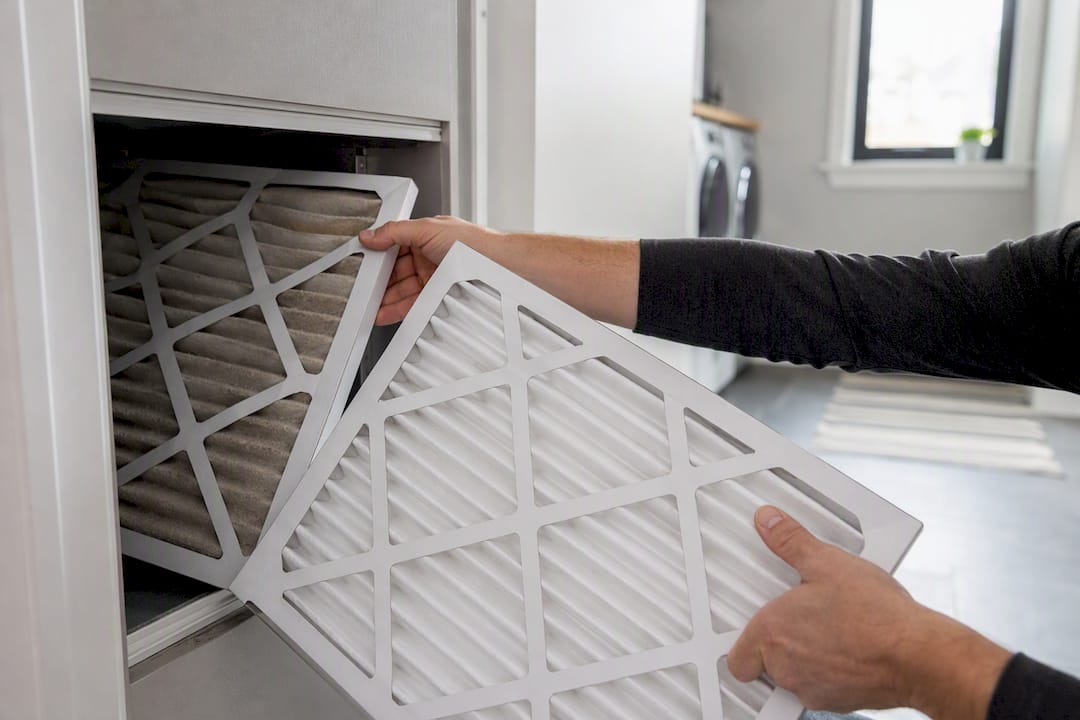
- Pull the air filter and look at it. If it's gray, matted, or you can't see light through it, replace it. A clogged filter forces the blower to overheat, and this single fix resolves a surprising share of burning complaints.
- Map the smell at your registers. Walk room to room and sniff near supply vents. A smell that's strongest at the furnace cabinet itself, rather than spread evenly through the house, points to an electrical or cabinet-localized issue rather than ordinary duct dust.
- Shine a flashlight into return grilles and visible ducts for foreign objects. Kids' toys and paper are more common than you'd think.
Pro Tip: Never open an electrical access panel or touch furnace wiring yourself. If the smell traces back to the cabinet or you see any scorch marks, that's the line where a homeowner check ends and a technician's visit begins.
Normal Dust Burnoff or a Real Problem? Here's How to Tell
The clearest signal is time. Dust burnoff fades within 10 to 30 minutes and is noticeably weaker, sometimes absent, on the next heating cycle. A real problem behaves differently:
- Smell persists past 60 minutes or shows no sign of fading.
- It recurs every single cycle, not just the first one after a long shutdown.
- Airflow feels weaker than usual at multiple registers, which often points to a filter or blower issue.
- The odor is acrid or chemical, not a dusty, burnt-toast smell.
Run the repeat-cycle test: let the furnace shut off and kick back on, and see if the smell returns at the same intensity. Combine that with the register comparison from your smell-mapping check. A smell concentrated at the cabinet or return, rather than spread evenly across supply vents, tells a technician where to start looking before they even open the panel.
Preventing Burning Smells Before They Start
Most burning-smell calls trace back to something a simple maintenance schedule would have caught. Changing your filter regularly is recommended, with more frequent swaps if you have pets or use higher-efficiency filters that restrict airflow more.
An annual tune-up matters more than most homeowners assume. During that visit, a technician checks:
- Airflow and static pressure, to catch restriction before it strains the blower motor
- Electrical connections, since loose wiring is a common source of acrid smells
- The heat exchanger and burners for cracks, corrosion, or buildup
Routine maintenance and clean filters are the single biggest lever homeowners have against blower overheating. Duct or coil cleaning becomes worthwhile if you're dealing with musty smells or visible buildup, not burning odors specifically. On cost, a filter swap runs you almost nothing; a blower motor repair typically lands in the low hundreds; a cracked heat exchanger, which usually means replacement, is a much bigger job. If you're weighing a repair against a system that's already on its last legs, reliable HVAC repair guidance can help you figure out which category you're in.
What Years of Furnace Calls Teach You About That Smell
Seasonal dust burnoff accounts for most of the "my furnace smells like burning" calls E320air fields every fall, and it almost always resolves on its own within the first few cycles. The misdiagnosis we catch most often is homeowners assuming a persistent smell is "just the filter" when it's actually a blower motor running hot, or the reverse: replacing a motor when a $15 filter would have fixed it.
That's why our technicians measure airflow and static pressure before touching anything electrical. A proper inspection checks wiring connections, confirms the heat exchanger is intact, and verifies carbon monoxide isn't a factor, in that order. Expect a technician to ask when the smell started and whether it's faded, before they even open the cabinet.
— Edward
Get a Professional Furnace Inspection Before Small Problems Get Expensive
E320air runs the same diagnostic sequence on every burning-smell call: airflow measurement, electrical inspection, and a carbon monoxide safety check, in that order, so you get an actual answer instead of a guess. That matters because the fix for a restricted filter and the fix for a failing blower motor look nothing alike, and guessing wrong costs you a second service call.

If your furnace is still under warranty or nearing the end of its service life, a licensed contractor can also tell you honestly when repair stops making sense and replacement becomes the better investment. E320air offers both scheduled inspections and emergency appointments, and our problem-solving history shows the range of furnace issues we've diagnosed and fixed across the Inland Empire. If you're smelling something off right now, book an inspection with E320air today and get a straight answer instead of a guess.