
TL;DR:
- Upgrading an old furnace improves efficiency, safety, and reduces repair costs.
- A high AFUE furnace in Moreno Valley can cut heating bills and qualify for rebates.
- Proper sizing and professional installation ensure maximum savings and household comfort.
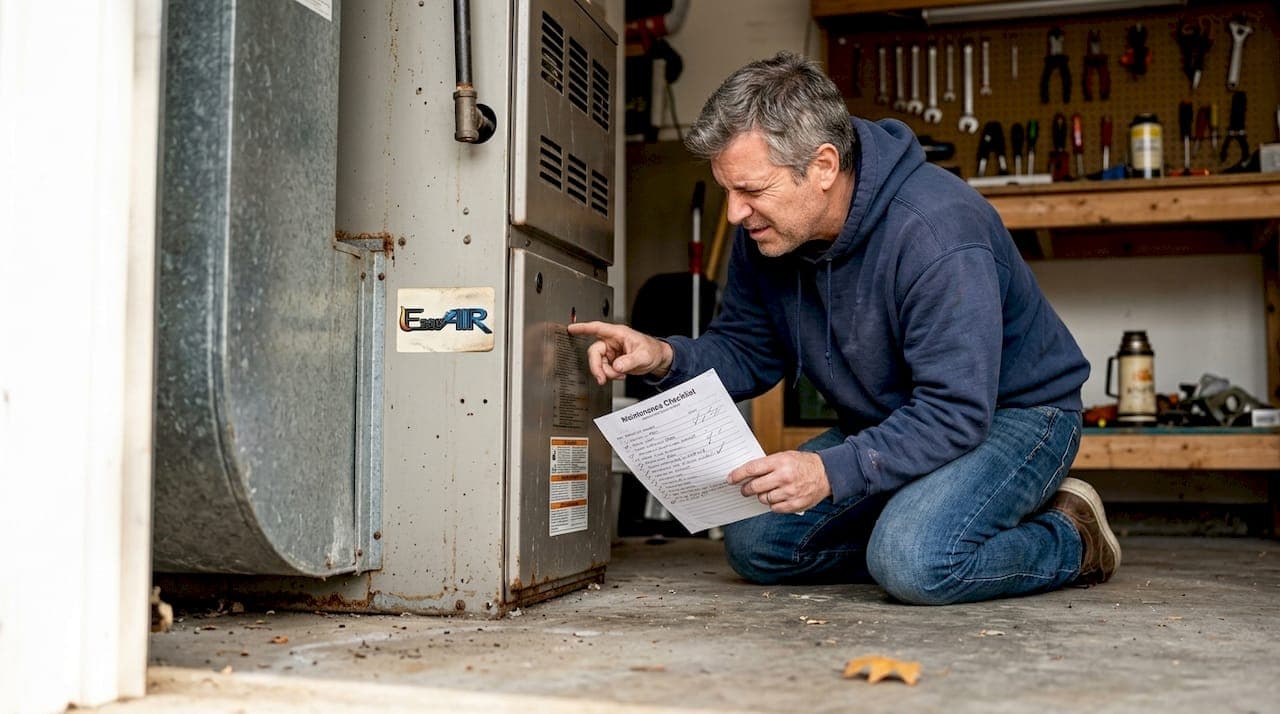
Most homeowners in Moreno Valley hold onto their old furnace thinking they're saving money. The truth is, every year past the 15-year mark, that furnace quietly drains your wallet through rising utility bills, surprise repair calls, and uneven heating. New furnaces last 15 to 20 years and come with warranties that protect your investment far better than patching an aging unit. This guide walks you through the real financial and comfort case for upgrading, what to look for in Moreno Valley's mild climate, and how to avoid the most common mistakes homeowners make when they finally decide to act.
Table of Contents
- The real cost of keeping an old furnace
- How a new furnace saves money and energy
- Comfort, air quality, and peace of mind
- What to know before you upgrade your furnace
- Why replacing your furnace isn't just about savings
- Ready to upgrade? Next steps for Moreno Valley homeowners
- Frequently asked questions
Key Takeaways
| Point | Details |
|---|---|
| Hidden costs of old furnaces | Older furnaces rack up frequent repairs and higher utility bills, costing more over time. |
| Modern furnaces boost savings | Upgrades with 92%+ efficiency drastically cut energy use and may qualify for rebates in Moreno Valley. |
| Comfort and air quality matters | New systems provide more even heating and better air, improving home health and comfort. |
| Sizing and installation are crucial | Proper sizing and professional installation prevent common efficiency and longevity issues. |
The real cost of keeping an old furnace
Hanging onto an old furnace might feel like the responsible, budget-friendly move. But the numbers often tell a different story. A useful rule of thumb is the $5,000 rule: multiply your repair estimate by your furnace's age. If that number tops $5,000, you're likely better off replacing the unit than pouring more money into it.
Here's why that math matters. An aging furnace doesn't just break down more often. It also runs less efficiently, meaning your utility bills creep up month after month without any obvious cause. Add in the risk of a cracked heat exchanger (which can leak carbon monoxide) and you're looking at a safety issue, not just a budget one. Furnace sizing and comfort play a big role here too, since an old, poorly matched unit struggles to heat your home evenly.
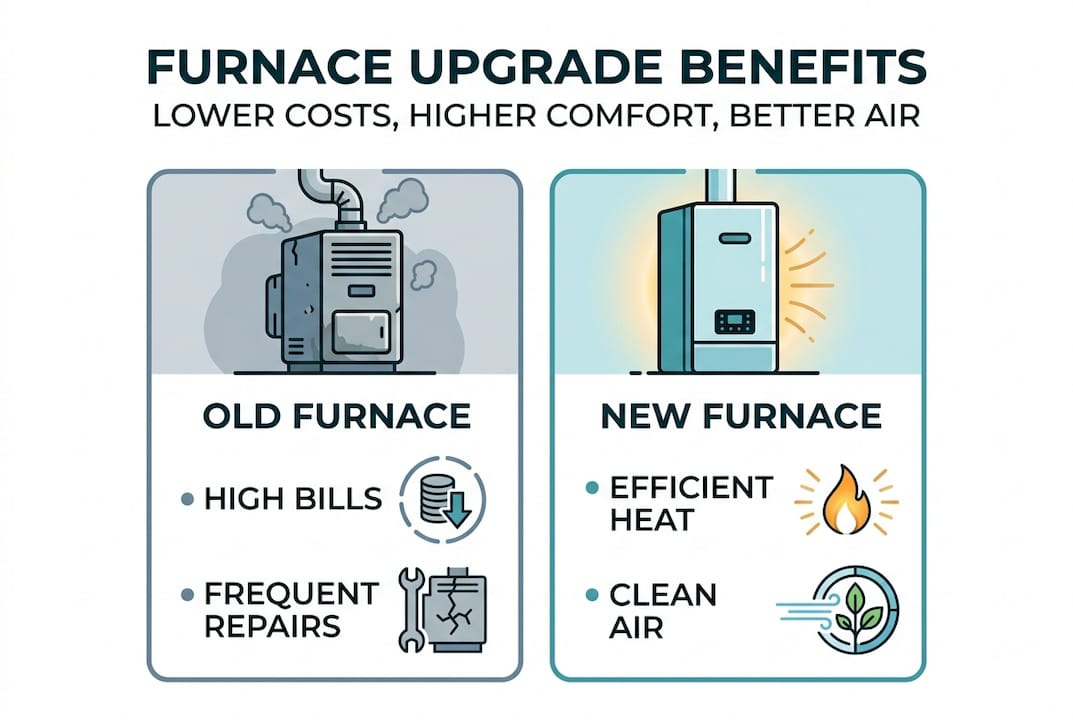
| Issue | Furnace over 10 years old | New furnace |
|---|---|---|
| Average repair frequency | 2 to 3 times per year | Rarely, covered by warranty |
| Efficiency (AFUE) | 60% to 80% | 92% to 98% |
| Heat distribution | Uneven, cold spots common | Consistent, even airflow |
| Safety risk | Higher (heat exchanger wear) | Lower, modern safety controls |
| Monthly energy cost | Higher by 20% to 40% | Optimized, lower bills |
Short-cycling is another red flag. That's when your furnace turns on and off too frequently, never completing a full heating cycle. It wastes energy, wears out components faster, and leaves rooms feeling drafty. Exploring HVAC replacement options in California can help you understand what modern systems offer compared to what you're currently running.
Warning signs your furnace is costing you more than it should:
- Your heating bill has gone up without a change in usage
- The furnace makes banging, rattling, or squealing sounds
- Some rooms are noticeably colder than others
- You've had two or more repairs in the past two years
- The unit is 12 or more years old
- You notice dust, soot, or unusual odors near vents
"Aging furnaces are prone to failures like heat exchanger cracks, which not only reduce efficiency but create serious safety risks. Newer models dramatically reduce both repair frequency and operating costs."
Pro Tip: If your furnace is over 10 years old and you're calling for repairs more than once a year, start getting replacement quotes now. Waiting until it fails completely means paying emergency rates and rushing a decision you should take your time with. Good upgrading for air quality starts with recognizing when the old system is holding you back.
How a new furnace saves money and energy
Understanding the cost of old equipment, let's explore the real savings and incentives you gain with a newer, efficient furnace.
AFUE stands for Annual Fuel Utilization Efficiency. It measures how much of the fuel your furnace burns actually becomes heat for your home. A furnace with an 80% AFUE wastes 20 cents of every dollar you spend on gas. A 92%+ AFUE furnace wastes less than 8 cents, which adds up to real savings over a full heating season.
| AFUE rating | Annual gas cost (est.) | Annual savings vs. 80% AFUE |
|---|---|---|
| 80% | $900 | Baseline |
| 92% | $783 | $117/year |
| 96% | $750 | $150/year |
| 98% | $735 | $165/year |
Estimates based on average mild-climate usage. Actual savings vary by home size and usage.
For Moreno Valley homeowners, the mild winters mean your furnace runs less often than in colder regions. That makes high efficiency even more valuable per run cycle, and it also makes you eligible for utility rebates tied to high-efficiency equipment. SoCalGas and local programs frequently offer cash-back incentives for units rated 92% AFUE or above.
Monthly and long-term financial benefits of upgrading:
- Lower monthly gas bills from improved fuel efficiency
- Rebates from utility companies and state programs
- Fewer service calls and lower repair costs
- Longer equipment lifespan with warranty protection
- Higher home resale value with documented upgrades
Pro Tip: Pair your new furnace with a smart thermostat and HVAC zoning benefits to stretch your savings even further. Zoning lets you heat only the rooms you're using, which cuts waste and gives every family member more control over their comfort. The combination of a high-efficiency furnace and smart controls can reduce your heating costs by 30% or more compared to an older, unzoned setup. That's not a minor improvement. That's a fundamentally different experience in how your home feels and what it costs to run it.
Comfort, air quality, and peace of mind
While savings are compelling, comfort and health upgrades add another dimension to your investment.
Modern furnaces don't just heat your home. They do it more quietly, more consistently, and with better airflow management than units built 10 or 15 years ago. In Southern California's mild winters, you may only run your furnace for a few months, but when you do, you want it to work without cold spots, noisy startups, or that dry, stale air that older systems tend to push through your vents.
Newer models include variable-speed blower motors, which adjust airflow gradually rather than blasting on at full power. This means steadier temperatures, less noise, and better air circulation throughout your home. That circulation directly affects indoor air quality, since stagnant air lets dust, allergens, and pollutants settle. Improving air quality is one of the most overlooked benefits of a furnace upgrade, especially for households with allergy sufferers or young children.
"Modern furnaces last 15 to 20 years and come with manufacturer warranties that cover major components, giving homeowners real protection against unexpected costs and the peace of mind that comes from reliable, consistent heat."
Benefits of upgrading your furnace beyond energy savings:
- Even, consistent heat throughout every room
- Quieter operation with variable-speed motors
- Better filtration and improved indoor air circulation
- Reduced risk of carbon monoxide issues from worn heat exchangers
- Manufacturer warranties covering parts and labor
- Less stress about breakdowns during cold snaps
Pro Tip: Don't wait for your furnace to fail on the coldest night of the year. Upgrading proactively means you get to choose the right model, the right contractor, and the right timing. A qualified HVAC contractor can assess your current system and give you an honest picture of how much life it has left, so you're never caught off guard.
What to know before you upgrade your furnace
With the advantages clear, it's smart to avoid common mistakes when planning your upgrade.
The biggest mistake homeowners make is assuming bigger is better. An oversized furnace short-cycles constantly, turning on and off before completing a full heating cycle. That wastes fuel, puts stress on components, and leaves your home feeling inconsistently heated. Proper sizing requires a load calculation based on your home's square footage, insulation, window placement, and local climate. It's a technical step that separates good installs from rushed ones.
Key steps for a successful furnace upgrade:
- Evaluate your current system. How old is it? How often has it been repaired? Apply the $5,000 rule to decide if repair or replacement makes more sense.
- Get a proper load calculation. Ask any contractor you interview if they perform a Manual J load calculation. If they skip this step, move on.
- Compare AFUE ratings. For Moreno Valley, a 92% to 96% AFUE unit typically offers the best balance of upfront cost and long-term savings.
- Check for rebates. Ask your contractor about current utility and state rebates before you commit to a model.
- Budget for installation quality. The equipment matters, but so does the install. A poor installation undermines even the best furnace.
Pro Tip: Always ask your contractor for AFUE documentation and a written rebate eligibility assessment before signing anything. HVAC sizing essentials can help you understand what a proper evaluation looks like so you know the right questions to ask.
Red flags when shopping for an installer:
- Quotes a price without visiting your home
- Can't explain what AFUE rating they're recommending or why
- Doesn't mention load calculations or sizing
- Pushes the most expensive unit without explaining the value
- Has no verifiable local reviews or references
A professional installation done right the first time protects your warranty, your efficiency ratings, and your comfort for the next two decades.
Why replacing your furnace isn't just about savings
Most guides focus on the ROI math. Payback periods, rebate amounts, efficiency percentages. Those numbers matter, but they miss something important.
The homeowners we work with who feel best about their upgrade aren't the ones who saved the most money. They're the ones who made the decision on their own terms. They chose when to upgrade, which system to install, and which contractor to trust. They didn't get forced into a decision at 10 PM on a January night when the heat went out and they had to say yes to whoever showed up first.
There's real value in control. A new furnace lasting 15 to 20 years means you're not just buying equipment. You're buying a decade and a half of predictability. No surprise repair bills. No worrying about whether the heat will hold through a cold week. That kind of energy resilience and household stability is worth more than a spreadsheet can show.
We believe proactive upgrades, done with proper sizing matters and informed contractor selection, are one of the highest-value decisions a homeowner can make. Not because of the rebate check. Because of what it feels like to stop worrying.
Ready to upgrade? Next steps for Moreno Valley homeowners
If this article has you thinking seriously about your furnace, that's a good sign. You don't need to rush, but you do need a local team that knows Moreno Valley homes, understands the rebate landscape, and won't cut corners on sizing or installation.
At E320 Air, we guide homeowners through every step of the furnace upgrade process, from the initial assessment to the final inspection. You can explore our HVAC installation services to understand what a professional install looks like, or browse our customer results to see real projects we've completed for homeowners just like you. We're here to make the process straightforward, honest, and worth every dollar.
Frequently asked questions
How do I know if my furnace should be repaired or replaced?
If the repair cost multiplied by your furnace's age exceeds $5,000, replacement is usually the smarter choice. The $5,000 rule gives you a simple benchmark to avoid throwing money at a system that's past its useful life.
What efficiency rating should I look for in Moreno Valley?
Look for furnaces with a 92% or higher AFUE rating for maximum rebates and efficiency in a mild climate. That threshold unlocks most utility incentives while delivering meaningful savings on your heating bills.
How long will a new furnace last?
Most new furnaces last 15 to 20 years and come with extensive manufacturer warranties covering key components. Proper maintenance and a quality installation help you reach the top end of that range.
Can upgrading my furnace really improve indoor air quality?
Yes, newer models use better filtration and more consistent airflow, leading to improved air quality throughout your home. Modern furnaces reduce repair frequency and improve air circulation, which directly benefits households with allergies or respiratory sensitivities.