
TL;DR:
- Southern California furnaces often fail from sitting idle rather than heavy use.
- Regular maintenance and cleaning of safety sensors prevent costly breakdowns.
- Proper seasonal prep and professional inspections extend furnace lifespan and safety.
Most Southern California homeowners are surprised to learn their furnace is far more likely to fail from sitting idle than from working too hard. In a region where winters rarely push past a few weeks of genuine cold, your heating system spends most of the year doing absolutely nothing. That inactivity quietly allows dust to settle on sensors, corrosion to creep into connections, and small issues to build into costly breakdowns. Understanding how your furnace actually operates, from the moment your thermostat sends a signal to the moment warm air reaches your living room, gives you the confidence to make smarter maintenance calls and better decisions about repairs or replacements.
Table of Contents
- The furnace's core cycle: what actually happens when you call for heat
- Key components that protect and control your furnace
- Efficiency, AFUE ratings, and why it matters for Southern California homes
- Unique challenges and maintenance needs for Southern California furnaces
- Most furnace problems aren't what you think: the case for strategic seasonal care
- Get professional help or upgrades for your home's heater
- Frequently asked questions
Key Takeaways
| Point | Details |
|---|---|
| How furnaces operate | Modern gas furnaces heat your home by following a precise sequence of ignition, combustion, heat exchange, and distribution. |
| Safety is built-in | Sensors and switches protect your home by shutting off unsafe operation before dangerous conditions arise. |
| Know your AFUE | Furnace efficiency ratings (AFUE) reveal how much money you save—and which upgrade might fit best for Southern California’s mild winters. |
| Seasonal care matters | Even with infrequent use, dust and inactivity can cause most SoCal furnace problems, so annual maintenance is key. |
| Expert help saves hassle | Recognizing warning signs early and calling professionals can prevent costly emergency breakdowns and extend your furnace’s life. |
The furnace's core cycle: what actually happens when you call for heat
Now that we've set the stage, let's dig into the step-by-step inner workings of your furnace so you know what each part is actually doing.
A modern gas furnace doesn't simply "turn on." It runs through a precise, tightly controlled sequence every single time you call for heat. Each step must succeed before the next one begins. If anything in that chain fails, the furnace shuts down and you're left with cold air or no air at all.
Here's how the sequence unfolds:
- Thermostat sends a signal. When the temperature in your home drops below your set point, the thermostat sends a low-voltage signal to your furnace control board.
- Draft inducer motor starts. The control board activates a small motor that pulls combustion gases through the heat exchanger and out through the exhaust vent. This clears any residual gases before ignition.
- Pressure switch verifies airflow. A small rubber hose connects the inducer to a pressure switch. If the switch doesn't detect the right air pressure, it stays open and the furnace won't ignite. This step confirms venting is clear and working.
- Igniter activates. In most modern furnaces, a hot surface igniter (a small glowing element similar to a light bulb filament) heats up to around 1,800°F to light the gas.
- Gas valve opens. With the igniter hot, the control board opens the gas valve, allowing fuel to flow to the burners.
- Flame sensor confirms combustion. A small metal rod sits in the burner flame. It sends a tiny electrical current back to the control board, proving the burners are actually lit. Without that signal, the board shuts the gas off within seconds as a safety measure.
- Heat exchanger warms up. The burners heat a sealed metal chamber (the heat exchanger). Your home's air never contacts the combustion gases; it only absorbs heat through the exchanger walls.
- Limit switch monitors temperature. If the heat exchanger gets too hot (often from restricted airflow), a high-limit switch trips and shuts the burners down before damage occurs.
- Blower motor kicks in. Once the heat exchanger reaches operating temperature, the blower pushes air across it and through your duct system into every room.
- Thermostat is satisfied. When your home reaches the set temperature, the thermostat signals the furnace to shut down. The burners go off, but the blower keeps running briefly to push residual heat out of the exchanger, improving efficiency and preventing overheating.
As a standard gas furnace cycles through thermostat call, ignition, combustion, heat transfer, and blower distribution, every stage depends on the one before it. Working with a skilled HVAC contractor means having someone who understands this sequence cold and can pinpoint exactly where a breakdown occurred.
"If your furnace turns on but shuts off within a few seconds, the most likely culprit is the flame sensor or a safety trip, not a dead thermostat."
Pro Tip: If your furnace fires up briefly and then shuts off repeatedly, that behavior (called short-cycling) almost always points to a failed safety check somewhere in the sequence, not the thermostat itself.
Key components that protect and control your furnace
Understanding the steps behind the scenes is important, but the real backbone of safety lies in the details of how each component is protected. Let's break down the most important ones.
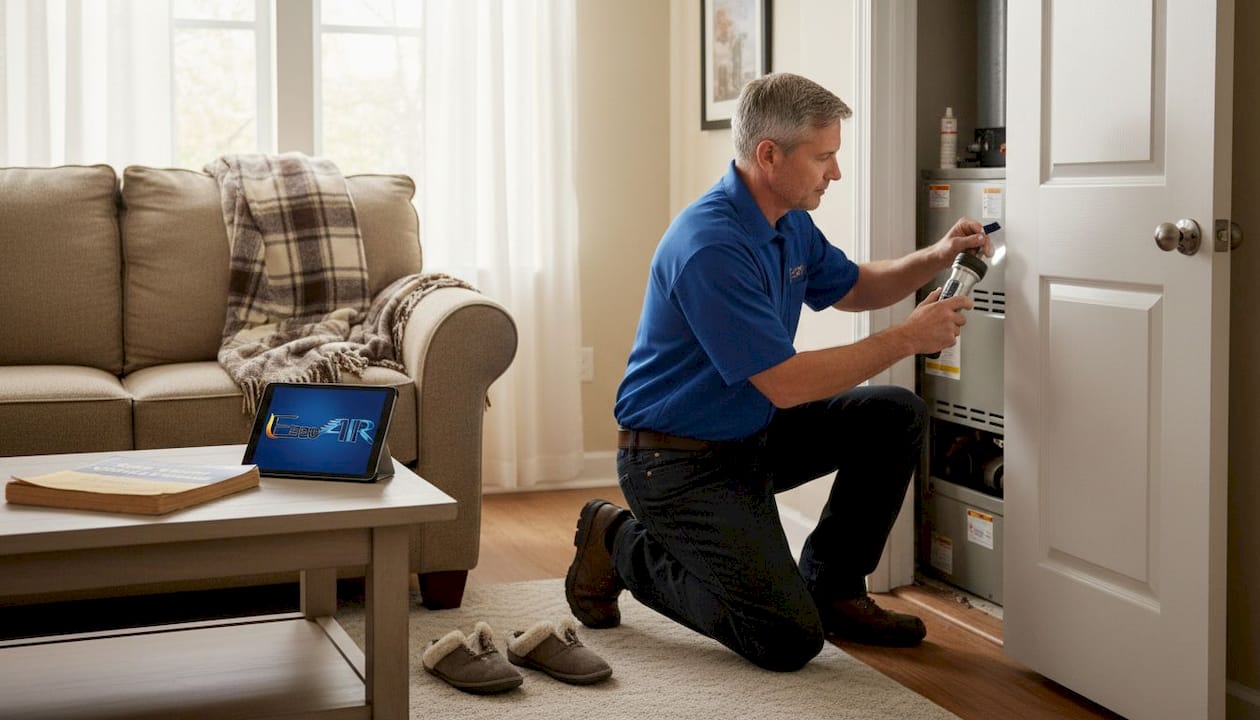
Your furnace has several built-in safety devices, and every single one exists for a reason. They're not accessories. They're what stands between a normal heating cycle and a genuinely dangerous situation inside your home.
Here's a look at the major players:
Pressure switch: Monitors airflow through the inducer. If a vent is blocked, the inducer motor fails, or the drain line on a high-efficiency furnace is clogged, the pressure switch stays open and stops the ignition sequence cold.
Flame sensor: A thin metal rod that detects whether the burner actually ignited. Dust and oxidation build up on this rod over time, reducing its ability to conduct the small electrical current it needs. A dirty flame sensor is one of the most common causes of short-cycling in Southern California furnaces that sit idle most of the year.
High-limit switch: Prevents overheating of the heat exchanger. If airflow is restricted (usually a clogged filter), the exchanger gets dangerously hot. The limit switch trips, cutting the burners. If this happens repeatedly, the heat exchanger can crack, potentially allowing combustion gases to mix with your indoor air.
Rollout switches: Located near the burner area, these are one-time-trip safety devices that detect if flames are rolling out of the burner compartment rather than staying contained. A rollout switch trip is a serious warning and should never be reset without professional inspection.
Here's a quick reference table to understand normal operation versus safety trips:
| Component | Normal function | Safety trigger | Homeowner symptom |
|---|---|---|---|
| Pressure switch | Confirms inducer airflow | Blocked vent or failed inducer | Furnace won't ignite |
| Flame sensor | Detects active burner flame | Dirty or corroded sensor | Short-cycling after ignition |
| High-limit switch | Monitors heat exchanger temp | Clogged filter or blocked airflow | Burners cut off mid-cycle |
| Rollout switch | Detects flame rollout | Cracked heat exchanger or blockage | Furnace won't restart |
Red flags that point to a safety device issue:
- Furnace ignites but shuts off within 5 to 10 seconds
- System runs for a few minutes, then stops unexpectedly
- You smell burning dust or a faint metallic odor at startup
- The furnace display shows an error code (check your owner's manual)
- Repeated tripping of the same safety device
As safety sequence faults often trace back to sensors, ignition problems, or switches rather than thermostat failures, troubleshooting usually involves the full sequence, not just the obvious parts. For deeper help with ignition and sensor issues, it helps to understand what each device is actually doing.
Pro Tip: Never jumper out or bypass a furnace safety device. These components exist to prevent fires, carbon monoxide leaks, and heat exchanger failures. A bypassed safety device is a hazard, not a fix.
Efficiency, AFUE ratings, and why it matters for Southern California homes
Once you grasp the tech under the hood, the next key issue is how well it turns dollars into comfort. This is where furnace efficiency comes in.
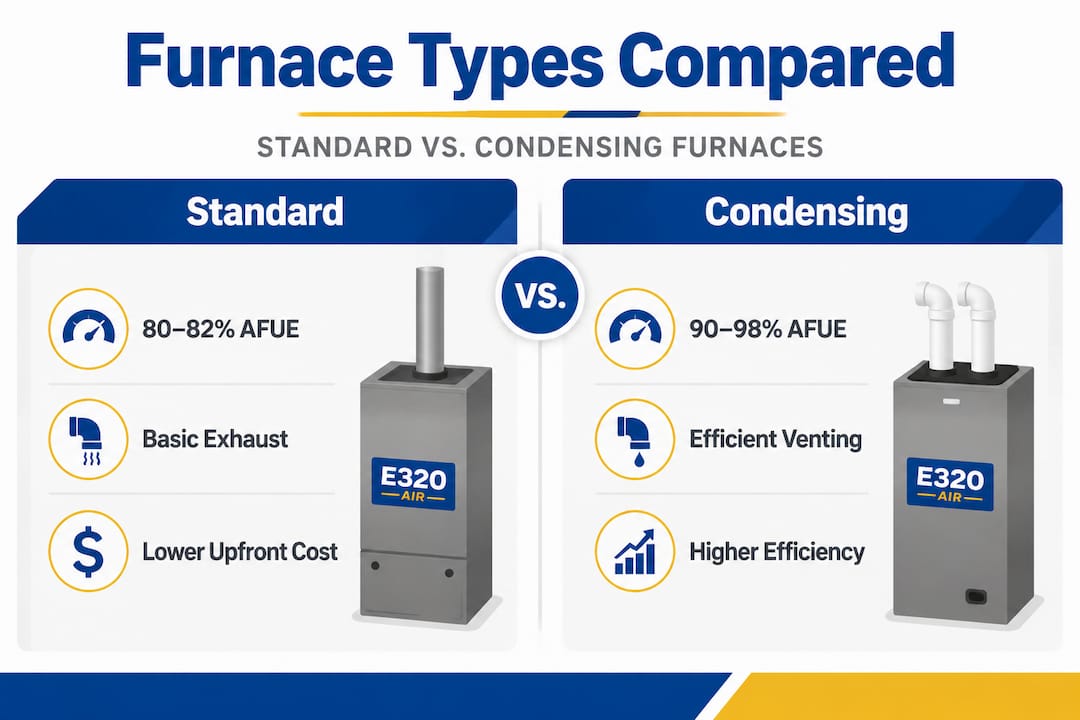
AFUE stands for Annual Fuel Utilization Efficiency. It tells you what percentage of the fuel your furnace burns actually becomes heat in your home. An 80% AFUE furnace converts 80 cents of every dollar of gas into usable heat. The other 20 cents goes up the flue as exhaust.
High-efficiency condensing furnaces typically run between 90% and 98% AFUE, while standard non-condensing models generally land between 80% and 82%.
| Furnace type | AFUE range | How it handles exhaust | Best for |
|---|---|---|---|
| Standard non-condensing | 80%–82% | Metal flue, high-temp exhaust | Budget replacement, limited runtime |
| Mid-efficiency | 83%–89% | Metal flue | Moderate use climates |
| High-efficiency condensing | 90%–98% | PVC pipe, cooled exhaust | High runtime, long-term savings |
For Southern California homeowners, the AFUE conversation is a bit different than in Minnesota. Your furnace runs far fewer hours per year, so the efficiency premium pays back more slowly. A 96% AFUE unit saves meaningful money in Denver. In San Bernardino or the Inland Empire, where you might only run your furnace 200 to 400 hours a year, the payback period stretches out.
That said, here are situations where higher AFUE still makes sense in SoCal:
- You're replacing an aging 70s or 80s unit still running at 60% to 70% efficiency
- You use gas heating in a larger home with multiple zones
- You qualify for utility rebates that offset the installation premium
- You're also upgrading ductwork and want to maximize the whole system's performance
For a detailed look at your furnace replacement options, it helps to evaluate both upfront cost and expected annual runtime before committing to a high-efficiency model. You might also explore HVAC zoning to maximize comfort without running the full system every time.
Unique challenges and maintenance needs for Southern California furnaces
Efficiency is only as good as your system's maintenance. Let's focus on what uniquely matters for Southern California homeowners.
Here's the thing most SoCal homeowners don't expect: your furnace can deteriorate faster from sitting than from running. While reduced runtime can actually extend furnace life, infrequent use still allows dust to coat the flame sensor, oxidation to form on burner surfaces, and debris to clog the inducer. Then, the first cold snap of November arrives, you turn the heat on for the first time in eight months, and nothing happens.
That scenario plays out across the region every single year.
Here's your pre-season maintenance checklist before firing up the furnace for the winter:
- Replace or inspect the air filter. A clogged filter starves the furnace of airflow, triggering the high-limit switch and causing short-cycling.
- Visually inspect the flame sensor. If it looks gray or filmed over, it needs cleaning. A technician can clean it in minutes with light steel wool.
- Check the exhaust vent. Birds nest in PVC vent terminations during the off-season. Even a partial blockage will prevent the pressure switch from closing.
- Clear the area around the furnace. Stored items too close to the unit restrict airflow and create fire hazards.
- Test the thermostat. Switch it to heat mode and confirm it calls for the furnace before cold weather arrives.
- Listen during the first full cycle. Unusual sounds (banging, rattling, or squealing) during initial startup are worth investigating before they worsen.
Keeping air quality inside your home tied directly to your furnace filter and ductwork is an often-overlooked part of seasonal prep.
"Annual maintenance is the single most effective thing a Southern California homeowner can do to prevent a no-heat emergency in January."
Symptoms that often appear after long periods of inactivity:
- Yellow or orange burner flames instead of blue (sign of incomplete combustion)
- Burning dust smell during the first few cycles (normal if brief, a concern if it persists)
- Furnace kicks on but blower doesn't follow
- Repeated trips within the first hour of use
- Error codes that weren't present last season
Pro Tip: The best time to schedule a furnace tune-up is September or early October. You'll beat the holiday rush, and if a part needs replacing, you won't be waiting in line during the first cold week of the year. Understanding your seasonal HVAC needs as a Riverside County or greater SoCal homeowner makes that timing even more critical.
Routine homeowner maintenance like swapping filters regularly and keeping vent pathways unobstructed handles a significant portion of the issues that would otherwise require a service call.
Most furnace problems aren't what you think: the case for strategic seasonal care
Now that you have practical maintenance strategies, let's debunk some myths and share the most important lesson learned from helping hundreds of Southern California homeowners.
The conventional belief is that furnaces wear out from running too much. In SoCal, that's simply not the pattern we see. The furnaces that cause the most grief are usually the ones that ran perfectly last season, sat untouched through spring and summer, and then failed silently in ways nobody noticed until November. Dust is insidious. It builds on flame sensors and reduces conductivity. It coats burner surfaces and affects combustion quality. It collects in drain lines on high-efficiency units and triggers pressure switch faults.
The real cost of skipping annual maintenance isn't a worn-out furnace. It's a surprise $400 service call on a cold Friday night because a $12 flame sensor cleaning never happened.
There's another part of this that most homeowners miss: safety switches don't fail dramatically. They degrade slowly. A rollout switch that tripped last season and was simply reset without inspection is a warning that was ignored. A heat exchanger that's been overheating repeatedly because a filter went unchanged for two years may have micro-cracks that are impossible to see without professional inspection. Those are the situations that lead to carbon monoxide entering the living space.
The furnaces we see at heater repair calls that are genuinely past saving almost always have a history of deferred maintenance, not hard use. An 18-year-old furnace that gets a clean filter and an annual tune-up can outlast a 10-year-old unit that's been running dirty. The math isn't complicated. Small, consistent attention is always cheaper than reactive emergency repairs, and it keeps your family safer in the process.
Get professional help or upgrades for your home's heater
If you're ready to put this knowledge into practice or need expert repairs and upgrades, here's how to get quality help in Southern California.
Understanding how your furnace works is genuinely empowering, but some jobs belong with a licensed professional. Flame sensor cleaning is a quick DIY task. Cracked heat exchanger inspection, gas valve testing, or pressure switch diagnostics are not. Attempting those without the right tools and training creates real risk.
Our team handles everything from quick pre-season tune-ups to full HVAC installation when it's finally time to replace an aging system. If you want to see how we've solved real heating problems for homeowners across the region, browse our problem-solving gallery for real-world examples. Whether you need a fast diagnostic or a whole-system upgrade, we're here to make sure your home is warm, safe, and efficient before the next cold snap arrives.
Frequently asked questions
How often should I service my furnace in Southern California?
You should schedule professional service once a year, ideally before the heating season. Annual tune-ups prevent ignition failures and corrosion problems that develop even in mild climates where the furnace rarely runs.
What is the average lifespan of a gas furnace in Southern California?
A well-maintained gas furnace in SoCal can last 15 to 20 years. Since reduced runtime extends furnace life in mild climates, a properly cared-for unit here often outlasts the national average.
What does AFUE mean and how does it affect my energy bills?
AFUE stands for Annual Fuel Utilization Efficiency and measures how much fuel converts to heat. A higher AFUE metric means less wasted gas and lower monthly operating costs.
Why does my furnace turn on, then shut off quickly (short cycling)?
Short-cycling is almost always a safety sequence problem. Safety sequence faults are typically caused by clogged filters, dirty flame sensors, or ignition issues rather than thermostat failure.
What maintenance can I do myself?
You can change your air filter monthly, keep vents and registers clear of furniture or debris, and visually check for dust buildup near the burner. Homeowner maintenance like replacing filters and clearing vent pathways handles a significant portion of common furnace issues.