
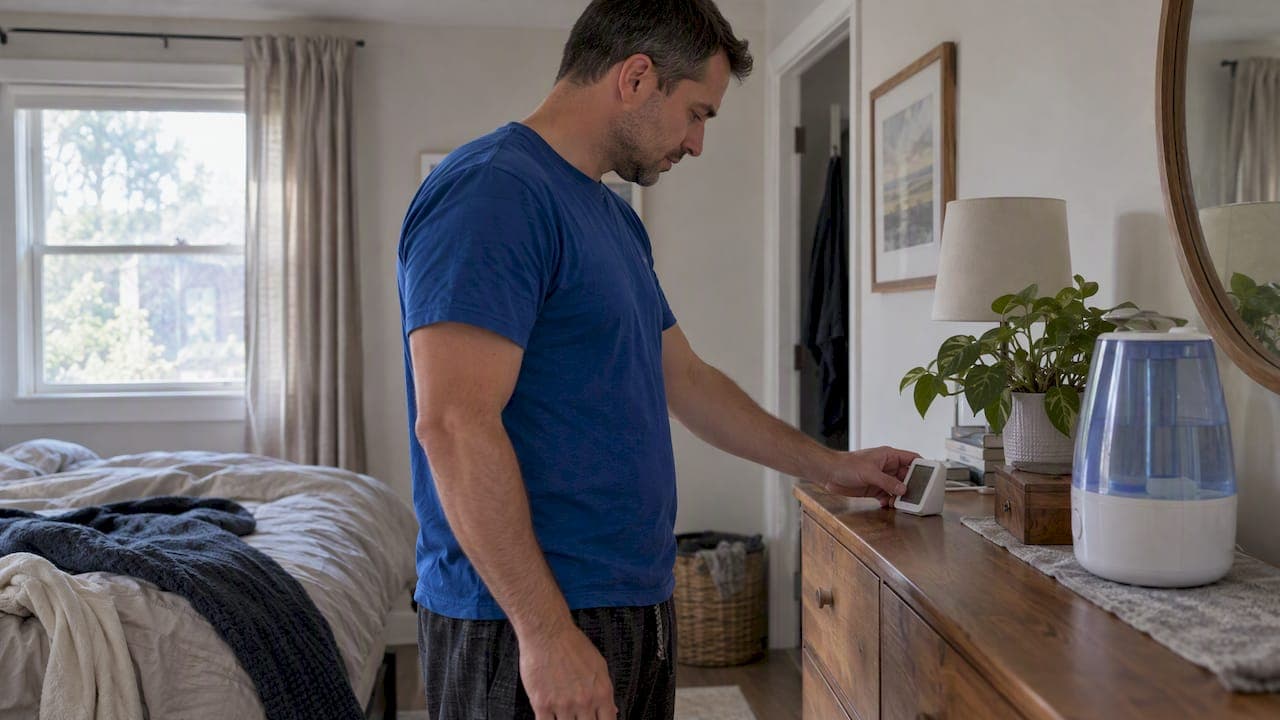
If your indoor air feels thin and dry, check it against the EPA's recommended range of 30% to 50% relative humidity. Grab a hygrometer and test the room you sleep in tonight.
TL;DR:
- For quick relief, dry laundry indoors or use a bedroom humidifier; portable units work locally but are inefficient across an entire home.
- Stop adding moisture if windows fog, and keep humidity at or below 50%, since excess moisture encourages mold and dust mites.
- Ultrasonic and impeller humidifiers can spread minerals and microorganisms; use distilled water, rinse tanks daily, and deep clean them weekly.
- If low humidity persists throughout the home or varies sharply by room, ask a contractor to test ductwork and air leaks.
- People with asthma or allergies should consult a healthcare professional before using a humidifier, following Mayo Clinic guidance on those conditions.
Table of Contents
- Why indoor air gets dry in the first place
- What very dry air does to your health, comfort, and home
- Fast, low-cost ways to add humidity safely tonight
- Which humidifier type fits your home, and how to run it safely
- When dry air calls for an HVAC professional instead of a humidifier
- A technician's take on chasing the right humidity number
- How E320 Air helps when DIY fixes aren't enough
- FAQ
- Sources
Why indoor air gets dry in the first place
Cold outdoor air simply holds less water vapor than warm air, and once your furnace heats that air, the relative humidity drops even further. That is why dry air shows up hardest in winter, even in homes that feel humid enough in July.
Your house itself often makes it worse. Uncontrolled gaps around windows, doors, and attic penetrations let dry outdoor air leak in and pull moist indoor air out. Sealing those leaks helps the home hold onto humidity and can cut heating and cooling costs by roughly 10% to 20%, according to Department of Energy-aligned research. Our guide to preventing HVAC leaks covers common leak points worth checking first.
Your HVAC system plays a role too. Leaky ducts, unbalanced return air, and air conditioning that strips moisture out of the air can all leave rooms drier than they should be.
- Cold winter air naturally carries less moisture, and heating it lowers relative humidity further.
- Air leaks around doors, windows, and attic penetrations pull in dry outdoor air and let indoor moisture escape.
- Duct leaks and unbalanced airflow move far more water vapor than simple diffusion through walls, according to Building America research, which can swing humidity readings room to room.
Warmer air can hold more moisture than cold air, which is the whole reason heated homes dry out so fast in winter.
What very dry air does to your health, comfort, and home
Dry air shows up on your body before you notice it anywhere else. Cracked lips, an itchy throat, dry nasal passages, and more frequent nosebleeds are common complaints. Mayo Clinic advises people with asthma or allergies to consult a healthcare professional before using a humidifier.
Your house feels it too. Dry air can also affect the home, with possible signs including static shocks, peeling wallpaper, cracked paint, or changes in wood furniture and flooring.
- Dry skin, chapped lips, irritated sinuses, and more frequent nosebleeds are the most common complaints.
- Static electricity builds up on carpets, clothing, and doorknobs when the air is too dry to conduct it away.
- Dry indoor air may affect wood floors, doors, and furniture.
The EPA sets the target indoor relative humidity at 30% to 50%, a range narrow enough that it's worth checking with an actual hygrometer rather than guessing by feel. Humidity above 50% can promote mold and dust-mite growth, according to EPA guidance. Condensation on windows can also signal excess moisture.
Fast, low-cost ways to add humidity safely tonight
You don't need new equipment to make tonight more comfortable. Start with what is already in your house, then measure before you do anything more.
- Check your current humidity with a hygrometer, and if your humidifier has a built-in humidistat, set it to stop at 50% RH, per EPA guidance.
- You can try boiling water on the stove or taking a shower with the door open and the exhaust fan off to add moisture to the air.
- Hang laundry to air-dry indoors instead of using the dryer, which releases moisture into the room as it dries.
- Place a portable humidifier in the bedroom rather than trying to humidify the whole house at once, since single-room units are effective locally but inefficient across an entire home.
- Set bowls of water or a few houseplants near heat sources or sunny windows, away from furniture or flooring that could be damaged by nearby moisture.
Watch for window condensation as you go. If you see fogging or moisture building up on the glass, you've likely hit the ceiling of safe humidity for the current outdoor temperature, and it's time to back off rather than add more.
Pro Tip: Keep a cheap hygrometer in your bedroom year-round. It takes the guesswork out of knowing when to humidify and when to stop.
Which humidifier type fits your home, and how to run it safely
Portable humidifiers come in several styles. Ultrasonic and impeller models produce a cool mist and run quietly, but they can disperse minerals and even microorganisms into the air if the tank isn't cleaned regularly. Evaporative units use a wick and fan. Warm-mist steam units boil water before releasing it.

Whole-house or central humidifiers connect to your HVAC system and distribute moisture through the ductwork. They may be an option when portable units aren't solving a whole-home humidity problem. Our post on whole-house humidifier benefits goes into more detail on how that setup compares to room-by-room units.
Maintenance matters as much as the type you choose:
- Use distilled or demineralized water in ultrasonic and impeller units to cut down on mineral dust released into the air, especially where tap water is hard.
- EPA guidance says manufacturers typically recommend rinsing the tank daily and deep cleaning weekly. Standing water can breed bacteria and mold.
- Follow manufacturer cleaning instructions, or use a 3% hydrogen peroxide solution when no instructions are available.
Both the EPA and Mayo Clinic agree on one hard limit: never let indoor relative humidity run above 50%, since that is the point where mold and dust mites start to thrive. A hygrometer or built-in humidistat makes it easy to stay inside that range without constant guesswork.
When dry air calls for an HVAC professional instead of a humidifier
Some dry air problems aren't going to respond to a humidifier on the nightstand, no matter how often you run it. If every room in the house reads low on a hygrometer despite portable units, if your energy bills have crept up without explanation, or if you notice condensation building inside walls or window frames, those point to something structural rather than seasonal.
A contractor can assess issues a portable humidifier can't address, such as air leaks, ductwork, or whether a balanced ventilation system like an HRV or ERV may suit your home. Our overview of HVAC air quality improvements walks through how these pieces fit together.
- Persistent low humidity throughout the home may warrant an assessment of air leaks or duct problems.
- Rising energy bills alongside dry air may be a reason to check whether the home is holding conditioned air and moisture.
- Large humidity differences between rooms suggest uneven airflow that a contractor can diagnose with pressure and duct testing.
Sealing air leaks can cut heating and cooling costs by 10% to 20%. Consider ventilation needs when planning air sealing. For door and window drafts specifically, this guide to winterizing doors covers simple weatherization steps worth trying before a full inspection. If window panes are fogging between the glass itself rather than on the surface, this condensation diagnostic checklist can help you figure out whether it's a humidity issue or a failed window seal.
Pro Tip: Before hiring anyone, ask what diagnostics they use (hygrometer readings, duct pressure testing), request a written estimate, and confirm what's covered under warranty.
A technician's take on chasing the right humidity number
Measuring first saves people money and frustration. Some dry-air complaints may respond to a portable humidifier and habit changes. If the problem persists throughout the home, consider whether the house itself is losing moisture. Fix what you can see before assuming you need new equipment, and bring in a professional when the problem is bigger than one room.
Remove the attribution.
How E320 Air helps when DIY fixes aren't enough
When portable humidifiers and sealed doorframes still leave your home feeling dry, a whole-home assessment usually finds the real cause faster than more trial and error. We handle whole-house humidifier installation tied directly into your HVAC system, duct and air sealing, ventilation evaluation for HRV/ERV options, and the routine maintenance and repairs that keep a system running the way it should.

An in-home visit starts with a diagnosis of where your home is losing humidity, followed by a written recommendation and transparent pricing, with financing options available. If you've measured your air, tried the quick fixes, and the dryness hasn't budged, reach out for a residential HVAC evaluation and we'll help you figure out what your home actually needs.
FAQ
What are the symptoms of dry air in a house?
Common signs include chapped lips, dry or itchy skin, nosebleeds, static shocks, and irritated sinuses, along with household clues like peeling wallpaper, cracked paint, and shrinking wood furniture or flooring. If you notice several of these at once, check your relative humidity against the EPA's 30% to 50% target with a hygrometer.
How do you fix dry air in your house?
Start by measuring humidity with a hygrometer, then add moisture through a portable humidifier, steamy showers, or indoor air-drying of laundry while watching for condensation on windows. If dryness persists across the whole house despite these steps, the cause is often air leaks or HVAC issues that a whole-house humidifier or professional air sealing can resolve.
Can opening a window help with dry air?
Opening a window may not help with dry air in winter. Cold outdoor air contains less water vapor than warm air, and heating it lowers its relative humidity. Sealing drafts may help the home retain conditioned air and moisture.
Do air purifiers help with dry air?
Air purifiers filter particles like dust and allergens but do not add moisture to the air, so they won't raise low humidity on their own. A humidifier, not a purifier, is the tool for correcting relative humidity below the EPA's recommended 30% to 50% range.
Sources
- Use and Care of Home Humidifiers | US EPA
- Energystar
- Humidifiers: Ease skin, breathing symptoms - Mayo Clinic