
Most furnaces blowing cold air are stuck on one of four things: the thermostat fan is set to ON instead of AUTO, the air filter is clogged, the pilot or flame sensor has failed, or a safety switch shut the burners off. Set the fan to AUTO, swap the filter, and open every vent first. If warm air still doesn't show up within about 15 minutes, stop troubleshooting and call a technician.
TL;DR:
- Most cold air issues are caused by the thermostat fan being on instead of auto, a clogged filter, or a safety switch shutting off the burners.
- Overheating from airflow restrictions or a failed flame sensor can trigger the furnace to temporarily blow cold air after initial warm-up.
- Resetting the furnace involves turning off power, waiting 30 seconds, and then observing the sequence of components firing; failure at specific steps indicates the problem.
- Persistent cold air after basic checks suggests mechanical faults like duct leaks, high-limit switches, or control board failures, often requiring professional diagnosis.
- Homeowners should call a technician if they smell gas, see soot, experience repeated lockouts, or encounter error codes that are beyond DIY troubleshooting.
Table of Contents
- Why Is My Furnace Blowing Cold Air? Start With These Checks
- What's Actually Causing the Cold Air?
- How Do You Safely Reset and Test a Furnace?
- When Should You Call an HVAC Technician?
- What Do HVAC Technicians See Most Often?
- An Editorial Note on Furnace Safety
- Get a Diagnostic Visit From E320air
- Sources
Why Is My Furnace Blowing Cold Air? Start With These Checks
Before you assume the worst, run through five checks that take less than ten minutes combined and solve the majority of "no heat" complaints.
- Set the thermostat to HEAT and the fan to AUTO. If the fan switch is set to ON, the blower runs nonstop and pushes room-temperature air through the ducts even when the burners aren't firing. Carrier notes this is one of the most common causes of cold air, and flipping the switch to AUTO alone resolves a lot of service calls.
- Check the batteries and the schedule. A thermostat running on dying batteries can drop into a weird state or stop calling for heat correctly. If it's a smart thermostat, confirm the schedule hasn't quietly slipped into "away" or "eco" mode.
- Pull the air filter and hold it up to a light. If you can't see light through it, replace it. Filters have an airflow arrow printed on the frame; that arrow points toward the furnace, in the direction of airflow. Install it backward and you choke airflow even with a brand-new filter.
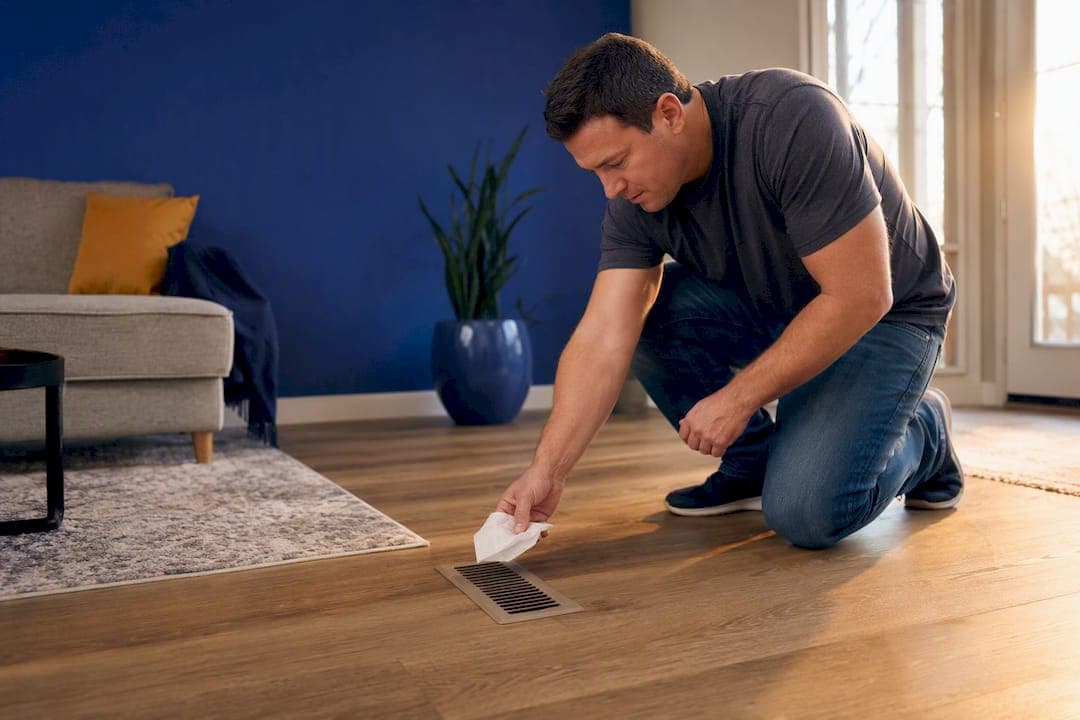
- Walk the house and open every supply and return vent. Furniture, rugs, and boxes pushed in front of a return vent restrict airflow just as much as a dirty filter does. Closed vents in unused rooms don't save energy on a forced-air system; they just add pressure to the system.
- Check the power switch and breaker. Furnaces have a wall switch that looks like a light switch, often near the unit or at the top of the basement stairs. Confirm it's on, then check your electrical panel for a tripped breaker. If you smell gas at any point, skip every other step, leave the house, and call your gas utility from outside before doing anything else.
One more thing worth knowing: a short blast of cool air right when the furnace kicks on is normal. The heat exchanger needs a minute or two to warm up before the blower pushes hot air, and Lennox's troubleshooting guide confirms this brief cool start is expected behavior, not a fault.
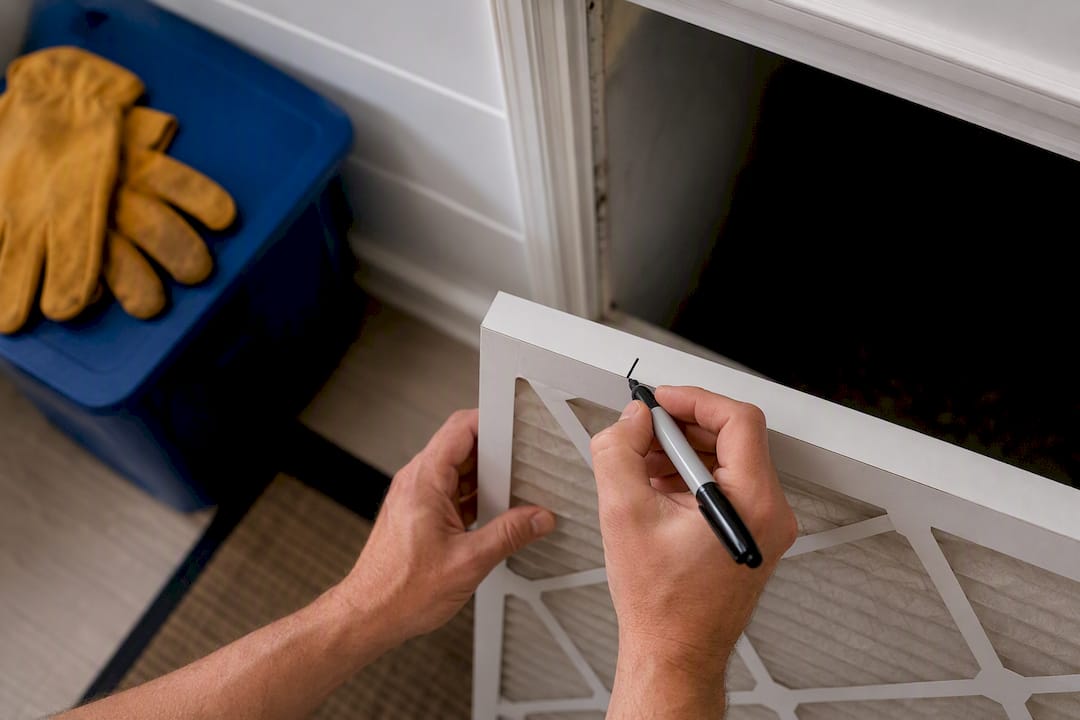
Pro Tip: Mark the filter's install date on the frame with a permanent marker every time you change it. It ends the guessing game and tells you instantly, next time you're troubleshooting, whether "the filter is fine" is actually true.
What's Actually Causing the Cold Air?
Once you've ruled out the fan switch and the filter, the remaining causes fall into a handful of mechanical and control failures, each with a distinct symptom pattern.
- Airflow restriction triggers a high-limit shutdown. A clogged filter, blocked return, or crushed duct chokes airflow across the heat exchanger. It overheats, a safety switch called the high-limit trips, and the burners shut off while the blower keeps running, pushing cold air through the vents. Bryant walks through this exact chain: restricted airflow leads to an overheated heat exchanger, which trips the limit switch.
- Ignition or flame-sensor failure. The burners light briefly, the flame sensor fails to detect a stable flame, and the control board shuts gas flow off as a safety measure. You might notice a few seconds of warmth followed by the blower running cold for the rest of the cycle.
- Condensate or pressure-switch faults on high-efficiency units. Condensing furnaces route exhaust through a drain line and monitor pressure with a switch. A clogged drain or a stuck switch prevents ignition entirely, and the system won't even attempt to fire. This is a common furnace maintenance blind spot; if your system freezes or drains poorly in other seasons, it's worth reading about why HVAC systems freeze in summer for related plumbing and drainage issues.
- Control board, inducer, or blower motor faults. The control board sequences every step of ignition. If a relay fails or the inducer motor (which pulls air through before ignition) doesn't spin up, the board never lets the burners fire, and the blower runs on schedule regardless.
- Duct leaks or too many closed vents. Even a functioning furnace can feel like it's blowing cold if heated air is leaking into an attic or crawlspace before it reaches your registers.
A repeating pattern where you get a few minutes of heat, then cold, then heat again, is a signature. Carrier's own diagnostic guidance treats this cycling as classic high-limit behavior driven by airflow restriction, not a random glitch. If your system has done this before, it may be worth reading about why HVAC systems short cycle for a closer look at the pattern.
How Do You Safely Reset and Test a Furnace?
A furnace reset is a diagnostic tool, not a repair. Here's how to do it and what to watch for:
- Turn the thermostat off, then cut power at the furnace's wall switch or the breaker. Wait 30 seconds. This clears a lockout the control board may have latched into after repeated failed ignition attempts.
- Restore power, set the thermostat to HEAT, and call for a normal cycle.
- Watch the sequence in order: the inducer motor spins up first, then the igniter glows or clicks, then you should see or hear the flame catch, then the blower kicks in a short delay later. Each stage tells you where the failure is happening.
- Give it about 10 to 15 minutes. If warm air hasn't arrived by then, stop and note exactly what you saw.
| What you observed | Likely stage of failure |
|---|---|
| Inducer never starts | Power, control board, or inducer motor |
| Inducer runs, no igniter glow or spark | Igniter or control board |
| Igniter fires, flame doesn't hold | Flame sensor or gas supply |
| Flame holds, blower stays cold | Blower motor or wiring |
Write down any clicking, humming, error codes, or blinking LED patterns on the control board. Bryant notes that a reset only providing temporary heat is itself a diagnostic clue: it points to an underlying combustion or safety-control fault, not a one-time fluke.
When Should You Call an HVAC Technician?
Some symptoms aren't DIY territory, full stop. Call a professional if you notice any of the following:
- Any smell of gas, at any point, before or during troubleshooting.
- The furnace locks out repeatedly even after a proper reset.
- You see soot around the burner compartment or corrosion on the heat exchanger.
- Cold air persists after you've checked the fan, filter, vents, and breaker.
- The control board displays a blinking fault code you can't identify.
Flame sensors, gas valves, heat exchangers, and pressure switches involve combustion safety and warranty-sensitive parts. The Spruce's troubleshooting rundown backs this up: homeowner checks solve plenty of no-heat calls, but anything touching gas or sealed combustion belongs to a licensed technician. Most diagnostic visits run 30 to 60 minutes; have your furnace's model number, any fault codes, and a rough timeline of when the problem started ready for the technician.
Pro Tip: Book a diagnostic visit before you book a repair. A diagnostic tells you exactly what's wrong before anyone quotes you a fix, so you're not paying to guess.
What Do HVAC Technicians See Most Often?
Most "no heat" calls we run trace back to a filter, a thermostat setting, or a blocked return, not a broken furnace. Replace disposable filters regularly every heating season, book an annual tune-up, and never open the gas valve, burner assembly, or control board yourself.
An Editorial Note on Furnace Safety
The instinct to fix a cold furnace yourself is reasonable; the checks in this guide are genuinely safe and solve most cases. But combustion and gas components carry real risk, and the moment a fix requires opening a sealed system or touching a gas line, that instinct needs to yield to a licensed technician.
— Edward
Get a Diagnostic Visit From E320air
If the fan switch, filter, and vents didn't fix it, you're likely looking at an ignition, control board, or airflow problem that needs a trained eye, not another YouTube tutorial. E320air runs full diagnostic visits that trace the exact failure point (ignition control, flame sensor, blower motor, duct restriction) before quoting a single dollar of repair work, so you know what you're paying for before you agree to it.
A typical visit starts with the same reset and observation sequence covered above, but with combustion analyzers and control-board diagnostics a homeowner can't run at home. From there, you get a written estimate, not a guess. E320air also handles filter and airflow service, ignition control repairs, and duct sealing for homes where leaky ductwork is quietly undercutting heating performance. If your furnace is older and the diagnosis points toward replacement rather than repair, the HVAC installation page covers what that process looks like. Ready to get an actual answer instead of another guess? Book a diagnostic visit with E320air and get your heat back on a real schedule.
Sources
- Furnace Blowing Cold Air | Carrier
- Is your furnace blowing cold air? | Lennox
- Why your furnace isn’t blowing hot air (The Spruce)