
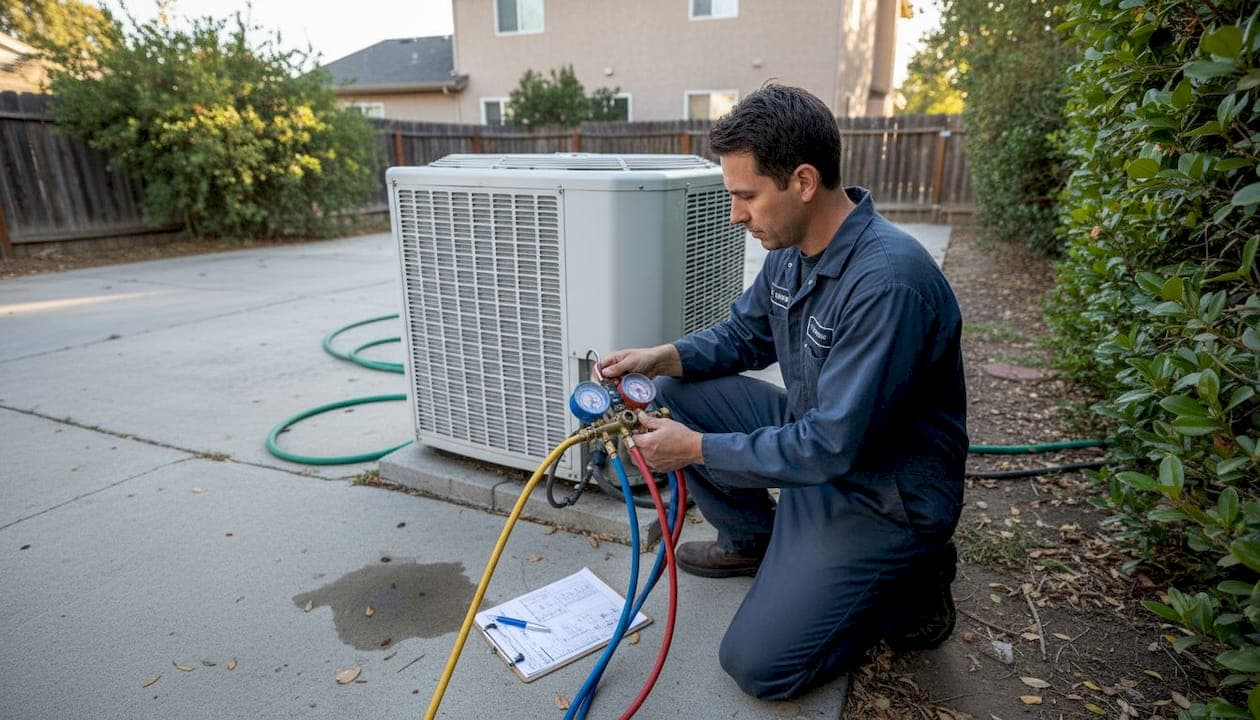
TL;DR:
- Proper planning, permits, and load calculations are essential for a compliant HVAC installation.
- Using licensed contractors ensures code adherence, system efficiency, and warranty validity.
- Regular maintenance prolongs system lifespan and prevents costly failures, especially in Highland's climate.
Getting your HVAC installation wrong in Highland, California is not just uncomfortable. It can cost you thousands in fines, failed inspections, and voided equipment warranties. HVAC installations in California require mechanical permits and strict code compliance enforced by San Bernardino County. Highland homeowners face a unique combination of intense summer heat, Title 24 energy requirements, and local mechanical codes that make proper planning absolutely essential. This guide walks you through every stage of a compliant, efficient HVAC installation, from pulling permits to passing your final inspection, so you invest your money wisely and stay comfortable year-round.
Table of Contents
- What you need before starting HVAC installation in Highland
- Step-by-step HVAC installation process for Highland homes
- How to avoid common HVAC installation mistakes in Highland
- Passing inspection and maximizing your new HVAC system's lifespan
- A smarter way to plan your Highland HVAC upgrade
- Ready for a code-compliant HVAC installation in Highland?
- Frequently asked questions
Key Takeaways
| Point | Details |
|---|---|
| Permits are required | You must obtain a mechanical permit and follow California code for any HVAC install in Highland. |
| Professional sizing matters | Get a Manual J load calculation by a pro to ensure efficiency and prevent costly mistakes. |
| DIY risks are high | Improper self-installation can fail inspection, void warranties, and even break the law. |
| Inspection is mandatory | A final inspection is required to pass and activate your system safely. |
What you need before starting HVAC installation in Highland
Before a single piece of equipment gets ordered, you need to understand what Highland and California require. Skipping the preparation phase is the single fastest way to fail an inspection, void a manufacturer warranty, or end up with a system that cannot keep up with a 105-degree Inland Empire summer.
Permits and code compliance
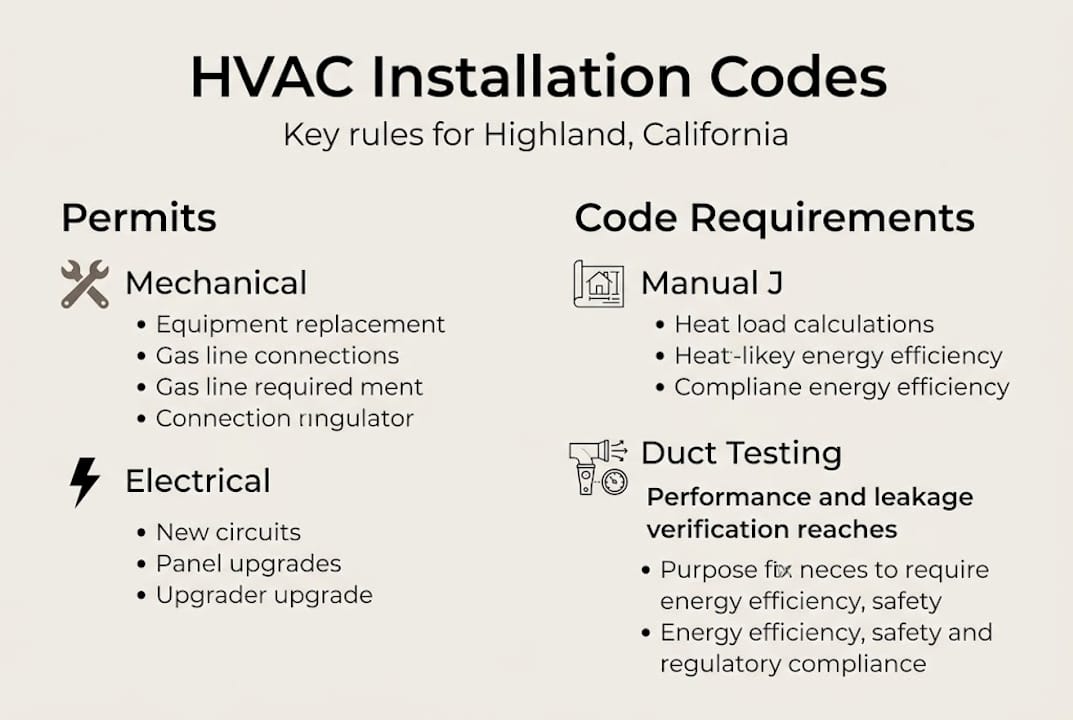
Mechanical permits are required for any HVAC installation or replacement project over $500 in California, including Highland. That covers new systems, full replacements, and significant alterations. Your contractor must pull this permit before work begins, not after. The permit triggers inspections that confirm your system meets California Building Code, California Mechanical Code, and Title 24 Energy Standards.
Manual J load calculation
System sizing is not a guess. A Manual J load calculation is a formal engineering process that accounts for your home's square footage, insulation levels, window placement, and local climate data. Installing a system that is too large causes short-cycling, high humidity, and premature wear. Too small and your system runs constantly without ever reaching your thermostat setting. Always insist on a documented Manual J before equipment selection. Check out these HVAC installation steps to understand how sizing fits into the full process.
General cost overview
For Highland homeowners, residential HVAC installation typically falls between $6,000 and $15,000 or more, depending on system type, ductwork condition, and permit fees. Budget for unexpected duct repairs, which are common in older San Bernardino County homes.
Essential checklist before installation day
- Confirmed mechanical permit pulled by your licensed contractor
- Completed Manual J load calculation on file
- Equipment selected and delivery scheduled
- Attic and crawl space access cleared
- Electrical panel capacity verified for new system load
- Existing ductwork inspected for leaks or damage
- Thermostat wiring reviewed
| Preparation task | Who handles it | Why it matters |
|---|---|---|
| Manual J load calc | Licensed contractor | Correct sizing, code compliance |
| Mechanical permit | Licensed contractor | Legal requirement, triggers inspection |
| Duct inspection | Contractor or inspector | Efficiency, Title 24 compliance |
| Electrical check | Electrician or contractor | Safety, proper system operation |
| Equipment selection | Homeowner + contractor | Efficiency rating, budget fit |
Pro Tip: Ask your contractor to show you the permit number before work starts. If they cannot provide one, that is a red flag. Understanding why hire a licensed contractor can save you from costly mistakes down the road.
Step-by-step HVAC installation process for Highland homes
With your prerequisites in order, let's walk through the Highland HVAC installation from first steps to final inspection. Each stage matters, and skipping even one can trigger a failed inspection or a callback visit.
Typical installation steps follow a proven sequence: Manual J calculation, equipment selection, permitting, installation, system testing, and final inspection. Here is how that plays out for a Highland home.
The 8-step installation process
- Site assessment: Your contractor evaluates your home's layout, existing ductwork, electrical capacity, and attic or crawl space conditions.
- Manual J calculation: Load calculation is completed and documented. Equipment is selected based on results.
- Permit application: Your contractor submits the mechanical permit application to San Bernardino County before any physical work begins.
- Equipment delivery and staging: Units arrive and are staged outside the work area. Existing equipment is safely disconnected and removed.
- Refrigerant line installation: New refrigerant lines are run, or existing lines are inspected and pressure-tested. Only EPA Section 608 certified technicians can handle refrigerants legally.
- Air handler and duct connections: The indoor unit is mounted, and all duct connections are sealed with mastic or metal tape per California Mechanical Code requirements.
- Electrical connections and thermostat wiring: All wiring is completed to code, and the new thermostat is programmed and tested.
- System startup and inspection: The system is charged, tested for proper operation, and a county inspector verifies compliance before the permit is closed.
Important: Do not attempt refrigerant work yourself. Federal law under Section 608 of the Clean Air Act prohibits unlicensed individuals from purchasing or handling regulated refrigerants. Violations carry fines up to $44,539 per day. Always use a licensed contractor for any refrigerant-related work.
| Task | Homeowner role | Contractor role |
|---|---|---|
| Equipment selection | Approve and budget | Recommend based on Manual J |
| Permit | None required | Pull and manage |
| Installation | Clear access areas | Perform all technical work |
| Inspection scheduling | Be available | Coordinate with county |
| System testing | Review results | Perform and document |
For a deeper look at how this installation workflow comparison differs by project type, or to explore your replacement options before committing to a system, those resources will help you make a more informed decision.
How to avoid common HVAC installation mistakes in Highland
With the steps outlined, it is just as important to recognize and avoid local pitfalls. Highland's climate and code environment create specific traps that catch unprepared homeowners every year.
The most common installation mistakes
- Skipping the Manual J calculation: Guessing system size based on square footage alone leads to oversized or undersized equipment. Manual J sizing and licensed contractor work are required for code compliance and to keep manufacturer warranties valid.
- Pulling no permit or using an unlicensed installer: Unpermitted work can result in fines, forced removal of equipment, and serious problems when you sell your home.
- Poor duct sealing: Leaky ducts waste 20 to 30 percent of conditioned air before it reaches your living space. California's Title 24 requires duct leakage testing on new and replacement systems.
- Ignoring electrical capacity: Newer high-efficiency systems sometimes require a dedicated circuit or panel upgrade. Overlooking this causes tripped breakers and potential fire hazards.
- Choosing the cheapest bid without vetting credentials: Low bids often mean unlicensed labor, no permit, or undersized equipment.
The real cost of getting it wrong
Replacement costs for residential HVAC in Southern California run $6,000 to $15,000 or more. If a system is installed incorrectly and fails early, you absorb that cost again, often without warranty coverage. Improper proper system sizing also drives up monthly energy bills, sometimes by hundreds of dollars per year in a Highland summer.
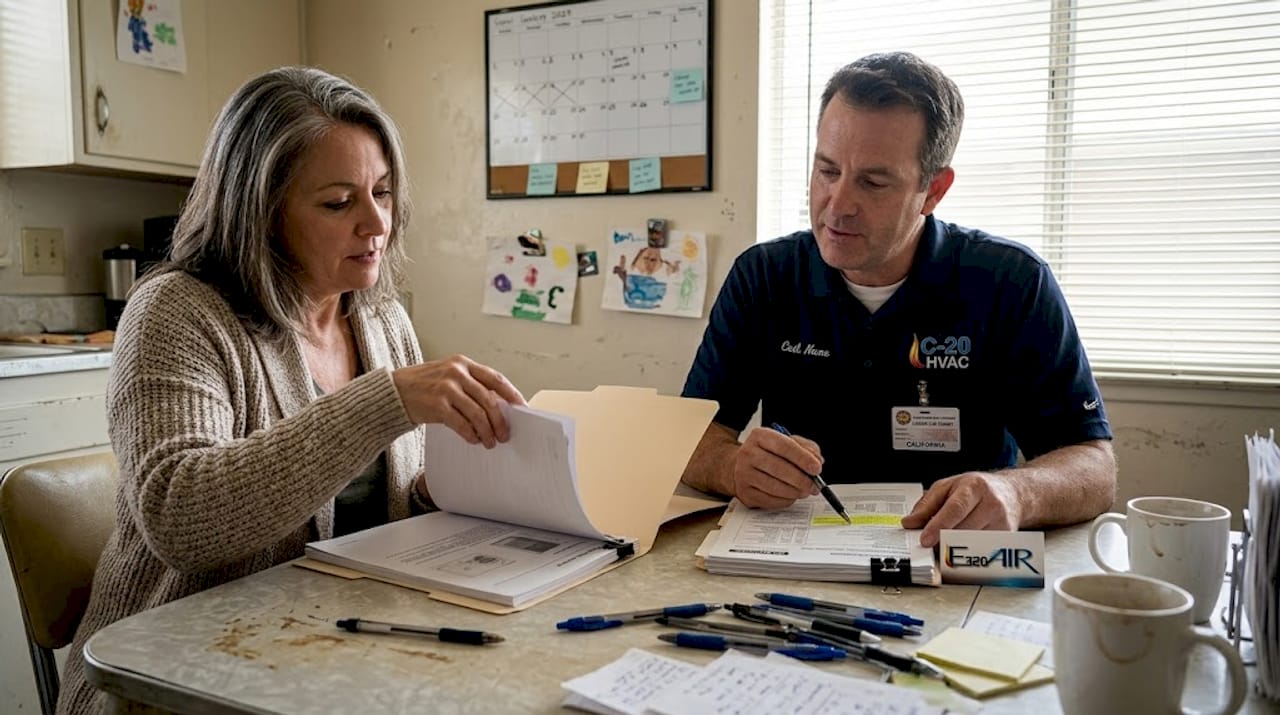
Pro Tip: Before signing any contract, verify your contractor holds a valid California C-20 Warm-Air Heating, Ventilating, and Air-Conditioning license. You can look this up instantly on the California Contractors State License Board website. Understanding the full importance of professional installation makes it clear why this step is non-negotiable.
Why improper sizing hurts more than comfort
An oversized system short-cycles, meaning it turns on and off too frequently. This wears out the compressor faster, creates humidity problems, and drives up repair costs. An undersized system runs constantly during Highland's peak summer heat, never reaching setpoint and burning through energy. Neither scenario is acceptable, and both are avoidable with a proper load calculation.
Passing inspection and maximizing your new HVAC system's lifespan
Once installation is complete, your journey concludes with inspection and begins again with maintenance. This final stage is where many homeowners relax too early.
Highland and San Bernardino County require a final inspection after installation to confirm code compliance. Your contractor schedules this with the county building department. The inspector will not just glance at the equipment. They check the full scope of the installation.
What inspectors verify at final inspection
- Permit is active and matches the installed equipment
- Refrigerant type and charge documentation
- Duct leakage test results (Title 24 compliance)
- Electrical connections and disconnect switch placement
- Equipment clearances from walls and combustibles
- Thermostat wiring and programmable controls
- HERS (Home Energy Rating System) documentation if required
Why systems fail inspection in Highland
The most common reasons for a failed inspection include missing duct leakage test results, improper electrical disconnects, equipment installed without a permit, and refrigerant documentation that does not match the installed system. All of these are contractor errors, which is exactly why choosing a licensed, experienced local pro matters. Review what to expect from an HVAC contractor so you know the right questions to ask before and after installation.
Long-term maintenance for Highland homes
Highland's dusty, hot climate is tough on HVAC equipment. A new system needs consistent care to deliver its rated lifespan of 15 to 20 years.
- Replace standard 1-inch filters every 30 to 60 days during peak season
- Schedule professional tune-ups every spring before cooling season
- Keep outdoor condenser coils clear of debris and landscaping
- Check refrigerant levels annually through a licensed technician
- Inspect duct connections every two to three years for leaks
Pro Tip: Set a recurring calendar reminder for filter changes and your annual tune-up. Most HVAC failures happen in the first week of a heat wave, when the system has been sitting idle and unmaintained all winter.
A smarter way to plan your Highland HVAC upgrade
Now that you know the process, here is a candid take from our experience working in the Inland Empire.
Most homeowners who run into trouble are not careless. They are trying to save money, which is completely understandable when you are looking at a $10,000 project. The problem is that the shortcuts that seem to save money upfront, skipping the permit, hiring the cheapest bidder, guessing at system size, almost always cost more in the end. A failed inspection means re-inspection fees and rework. A voided warranty means paying out of pocket for a compressor replacement. An oversized system means higher energy bills every single month for years.
The homeowners who get the best outcomes treat the planning phase as seriously as the installation itself. They ask for the Manual J in writing. They verify the C-20 license. They confirm the permit is pulled before day one. These are not complicated steps. They are just the ones that separate a smooth project from a stressful one. A good homeowner's guide to HVAC contractors gives you the exact questions to ask so you are never left guessing.
Investing in a detailed plan and a trusted local pro is not just about comfort. It is about protecting one of the biggest investments you will make in your home.
Ready for a code-compliant HVAC installation in Highland?
If you want every step done right the first time, working with a local expert who knows Highland's codes, climate, and inspection process makes all the difference. We handle the permits, the Manual J, the installation, and the final inspection coordination so you do not have to navigate any of it alone.

Explore our Highland HVAC installation service to see how we approach every project with full code compliance from day one. You can also browse our installation success stories to see real Highland-area results. When you are ready to move forward, reach out for a permit-ready quote and let us take the stress out of your upgrade.
Frequently asked questions
Do I need a permit for HVAC installation in Highland, CA?
Yes. Mechanical permits are required for any new, replacement, or altered HVAC system in Highland and throughout California. Your licensed contractor must pull this permit before work begins.
Can I install my own HVAC system in Highland?
DIY installation is strongly discouraged because of complex codes, refrigerant regulations and licensing requirements, and the need for a C-20 licensed contractor to pull permits and pass inspections.
What codes apply to HVAC installation in Highland?
Installations must meet California codes adopted by San Bernardino County, including California Building Code, California Mechanical Code, and Title 24 Energy Standards.
How much does residential HVAC installation cost in Highland?
Most Highland homeowners should budget $6,000 to $15,000 or more, based on typical residential installation costs in Southern California, including ductwork repairs and permit fees.