

TL;DR:
- HVAC technicians must obtain EPA Section 608 certification as a federal requirement before handling refrigerants. Additional qualifications, such as state licenses and voluntary certifications like NATE and OSHA 10, enhance job prospects and earnings. Building a career involves deliberate credentialing, with foundational EPA 608 certification, followed by experience-based NATE and OSHA training.
HVAC technician qualifications are defined by a combination of federal certification, state licensing, and formal training that together determine whether you can legally and competitively work in the trade. The EPA Section 608 certification is the only federally mandated credential required for anyone handling refrigerants in the U.S. Without it, you cannot legally touch a refrigerant system. Beyond that federal floor, state licenses, NATE certification, and OSHA 10-hour safety training separate entry-level candidates from those who get hired fast and paid well.
1. What are the core HVAC technician qualifications?
Every HVAC career starts with three layers of credentials: federal, state, and voluntary. The federal layer is EPA Section 608. The state layer depends on where you work. The voluntary layer, which includes NATE and OSHA training, is what pushes your salary and job options higher.
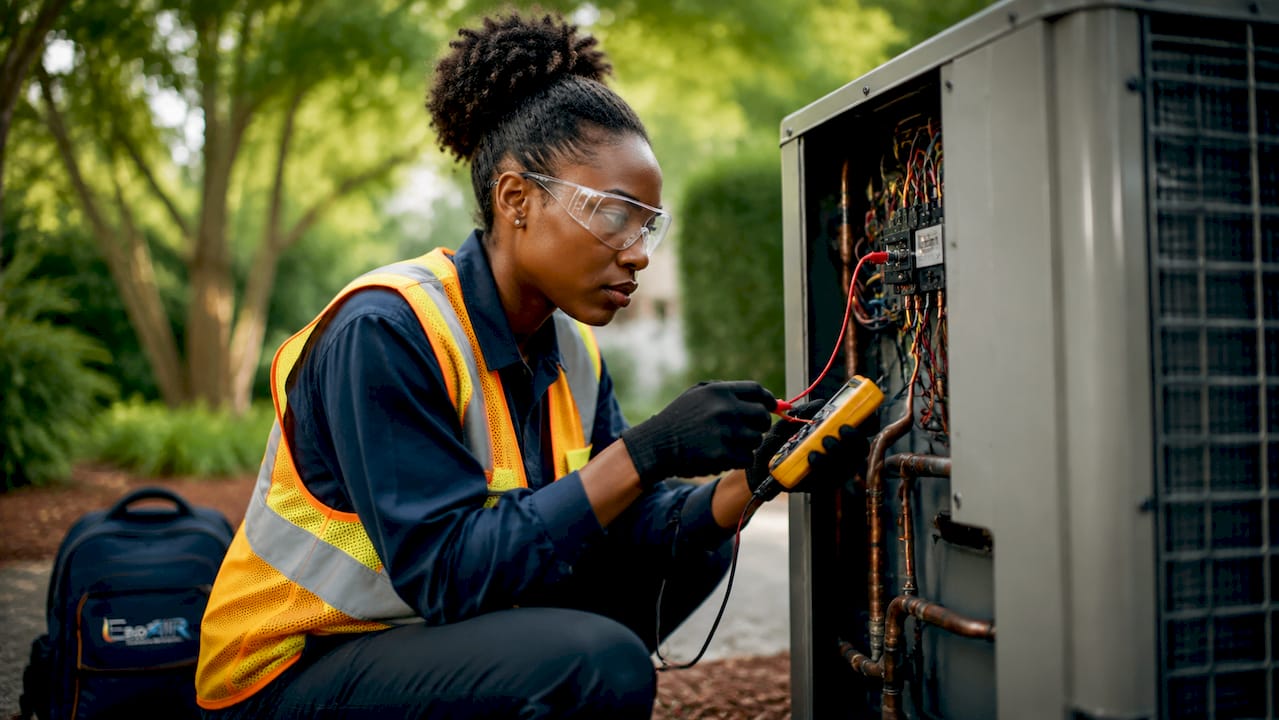
Skipping any layer creates real problems. Working without EPA 608 certification exposes you to federal fines. Working without a required state license means you cannot pull permits or bid on contracts. Skipping voluntary certifications means you compete only on price, not on credentials.
2. What is EPA Section 608 certification and why is it mandatory?
EPA Section 608 is the federal certification that legally permits HVAC technicians to purchase, handle, and recover refrigerants. The Environmental Protection Agency created this requirement under the Clean Air Act to prevent illegal venting of refrigerants into the atmosphere.
The exam covers four certification types:
- Type I: Small appliances (under 5 lbs of refrigerant)
- Type II: High-pressure systems (most residential and commercial AC)
- Type III: Low-pressure systems (large chillers)
- Universal: All of the above combined
The Universal certification is the strategic choice for any technician who wants full flexibility. It covers all stationary equipment types and eliminates the need to retest if your job scope expands. Type II alone is common but limiting. Universal is the standard worth pursuing from the start.
The exam structure consists of 100 multiple-choice questions with a passing score of 70%. Exam fees typically run $20–$40. That low cost makes it one of the best returns on investment in any trade.
Pro Tip: Pass rates climb from 60% with self-study to over 90% when you use a dedicated prep course. Study materials cost $30–$150. Spend the money on a prep course before you sit for the exam.
Working without EPA 608 certification is a federal violation. Employers who knowingly hire uncertified technicians for refrigerant work also face penalties. Get this credential before your first day on the job.
3. What are the main HVAC training program options?
Formal HVAC education credentials come in three main formats, each with different time and cost commitments.
| Program Type | Duration | Tuition Range |
|---|---|---|
| Continuing education | 8–9 weeks | ~$3,695 |
| Certificate program | ~6 months | $4,000–$6,000 |
| Diploma program | 10–15 months | $6,000–$8,000+ |
Vocational HVAC programs vary widely in length and cost. A continuing education course gets you into the field faster. A diploma program gives you deeper technical grounding and stronger credentials for commercial work.
The curriculum in quality programs covers:
- Refrigeration cycles and thermodynamics
- Electrical theory and circuit reading
- Ductwork design and airflow
- Combustion and gas systems
- EPA 608 exam preparation
Classroom instruction combined with hands-on lab training is the format that produces job-ready technicians. Lab time is where you learn to read gauges, braze copper, and wire a thermostat correctly. Classroom hours alone do not build the muscle memory the job demands.
Pro Tip: Ask any program you consider what percentage of graduates pass the EPA 608 exam on the first attempt. Schools with strong pass rates invest in quality lab equipment and exam prep. That number tells you more than any brochure.
Financial aid is available at many community colleges and vocational schools. Federal Pell Grants, workforce development funds, and employer tuition reimbursement programs can reduce your out-of-pocket cost significantly.
4. How do state licensing requirements affect your credentials?
State licensing is the layer of HVAC technician job requirements that most new technicians underestimate. Approximately 30–35 states require a contractor license for HVAC work. The remaining states delegate licensing to local city or county governments.
States like Colorado, Illinois, and New York have no statewide HVAC license. That does not mean you can work without a license in those states. It means you need to check city and county rules, which can be stricter than any state requirement.
Licensing matters for three practical reasons:
- You cannot pull building permits without a license in most jurisdictions.
- Contractors without licenses cannot legally bid on many commercial projects.
- Homeowners and property managers increasingly verify licenses before hiring.
The best approach is to contact your state's contractor licensing board directly. Many states publish their requirements online. If your state delegates to local governments, check your county or city building department. Do not assume you are exempt because your state has no statewide rule.
Understanding what an HVAC contractor does at the licensing level helps you see why these credentials matter beyond just getting hired.
5. What voluntary certifications boost an HVAC career?
Voluntary certifications are the credentials that separate technicians who earn average wages from those who earn top wages and move into supervisory roles. Stacking certifications like NATE on top of EPA 608 can boost salary by 15–25%. That is not a minor raise. Over a career, it compounds into a significant income difference.
The most valuable voluntary credentials are:
- NATE (North American Technician Excellence): The most recognized voluntary certification in the U.S. HVAC industry. Requires a core exam plus a specialty exam covering specific systems like air conditioning, heat pumps, or gas heating. Employers treat NATE as a signal of verified competence.
- OSHA 10-hour training: Employers often require or strongly prefer OSHA 10 before technicians start fieldwork. It covers hazard recognition, fall protection, and electrical safety. The course takes one day and costs under $100.
- HVAC Excellence certification: A secondary credential that validates specific technical skills. Less universal than NATE but recognized by many regional employers.
- RSES (Refrigeration Service Engineers Society) certification: Valued in commercial refrigeration and industrial HVAC work.
The recommended path for new technicians is: EPA 608 Universal first, then OSHA 10 before fieldwork begins, then NATE after 6–12 months of field experience. This sequence builds credentials in the order employers actually care about them.
Stacked certifications also open doors to supervisory and specialty roles that are not available to technicians with only a basic credential set. The investment in each additional certification pays back quickly.
Pro Tip: Take the OSHA 10 course before your first field assignment, not after. Many employers will not send uncertified technicians to job sites. Completing it during your training program saves time and signals professionalism to hiring managers.
Understanding how refrigerants work in HVAC systems gives you a technical edge when preparing for both EPA 608 and NATE exams.
6. What practical advice helps new technicians succeed early?
The physical demands of HVAC work are real and underestimated by most people entering the trade. About 30% of new technicians leave within the first three years because of the physical difficulty. The job involves working in attics above 130°F in summer, crawl spaces in winter, and lifting equipment that weighs 80 lbs or more. Going in physically prepared is not optional.
Practical advice for surviving and thriving in the early career stage:
- Prepare physically before starting. Build core strength and heat tolerance before your first summer season. Technicians who are not physically ready burn out fast.
- Use a prep course for EPA 608. Self-study pass rates sit around 60%. Prep course pass rates exceed 90%. The difference is not talent. It is structured preparation.
- Get Universal, not just Type II. Type II covers the most common residential systems, but Universal covers everything. Choosing Universal from the start avoids retesting later when your job scope expands.
- Complete OSHA 10 before fieldwork. Combining technical certifications with OSHA 10 training before employment significantly improves job market readiness. Employers notice.
- Plan your certification timeline. Trying to earn EPA 608, NATE, and OSHA 10 simultaneously while working leads to burnout. Space them out with 6-month gaps.
The industry is also transitioning to A2L refrigerants with lower global warming potential. Technicians who add A2L handling training to their credentials in 2026 position themselves ahead of peers who wait until the transition is complete.
Pro Tip: Find a mentor in your first year. Experienced technicians carry diagnostic knowledge that no certification exam tests. One hour with a 20-year veteran on a difficult service call teaches more than a week of classroom instruction.
Key takeaways
HVAC technician qualifications require EPA Section 608 Universal certification as the non-negotiable foundation, supported by state licensing, formal training, and voluntary credentials like NATE and OSHA 10 to maximize employability and earning potential.
| Point | Details |
|---|---|
| EPA 608 is mandatory | You cannot legally handle refrigerants without this federal certification. |
| Universal beats Type II | Universal certification covers all equipment types and prevents retesting gaps. |
| State licensing varies | Check your state and local rules. 30–35 states require a contractor license. |
| Voluntary certs raise pay | NATE certification can boost salary by 15–25% over EPA 608 alone. |
| Physical readiness matters | About 30% of new technicians leave within 3 years due to physical demands. |
My take on building a real HVAC career in 2026
The technicians I see succeed fastest are not the ones who rush to collect every certification at once. They are the ones who treat EPA 608 Universal as the foundation and build deliberately from there.
The industry's shift to A2L refrigerants is the single biggest change affecting technicians right now. Updated refrigerant handling training is not optional for anyone who wants to stay relevant past 2027. Employers are already asking about it in interviews.
My honest advice: get EPA 608 Universal before anything else. Add OSHA 10 before your first field assignment. Earn NATE after six months of real experience, when the exam questions connect to things you have actually seen on the job. That sequence is not just logical. It is the one that sticks.
The technicians who treat certifications as checkboxes burn out or plateau. The ones who treat each credential as a skill upgrade build careers that last.
— Edward
E320air and your HVAC career path
Building a career in HVAC means working alongside professionals who hold the credentials and field experience that matter. E320air is a full-service HVAC contractor specializing in repairs, maintenance, equipment sales, and installations across residential and commercial properties.
Whether you are entering the trade or expanding your skills into commercial work, seeing real HVAC service work up close is one of the best ways to understand what the job actually demands. E320air's team handles the full range of systems that certified technicians work on every day. For those interested in the commercial side of the trade, commercial HVAC services represent some of the most in-demand and well-compensated work in the industry. Visit E320air to learn more about the services and career opportunities available.
FAQ
What is the first certification an HVAC technician needs?
EPA Section 608 certification is the first and only federally required credential for HVAC technicians. You must hold it before legally handling any refrigerant in the U.S.
How long does HVAC training take?
HVAC training programs range from 8–9 weeks for continuing education courses to 10–15 months for full diploma programs. Certificate programs typically take about 6 months.
Do all states require an HVAC license?
No. Approximately 30–35 states require a contractor license, while others delegate licensing to local city or county governments. Always verify your specific local requirements before working.
Is NATE certification worth pursuing?
NATE certification is worth pursuing after gaining field experience. It can raise your salary by 15–25% and signals verified competence to employers in both residential and commercial markets.
What is the EPA 608 exam pass rate?
Pass rates on the EPA 608 exam run around 60% for self-study candidates. Technicians who complete a dedicated prep course pass at rates exceeding 90%.