
If your AC is running but blowing warm air, the culprit is almost always one of four things: a dirty filter choking airflow, a thermostat set or wired wrong, a low or leaking refrigerant charge, or a dirty outdoor condenser unit. Check your thermostat mode and filter first. If the air stays warm after that, shut the system off and call a licensed HVAC technician, especially if you smell burning or suspect a refrigerant leak.
TL;DR:
- Dirty filters or blocked vents are the most common causes of warm air, and replacing filters or opening vents often resolves the issue.
- Low refrigerant or electrical faults like a failing compressor require professional diagnosis and repair, especially if there are signs of leaks, ice, or burning smells.
- Checking the thermostat settings and outdoor unit cleanliness are simple DIY steps that can quickly identify or rule out basic issues.
- Regular maintenance, including filter changes and professional tune-ups, helps prevent refrigerant leaks, dirty coils, and airflow problems.
- Immediate professional help is necessary if there are refrigerant leaks, compressor failure, electrical arcing, or persistent ice formation.
Table of Contents
- How a Central AC Actually Cools Your House
- What's Causing Your AC to Blow Warm Air?
- Fix AC Blowing Warm Air: A Safe DIY Checklist
- When Should You Call a Licensed HVAC Technician?
- Preventive Maintenance That Keeps Warm Air From Coming Back
- What I've Learned Watching Homeowners Try to Fix This Themselves
- How E320air Diagnoses and Fixes Warm-Air Problems
- Where to Verify This Information
- Sources
- FAQ
How a Central AC Actually Cools Your House
A split-system air conditioner doesn't make cold air. It moves heat out of your house using refrigerant that cycles between two coils. Inside, the evaporator coil absorbs heat from the air your blower pushes across it. That refrigerant, now carrying the heat, travels to the outdoor condenser unit, where the compressor pressurizes it and the outdoor fan dumps the heat outside. The now-cooled refrigerant heads back inside to do it again.
Your thermostat is the traffic cop, telling the system when to run and for how long. The blower is the muscle, moving conditioned air through your ducts. When technicians troubleshoot, they lean on two numbers: temperature split (the difference between the air going into the return and the air coming out of a supply vent, usually 15 to 20 degrees on a healthy system) and airflow, targeted around 350 to 400 CFM per ton of cooling capacity. When either number is off, warm air follows.

What's Causing Your AC to Blow Warm Air?
Matching your symptoms to a cause narrows things down fast. Here's what to look for, roughly ordered from "fix it yourself in five minutes" to "step away and call someone":
- Dirty or clogged filter. If air barely moves out of the vents and the filter looks gray or matted, this is your answer. A blocked filter starves the evaporator coil of airflow, which drops your cooling capacity and can eventually freeze the coil. ENERGY STAR notes that keeping filters clean can improve efficiency by 5 to 15 percent.
- Thermostat problems. Check that it's set to "cool," not "fan" or "heat." Dead batteries, a stuck relay, or a miscalibrated sensor can all make the system run without actually cooling.
- Restricted airflow elsewhere. Closed or blocked supply vents, crushed ductwork, or a failing blower motor all choke the same airflow the filter does, just further down the line. Weak airflow at every register in the house points to the blower or ducts rather than one closed vent.
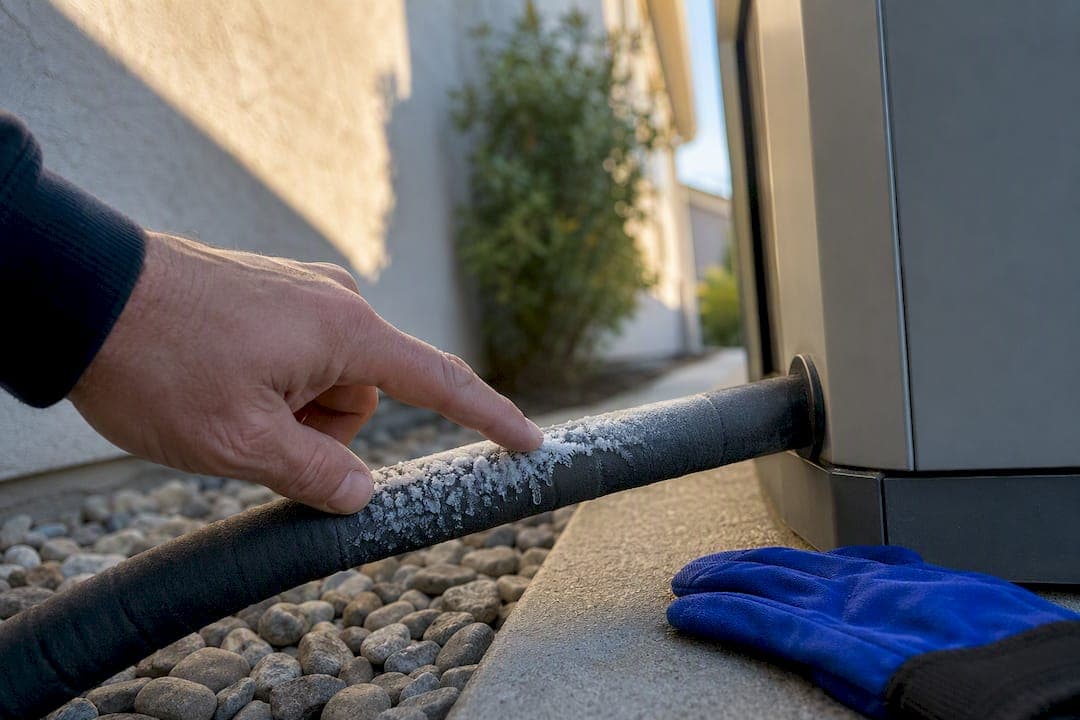
- Low or leaking refrigerant. Ice on the copper line outside, an oily residue near fittings, or a hissing sound are classic leak signs. Refrigerant doesn't get "used up" like gasoline. If the charge is low, something is leaking, and adding refrigerant without fixing the leak is a short term patch, not a repair.
- Frozen evaporator coil. Usually caused by restricted airflow or low refrigerant, a frozen coil blocks heat transfer entirely and often shows up as ice on the indoor unit or a puddle underneath it. Turn the system off and let it thaw before doing anything else.
- Dirty condenser coils or outdoor unit problems. A coil caked in dirt, grass clippings, or dust can't reject heat properly. Leaves and debris jammed around the fan will do the same thing.
- Electrical or compressor faults. A tripped breaker, a failing start capacitor, or a compressor that hums but won't start are electrical issues. These need a licensed technician, full stop. So does a compressor making grinding or clanking noises.
Fix AC Blowing Warm Air: A Safe DIY Checklist
Work through these in order. Anything beyond a visual check or a filter swap means cutting power to the unit first, both at the thermostat and at the breaker.
- Confirm the thermostat is set correctly. Mode should read "cool," the fan should be on "auto," and the set temperature should be a few degrees below room temperature. Replace batteries if it's battery powered, and try a simple reset (many models let you hold the reset button or pull power for 60 seconds).
- Pull the filter and look at it. If you can't see light through it, replace it. ENERGY STAR recommends checking filters monthly and replacing them at least every three months, more often during peak summer use. A standard MERV 8 to MERV 13 filter works for most residential systems without overly restricting airflow.
- Walk your house and open every supply vent. Closed vents in unused rooms are a common, invisible source of restricted airflow.
- Check the outdoor unit. Clear leaves, mulch, and grass clippings away from the condenser, and confirm the outdoor fan is spinning when the system runs. Never open the electrical panel or touch refrigerant lines yourself.
- Feel the airflow at a supply register. Weak airflow even with a clean filter suggests a blower or duct problem that needs a technician.
Pro Tip: Snap a photo of your outdoor unit, your filter, and your thermostat settings before you call for service. A technician who can see the setup ahead of time often diagnoses faster over the phone and arrives with the right parts.
Stop immediately and call a professional if you see oily residue on refrigerant lines, ice that keeps reforming after thawing, a breaker that trips repeatedly, or a compressor making loud grinding noises.
When Should You Call a Licensed HVAC Technician?
Some symptoms simply aren't DIY territory. Suspected refrigerant leaks, a compressor that won't start or runs but doesn't cool, repeated breaker trips, and any sign of electrical arcing all call for a licensed pro immediately.
Refrigerant work isn't optional-license territory either. The EPA requires refrigerant servicing to be handled by certified technicians under Section 608, and it specifically warns against unapproved refrigerants that can create fire or explosion hazards. A qualified technician fixes the leak and verifies the charge with gauges, rather than just topping it off.
Treat a complete loss of cooling during extreme heat, especially with infants, elderly residents, or anyone with a health condition in the house, as an emergency. A burning smell or visible sparking is also an emergency. Everything else, like a slightly warm house or a system that's simply underperforming, can usually wait for next-day scheduled service.

Preventive Maintenance That Keeps Warm Air From Coming Back
Most warm-air calls trace back to neglect, not bad luck. A few habits keep small issues from becoming expensive ones:
- Check your filter monthly and replace it at least every three months, more often if you have pets or run the system constantly through summer.
- Book an annual professional tune-up. A technician will clean the coils, verify airflow, check the refrigerant charge, and test electrical components before they fail outright.
- Keep two feet of clearance around the outdoor condenser, free of plants, mulch, and debris.
- Seal obvious duct gaps and add attic insulation where you can. The Department of Energy notes that sealing and insulating a home reduces the load your AC has to fight in the first place.
- Run ceiling fans alongside your AC. It lets you raise the thermostat a couple degrees without losing comfort.
Regular maintenance doesn't just prevent warm-air breakdowns. It keeps the whole system running on less energy and stretches its working life by years.
What I've Learned Watching Homeowners Try to Fix This Themselves
Most people can safely handle a filter swap, a thermostat reset, and clearing debris from the outdoor unit. Those three checks solve a surprising share of warm-air complaints on their own. Where homeowners get into trouble is refrigerant and electrical work. Attempting a refrigerant top-off without finding the leak first almost always means paying for the same repair twice. Before booking a service call, jot down what you've already checked, note when the warm air started, and take a couple of photos. It saves the technician time and usually saves you money.
— Edward
How E320air Diagnoses and Fixes Warm-Air Problems
A licensed technician can run the same airflow and temperature-split diagnostics described above, find the actual cause, and provide a written estimate before any repair starts.
A typical visit covers a full safety check, leak testing on the refrigerant lines, airflow measurement at the coil and registers, and an inspection of electrical components like the capacitor and contactor. If your system needs refrigerant work, it's handled by EPA Section 608-certified technicians, not a quick top-off that masks a leak. E320air's Residential HVAC services cover everything from that first diagnostic call to full HVAC installation when a system is past the point of repair, and emergency repairs are available for the cooling failures that can't wait. You can see real repair examples in the problem-solving gallery before you book. When you're ready, schedule a diagnostic visit through E320air and get a straight answer instead of another guess.
Where to Verify This Information
For readers who want the regulatory and technical detail behind these recommendations, the EPA's refrigerant safety guidance covers certification rules, ENERGY STAR's heating and cooling guide covers filter maintenance, and the Building America diagnostics guideline explains airflow and temperature split testing in technical detail.
Sources
- A Guide to Energy-Efficient Heating and Cooling (ENERGY STAR)
- Questions and answers about R-22a safety (EPA)
- Measure Guideline: Air Conditioner Diagnostics, Maintenance, and Replacement (Building America)
- Home Cooling 101 (U.S. Department of Energy)
FAQ
How Do I Fix My AC Blowing Warm Air?
Start with the thermostat mode, then check and replace the filter if it's dirty, since a clogged filter is one of the most common causes of an air conditioner not cooling. Clear debris from the outdoor unit next. If warm air continues, the issue is likely refrigerant or electrical, and that requires a licensed technician.
Should I Turn Off the AC If It's Blowing Warm Air?
Yes, if you see ice on the coil, hear unusual noises, or smell anything burning, shut the system off at the thermostat and breaker right away. Running a frozen coil or a struggling compressor can turn a moderate repair into a much bigger one.
How Do I Reset an AC That's Not Blowing Cold Air?
Most thermostats reset by cutting power for about 60 seconds, either through a dedicated reset button or by flipping the breaker off and on. If the system still runs warm after a reset, the problem is almost always airflow, refrigerant, or a component fault rather than something a reset can fix.
Is AC Blowing Hot Air an Emergency?
It depends on the circumstances. A complete loss of cooling during extreme heat, particularly with infants, elderly residents, or anyone with a health condition in the home, counts as an emergency, as does any burning smell or visible sparking. A system that's simply running warm without those risk factors can typically wait for scheduled next-day service.