
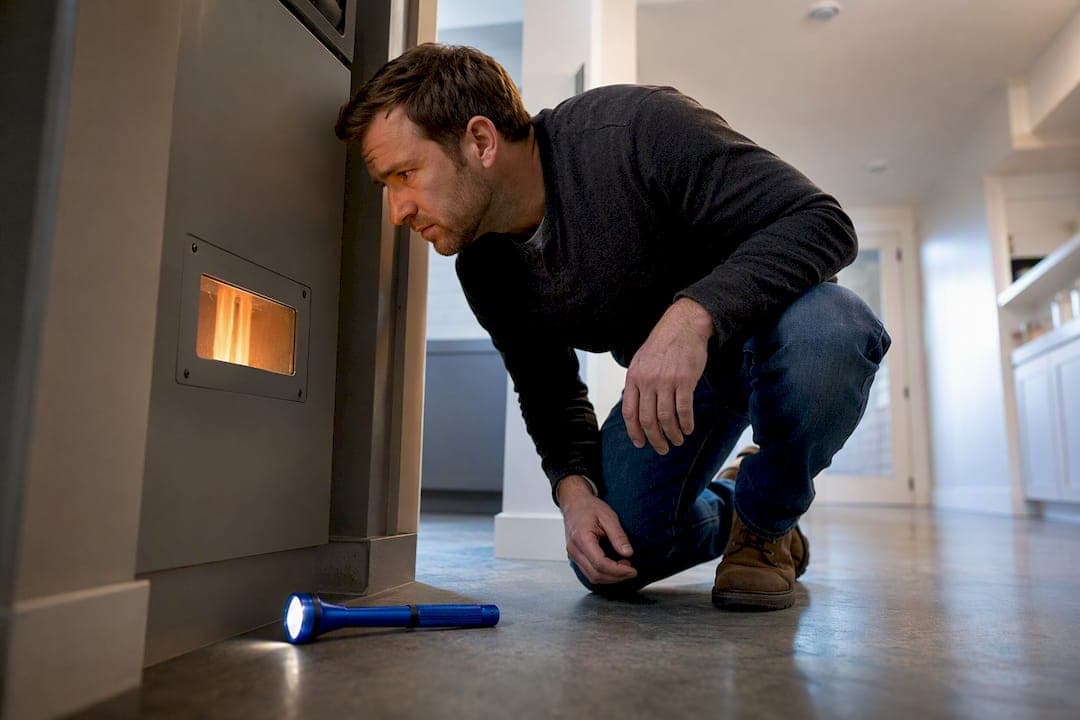
If your furnace clicks but never lights, it's almost always one of four things: a thermostat setting, a power interruption, blocked airflow, or a failed ignition part like the ignitor or thermocouple. Check the thermostat mode and batteries, the furnace switch and breaker, and sniff for gas before touching anything else. If you smell gas anywhere near the unit, leave the house and call your gas company or 911 immediately instead of troubleshooting further.
TL;DR:
- Ensuring the furnace gets power involves checking the thermostat, circuit breaker, and control board error codes before inspecting ignition components.
- A clogged air filter or blocked vents can cause the furnace to shut down ignition safety switches prematurely, so replacing filters regularly is key.
- Most ignition failures stem from simple causes like thermostat settings, power interruptions, or faulty thermocouples, not complex repairs.
- Handling gas or electrical components without proper training can be dangerous; homeowners should contact licensed technicians for gas valve or ignition system issues.
- Replacing a furnace after 15 years with repeated repairs can save money and improve safety and efficiency compared to multiple costly part replacements.
Table of Contents
- Quick Checklist To Run Before You Call Anyone
- Is the Furnace Even Getting Power?
- Could Airflow Be Shutting Down Ignition?
- Why Isn't the Ignitor Lighting the Burners?
- What About Pilot Lights, Thermocouples, and Dirty Sensors?
- Could the Problem Be Upstream of the Furnace Entirely?
- How Often Should You Service the Furnace to Avoid This?
- Safe DIY vs. When You Need a Licensed Technician
- Should You Repair the Ignition System or Replace the Furnace?
- What Tools Help You Troubleshoot a Furnace Safely?
- What Safety Rules Apply Before You Touch Anything?
- Ready to Get Your Heat Working Again?
- What Homeowners Get Wrong Most Often
- Where to Read More
- Sources
Quick Checklist To Run Before You Call Anyone
Run through these in order. Most furnace ignition failures get solved or at least narrowed down in the first five minutes.
- Set the thermostat to "heat," bump the setpoint a few degrees above room temperature, and swap the batteries if the display looks dim or blank.
- Find the furnace's power switch (it looks like a light switch, usually near the unit or at the top of the basement stairs) and check the breaker labeled "Furnace" or "Heat."
- Smell for gas. If you catch even a faint rotten-egg odor, evacuate and call the gas company or emergency services.
- Pull the air filter and look at it against a light. If you can't see light through it, replace it, and confirm your supply and return vents are open.
- Locate the gas shutoff valve near the furnace and make sure the handle lines up with the pipe, meaning it's open.
Manufacturer guides from brands like Carrier point to these same starting checks before moving on to anything involving tools or ignition parts.
Is the Furnace Even Getting Power?
Furnaces run on low-voltage thermostat signals and standard household electricity at the same time, and a break in either one stops ignition cold.
- Confirm the thermostat display is lit, set to "heat," and calling for a temperature above the current room reading.
- Look for the furnace's dedicated power switch, usually a toggle on or near the unit's cabinet, and make sure it's flipped on.
- Check your electrical panel for a tripped breaker labeled "Furnace," "Heat," or "HVAC."
- If the control board has a small window with a blinking light, count the flashes. That pattern usually maps to a specific fault code in the furnace's manual, and it's worth writing down before you call for service.
A breaker that trips once is annoying. A breaker that trips every time you reset it is telling you something is drawing too much current, and flipping it back on repeatedly risks damaging the control board or starting an electrical fire.
Could Airflow Be Shutting Down Ignition?
Furnaces are built to stop themselves rather than overheat, and a clogged filter is the single easiest way to trigger that shutdown. When airflow drops too low, a limit switch inside the cabinet senses rising heat and cuts the burners before they can fully light, which often looks like the furnace trying to start, then quitting a few seconds in.
Pull the filter and hold it up to a light. If it's gray and opaque, replace it. While you're at it, walk the house and make sure no furniture or rugs are blocking supply and return vents, since closed-off rooms restrict the same airflow.
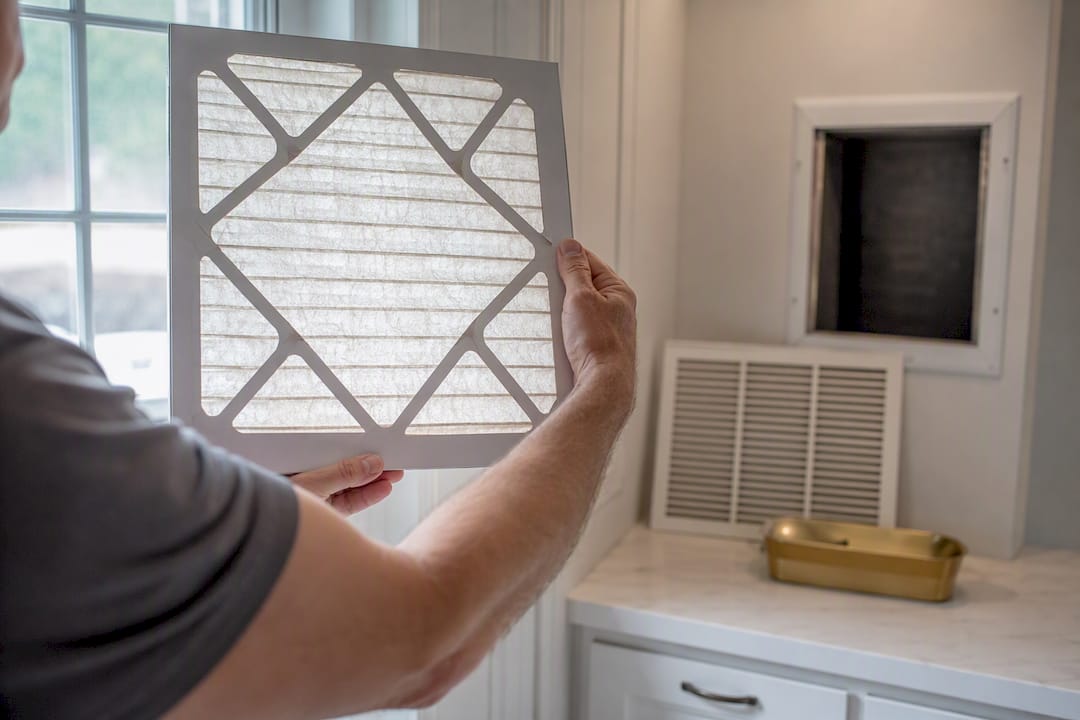
If the filter is clean and vents are open but you still hear weak airflow, grinding, or a burning smell from the blower, that's a motor or bearing problem, not a filter problem, and it needs a technician.
Pro Tip: Keep two spare filters in a closet and jot the replacement date on the frame with a marker. A five-minute habit like this prevents most of the "furnace won't ignite" calls that turn out to be nothing but a clogged filter.
Why Isn't the Ignitor Lighting the Burners?
Modern furnaces follow a set startup sequence, and knowing it turns guesswork into an actual diagnosis. The order runs like this: the thermostat calls for heat, the inducer motor spins up to clear the exhaust path, a pressure switch confirms that airflow, the ignitor heats up or sparks, the gas valve opens, the flame sensor confirms a flame is burning, and finally the blower kicks on to push warm air through the ducts.
You can safely observe a lot of this without touching anything:
- Listen for the inducer motor humming on startup. Silence there usually means a bad motor or a stuck pressure switch.
- Watch through the furnace's viewing window for an orange glow (hot surface ignitor) or a visible spark (spark ignitor).
- Listen for repeated clicking with no flame. That pattern usually points to a gas valve that isn't opening or an ignitor that's cracked and no longer heating.
What you shouldn't do: test ignitor voltage, check resistance with a meter, or measure gas pressure yourself. Those tasks involve live electrical current and pressurized gas lines, and they're squarely technician territory.
What About Pilot Lights, Thermocouples, and Dirty Sensors?
Older standing-pilot furnaces and newer electronic-ignition models fail in different ways, so it helps to know which one you have before you start guessing.
- On a standing-pilot system, if the pilot won't stay lit, the thermocouple is the most common culprit — a small metal sensor that shuts off gas flow if it doesn't detect flame. A dirty or misaligned thermocouple reads "no flame" even when the pilot is burning fine.
- Thermocouple parts typically run under $30, though professional replacement, including the service call, often costs a few hundred dollars.
- On electronic-ignition furnaces, a dirty flame sensor causes a near-identical symptom: the burners light, run for a few seconds, then shut off as the furnace repeats its startup cycle over and over.
- Gently cleaning a flame sensor with fine steel wool or an emery cloth often restores normal operation, but only attempt this if your owner's manual walks through the steps for your specific model.
- A blocked pilot orifice or dirty burner ports can starve the flame of gas or air, and clearing those safely usually calls for a professional with the right tools.
Could the Problem Be Upstream of the Furnace Entirely?
Sometimes the furnace itself is fine and the trouble is the gas or combustion supply feeding it.
- Check whether your stove, water heater, or other gas appliances are also out. If everything gas-powered in the house is dead, that points to a utility-side outage, not a furnace problem.
- Confirm the shutoff valve near the furnace is fully open before assuming a bigger issue.
- Any rotten-egg smell means stop immediately, leave the house, and call your gas utility or 911 from outside. Never try to locate a leak yourself.
- Poor draft, a blocked flue, or a disconnected vent pipe can snuff out a pilot or trip a pressure switch, and correcting venting issues requires a technician's inspection, not a homeowner fix.
If duct or vent blockages seem to be part of the problem, a service like vent and duct cleaning can clear the kind of buildup that interferes with draft and combustion airflow.
How Often Should You Service the Furnace to Avoid This?
- Replace the filter every one to three months, leaning toward monthly if you have pets or run the furnace constantly through winter.
- Book a professional tune-up in late summer or early fall, before the first cold snap forces the system to work hard for the first time in months, a timing manufacturers like Trane specifically recommend.
- Expect a proper tune-up to include burner cleaning, ignitor and flame sensor inspection, a check of the venting system, and a gas-pressure test.
- Keep a simple log of filter changes and any odd noises or smells, since patterns over a season often reveal a developing problem before it causes a full shutdown.
Safe DIY vs. When You Need a Licensed Technician
Filter swaps, thermostat batteries, and visual inspections are fair game for any homeowner. Gas-valve work, electrical testing, ignitor diagnostics, and gas-pressure checks are not, and attempting them without training risks a real gas or electrical hazard.
Call a technician immediately if you smell gas, if the furnace locks out repeatedly after multiple restart attempts, if the control board flashes an error code you can't resolve, if there's no power reaching the board at all, or if the inducer motor never starts. Before the appointment, write down your furnace's model number and the exact symptom sequence. That's the biggest time-saver homeowners overlook.
When you do call, ask a few direct questions: is the technician licensed for gas appliance work, what does the diagnostic visit cost, does the repair affect any existing warranty, and what's the realistic turnaround if a part needs to be ordered. E320air's furnace repair and diagnostic services are built around exactly this kind of escalation, and the problem-solving gallery shows real examples of ignition and airflow fixes similar to what's described here.
Should You Repair the Ignition System or Replace the Furnace?
Age matters more than most homeowners think. A furnace past 15 years old that's already had one or two major repairs, especially anything involving the heat exchanger, is usually a better candidate for replacement than another round of part swaps.
A rough rule worth using: if a single repair quote starts creeping toward half the cost of a new system, replacement usually makes more financial sense over the next several winters. Old standing-pilot furnaces also carry safety-control designs that newer systems have phased out, so replacing one isn't just about reliability. It's also a real efficiency upgrade. If you're leaning that direction, E320air's HVAC installation page covers what a replacement system involves.
What Tools Help You Troubleshoot a Furnace Safely?
You don't need a toolbox full of specialty gear to run through the safe checks. A flashlight lets you see the filter clearly and peek through the furnace's viewing window at the ignitor without opening any panels. A basic multimeter is useful only if you already know how to test AC voltage safely. If you don't, skip it and let a technician handle that step.
Fresh thermostat batteries (usually AA or AAA) solve more "dead furnace" calls than people expect, so keep a spare set in a kitchen drawer year round. A small mirror on an extendable handle helps you check behind the unit or in tight cabinet corners without crawling in. A notepad or your phone's notes app matters more than any physical tool. Writing down the exact sequence, whether the inducer ran, whether you heard clicking, whether anything glowed, turns a vague "it just won't turn on" into information a technician can actually use over the phone.
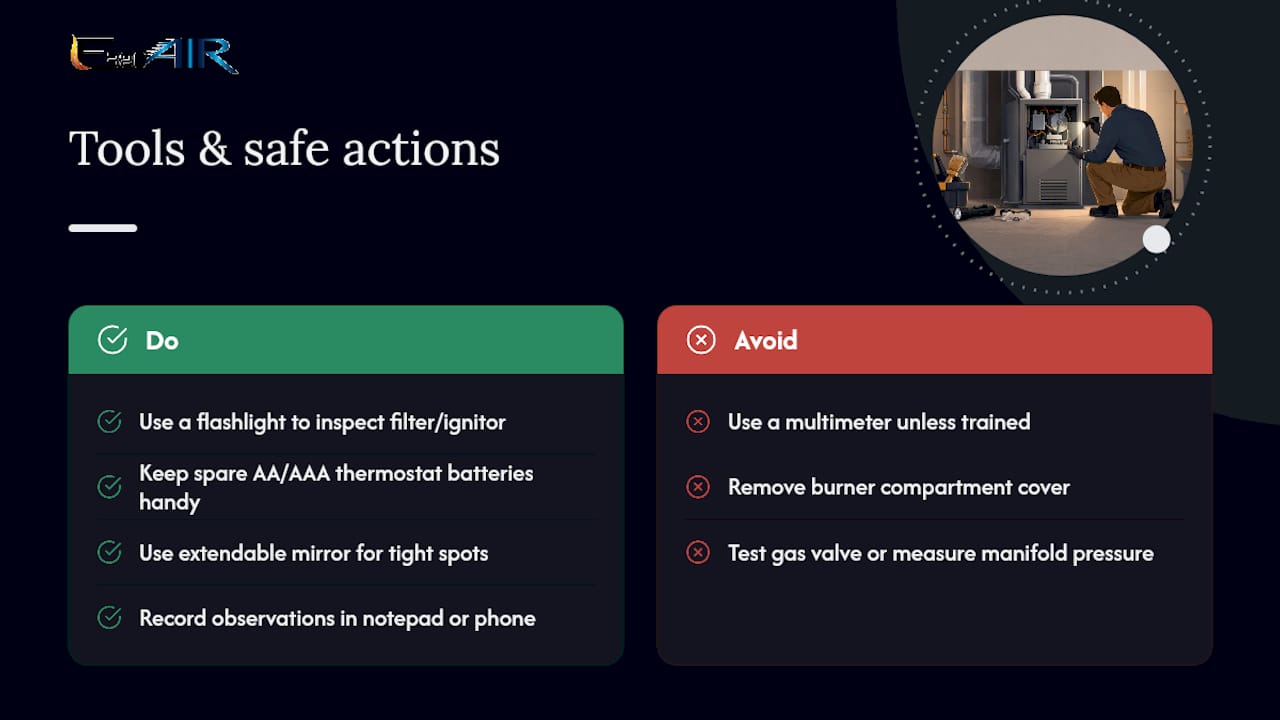
Skip anything that requires removing the burner compartment cover, testing gas valve resistance, or measuring manifold pressure. Those steps call for gauges and training most households don't have, and getting them wrong risks a gas leak or a damaged control board. The goal with troubleshooting furnace ignition problems isn't to fix everything yourself. It's to gather enough information that a service call takes twenty minutes instead of two hours.
What Safety Rules Apply Before You Touch Anything?
Turn off power to the furnace at the switch or breaker before removing any panel, even just to look inside. Never use an open flame, lighter, or match near the unit to check for gas, since that's how a small leak becomes a serious accident.
Work in a well-lit area and avoid touching the ignitor even after the system has powered down. Hot surface ignitors stay dangerously hot for several minutes after shutoff. If your furnace uses a standing pilot and the manufacturer's relighting instructions are posted on the unit, as they legally must be, follow them exactly and don't skip steps to save time.
Never bypass a safety switch, tape down a limit switch, or hold a gas valve open manually to force ignition. Those switches exist specifically to stop a fire or gas buildup, and defeating them is the single most dangerous thing a homeowner can do while troubleshooting. If at any point you're unsure whether a step is safe, stop and call a professional instead of guessing. A furnace that stays off for one more day is a far better outcome than one that ignites incorrectly.
If your home has small children, pets, or anyone with limited mobility, evacuate them from the immediate area around the furnace before doing any hands-on inspection, particularly if there's any gas odor at all, however faint.
Ready to Get Your Heat Working Again?
Most furnace ignition failures trace back to something simple: a filter, a breaker, a thermostat setting, or a $30 thermocouple. But when the fix involves gas valves, ignitor voltage, or a control board that keeps throwing error codes, that's where DIY needs to stop. E320air handles furnace diagnostics and repair across the range of issues covered here, from quick sensor cleanings to full system replacements, and the team can also walk you through commercial HVAC service if the furnace in question serves a business rather than a house. If the checklist above didn't get your heat running again, schedule a diagnostic visit and skip the guesswork.
What Homeowners Get Wrong Most Often
The biggest mistake I see isn't a bad guess about what's broken. It's flipping the breaker five times in a row hoping the sixth attempt sticks. That habit alone sends more furnaces into deeper electrical trouble than almost any other homeowner action.
The second mistake is calling for service with no details ready. "It just won't turn on" tells a technician nothing. "It clicks three times, the ignitor glows, then it shuts off" tells them almost everything. Keep your model number somewhere obvious, note the exact symptom order, and stock spare batteries and a filter before winter starts. And if you catch any whiff of gas, none of this matters: shut off the system and get out.
— Edward
Where to Read More
- Trane's furnace ignition troubleshooting guide covers manufacturer-listed causes.
- House Digest on pilot lights explains thermocouple and draft issues.
- E320air's guide on what to do when your furnace smells like gas covers emergency steps in more depth.
- E320air's DIY furnace repair guide walks through safe homeowner maintenance step by step.
Sources
- Furnace Not Igniting? Find Out Why and What to Do - Trane®
- Why Won't My Furnace Ignite? | Furnace Parts DIY
- Top Reasons Why Your Gas Pilot Light Keeps Going Out Unexpectedly - House Digest
- Furnace Not Turning On? Troubleshooting & Repair Guide | Carrier