
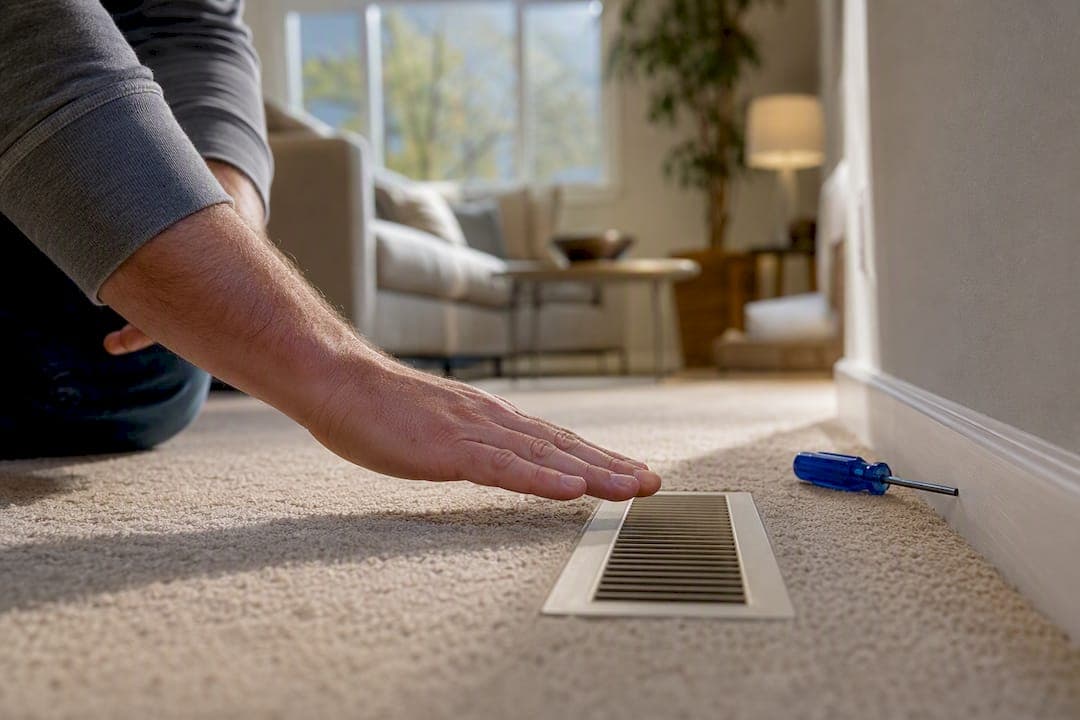
Start with the thermostat and the filter. Most cases of a heat pump not heating trace back to a mode set to "cool" or "fan," a filter so clogged it froze the coil, or an outdoor unit stuck in defrost. Set the thermostat to Heat, fan to Auto, swap a dirty filter, and clear leaves or ice from the outdoor unit. If you hear hissing, see oil stains, or the unit keeps freezing after a clear defrost cycle, stop troubleshooting and call a licensed technician. Refrigerant work is not a homeowner job.
TL;DR:
- Ensuring the thermostat is set to heat and the fan to auto can resolve most heat pump issues in minutes, often avoiding a service call.
- Replacing or inspecting the filter and clearing debris from the outdoor unit are simple steps that prevent common freezing problems and airflow blockages.
- Homeowners should avoid refrigerant-related repairs, as handling leaks or recharging systems requires EPA-certified technicians and legal compliance.
- Persistent problems like ice that won't clear, refrigerant leaks, or a stuck reversing valve indicate a need for professional diagnosis and repair.
- Regular maintenance, including filter changes and outdoor unit clearance, can prevent most winter breakdowns and improve system efficiency.
Table of Contents
- Heat Pump Not Heating: A Step-By-Step Troubleshooting Checklist
- What You Can Safely Fix Yourself vs. What Needs a Licensed Technician
- Heat Pump Maintenance Tips That Prevent Most Winter Breakdowns
- When to Stop Troubleshooting and Call an HVAC Technician
- A Contractor's Notes From the Field
- What Homeowners Get Wrong About Heat Pump Repairs
- Book a Heat Pump Diagnostic With E320air
- Sources
Heat Pump Not Heating: A Step-By-Step Troubleshooting Checklist
Work through these in order. Each one takes a few minutes, and together they catch the large majority of "no heat" calls before a technician ever needs to show up.
- Check the thermostat mode and setpoint. Confirm it reads Heat, not Cool or Off, and that the fan is set to Auto rather than On (a fan stuck on will blow air that feels cold even when the system cycles correctly). Bump the setpoint 3 to 5 degrees above room temperature and listen for the system to engage within a minute or two.
- Replace or inspect the filter. Hold it up to a light. If you can't see light through it, it's done. A severely clogged filter can freeze the indoor coil and trip safety switches, which shuts the whole system down rather than just weakening it.
- Look at the outdoor unit. A light layer of frost during a defrost cycle is normal and should melt off within 30 to 90 minutes. A solid ice block that doesn't clear, or snow packed against the coil, means airflow is blocked and heating output drops fast.
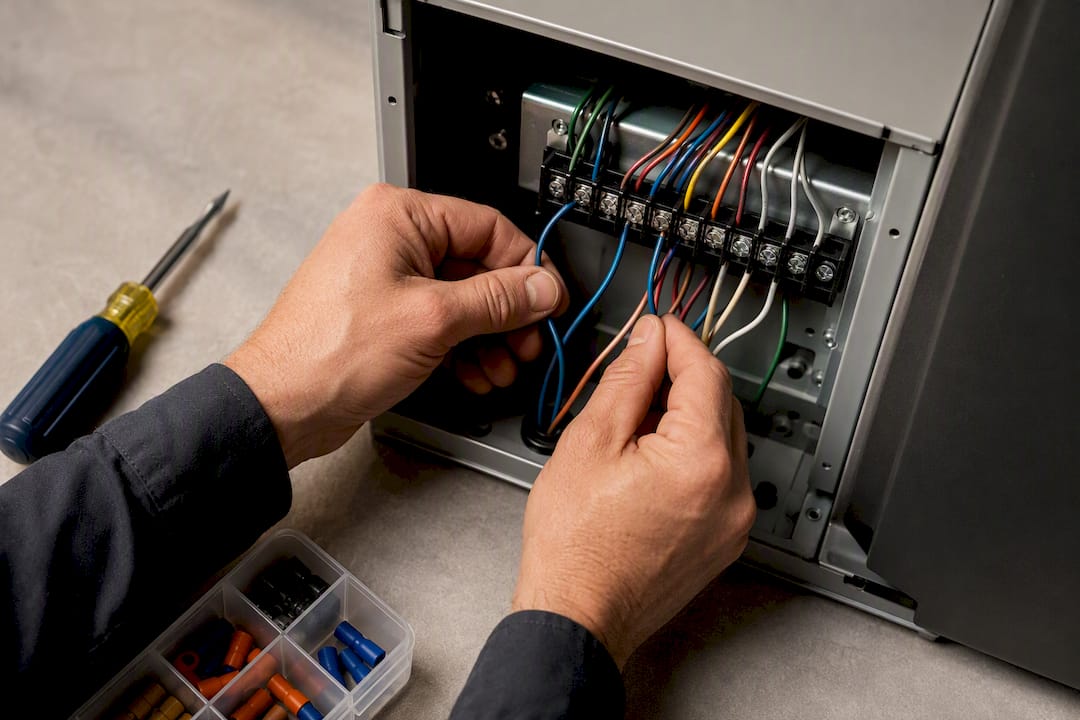
- Watch for reversing valve symptoms. If the system blows cold air even though the thermostat says Heat and the outdoor fan is spinning, the reversing valve may be stuck in cooling position. This is especially common right after a thermostat swap, where an incorrectly wired O/B terminal sends the wrong signal to the valve.
- Smell and look for refrigerant trouble. A faint hissing sound near the lines, oily residue at fittings, or a coil that refreezes within an hour of thawing all point to low refrigerant. These are pro-only repairs.
- Check power at both ends. Look at the indoor breaker, the outdoor disconnect switch, and any fuses at the outdoor unit. A single tripped breaker that resets and holds is a good sign. One that trips again within minutes usually means an electrical fault, not a fluke.
Pro Tip: Photograph any ice buildup on the outdoor unit before you clear it. If a technician needs to diagnose a recurring freeze pattern later, that photo timeline is often more useful than your verbal description of "it kept icing up."
After each check, give the system 15 to 20 minutes to respond before moving to the next step. Heat pumps ramp up slower than a furnace, and supply air typically runs between 85°F and 95°F even when everything is working right. That's below body temperature, so air blowing from the vent can feel lukewarm rather than hot. That's not a malfunction. It's physics.
What You Can Safely Fix Yourself vs. What Needs a Licensed Technician
Some of this list is a five-minute job. Some of it is illegal for anyone without federal certification to touch.
Safe for homeowners:
- Checking and changing the thermostat mode, batteries, and setpoint
- Replacing or cleaning the air filter
- Clearing leaves, snow, or debris from around the outdoor unit
- Resetting a tripped breaker (once, not repeatedly)
- Photographing error codes on the thermostat display and noting when symptoms started
Technician-only, no exceptions:
- Anything involving refrigerant, including recharging or leak repair
- Opening the sealed refrigerant system for any reason
- Diagnosing or replacing the reversing valve
- Testing or swapping capacitors, contactors, and other high-voltage components
The line here isn't arbitrary. EPA Section 608 requires certified technicians to handle refrigerants, and opening a sealed system without that certification is both a legal violation and a real safety risk, since refrigerant can cause frostbite or breathing hazards if mishandled. Before calling for service, gather the unit's serial number, a few photos of any visible ice or damage, and a rough timeline of when the problem started. Techs who show up with that information upfront tend to diagnose faster and charge less for the visit, since less of the appointment goes to detective work.
Heat Pump Maintenance Tips That Prevent Most Winter Breakdowns
Most "not heating" service calls trace back to something that a half hour of maintenance would have caught months earlier.
- Filters: inspect monthly and replace every 30 to 90 days depending on your home's dust load and whether you have pets.
- Outdoor unit clearance: keep 18 to 24 inches of open space on all sides, and keep the unit elevated and clear of leaves, grass clippings, and snow so the coil can transfer heat properly.
- Professional service: schedule regular professional service visits before heating and cooling seasons, so a technician can check refrigerant charge, electrical connections, and defrost operation before you need the system in a cold snap.
- Thermostat programming: avoid deep overnight setbacks. Heat pumps recover slowly, and a big setback can trigger costly backup heat strips just to catch up. A steady setpoint with a small 2 to 3 degree drop is more efficient. If your home loses heat fast regardless of the equipment, check for drafts around exterior doors. Weatherizing doors can measurably cut how hard your heat pump has to work.
Pro Tip: Write the filter change date on the frame with a marker. It sounds simple, but it's the single easiest way to stop guessing whether it's been six weeks or six months.
Our full heat pump maintenance checklist breaks these steps down by season if you want a printable version.
When to Stop Troubleshooting and Call an HVAC Technician
Certain symptoms mean the DIY checklist has run its course.
- Ice that won't clear after a full defrost cycle, or ice that returns within an hour of melting
- Hissing sounds or oily residue near refrigerant lines, both signs of a leak
- A reversing valve that won't switch, leaving the system stuck blowing cold air in heat mode
- A breaker that trips repeatedly rather than holding after a single reset
- Grinding, buzzing, or screeching noises from either the indoor or outdoor unit
A technician working through these will check refrigerant charge and leak points, test the reversing valve under load, inspect capacitors and contactors, measure airflow across the coil, and verify the defrost control board is cycling correctly. Costs vary widely depending on the fault, so for anything beyond a basic service call, get two quotes before authorizing bigger repairs. Have your error codes, a few photos, and your maintenance history ready. Our guide on what to expect during an HVAC service visit covers the full process in more detail.
A Contractor's Notes From the Field
Two patterns show up again and again on service calls. First, after any thermostat replacement, check the O/B wire configuration before assuming the reversing valve failed. Homeowners often replace a perfectly good valve because a wiring mistake made the system behave exactly like a stuck valve would. Second, keep your service records. If a compressor or valve fails inside its warranty window, missing maintenance documentation can complicate a warranty claim. Our post on handling no-heat emergencies has more field notes like these.
What Homeowners Get Wrong About Heat Pump Repairs
The conventional advice treats every "not heating" complaint like a mechanical failure waiting to be diagnosed. In practice, a large share of these calls are configuration problems, not broken parts. A thermostat left in the wrong mode, a fan setting on "On" instead of "Auto," or supply air that's actually working fine but just feels cool because it's running at 90°F instead of furnace-hot. None of that requires a service call.
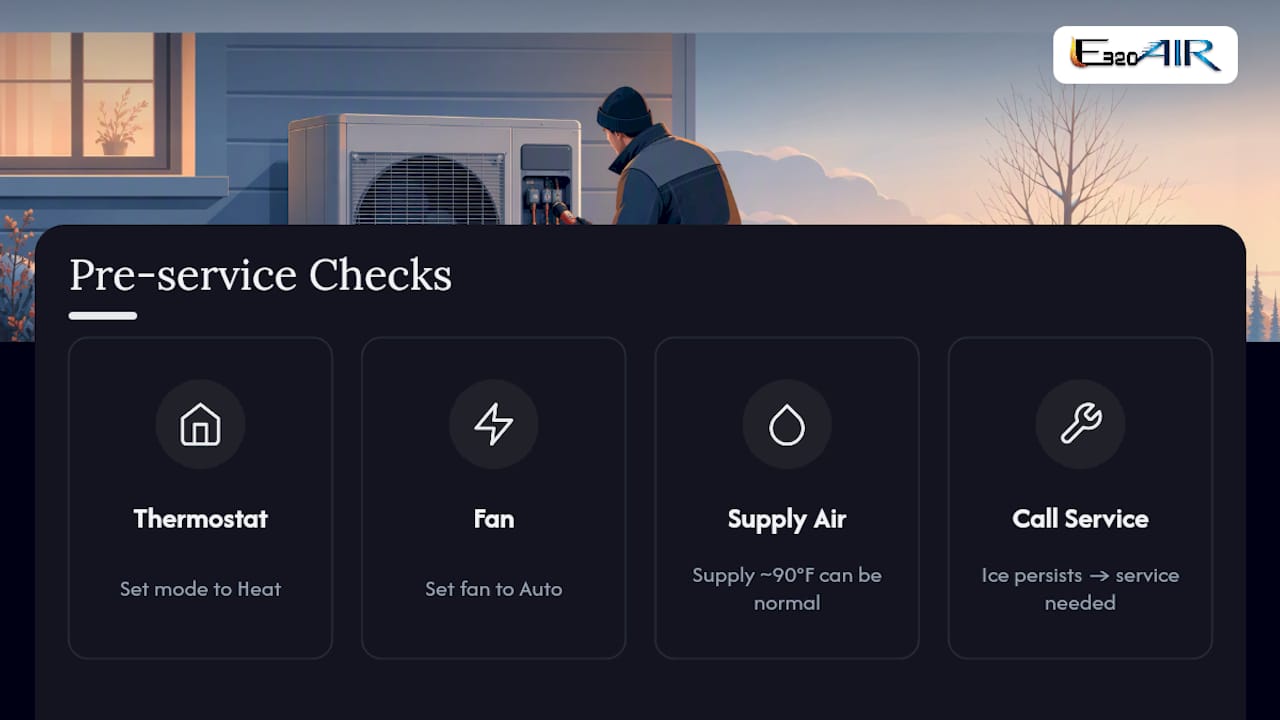
Where I'd push back on the usual troubleshooting lists is the order of operations. Most guides bury the thermostat check three steps deep, after filters and outdoor units. Flip that. Checking thermostat mode and fan settings takes thirty seconds and resolves more calls than any other single step. Only after ruling that out does it make sense to touch the filter, then the outdoor unit, then start worrying about the reversing valve or refrigerant charge.
The other gap: homeowners often wait too long on ice that clearly isn't clearing on its own, hoping it'll resolve itself. It won't. A defrost cycle that can't keep up is a mechanical or airflow problem, and every day you wait is a day the compressor works harder than it should.
— Edward
Book a Heat Pump Diagnostic With E320air
If you've worked through the checklist above and the system still isn't producing real heat, the fastest path forward is a certified diagnostic, not another round of guesswork. A certified technician handles the full range of what this guide flags as pro-only work: refrigerant leak detection and repair, reversing valve replacement, electrical component diagnostics, and full seasonal maintenance visits.
Technicians follow EPA-compliant refrigerant handling procedures, ensuring safety and legal compliance during repairs. When you request service, expect the tech to run through the same checks outlined here (airflow, defrost operation, electrical connections, refrigerant charge) and give you a clear diagnosis before any work starts. Browse past repairs in the problem-solving gallery, or if your system is old enough that a repair doesn't make financial sense anymore, ask about HVAC installation options instead. Ready to get a technician out to your property? Schedule a visit with E320air and get your heat back on track.
Sources
- Section 608 certification — U.S. EPA
- Is Heat Pump Supply Air Too Cold for Heating? — EnergyVanguard
- Maintenance checklist — ENERGY STAR
- Heat pump maintenance — Trane