
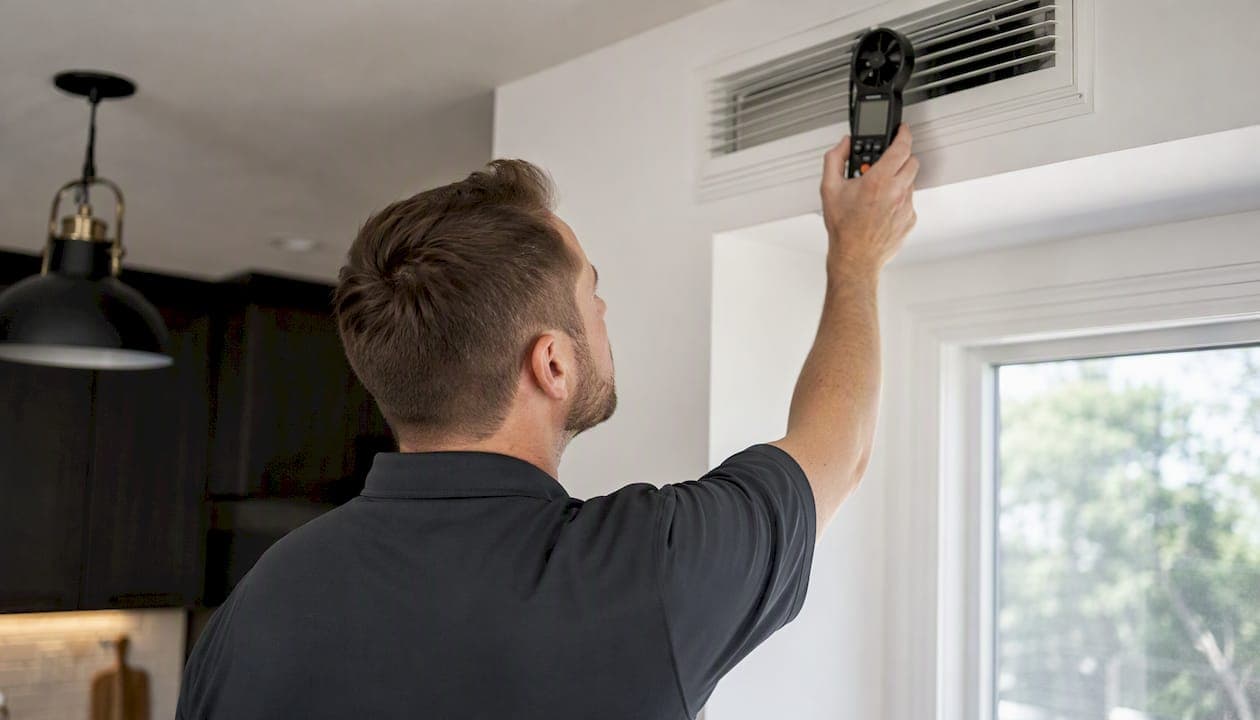
Professional air balancing typically runs $200–$2,000 for a residential home, with most single-family jobs landing around $450 when no major repairs are needed. Per-opening pricing usually falls in the $75–$100 range, so a home with 10–15 registers lands between $750 and $1,500 before any duct work or damper repairs.
Quick cost snapshot:
- Low end: $200–$350 (diagnostic-only visit or small condo, no repairs)
- Typical: $450–$900 (single-family home, 10–15 registers, minor adjustments)
- High end: $1,200–$2,000+ (large home, multiple zones, repairs needed)
Immediate recommendation: Start with a diagnostic visit ($150–$350) if you're unsure whether balancing is the real problem. If you already have obvious hot and cold spots, weak vents, or rising utility bills, skip straight to a full balancing quote. The three variables that move the price most are:
- Number of supply and return registers
- Duct condition (leaks, crimps, disconnected runs)
- Home size and system complexity (single vs. multi-zone)
Key Takeaways
Professional air balancing costs $200–$2,000 for residential homes, with most single-family jobs averaging around $450, and the price is driven primarily by register count, duct condition, and whether repairs are needed.
| Point | Details |
|---|---|
| Typical cost range | Most single-family homes run $450–$1,200; per-opening rates of $75–$100 are standard. |
| Start with a diagnostic | A $150–$350 diagnostic visit identifies the real problem before committing to full balancing. |
| Biggest price drivers | Register count, duct condition, and number of HVAC zones move the price most. |
| Insist on a written report | Any legitimate balancing job delivers before-and-after CFM readings for every register. |
| E320air's approach | Measurement-based, itemized quotes with NATE-certified techs and a satisfaction guarantee. |
Table of Contents
- What is air balancing, and what does it actually fix?
- How do you know if your home needs air balancing?
- What does a technician actually do during a professional balancing job?
- How much does air balancing cost, and what drives the price?
- DIY vs. professional: where's the line?
- How do you choose the right air balancing contractor?
- How long does a balancing visit take?
- What do you actually get for the money?
- What to expect on the day of service
- How E320air prices balancing jobs in the Inland Empire
- When balancing is the right call, and when it isn't
- E320air's air balancing service: get a written estimate
- Sources
What is air balancing, and what does it actually fix?
Air balancing, formally called Testing, Adjusting, and Balancing (TAB), is the process of measuring and tuning your HVAC system so every room gets the correct amount of conditioned air. A technician doesn't just open and close vents. They measure airflow, static pressure, and temperature differentials across the entire system, then adjust dampers, fan speeds, and duct configurations until the numbers match design specifications.
The measurable objectives a TAB visit targets:
- Even temperatures across all occupied rooms (typically within 2–3°F of the thermostat setpoint)
- Correct CFM (cubic feet per minute) delivered to each room based on its size and load
- Proper static pressure across the air handler, so the blower isn't working harder than it should
- Balanced return airflow to prevent pressure imbalances that cause doors to slam or rooms to feel stuffy
Technicians use a flow hood (captures airflow at a register face), a manometer (measures static pressure in the duct), a thermo-hygrometer (temperature and humidity), and an anemometer (air velocity at grilles). The combination of those four readings tells a tech exactly where the system is losing efficiency and comfort.
How do you know if your home needs air balancing?
If one bedroom is always 5°F warmer than the rest of the house in summer, that's the clearest sign. But the symptoms range from obvious to subtle.
Signs that point directly to a balancing problem:
- Rooms that stay hot in summer or cold in winter regardless of thermostat setting
- Vents that blow weakly or barely at all
- The system short-cycles (turns on and off frequently without reaching setpoint)
- Utility bills creeping up without a change in usage habits
- Humidity levels that vary noticeably from room to room
- Doors that move or slam when the system kicks on (a pressure imbalance signal)
Some of these signs resolve with a straightforward damper adjustment during a single visit. Others, particularly weak vents combined with high static pressure readings, often indicate a duct leak or a disconnected run that needs repair before balancing can hold.
Pro Tip: Before calling for a quote, walk through the house with the system running and hold your hand near each supply register. Note which ones feel weak and which rooms feel off-temperature. That 10-minute survey gives the technician a head start and can shorten the diagnostic portion of the visit.
What does a technician actually do during a professional balancing job?
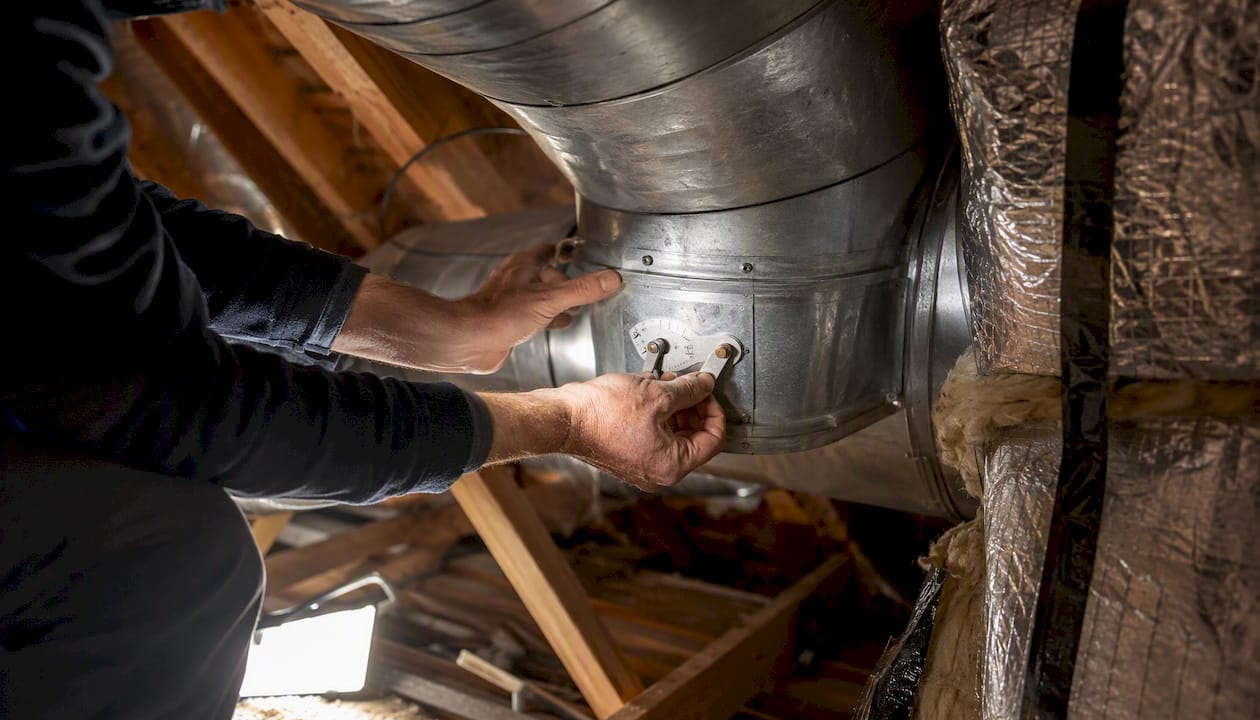
The process follows a logical sequence: measure first, adjust second, verify third. Here's what a typical residential visit looks like from start to finish.
Step-by-step process:
- Pre-visit review: The tech reviews the home's floor plan, system specs, and any prior service records to understand design intent before touching anything.
- Baseline measurements: Using a flow hood and manometer, they record existing CFM at every supply and return register, plus static pressure at the air handler.
- System inspection: Ductwork, dampers, filter condition, and blower operation are checked. Leaks or disconnected runs are flagged here.
- Adjustments: Dampers are repositioned, balancing dampers installed where missing, and fan speed or static pressure settings adjusted at the air handler.
- Re-measurement: Every register is measured again to confirm the adjustments hit target CFM values.
- Written report: The tech documents before-and-after readings for every opening, static pressure results, and any deficiencies found.
Tools used on a typical residential job:
- Flow hood (captures register airflow in CFM)
- Digital manometer (duct static pressure)
- Thermo-hygrometer (temperature and relative humidity)
- Anemometer (velocity at grilles and returns)
- Balancing dampers (installed if existing dampers are missing or seized)
Pro Tip: Ask for the written airflow report before the tech leaves. A legitimate balancing job produces before-and-after CFM readings for every register. If a contractor can't hand you that document, the job wasn't done to a measurable standard.
How much does air balancing cost, and what drives the price?
Residential balancing jobs typically run $200–$1,200, with a national average around $450 for a standard single-family home in the 1,200–2,500 sq ft range with no major repairs. Per-opening rates of $75–$100 are the most common pricing model for residential work.
Sample pricing by scenario
Labor rates for residential balancing run $100–$200 per hour; commercial TAB work runs higher at $165–$300 per hour, often with multi-hour minimums and report compilation time built into the invoice.
Factors that push the price up:
- More registers (each one adds to measurement and adjustment time)
- Poor duct condition (leaks require sealing before balancing holds)
- Limited access (attic ducts, crawl spaces, finished ceilings)
- Multiple HVAC units or zones
- Older systems with no existing dampers
Common add-ons discovered during balancing (budget separately if needed):
- Duct sealing: $200–$4,000 depending on extent
- Damper motor replacement: $150–$400 per unit
- Blower motor repair or replacement: $400–$1,200
Many balancing jobs uncover related defects like leaky ducts or failed damper motors that change the final price. Framing your estimate as "diagnostic + itemized repairs" from the start reduces surprises.
Statistic callout: Air balance reports for residential systems most often fall in the $300–$1,500 range, though complex commercial systems can push totals to $6,000 or more.
DIY vs. professional: where's the line?
Do basic checks yourself. Hire a pro for anything that requires measurement-based adjustments.
A homeowner can reasonably do the following without risk:
- Check and replace a clogged air filter (the single most common cause of weak airflow)
- Partially open or close supply register dampers to redirect airflow
- Confirm return vents aren't blocked by furniture
- Check that flex duct runs aren't kinked or crushed
What homeowners can't replicate without professional tools is actual measurement. Opening a register wider feels like more airflow, but without a flow hood reading, you don't know if you've improved the room or just robbed CFM from another zone. Worse, over-restricting a register raises static pressure across the whole system, which stresses the blower motor and can void equipment warranties.
Risks of DIY balancing attempts:
- Incorrect damper settings that worsen pressure imbalances
- Missed duct leaks that continue wasting conditioned air
- Voided manufacturer warranty on newer systems if settings are altered outside spec
- No documentation if a problem recurs or a landlord-tenant dispute arises
Pro Tip: A diagnostic-only visit ($150–$350) is often the smarter first move than a full DIY attempt. Many contractors credit the diagnostic fee toward the full balancing job if you proceed — so you're paying for certainty, not just a service call.
How do you choose the right air balancing contractor?
Lead with one requirement: ask for measurement-based quotes and a written airflow report as a deliverable. Any contractor who can't commit to those two things upfront isn't doing TAB work.
Questions to ask before booking:
- Do you provide before-and-after CFM readings for every register?
- Are your technicians NATE-certified?
- What warranty or satisfaction guarantee comes with the work?
- Do you price per opening or as a flat rate, and what's included in each?
- Will you provide a written report I can keep for my records?
- What happens if the system doesn't hold balance after 30 days?
Red flags to watch for:
- Vague estimates with no register count or scope of work
- No mention of measurements or reporting
- Immediate push to replace equipment before testing the existing system
- Unwillingness to credit the diagnostic fee toward full service
Trust signals to look for on the quote:
- NATE-certified technician listed by name
- Itemized pricing (diagnostic fee, per-opening rate, repair line items)
- Written satisfaction or service guarantee
- Before-and-after airflow measurement report included in scope
How long does a balancing visit take?
A diagnostic-only visit on a typical single-family home takes 1–2 hours. Full balancing with adjustments and a written report runs longer.
| Job Type | Typical Duration | Notes |
|---|---|---|
| Diagnostic only | 1–2 hours | Measurements, no adjustments |
| Small condo (6–8 registers) | 2–3 hours | Single zone, straightforward access |
| Typical single-family (10–15 registers) | 3–5 hours | Includes adjustments and report |
| Large home or multi-zone | 5–8 hours | May require a second visit |
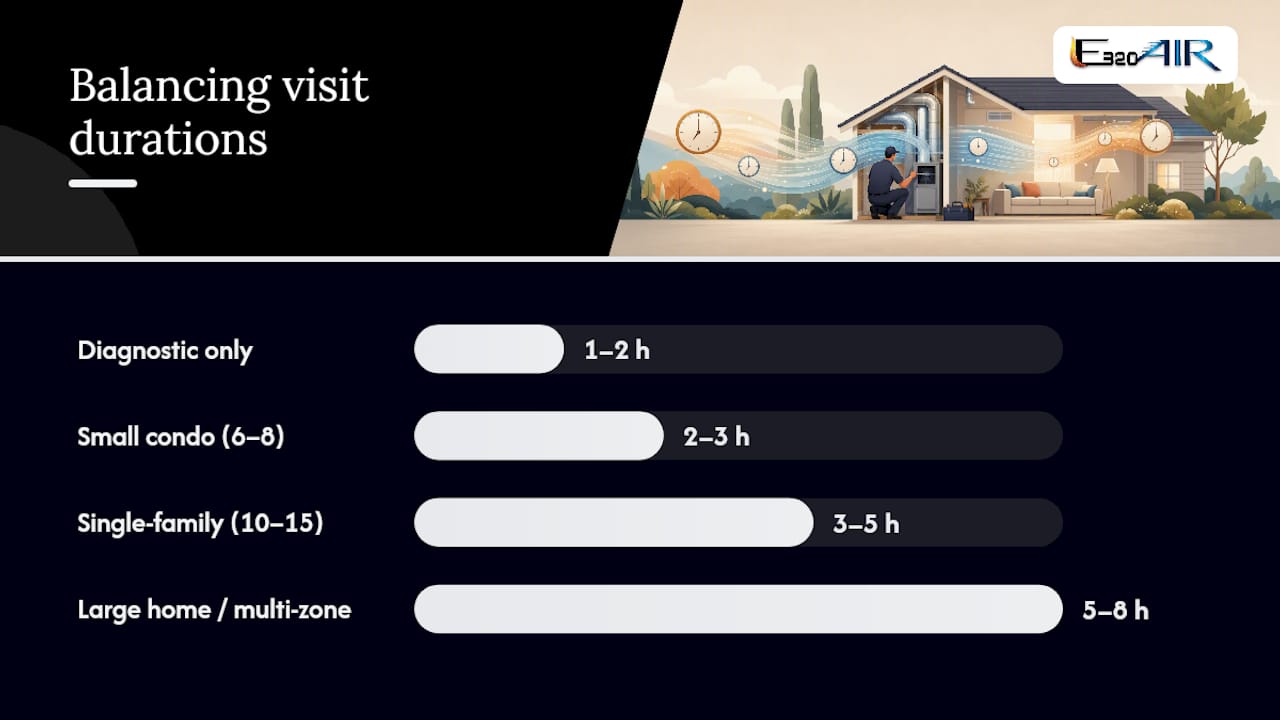
Factors that extend the timeline include attic or crawl-space duct access, multiple air handling units, discovered repairs (duct sealing, damper replacement), and the time needed to compile a detailed written report. Commercial TAB work on multi-unit properties can span multiple days.
What do you actually get for the money?
A properly balanced system reduces the load on your equipment, which improves efficiency and can extend equipment life. The comfort improvement is immediate and measurable: rooms that were consistently 5–8°F off setpoint typically come within 2–3°F after a professional job.
Concrete returns homeowners commonly see:
- More consistent temperatures room to room without adjusting the thermostat
- Lower utility bills from reduced run-time (the system reaches setpoint faster)
- Quieter operation when static pressure is corrected
- Fewer tenant or occupant complaints for property managers
- Documentation of remedial work for lease or warranty purposes
Balanced airflow also reduces the frequency of filter changes and coil cleanings, since air is moving through the system as designed rather than bypassing dirty spots. For property managers, that written airflow report is a practical asset: it documents the condition of the system at a specific date, which matters when disputes arise over habitability or maintenance history.
Statistic callout: Homeowners focused on long-term HVAC cost savings often find that balancing is one of the highest-return tune-up services available, since it addresses the root cause of comfort complaints rather than masking them.
What to expect on the day of service
Clear access is the single most important thing you can do before the tech arrives. A job that should take 3 hours can stretch to 5 if the technician is moving furniture to reach returns or waiting for attic access.
Homeowner prep checklist:
- Clear a 3-foot radius around every supply and return register
- Set the thermostat to a consistent mode (cooling or heating) and leave it there
- Replace the air filter if it hasn't been changed in the last 30 days
- Secure pets in a room the tech won't need to access
- Have a representative present who can authorize any repair decisions on the spot
What the technician will do on-site:
- Walk the home and confirm register locations against the floor plan
- Record baseline CFM and static pressure readings at every opening
- Inspect ductwork, dampers, and the air handler for deficiencies
- Make adjustments and re-measure to confirm targets are met
- Compile and hand over the written airflow report before leaving
After the tech leaves, run the system for 24 hours and then walk through the house again. Check the rooms that were previously problematic. If a room is still significantly off-temperature, call the contractor. A satisfaction guarantee should cover a return visit to re-verify measurements.
For a detailed walkthrough of the home airflow balancing workflow, E320air's blog covers the process step by step.
How E320air prices balancing jobs in the Inland Empire
E320air derives estimates from measurement-based diagnostics, not guesswork. Every quote starts with a diagnostic visit that produces actual CFM and static pressure readings, and pricing is itemized so you can see exactly what you're paying for.
How the estimate is structured:
- Diagnostic fee: Covers the initial airflow and static pressure measurements across all registers
- Per-opening rate: Applied to each supply and return register included in the balancing scope
- Repair line items: Any duct sealing, damper work, or blower service is quoted separately after the diagnostic, not bundled into a flat rate that hides the real scope
Sample estimates for Inland Empire homes:
These ranges assume reasonable duct access and no major repairs. Homes with California HVAC service pricing considerations, such as older duct systems or multi-story layouts, may fall at the higher end.
Trust signals on every E320air quote:
- NATE-certified technicians on every job
- Written airflow report with before-and-after CFM readings per register
- Satisfaction guarantee: if measurements don't hold, we return to re-verify
- Itemized pricing with no hidden diagnostic fees
When balancing is the right call, and when it isn't
Most homeowners who call about comfort problems assume they need a new system. In my experience reviewing HVAC service outcomes, the majority of those calls resolve with balancing or a duct repair, not equipment replacement.
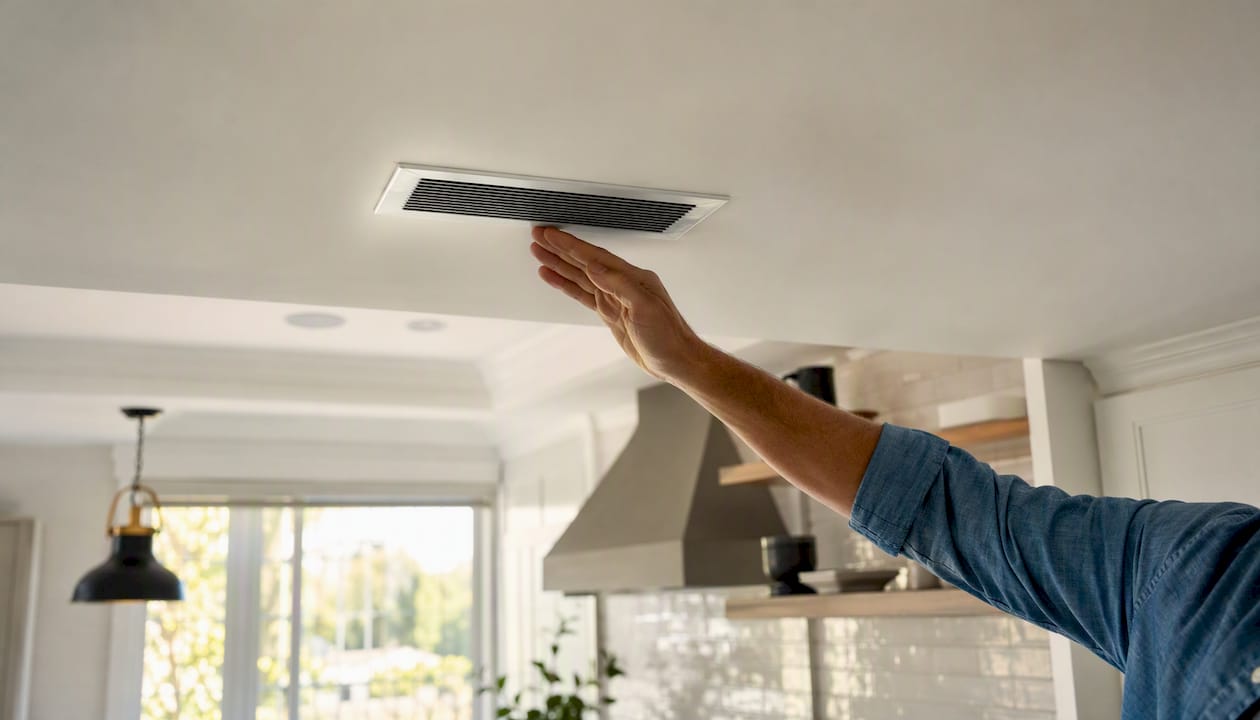
The clearest indicator that balancing is the right first step: the system runs, the filter is clean, and specific rooms are consistently off-temperature. That pattern almost always points to airflow distribution, not equipment failure. Where balancing is the wrong call is when the equipment itself is undersized for the home's load, or when a refrigerant issue is masking as a comfort problem. A good diagnostic visit separates those two scenarios before any money is spent on adjustments.
One thing worth insisting on regardless of who you hire: request the written measurement report. Not a verbal summary, not a technician's assurance that "everything looks good." The numbers. A contractor who delivers before-and-after CFM readings for every register is accountable to the work in a way that a vague service ticket is not. That report also protects you if the problem recurs and you need to demonstrate what was done and when.
E320air's air balancing service: get a written estimate
Comfort problems that have persisted through multiple service calls usually come down to airflow distribution, not equipment age. E320air's air balancing service starts with a measurement-based diagnostic, produces an itemized written quote, and delivers a before-and-after airflow report you can keep.

Every job is performed by NATE-certified technicians and backed by a satisfaction guarantee. If the measurements don't hold after the visit, we return to re-verify at no additional charge. For larger properties, E320air also handles commercial HVAC balancing for multi-unit buildings and mixed-use spaces throughout the Inland Empire.
Ready to stop guessing which room is the problem? Request a balancing estimate and get a written quote with itemized pricing within one business day.
Sources
- What Is HVAC Balancing? Improve Airflow & Efficiency
- Cost to Balance an HVAC System: Typical Price Ranges and What Drives Cost 2026 - Pick Comfort
- Air Balance Report Cost: Typical Prices and Main Cost Drivers 2026 – Heat Pump Prices Reviews
- HVAC Balancing: What It Is, How It Works, and When You Need It
- How Much Does Air Balancing Cost? - Vortex Air