
TL;DR:
- California HVAC selection prioritizes high SEER ratings, refrigerant compliance, and proper sizing.
- Leading brands like Lennox, Carrier, Trane, Daikin, and Mitsubishi suit California's climate.
- Expert installation and regional knowledge are crucial for long-term system performance and code adherence.
California is one of the most demanding states in the country when it comes to HVAC choices. Scorching inland summers, mild coastal winters, strict Title 24 energy codes, and major refrigerant changes rolling out in 2025 and 2026 all combine to make system selection genuinely complex. Get it right, and you will enjoy lower utility bills, reliable year-round comfort, and access to thousands of dollars in rebates. Get it wrong, and you are stuck with a system that underperforms, fails early, or leaves money on the table. This guide cuts through the noise and gives you a clear, expert-backed path to the best HVAC brands and systems for California properties.
Table of Contents
- Key criteria for choosing an HVAC system in California
- Top HVAC brands for California homes and properties
- Side-by-side comparison: Key features, efficiency, and rebates
- Getting the most from your HVAC investment: Installation, sizing, and maintenance
- Why local expertise beats generic rankings
- Find the right HVAC solution for your California property
- Frequently asked questions
Key Takeaways
| Point | Details |
|---|---|
| Prioritize energy efficiency | Choose brands with high SEER ratings and models that qualify for rebates to lower your bills and carbon footprint. |
| Meet new California codes | Ensure your HVAC system uses low-GWP refrigerants and complies with 2026 Title 24 standards to be future-proof. |
| Certified installation matters | Use NATE-certified or manufacturer-approved technicians to maximize system lifespan and comfort. |
| Heat pumps excel regionally | Modern heat pumps provide efficient year-round heating and cooling tailored to California’s climate. |
Key criteria for choosing an HVAC system in California
Before looking at any brand name, you need to know what makes a system a good fit for California specifically. The criteria here are not the same as they would be in, say, Minnesota or Florida. California's unique mix of regulations, climate zones, and incentive programs changes the game considerably.
Energy efficiency ratings matter more here than almost anywhere else. The SEER (Seasonal Energy Efficiency Ratio) rating measures how efficiently a cooling system operates over an entire season. California's hot inland valleys and extended cooling seasons mean even a small SEER improvement adds up to real dollar savings on your electricity bill every single month. Look for systems rated at 16 SEER or higher as a baseline, with top-tier models reaching 20 to 28 SEER for maximum savings.
State code compliance is not optional. California's California HVAC replacement options landscape changed significantly with Title 24 updates, and the 2025 to 2026 refrigerant phase-out is one of the biggest shifts in years. The industry is moving away from R-410A toward low global warming potential (low-GWP) refrigerants. As heat pumps are ideal for California mild winters and hot summers, providing dual heating and cooling with efficiency up to 300 to 400% and compliance with 2025 and 2026 Title 24 codes phasing out R-410A, buying a system that uses compliant refrigerants now protects your investment for the long term.
Your local climate zone shapes everything. California has 16 distinct climate zones recognized by the California Energy Commission. A property in Riverside experiences very different demands than one in San Francisco or Fresno. Understanding your seasonal HVAC needs helps narrow down which system type actually makes sense for your address, not just for California in general.
Here are the core criteria to evaluate before you commit to any system:
- SEER rating: Aim for 18 or higher for maximum long-term savings in California conditions
- Refrigerant type: Confirm compatibility with post-2026 low-GWP standards
- Heating capacity: Even mild California winters require a system that heats reliably
- Rebate eligibility: Check TECH Clean CA, federal tax credits, and your utility's programs
- Installer certification: Only work with NATE-certified or brand-authorized technicians
Pro Tip: Ask your contractor to show you the Manual J load calculation for your home before any system is purchased. This calculation tells you the exact heating and cooling load your property needs, and it prevents the common mistake of buying an oversized unit.
"Choosing an HVAC system for California is not just about cooling power. It is about pairing the right efficiency rating, the right refrigerant, and the right installer to protect your investment under the state's evolving code requirements."
Top HVAC brands for California homes and properties
Now that you know what to look for, let's break down which HVAC brands deliver the best performance in California's demanding climate. Each of these manufacturers has a strong track record in the state, but they each shine in different scenarios.
Lennox is consistently at the top for energy efficiency in California. Lennox offers heat pump models up to 28 SEER efficiency, which translates to significant monthly bill savings compared to older systems and solid rebate eligibility across state and utility programs. Their XC25 and XP25 models are particularly well-suited to California because they combine variable-speed compressor technology with communicating thermostats, which lets the system fine-tune its output rather than simply cycling on and off. That translates to better humidity control and more consistent temperatures throughout the day.
Carrier brings strong hybrid and dual-fuel options to the table, which makes them an excellent choice for properties that want to balance electric heat pump performance with a gas furnace backup during the rare cold snaps in higher-elevation California communities. Carrier's Infinity series includes smart controls that integrate with home automation platforms, and the brand's service network across California is robust enough to find trained technicians in most markets without difficulty.
Trane earns consistent praise for reliability and climate resilience. Their systems are engineered with durability in mind, and their warranty coverage, including up to 12 years on compressors for registered units, gives homeowners and property managers real peace of mind. Trane's XV20i heat pump is a standout for California's central valley and inland communities where summers are extreme and the equipment runs hard for months at a time.
Daikin and Mitsubishi lead the ductless and mini-split category, which is increasingly relevant in California. Older homes without existing ductwork, room additions, converted garages, and ADUs (accessory dwelling units) all benefit enormously from ductless systems. Both brands offer inverter-driven compressors that adapt capacity precisely based on demand, avoiding the energy waste that comes from oversized conventional systems.
Key advantages by brand at a glance:
- Lennox: Highest SEER ratings available, strong rebate eligibility, leading heat pump technology
- Carrier: Hybrid options, excellent smart home integration, wide service network
- Trane: Exceptional durability, strong warranty programs, tested in extreme climates
- Daikin/Mitsubishi: Best ductless solutions, precision inverter control, perfect for retrofits
Pro Tip: If your property has older ductwork, get it inspected before installing any new high-efficiency system. Leaky ducts can waste 20 to 30% of conditioned air before it ever reaches the living space, which undercuts the efficiency gains you paid for.
Side-by-side comparison: Key features, efficiency, and rebates
With the leading brands introduced, it helps to see how they stack up across the most critical performance and cost categories. California homeowners and property managers need to weigh initial investment against long-term savings, code compliance, and available incentives.
TECH Clean CA rebates of $100 to $3,000, federal tax credits, and utility programs make upgrades significantly more affordable, while 2026 refrigerant changes require low-GWP options across all new installations. Factoring rebates into your total cost comparison can shift the math significantly in favor of premium, high-efficiency models.
| Brand | Max SEER | Heat pump available | Low-GWP refrigerant | Estimated rebate eligibility | Warranty (compressor) |
|---|---|---|---|---|---|
| Lennox | 28 SEER | Yes | Yes (R-454B) | High | 10 years |
| Carrier | 24 SEER | Yes | Yes (R-32/R-454B) | High | 10 years |
| Trane | 22 SEER | Yes | Yes (R-454B) | High | 12 years |
| Daikin | 25 SEER | Yes | Yes (R-32) | Moderate to High | 12 years |
| Mitsubishi | 26 SEER | Yes (mini-split) | Yes (R-32) | Moderate to High | 12 years |
Beyond the table numbers, a few additional points shape your real-world decision:
- Upfront cost vs. savings: Lennox and Mitsubishi carry higher purchase prices, but monthly bill reductions of 30 to 50% over older systems often recover the premium within four to six years in California's climate
- Refrigerant future-proofing: All five brands listed above are transitioning to R-32 or R-454B, which keeps you compliant through 2026 and beyond without emergency equipment swaps
- Rebate stacking: Federal Inflation Reduction Act credits of up to 30% on qualifying heat pumps can be combined with TECH Clean CA rebates and many utility-specific programs, substantially lowering your net cost
For a detailed look at how these systems fit into California HVAC replacement options, it is worth reviewing current code requirements alongside the brand specs before finalizing your choice. Understanding how a central air guide applies to your specific property type also helps you ask the right questions when getting quotes.
Getting the most from your HVAC investment: Installation, sizing, and maintenance
Choosing the right brand is only one piece. Making it work for decades comes down to installation quality and ongoing care. The best heat pump on the market will underperform badly if it is installed incorrectly or sized without proper calculations.
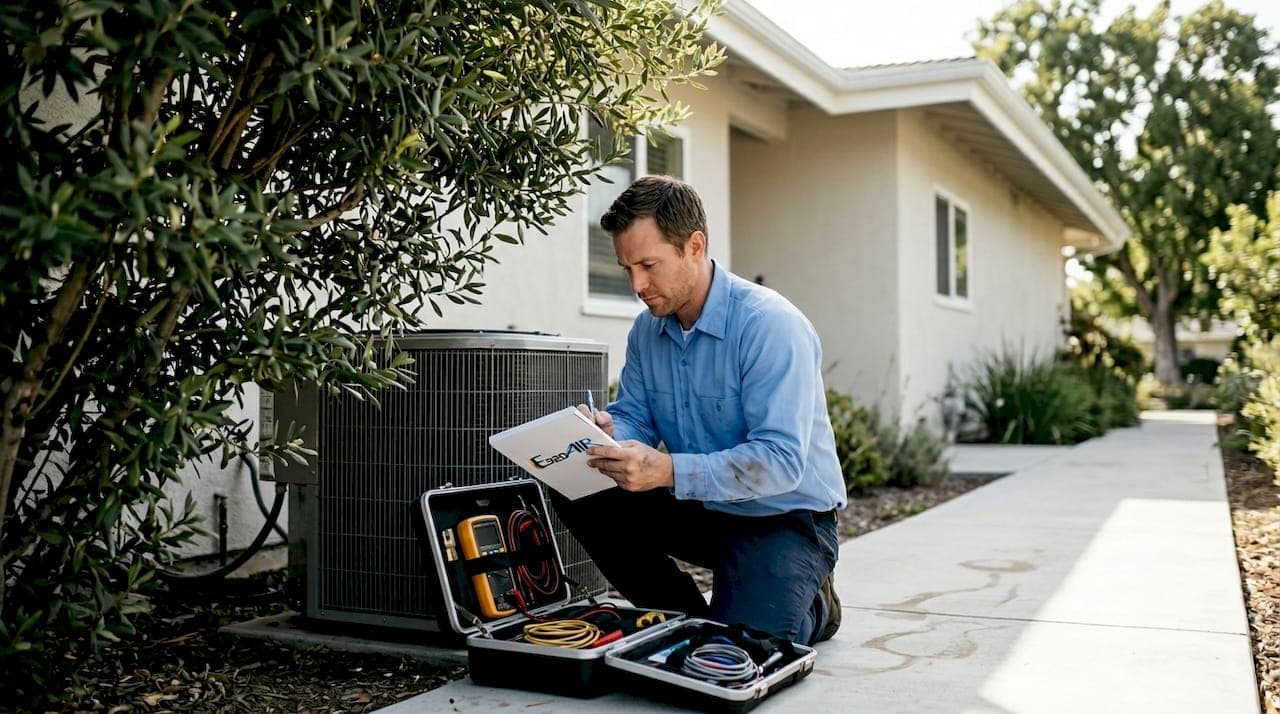
NATE-certified installers and proper sizing extend system life to 15 to 20 years in California's heat, which is why the contractor you hire matters as much as the equipment you choose. Here is what that looks like in practice:
- Verify your installer's certifications. NATE (North American Technician Excellence) certification means your technician has passed independent testing on HVAC installation and service. Brand authorization adds manufacturer-specific training on top of that baseline. Together, they protect your warranty and your investment.
- Insist on a Manual J sizing calculation. Proper HVAC sizing is not a guess. It accounts for your square footage, ceiling height, window area, insulation levels, local climate zone, and occupancy patterns. Oversized systems short-cycle, meaning they run in short bursts that leave humidity problems behind. Undersized systems run constantly and wear out fast.
- Schedule pre-season maintenance every year. Spring service before cooling season and fall service before heating season catches small problems before they become expensive failures. A tune-up typically includes coil cleaning, refrigerant charge verification, electrical connection checks, and filter replacement.
- Replace filters on schedule. A clogged filter forces your system to work harder, which raises energy bills and strains the blower motor. In dusty California inland areas, filters may need replacing every 30 to 45 days during heavy use seasons.
- Keep outdoor units clear. Debris, overgrown shrubs, and shade structures that restrict airflow around condenser units are a common and easily avoided problem. Maintain at least two feet of clearance on all sides.
Pro Tip: Sign up for a maintenance agreement with your HVAC contractor. These programs typically cover annual tune-ups, priority scheduling during peak seasons, and discounts on repairs, and they keep your system running at peak efficiency year after year.
Following seasonal maintenance tips tailored to your region of California takes the guesswork out of upkeep and gives you a clear calendar for staying ahead of problems.
"A high-efficiency system installed poorly will cost more to run and fail sooner than a mid-range system installed correctly. Installation quality is not a variable you can cut corners on."
Why local expertise beats generic rankings
National "best HVAC brands" lists have a real limitation that does not get talked about enough: they rank based on average conditions across the entire country. California is not average, and even within California, the differences between a property in the Coachella Valley, the Bay Area, and the Sierra Nevada foothills are enormous.
We have seen firsthand what happens when homeowners choose a brand purely because it topped a national list, then hire a cut-rate installer who is unfamiliar with California's specific code requirements and climate zones. The result is almost always a system that is slightly wrong in three or four ways: maybe it is sized for an average American home rather than one with California-specific solar gain, or it is installed without accounting for the local utility's specific rebate documentation requirements, or the refrigerant configuration is not optimized for the altitude and temperature swings of that particular area.
Local expertise is what closes that gap. A contractor who has worked specifically in your region understands the microclimate HVAC tips that a national brand's spec sheet will never mention. They know which models hold up best against the particular demands of your zip code, which utility programs are actually worth pursuing, and how to configure a system for maximum longevity in your specific conditions.
The brands we recommend, Lennox, Carrier, Trane, Daikin, and Mitsubishi, all make excellent equipment. But the gap between a great installation and a mediocre one is larger than the gap between any two of these brands. Prioritize finding a certified, California-experienced contractor first, then choose your equipment together. That order of operations produces better outcomes than any generic ranking ever will.
Find the right HVAC solution for your California property
When you're ready to take the next step with your HVAC project, expert help is available. At E320 Air, we specialize in energy-efficient, code-compliant HVAC upgrades designed specifically for California properties. Our team of certified technicians installs, maintains, and services all of the leading brands covered in this guide, including Lennox, Carrier, Trane, Daikin, and Mitsubishi.

Whether you need a full system replacement or a new installation for an addition or ADU, we match the right equipment to your property's specific needs. Visit our HVAC installation experts page to learn more about our installation services, or browse our project success stories to see real examples of California HVAC solutions we have delivered. Let's find the system that keeps your property comfortable, efficient, and compliant for years to come.
Frequently asked questions
What is the most energy-efficient HVAC brand for California's climate?
Lennox offers heat pump models up to 28 SEER, making it the top energy-efficient choice for most California homes and one of the most rebate-eligible options in the state.
Which HVAC systems qualify for California rebates and incentives in 2026?
Systems using low-GWP refrigerants and TECH Clean CA eligibility, including most modern heat pumps from Lennox, Carrier, Trane, Daikin, and Mitsubishi, can qualify for rebates from $100 to $3,000 plus federal tax credits.
How long should a properly installed HVAC system last in California?
A correctly sized and maintained system installed by certified professionals lasts 15 to 20 years in California's climate, provided annual tune-ups and seasonal maintenance are performed consistently.
Are heat pumps a good option for California homes?
Yes, heat pumps are ideal for California because they deliver both heating and cooling with efficiencies far above traditional systems, and they align with Title 24 code requirements taking effect in 2025 and 2026.