
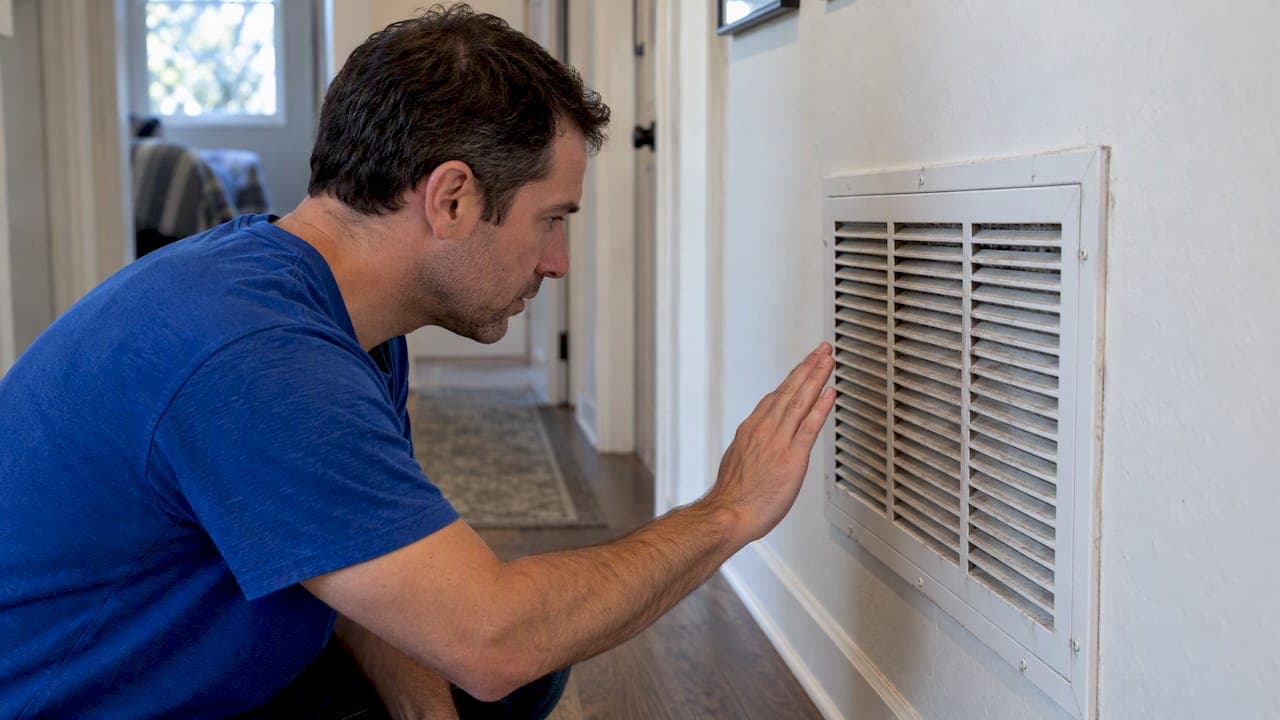
Yes, a blocked or closed return vent can cut airflow and put extra stress on your HVAC system, so it's worth fixing fast. Start with a five-minute check: turn the fan to high, feel for suction at the return grille, and pull the filter to see if it's clogged. Those two steps tell you whether you're dealing with a simple fix or something deeper in the ductwork.
TL;DR:
- Compare suction at every return with the fan on high; one weak grille suggests a local fault, while several point to a system restriction.
- Check filters monthly and replace them at least every three months, sooner in homes with pets, smokers, or heavy dust.
- Vacuum both sides of the grille, clear rugs and furniture, and leave 8 to 12 inches of space around each return before retesting suction.
- Call a licensed technician when several returns stay weak after basic fixes, or when whistling, rattling, or booming sounds come from near the air handler.
- Ask a technician to measure static pressure and trace leaks before approving duct replacement; those tests identify whether the fault needs sealing, repair, or resizing.
Table of Contents
- 5-minute checklist to confirm a blocked return vent
- What typically causes a blocked return vent
- Step-by-step fixes you can try yourself
- When a blocked return vent needs a professional
- Keeping return vents clear for good
- Our take on diagnosing airflow problems first
- Get a diagnostic check from our team
- FAQ
- Sources
5-minute checklist to confirm a blocked return vent
Before you touch a screwdriver, figure out whether the problem is one vent or the whole system. Work through these steps in order:
- Set the thermostat fan to ON or high and walk to the return grille. You should feel steady suction pulling air in.
- Pull the filter and hold it up to light. If you can't see through it, replace it immediately, following ENERGY STAR guidance on monthly inspection and replacement every three months at minimum.
- Look for obvious obstructions: a couch pushed against the grille, a rug flopped over it, or a decorative cover blocking slots.
- If only one return feels weak, the issue is likely local, a nearby duct run or the register itself. If several returns feel weak, suspect a system-wide restriction.
Pro Tip: Test every return in the house, not just the one that feels off. Comparing results tells you instantly whether you're chasing a local blockage or a bigger airflow problem.
What typically causes a blocked return vent
Most blocked returns trace back to a handful of repeat offenders, and each one leaves a different clue.
- A clogged filter is the most common culprit. Filters with a higher MERV rating trap more dust but also restrict airflow faster, so they need more frequent swaps.
- Furniture, rugs, or decor covering the grille physically starves the system of return air, even when the duct behind it is perfectly clear.
- Older homes sometimes have a return that was removed and patched over during a remodel, leaving the system short one entire return path.
- Flexible duct can collapse, get crushed under stored items, or come loose from its connection, cutting off airflow before it ever reaches the grille.
- Grilles with dust-clogged slots or a stuck damper inside the boot can choke airflow even when nothing visible is in the way.
If you've recently had work done on the house, a disconnected or patched return is worth checking first. Our guide on weak airflow from vents covers more of these patterns in detail.
Step-by-step fixes you can try yourself
Most blocked returns respond to a short list of DIY fixes. Grab a vacuum with a brush attachment, a flashlight, gloves, a dust mask, and an incense stick or smoke pencil if you have one, then work through this sequence:
- Pop off the grille cover and vacuum both sides thoroughly, including the slats where dust builds up.
- If you can safely reach into the register boot, vacuum the immediate interior and any visible plenum connection.
- Replace or clean the filter. ENERGY STAR recommends checking it monthly and swapping it at least every three months, more often with pets or a dusty home.
- Move furniture back and keep at least 8 to 12 inches of clearance around every return. Pull up any rug that fully covers a grille.
- Re-run the suction test with the fan on high and note whether airflow improved. This is your pass/fail check.
- If you can safely access nearby duct runs, look for kinks, crushed sections, or detached joints. Re-secure flex duct with sheet-metal screws and seal with mastic or UL-rated metal tape, never standard cloth duct tape, which tends to fail over time according to ENERGY STAR's duct sealing guidance.
Statistic callout: Homes can lose roughly 20 to 30 percent of heating and cooling energy to duct leaks, and a blocked return only adds to that loss by forcing the system to work harder for less air.
A smoke pencil or lit incense stick held near duct seams or register edges will show you exactly where air is escaping or being pulled from unintended gaps, a trick professional diagnostic guides also rely on.

Pro Tip: Keep a quick before-and-after log of your suction test results. If airflow doesn't improve after clearing the grille and swapping the filter, that's your signal the problem is deeper than the register.
For step-by-step cleaning of accessible grilles and inlets, our guide to cleaning air ducts at home walks through the process in more detail.
When a blocked return vent needs a professional
Some signs mean it's time to stop troubleshooting and call a licensed technician.
- Multiple returns stay weak even after you've cleared grilles and changed the filter, pointing to a system-wide restriction.
- You hear whistling, rattling, or booming near the air handler, which can signal high static pressure.
- You can see duct damage, long runs with sharp bends, or suspect older insulation that may contain asbestos.
- The suction test shows no real pull at more than one return, which often means a collapsed plenum, failing blower motor, or hidden duct disconnection.
A technician will typically measure static pressure, run flow hood or CFM testing, use a smoke pencil to trace leaks, and seal ducts with mastic rather than tape. In some cases, the fix is resizing or replacing undersized ductwork entirely. Our piece on spotting undersized return air explains how to recognize that specific problem before the appointment. When you call, having photos of the affected returns and the filter's age on hand speeds up the diagnosis.
Keeping return vents clear for good
A little routine maintenance prevents most blockages from coming back.
- Check filters monthly and replace them at least every three months, sooner with pets, smokers, or a dusty household.
- Vacuum grilles during seasonal HVAC checks, not just when airflow feels off.
- Keep furniture set back from returns and favor low-profile pieces in tight rooms.
- Add a return inspection to your annual tune-up, and ask about duct sealing if weak airflow keeps coming back.
Pro Tip: Mark your filter's install date on the frame with a marker. It's a small habit that removes the guesswork from your replacement schedule.
Airflow problems aren't always about the duct itself. In older homes, even interior doors and thresholds affect how air balances between rooms, something covered well in this piece on how interior doors affect energy efficiency.

Our take on diagnosing airflow problems first
We'd rather see a homeowner clear a grille and swap a filter than pay for a service call that ends with the same advice. Most airflow complaints have a mechanical, visible cause, and a five-minute suction test catches a surprising share of them before any tool comes out of a truck. The instinct to jump straight to duct replacement is usually backward. Static pressure and leak testing tell you exactly where the restriction lives, so the repair matches the actual problem instead of guessing at the most expensive one. That's the order we follow: confirm, then fix, then verify, never the reverse.
— Edward
Get a diagnostic check from our team
If your return vents stay weak after the checks above, we'll find out why. Technicians typically measure static pressure, trace leaks, and seal or repair ductwork using durable methods rather than quick patches that fail quickly.

Before your visit, jot down which returns feel weak, how old your filter is, and snap a few photos of any grilles or duct sections you could reach. That cuts the diagnostic time down considerably. Our residential HVAC services cover everything from a single blocked return to a full duct resizing, and our problem-solving gallery shows real repairs we've completed on systems like yours. If the fix turns out to be bigger than expected, like replacing undersized ductwork, our installation team handles that too. Reach out through our main service page to get a visit scheduled.
FAQ
Is it okay to block return air vents?
No, blocking a return vent reduces system airflow, forces the blower to work harder, and can stress the heat exchanger or coil over time. Keeping at least 8 to 12 inches of clearance around every return avoids this.
Do return air ducts need to be cleaned?
Not usually. The EPA notes that surface dust on a grille is normal and simple vacuuming is typically enough, with professional duct cleaning reserved for visible contamination or biological growth.
Why is my return vent not pulling air?
A weak or absent suction usually means a clogged filter, an obstruction over the grille, or a deeper issue like a collapsed duct or failing blower motor. Testing every return in the house helps narrow down whether it's local or system-wide.
How do I unclog a blocked air vent?
Start by removing the grille cover and vacuuming both sides, then check the filter and replace it if it's dirty. If airflow still feels weak after that, the blockage is likely further into the ductwork and may need a professional look.