

TL;DR:
- HVAC ventilation types include exhaust-only, supply-only, HRVs, and ERVs, each suited to different climates and building needs. Proper selection depends on climate, building tightness, duct availability, and maintenance willingness to ensure indoor air quality and energy efficiency. Balanced systems like HRVs and ERVs are recommended for most modern homes to prevent moisture and pollutant issues while recovering energy.
HVAC ventilation types are the distinct methods a building uses to exchange stale indoor air with fresh outdoor air, directly controlling air quality, humidity, and energy costs. The four main mechanical categories are exhaust-only, supply-only, Heat Recovery Ventilators (HRVs), and Energy Recovery Ventilators (ERVs), with installed costs ranging from $500 to $6,500 depending on system complexity. Choosing the wrong type for your climate or building can raise energy bills, trap moisture, or pull outdoor pollutants indoors. This guide breaks down each option so you can make a confident, informed decision.
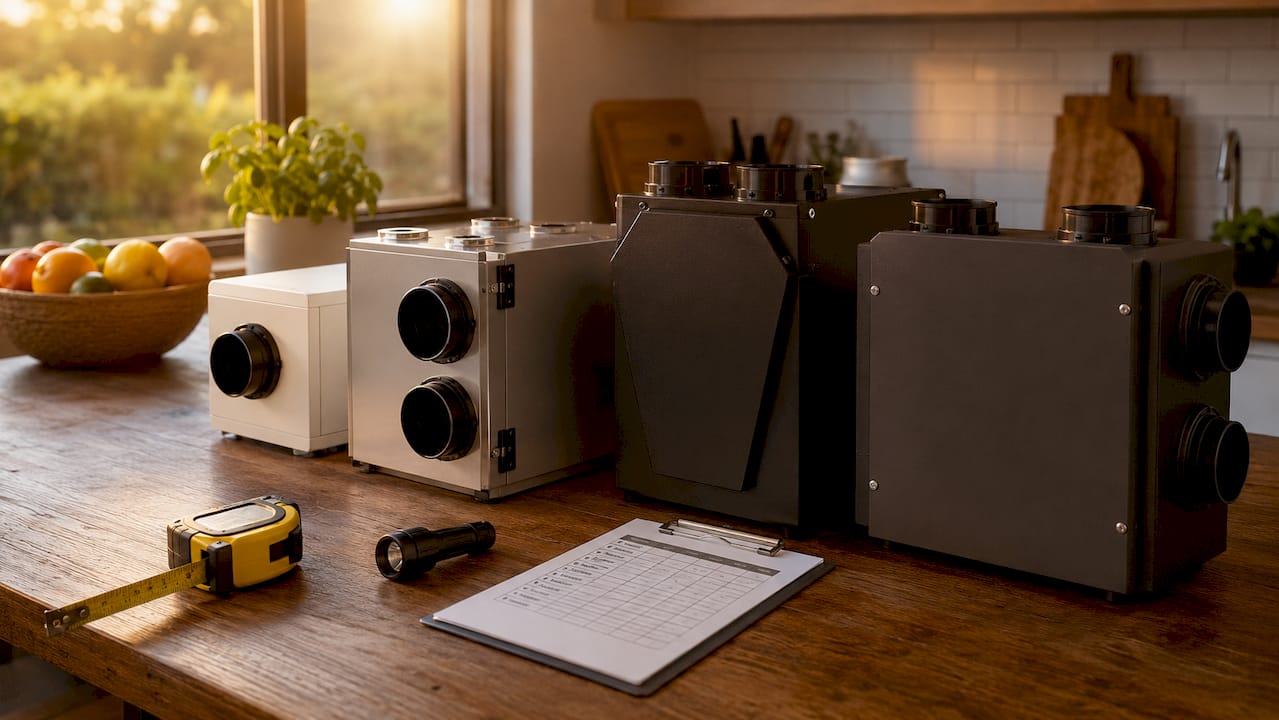
1. What are the main HVAC ventilation types?
Ventilation falls into two broad categories: natural and mechanical. Natural ventilation relies on wind pressure and temperature differences to move air through openings like windows and vents. Mechanical ventilation uses fans, ducts, and controls to manage airflow deliberately. For most modern homes and commercial properties, mechanical ventilation is the standard because it works regardless of outdoor conditions and can be sized to meet ASHRAE 62.2 residential airflow requirements. Natural ventilation alone rarely delivers consistent indoor air quality in tightly built structures.
Within mechanical ventilation, the four recognized system types each handle airflow differently. Exhaust-only and supply-only systems move air in one direction. HRVs and ERVs move air in both directions while recovering energy from the outgoing stream. Understanding these differences is the foundation of any smart ventilation decision.
2. Exhaust-only ventilation systems
Exhaust-only systems use one or more fans to pull stale air out of the building. That outward airflow creates negative pressure, which draws fresh outdoor air in through gaps, vents, and intentional openings in the building envelope. These systems are the least expensive option, with installed costs typically in the $500–$1,500 range.
When exhaust-only works well:
- Mild or hot-dry climates with low outdoor humidity
- Older, loosely built homes where some air infiltration already occurs
- Spaces like bathrooms and kitchens where localized exhaust is the primary goal
- Properties where budget is the primary constraint
The main risk is that negative pressure does not discriminate about what it pulls in. Exhaust-only systems risk drawing radon, combustion gases, or moisture-laden air through foundation cracks and wall cavities. This risk is highest in homes built or sealed after 1995, where tighter construction means fewer controlled entry points. In humid climates, moisture intrusion can lead to mold growth inside wall assemblies.
Pro Tip: If you use an exhaust-only system, test your home for radon annually and install carbon monoxide detectors near any gas appliances. These two steps cost very little and catch the most common hazards.
Maintenance for exhaust-only systems is straightforward: clean fan grilles every few months and check that exterior vents are not blocked by debris or insulation. Performance degrades quickly when airflow is restricted.
3. Supply-only ventilation systems
Supply-only systems work in the opposite direction. A fan pushes filtered outdoor air into the building, creating positive pressure that forces stale air out through leakage points and exhaust vents. Installed costs typically run $1,000–$2,500, reflecting the added filtration hardware.
Key benefits of supply-only systems:
- Incoming air passes through a filter before entering living spaces
- Positive pressure prevents outdoor pollutants from seeping in through cracks
- Works well in hot or humid climates where controlling what enters matters
- Reduces allergen and particulate infiltration compared to exhaust-only setups
The trade-off is energy load. Pushing unconditioned outdoor air into a building forces your heating or cooling system to work harder to bring that air to the desired temperature. In very cold climates, this can noticeably increase heating costs. Supply-only systems also do not recover any energy from the air they exhaust.
Pro Tip: Pair a supply-only system with a MERV 8 or higher filter to capture pollen, dust, and fine particulates. Upgrading the filter is one of the cheapest ways to improve indoor air quality without changing the system itself.
For properties near highways, industrial areas, or wildfire-prone regions, the filtration advantage of supply-only ventilation is significant. The benefits of ventilation types that filter incoming air become especially clear when outdoor air quality is unreliable.
4. Heat Recovery Ventilators (HRVs)
An HRV is a balanced mechanical ventilation system that simultaneously exhausts stale air and supplies fresh air. The two airstreams pass through a heat exchanger core, where the outgoing warm air transfers its heat to the incoming cold air without the two streams mixing. This recovers a large portion of the energy that would otherwise be lost.
HRVs transfer sensible heat only, meaning they move temperature but not moisture. That makes them well suited for cold and dry climates in USDA zones 5–7, where winters are frigid but outdoor humidity is low. In those conditions, you want to recover heat without also pulling in outdoor moisture.
| Feature | HRV Performance |
|---|---|
| Heat transfer type | Sensible heat only |
| Best climate | Cold, dry (USDA zones 5–7) |
| Installed cost | $2,500–$5,500 |
| Moisture exchange | No |
| Maintenance interval | Annual core cleaning |
Advantages of HRVs:
- Significantly reduces heating load in cold climates
- Eliminates drafts by pre-warming incoming air
- Maintains balanced airflow, avoiding pressure imbalances
- Extends the life of the building envelope by controlling condensation
The limitation is clear: an HRV in a humid climate will not remove excess moisture from incoming air. Using an HRV in a hot, humid region can worsen indoor moisture problems. Failure to maintain HRV cores annually reduces energy efficiency and allows dust and biological growth to accumulate, cutting airflow and air quality simultaneously.
5. Energy Recovery Ventilators (ERVs)
ERVs work like HRVs but go one step further. The heat exchanger core in an ERV transfers both sensible heat and latent heat, meaning it moves moisture as well as temperature between the two airstreams. In summer, an ERV pre-cools and dehumidifies incoming air using the cooler, drier exhaust stream. In winter, it retains indoor humidity that would otherwise be lost.
ERVs are the preferred choice for hot and humid climates because they actively manage moisture while recovering energy. USDA climate zones 3–4, which cover much of the American South and Mid-Atlantic, are the primary target for ERV installations.
| Feature | ERV Performance |
|---|---|
| Heat transfer type | Sensible and latent heat |
| Best climate | Humid, mixed (USDA zones 3–4) |
| Installed cost | $3,000–$6,500 |
| Moisture exchange | Yes |
| Maintenance interval | Annual core cleaning |
Benefits of ERVs in humid climates:
- Reduces cooling load by pre-conditioning incoming air
- Maintains comfortable indoor humidity without running a separate dehumidifier
- Lowers overall energy consumption compared to no-recovery systems
- Prevents the moisture buildup that leads to mold and structural damage
The moisture-transfer core in an ERV requires more careful cleaning than an HRV core. Biological growth in a neglected ERV core spreads directly into the fresh air supply. Annual maintenance is not optional for these systems.
Pro Tip: If you live in a climate with hot summers and cold winters, an ERV handles both seasons better than an HRV. The moisture exchange that helps in summer also prevents your home from becoming uncomfortably dry in winter.
6. Decentralized mechanical ventilation for homes without ductwork
Not every property can support a central ducted ventilation system. Older homes, apartments, and historic buildings often lack the wall cavities or ceiling space needed for ductwork. Decentralized mechanical ventilation solves this with individual room units that mount through a small hole in an exterior wall.
Decentralized systems serve spaces up to 45–75 m² and require wall penetrations typically in the 100–160mm diameter range. Installation is fast and causes minimal disruption to finished interiors. Units like double-flow decentralized ventilators can provide simultaneous intake and extraction in a single room, with minimal installation disruption compared to full duct retrofits.
Where decentralized ventilation fits best:
- Apartment renovations where building rules restrict ductwork
- Historic properties where wall and ceiling integrity must be preserved
- Single-room additions or converted spaces like garages and sunrooms
- Commercial spaces like server rooms or small offices needing targeted airflow
The coverage limit is the main constraint. A single unit handles one room effectively. Whole-house ventilation using decentralized units requires multiple installations, which raises total cost and complexity. For a full smart home renovation that includes ventilation upgrades, decentralized units work best as part of a broader plan rather than a standalone whole-house solution.
7. How to choose the right ventilation system
Choosing the right system starts with your climate zone. Cold, dry climates call for an HRV. Hot, humid climates call for an ERV. Mild climates with good outdoor air quality can often work with simpler exhaust-only or supply-only systems. Matching system to climate is the single most important decision you will make.
Building tightness is the second factor. Homes built after 1995 are typically tight enough that exhaust-only systems create problematic negative pressure. Tighter buildings need balanced systems like HRVs or ERVs that control both supply and exhaust. Older, leakier buildings have more flexibility but still benefit from mechanical control.
Ductwork availability shapes your options practically. If your home has existing ducts, a central HRV or ERV integrates cleanly. Without ducts, decentralized units or supply-only systems with minimal duct runs are the realistic path. Avoiding common installation mistakes during this decision saves significant money and rework later.
Balanced double-flow ventilation systems integrating mechanical supply and exhaust are recommended for new constructions or full renovations for optimal comfort and energy savings.
Maintenance capacity matters too. HRVs and ERVs require annual core cleaning. If you cannot commit to that schedule, a simpler system with lower maintenance demands may serve you better long term. The best system is the one that gets maintained consistently.
Key takeaways
The right HVAC ventilation type depends on climate zone, building tightness, ductwork availability, and your willingness to maintain the system annually.
| Point | Details |
|---|---|
| Climate drives the choice | Use HRVs in cold/dry climates and ERVs in hot/humid climates for best performance. |
| Exhaust-only carries real risks | Negative pressure can pull in radon and combustion gases in tightly sealed homes. |
| ERVs and HRVs need annual maintenance | Neglected cores reduce efficiency and introduce biological contaminants into fresh air. |
| Decentralized units solve the ductwork problem | Single-room units cover up to 75 m² with minimal wall disruption, ideal for retrofits. |
| Balanced systems outperform single-direction ones | Supply-and-exhaust systems deliver better air quality and energy recovery than exhaust-only or supply-only alone. |
What I've learned after years of HVAC ventilation installs
The most common mistake I see is homeowners choosing a system based on price alone, then calling us back six months later with moisture damage or air quality complaints. An exhaust-only system at $800 installed sounds like a win until you find mold in the wall cavity behind it.
The second mistake is climate mismatch. I have walked into homes in humid Southern California climates where a previous contractor installed an HRV. An HRV in a humid climate cannot transfer moisture, so it slowly makes the indoor humidity problem worse. The homeowner had no idea why their home felt damp year-round. Swapping to an ERV fixed it immediately.
My honest recommendation for anyone building new or doing a full renovation: go with a balanced double-flow mechanical system from the start. The upfront cost is higher, but integrating ventilation into your whole building strategy pays back in lower energy bills, better air quality, and fewer repair calls. Trying to retrofit the right system after the fact always costs more than doing it correctly the first time.
Maintenance is where most homeowners fall short. Clean your HRV or ERV core once a year. Set a calendar reminder. That single task preserves the system's efficiency and keeps the air you breathe clean. Skipping it for two or three years turns a well-performing system into a source of contamination.
— Edward
E320air can match you with the right ventilation system
Selecting the right ventilation system is straightforward when you have the right contractor behind you. E320air installs, maintains, and repairs the full range of residential and commercial ventilation systems, from simple exhaust fans to full HRV and ERV setups sized for your specific climate and building type.

Whether you are upgrading an older home, outfitting a new build, or managing a commercial property with specific air quality requirements, E320air's team assesses your space and recommends the system that fits your budget and climate. Visit the HVAC installation services page to get started, or browse the problem-solving gallery to see real ventilation solutions E320air has delivered for properties like yours.
FAQ
What is the most energy-efficient ventilation type?
HRVs and ERVs are the most energy-efficient options because they recover heat from outgoing air before it is exhausted. ERVs add moisture recovery, making them more efficient in humid climates.
Can I use natural ventilation instead of mechanical?
Natural ventilation works in loosely built older homes with favorable outdoor conditions, but it cannot meet ASHRAE 62.2 airflow standards reliably in modern, tightly sealed buildings.
What is the difference between an HRV and an ERV?
An HRV transfers heat only, making it best for cold and dry climates. An ERV transfers both heat and moisture, making it the better choice for humid or mixed climates.
How often do HRV and ERV systems need maintenance?
Both systems require annual core cleaning to maintain efficiency and prevent biological growth. Neglecting annual maintenance reduces air quality and energy performance noticeably within one to two seasons.
Is exhaust-only ventilation safe for a modern home?
Exhaust-only ventilation carries risk in tightly sealed homes because negative pressure can draw radon and combustion gases indoors. Homes built after 1995 generally need a balanced system for safe, reliable airflow.