
TL;DR:
- Many Southern California homes rely on HVAC systems alone for air quality, which is insufficient against wildfire smoke and dust. Proper ventilation controls indoor pollutants, humidity, and pressure, significantly improving health and energy efficiency. Regular maintenance, appropriate system choice, and compliance with California codes are essential for effective, cost-conscious indoor air management.
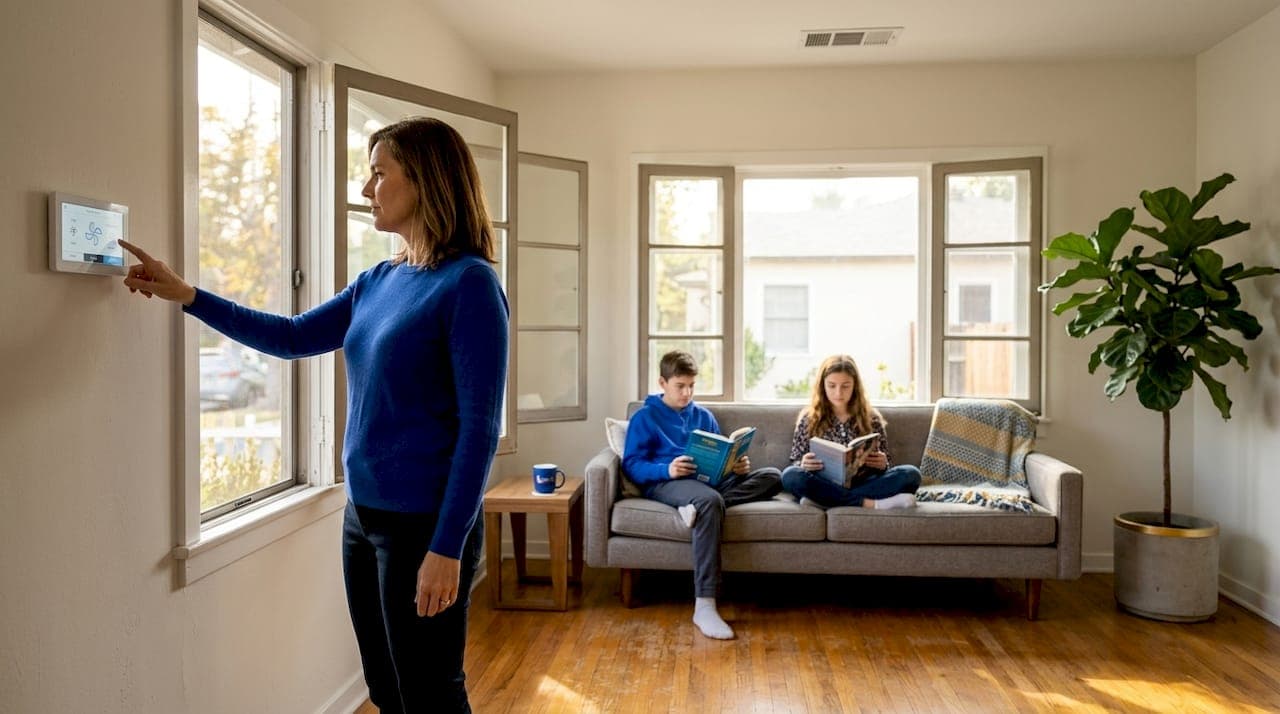
Many Southern California homeowners assume that because they have a running HVAC system, their indoor air is clean and well-circulated. That's a costly assumption. Wildfire smoke, drought-driven dust, high temperatures, and tightly sealed modern construction all work against air quality in ways a basic HVAC setup simply cannot fix on its own. Proper ventilation is a separate, deliberate layer of protection, and understanding how it works is the first step toward a healthier, more energy-efficient home.
Table of Contents
- What ventilation systems really do for your home
- Types of residential ventilation systems and how they compare
- Ventilation, air quality, and energy: striking the right balance
- Maintenance and compliance: keeping your system effective and legal
- Most homeowners underestimate what their ventilation really needs
- Get expert help optimizing your home's ventilation
- Frequently asked questions
Key Takeaways
| Point | Details |
|---|---|
| Proper ventilation is essential | Ventilation systems improve health, comfort, and keep homes up to code in Southern California. |
| Maintenance prevents problems | Regular filter changes and system checks keep air clean and energy costs down. |
| Smart upgrades save money | Modern systems like ERVs can boost air quality without big spikes in energy bills. |
| Local climate matters | Wildfire events and outdoor pollution make filter upgrades and professional advice vital for SoCal homes. |
What ventilation systems really do for your home
It's easy to confuse air conditioning with ventilation, but they solve different problems. Air conditioning controls temperature and humidity. Ventilation, on the other hand, moves air. It brings fresh outdoor air inside and pushes stale, polluted indoor air out. That exchange is what keeps carbon dioxide levels manageable, reduces airborne allergens, and prevents moisture buildup that leads to mold. Without deliberate ventilation, a home becomes a sealed box where pollutants concentrate over time.
The HVAC's air quality benefits go well beyond simply cooling a room. A properly designed ventilation system controls the source and path of airflow so that every room receives its share of fresh air while contaminants are continuously flushed out. In Southern California, where wildfire smoke can push harmful fine particles (PM2.5) into the air for days at a time, that flushing function becomes a genuine health issue, not just a comfort preference.
California takes this seriously at the code level. California Title 24 mandates ASHRAE 62.2 compliance for all residential ventilation, requiring a minimum continuous ventilation rate of roughly 7.5 cfm per person plus 0.03 cfm per square foot. Systems must be measured with a flow hood, sound-rated, and labeled for compliance. For most homeowners, that translates to a system that must be properly sized, installed, and verified, not just plugged in and forgotten.
Here is a quick summary of what a code-compliant ventilation system actually does for you:
| Role | What it does | Why it matters in SoCal |
|---|---|---|
| Pollutant removal | Flushes out VOCs, CO2, allergens | High outdoor pollution days, wildfires |
| Humidity control | Prevents mold and condensation | Marine layer, monsoon moisture |
| Energy efficiency | Controlled airflow reduces HVAC load | Extreme summer temperatures |
| Code compliance | Meets Title 24 / ASHRAE 62.2 | Required for permits and resale |
| Comfort balance | Equalizes pressure across rooms | Common in tight, newer construction |
Key benefits your ventilation system delivers every day:
- Reduced indoor allergen and pollen load
- Lower moisture levels that prevent mold growth
- Balanced air pressure that stops drafts and back-drafting
- Diluted indoor pollutants from cleaning products, furniture, and cooking
- Cleaner air during wildfire smoke events when combined with proper filtration
Types of residential ventilation systems and how they compare
Not all ventilation is created equal, and the type you choose has a direct impact on both air quality and your monthly utility bills. There are three broad categories worth knowing: mechanical, natural, and hybrid (energy recovery) systems.
Natural ventilation relies on windows, vents, and the pressure difference between indoors and outdoors. It works reasonably well in mild climates, but in SoCal it has a serious flaw. On wildfire days, opening windows imports smoke. On extreme heat days, it imports hot air. Natural ventilation is essentially uncontrolled, which makes it unreliable as a primary strategy.
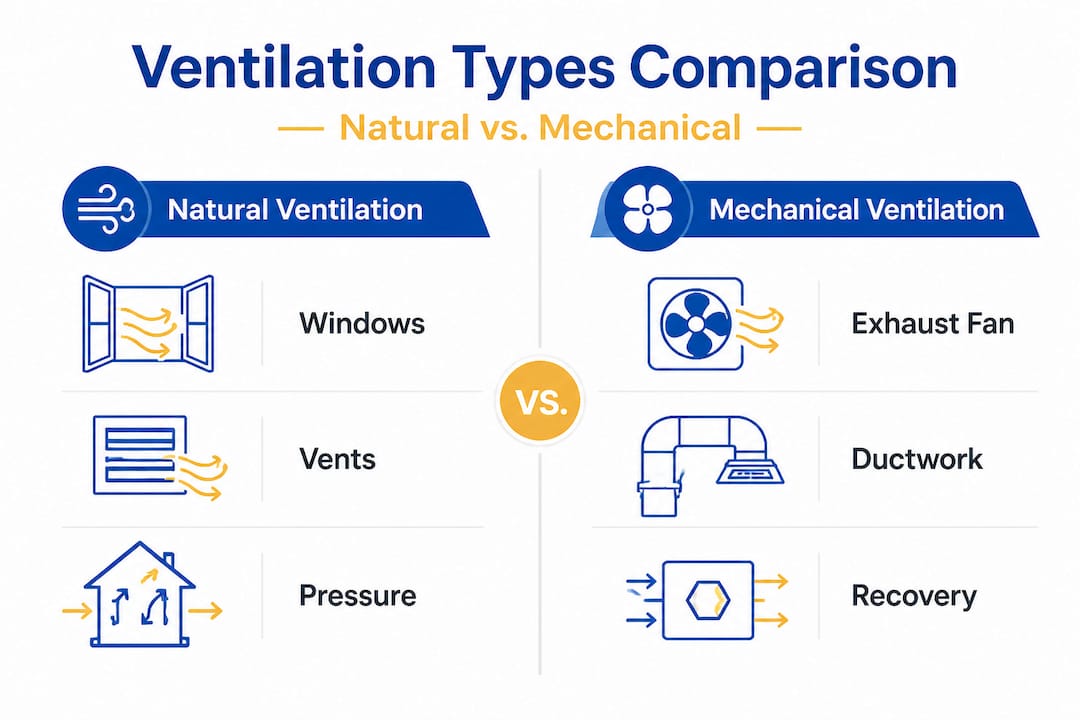
Mechanical ventilation uses fans and duct systems to control airflow deliberately. This category includes exhaust-only systems (bathrooms, kitchens), supply-only systems, and balanced systems that push and pull air simultaneously. Mechanical systems give you control, but running them constantly with 100% outdoor air can spike energy costs dramatically. Research shows that 100% outdoor air cuts airborne infection risk by 60 to 65 percent but raises energy use by up to 1,700 percent compared to recirculated air. That trade-off is real and it matters.
Hybrid or energy recovery systems, specifically Energy Recovery Ventilators (ERVs) and Heat Recovery Ventilators (HRVs), are the sweet spot for most SoCal homes. They bring in fresh air while transferring heat and moisture from outgoing air to incoming air, recovering a large portion of the energy that would otherwise be lost. They give you the health benefits of fresh air without the brutal energy penalty.
| System type | Air quality effect | Energy impact | Cost range | Best fit for SoCal |
|---|---|---|---|---|
| Natural (windows/vents) | Low, uncontrolled | Minimal | Low | Not recommended as sole method |
| Exhaust-only mechanical | Moderate | Low to moderate | Low | Apartments, smaller spaces |
| Balanced mechanical | High | Moderate | Moderate | Most homes |
| ERV/HRV hybrid | Very high | Low with recovery | Higher upfront | Best for wildfire-prone areas |
To figure out what you currently have, follow these steps:
- Locate your air handler or furnace and check whether there is an outdoor air intake duct connected to it.
- Check bathrooms and kitchen for exhaust fans, and verify they actually exhaust to the outside (not just to the attic).
- Look for any labeled ventilation unit near the air handler, such as an HRV or ERV box with two duct connections.
- Review your home's documentation or permit records for any ventilation specifications.
- If none of the above is clear, schedule a ventilation assessment with a qualified HVAC technician.
For homes in wildfire-prone areas like the Inland Empire, the San Gabriel Valley, or near the Angeles National Forest, mechanical ventilation combined with high-quality filtration is almost always the right call. Natural ventilation during fire season is not just ineffective, it actively imports hazardous air. Choosing energy-efficient HVAC options with integrated ventilation recovery is worth the upfront investment when you consider the health and utility savings over time. It's also worth reviewing how 2026 HVAC standards will affect equipment choices if you're planning an upgrade this year.
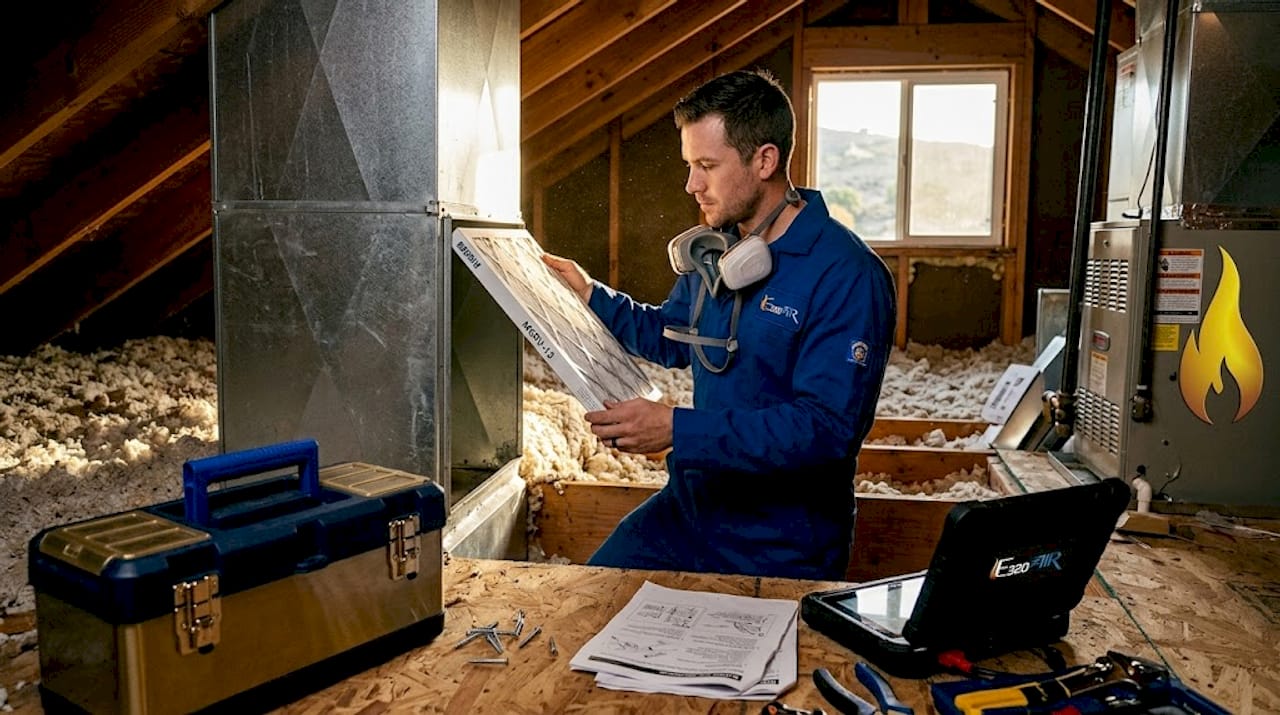
Pro Tip: Don't assume that more outdoor air is always better. Without an energy recovery ventilator, dramatically increasing fresh air intake during summer can cause your utility bill to jump sharply as your AC works harder to cool that incoming hot air.
Ventilation, air quality, and energy: striking the right balance
Getting more fresh air into your home sounds straightforwardly good. And for air quality, it mostly is. But energy costs are a real constraint, especially in Southern California where summer electricity rates are already high. Finding the right balance is the practical challenge most homeowners face.
The good news is that modern systems make this trade-off manageable. Recovery ventilators can reduce greenhouse gas emissions by 44 to 90 percent compared to simple mechanical ventilation, while still delivering the air quality improvements you need. The energy penalty of ventilation can be dramatically reduced without giving up the health benefits.
Here is what ERV and HRV systems specifically do to keep costs in check:
- They transfer heat energy from exhaust air to incoming fresh air, so your HVAC doesn't have to condition air from scratch
- ERVs also transfer moisture, which matters in SoCal's variable humidity
- They operate continuously at low speed, which uses far less electricity than cycling a large system on and off
- They reduce the total load on your air conditioner during summer peaks
- They improve humidity balance during the marine layer season, which prevents that clammy feeling without extra energy use
Wildfire season adds a specific dimension to this balance. During an active fire event, the goal flips: you want to minimize outdoor air intake and maximize filtration of recirculated indoor air. Running your system on recirculate with filter upgrades like MERV or HEPA filters dramatically reduces indoor PM2.5 concentrations. Research confirms that positive pressure ventilation reduced indoor PM2.5 by 38 to 62 percent in tested homes, showing just how meaningful the right system and filter combination can be.
A tight home that is well-sealed for energy efficiency actually creates a different problem: without deliberate ventilation, those sealed spaces accumulate CO2, VOCs from furniture and cleaning products, and moisture. The tighter the home, the more important a controlled ventilation strategy becomes.
Pro Tip: During wildfire season, set your ventilation system to recirculation mode, upgrade to at least a MERV-13 filter, keep all windows closed, and run the system continuously rather than cycling it on demand.
Maintenance and compliance: keeping your system effective and legal
Even the most technically advanced ventilation system will underperform if it isn't maintained properly. This is where most homeowners lose the benefits they paid for. A clogged filter doesn't just reduce air quality gradually. It can effectively eliminate outdoor air delivery entirely, turning a compliant system into a non-functional one.
Here is a practical maintenance schedule to follow:
- Check filters monthly during wildfire season, and at minimum every 2 to 3 months otherwise. Replace when dirty, not on a fixed calendar.
- Inspect outdoor intake vents for debris, pest nesting, or damage at least twice a year, ideally in spring and fall.
- Clean exhaust fan grilles in bathrooms and kitchen quarterly to prevent grease or dust from blocking airflow.
- Test airflow at supply and return grilles annually. If some rooms feel stuffy while others feel drafty, airflow balance may be off.
- Schedule a professional inspection once a year to check duct integrity, measure actual ventilation rates, and verify compliance with California Title 24 requirements.
"Under-ventilated homes often just need a filter change or a simple adjustment, not a full system replacement."
Common pitfalls that turn good systems into poor ones include:
- Leaving filters in place for a full year without checking them
- Exhaust fans ducted to the attic instead of outside (a code violation and a mold risk)
- Ignoring the indicator lights or alerts on ERV/HRV units
- Blocking supply or return grilles with furniture
- Skipping documentation that California code requires for testing and labeling
Poor maintenance also has a direct legal dimension. California's ventilation code expects systems to perform as designed, and homes with documented maintenance histories face fewer complications during inspections or resale. HVAC maintenance schedules are not just about performance, they are about protecting your investment and staying on the right side of California's building codes.
If your system is aging or consistently underperforming despite maintenance, it may be time to consider a more significant upgrade. Understanding the stages of HVAC replacement can help you plan that decision with confidence rather than scrambling during a breakdown.
Most homeowners underestimate what their ventilation really needs
Here is something we see constantly: homeowners who installed a good system two or three years ago and assume they are covered. They are not. The system may have been perfectly compliant on installation day, but California commercial buildings average 1.5 to 3.0 air changes per hour and are still frequently found to be under-ventilated due to maintenance neglect. Residential homes face the same risk at a smaller scale.
The deeper issue is the tendency to make ventilation decisions based on upfront cost alone. A cheaper exhaust-only system feels like a win until you're running it flat out during a wildfire week and still noticing that smoky smell indoors. The local climate in Southern California genuinely demands more than national average guidance suggests. Wildfires, extreme temperature swings, drought-driven particulate matter, and the marine layer all create conditions that average recommendations weren't designed to address.
"A little more focus on filters and tune-ups drastically changes air quality, yet most of us skip them."
The filter issue alone is underappreciated. MERV and HEPA filter insights consistently show that upgrading filter grade is one of the highest-impact, lowest-cost changes a homeowner can make. Yet most people run whatever filter came with the system, often a basic fiberglass type that does almost nothing for fine particles. During fire season especially, running a MERV-13 or better filter can be the difference between genuinely clean air and a home full of invisible particulate matter. Our honest take: treat filter selection as a seasonal decision, not a one-time purchase.
Get expert help optimizing your home's ventilation
If stepping through all of this feels like a lot to navigate on your own, that's understandable. Ventilation system selection, sizing, and compliance in Southern California involves local code knowledge, an understanding of your specific home's construction, and awareness of seasonal conditions like wildfire risk that general guidance simply doesn't cover well.
At E320 Air, we work specifically with Southern California homeowners to assess, upgrade, and maintain ventilation systems that meet California Title 24 requirements and actually perform in the local climate. Whether you need a system audit to find out why your home feels stuffy, a full upgrade to an ERV-based setup, or just a maintenance visit to get your existing system performing correctly, we can help. Browse real ventilation solutions from homes like yours, learn about professional HVAC installation options, or reach out through our home ventilation support page to schedule a consultation. Getting the right system working correctly is a straightforward process when you have the right team behind it.
Frequently asked questions
How often should I replace filters in my ventilation system during fire season?
During active wildfire events, check your filters every 1 to 2 weeks and replace them as soon as you notice visible discoloration or reduced airflow. Higher-grade filters like MERV-13 may load up faster during heavy smoke days.
Do I need a ventilation upgrade to meet California Title 24 in 2026?
Yes, all new construction and substantially renovated homes must meet ASHRAE 62.2 ventilation rates with properly tested, labeled, and documented systems. If your system was installed before recent code updates, a compliance check is a smart first step.
Does more ventilation always mean higher energy bills?
Not necessarily. Recovery ventilators reduce the energy penalty of fresh air ventilation significantly, making it possible to improve air quality without a dramatic increase in utility costs compared to running raw outdoor air.
What's the typical cause of under-ventilation in SoCal homes?
Dirty filters, physically blocked outdoor intakes, and skipped annual maintenance are the most common causes, and all three are entirely fixable without replacing your system.