
TL;DR:
- Regular HVAC maintenance extends equipment life, improves efficiency, and reduces emergency breakdowns.
- Upland's extreme seasonal conditions demand seasonal filters, outdoor unit cleaning, and annual professional tune-ups.
- DIY tasks include filter replacement and vent clearing, while refrigerant and safety inspections require licensed professionals.
Ignoring your HVAC maintenance schedule is one of the most expensive habits an Upland homeowner can develop. Well-maintained systems last 15 to 20 years, reduce energy use by 10 to 30 percent, and prevent 70 to 80 percent of breakdowns that leave families sweating through triple-digit San Gabriel Valley summers. This guide walks you through a practical, Upland-specific schedule, breaks down exactly which tasks you can handle yourself versus which need a licensed technician, and shows you how to stop wasting money on avoidable repairs.
Table of Contents
- Understand the importance of HVAC maintenance in Upland
- Essential HVAC maintenance tasks: what to do and when
- Sample HVAC maintenance schedule for Upland homeowners
- Comparing DIY versus professional maintenance: costs, benefits, and risks
- Costly maintenance mistakes Upland homeowners should avoid
- Our perspective: why rigid HVAC schedules fall short in Upland
- Need help staying on schedule? Local pros in Upland are here
- Frequently asked questions
Key Takeaways
| Point | Details |
|---|---|
| Routine saves money | Following regular HVAC schedules reduces repair costs and cuts energy bills in Upland homes. |
| DIY and pro roles | Homeowners can handle basic maintenance, but safety and warranty protection require professional service. |
| Local climate counts | Upland’s weather makes seasonal adjustments and visual inspections especially important for system health. |
| Avoid common pitfalls | Overlooking professional tune-ups or neglecting filter changes leads to most costly breakdowns. |
Understand the importance of HVAC maintenance in Upland
Upland sits at the foot of the San Gabriel Mountains, which creates a unique microclimate that pushes HVAC systems harder than most homeowners realize. Summers regularly climb above 100°F, and winter nights can drop into the mid-30s. That temperature swing, combined with Inland Empire air quality issues including dust, wildfire smoke, and seasonal Santa Ana winds, means your equipment collects grime and wears out faster than systems in milder coastal climates.
Understanding local HVAC seasonality is the first step toward building a realistic maintenance plan. When outdoor temperatures are extreme, your system runs longer cycles, which accelerates wear on motors, belts, coils, and electrical components. A system that logs twice the runtime of one in a mild climate will age at roughly double the rate without proper upkeep.
Here is what proper maintenance actually delivers for Upland homeowners:
- Extended equipment life: Systems that receive consistent tune-ups routinely reach 18 to 20 years, while neglected systems often fail well before the 10-year mark.
- Lower utility bills: A tuned system uses noticeably less electricity, which is critical in Upland where peak-summer utility bills can spike dramatically.
- Fewer emergency calls: Regular maintenance prevents the majority of unexpected breakdowns, meaning you are not calling for emergency service on a 105°F Friday evening.
- Better indoor air quality: Clean filters and coils mean fewer allergens and pollutants circulating through your home, which matters when wildfire smoke rolls through the valley.
The numbers are clear: Systems with dirty coils can lose up to 21% of their efficiency. In Upland's brutal summers, that is real money leaving your wallet every single month. Add the benefit of filter maintenance and the savings compound quickly.
Now that you understand what is at stake, let's break down what proper HVAC maintenance actually entails in Upland.
Essential HVAC maintenance tasks: what to do and when
A strong maintenance plan divides tasks by frequency. Some things need attention every month, others every season, and some require a professional's hands once per year. Mixing these up, or skipping them entirely, is where most homeowners lose money.
Here is the order of operations that keeps Upland systems running at peak performance:
- Monthly: inspect and replace air filters. Filters in Upland homes clog faster than average because of dust, pet dander, and wildfire particulate. Check the filter every single month. If it looks gray or feels restricted when you hold it to the light, swap it out. Choosing the right filter matters too: a MERV 8 to 11 rating balances air quality with airflow for most homes.
- Monthly: check supply and return vents. Walk through every room and make sure furniture, rugs, or curtains are not blocking vents. Restricted airflow forces the blower motor to work harder, raising your bills and shortening motor life.
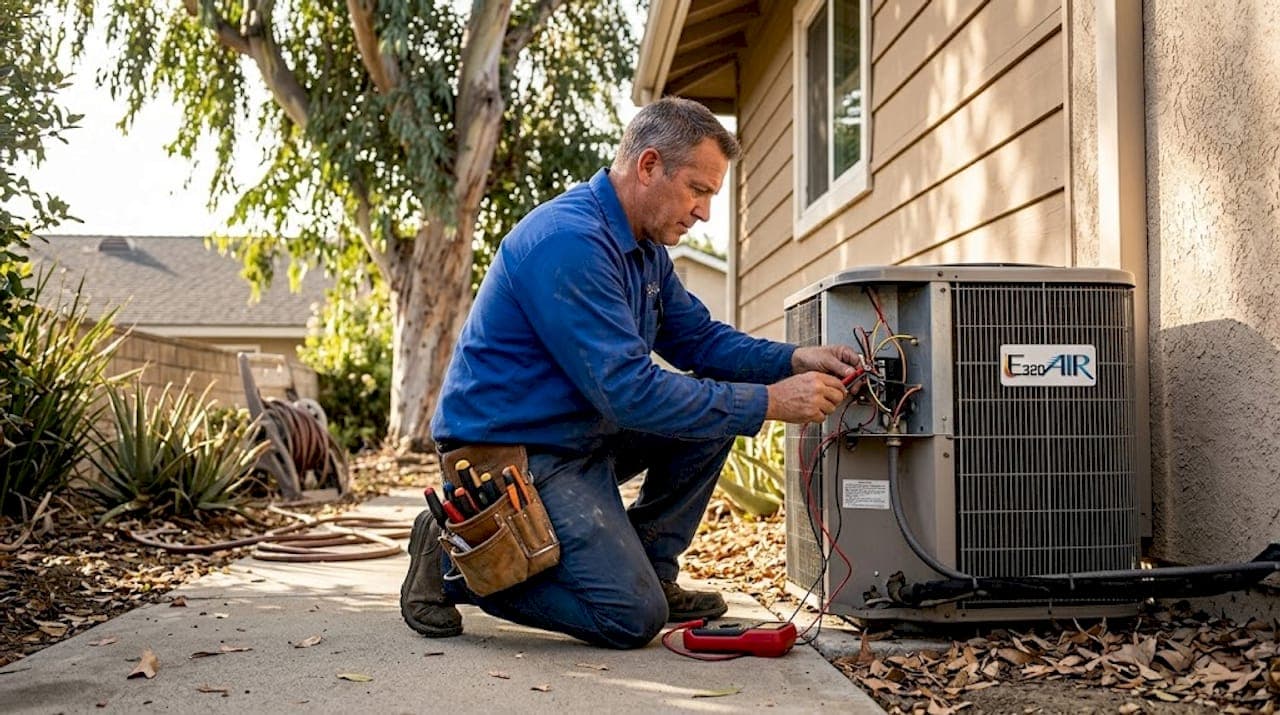
- Seasonal (spring and fall): clear debris around the outdoor unit. Leaves, dirt, cottonwood seeds, and overgrown shrubs can pack the condenser coils and restrict airflow. Clear at least 18 inches of space around the unit before each major season kicks in.
- Seasonal: test your thermostat. Before summer and before winter, switch your system on and verify it responds correctly. A failing thermostat sensor can cause your system to run constantly or shut off prematurely, both of which waste energy.
- Seasonal: visually inspect refrigerant lines. The insulation on the copper refrigerant lines running into your home should be intact. If you see cracking, bare copper, or ice buildup, contact a pro before the issue worsens.
- Yearly: schedule a full professional tune-up. A qualified HVAC contractor checks refrigerant levels, inspects electrical connections, measures static pressure, tests safety controls, performs a combustion analysis on gas furnaces, and checks for carbon monoxide risks. These are not tasks a homeowner can or should attempt.
- Yearly: clean the evaporator and condenser coils. Professionals clean coils with specialized equipment that removes buildup without damaging the delicate fins. This step alone can recover lost efficiency from dirty coils and directly lower your energy bills.
Pro Tip: Schedule your professional tune-up in early spring, before the Upland summer heat arrives. Technicians are busiest in June and July when systems are already failing. Booking in March or April means faster service, often better rates, and peace of mind heading into peak cooling season.
Knowing when to maintain is important, but knowing when to upgrade vs. maintain your system is equally valuable. If your unit is over 15 years old and repairs are adding up, the math may favor replacement.
With the major maintenance intervals in mind, let's see exactly what a well-designed schedule for Upland looks like.
Sample HVAC maintenance schedule for Upland homeowners
The table below organizes every key task by timing and clearly marks what you can handle yourself versus what requires a licensed technician. Print this out and stick it on your utility room wall.
| Task | Frequency | DIY or Pro |
|---|---|---|
| Inspect and replace air filter | Monthly | DIY |
| Check and clear supply/return vents | Monthly | DIY |
| Clear debris around outdoor unit | Every season | DIY |
| Test thermostat operation | Every season | DIY |
| Visually inspect refrigerant line insulation | Every season | DIY |
| Clean condensate drain line | Twice yearly | DIY |
| Clean evaporator and condenser coils | Yearly | Pro |
| Check and recharge refrigerant levels | Yearly | Pro |
| Inspect and tighten electrical connections | Yearly | Pro |
| Measure and adjust static pressure | Yearly | Pro |
| Perform combustion analysis (gas furnaces) | Yearly | Pro |
| Test carbon monoxide and safety controls | Yearly | Pro |
| Full system safety inspection | Yearly | Pro |
This schedule follows industry best practice: DIY covers filters, vents, and debris removal, while pros handle refrigerant, electrical, and safety systems where errors carry real risk. Trying to check refrigerant levels or inspect electrical connections without proper licensing and tools is dangerous and can void your warranty.
Keeping indoor air quality and upkeep tied together will make your schedule feel less like a chore and more like a health investment for your family.
Seeing the schedule visually helps clarify the homeowner's role, but how does this stack up against what you can realistically do yourself versus what must be handled by a professional?
Comparing DIY versus professional maintenance: costs, benefits, and risks
Let's be direct about this. There is real money to save by handling the simple tasks yourself, but there is also real risk in overstepping what a homeowner is qualified to do safely.
| Maintenance type | Average annual cost | Time investment | Key risks of skipping |
|---|---|---|---|
| DIY filter, vents, debris | $20 to $60 per year in filters | 1 to 2 hours per month | Reduced airflow, higher bills, motor strain |
| Professional annual tune-up | $100 to $250 per visit | 1 to 2 hours of your time | Missed safety issues, shortened system life |
| Emergency repair (avoided by both) | $300 to $1,500+ per incident | Hours of downtime | Equipment failure, safety hazards |
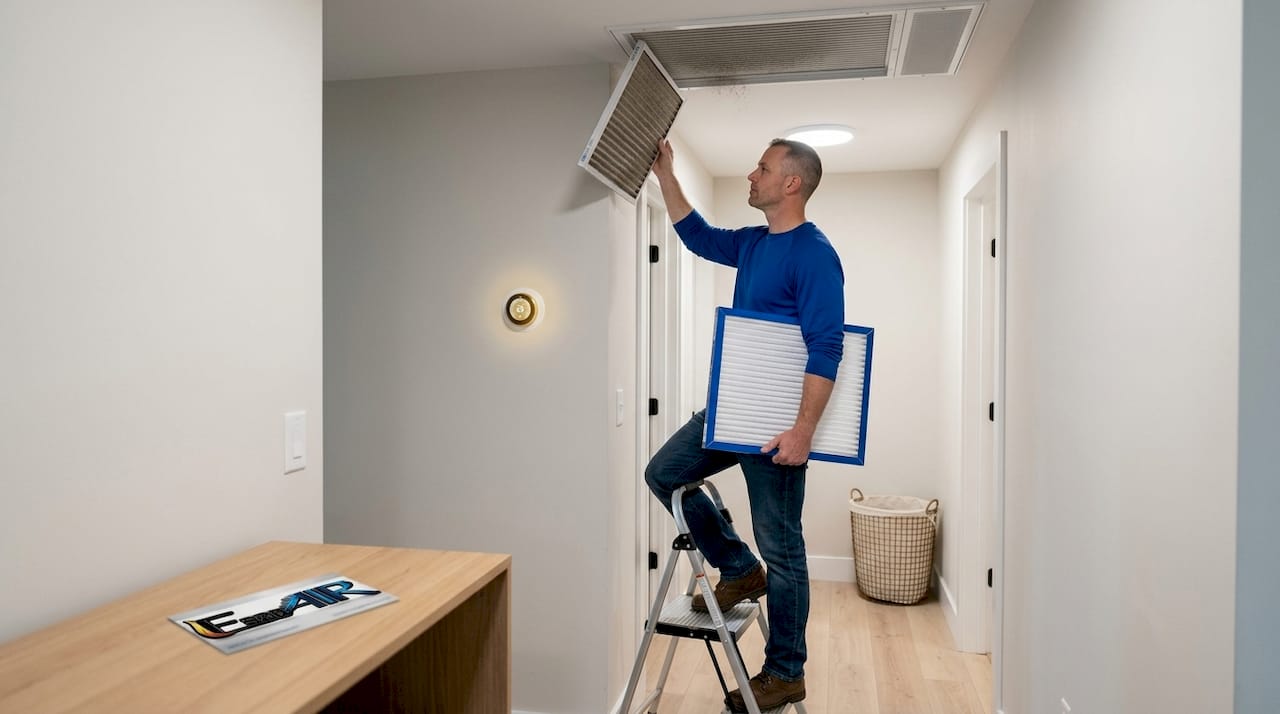
The DIY basics, specifically filter changes, clearing vents, and removing debris from around the condenser, cost very little and take minimal time. These tasks genuinely move the needle on system performance. Skipping them for even one season in Upland's dusty environment can restrict airflow significantly.
Professional maintenance is where warranty protection becomes critical. Manufacturer warranties often require documented proof of regular professional service. If a compressor fails and you cannot show a maintenance record, the manufacturer can deny your claim, turning a covered repair into a $1,500 out-of-pocket expense. That one fact alone justifies the cost of an annual tune-up.
Here is what a licensed HVAC technician brings that no DIY checklist can replicate:
- Calibrated tools to measure refrigerant charge accurately, because overcharged or undercharged systems fail prematurely.
- Thermal imaging or electrical testing equipment to catch loose connections before they cause motor failures or, worse, fires.
- Combustion analyzers for gas furnaces that measure carbon monoxide output invisible to the naked eye.
- The experience to recognize subtle signs of imminent failure that homeowners simply would not notice.
Pro Tip: When hiring a contractor for your annual tune-up, ask specifically if they will provide a written maintenance report. A good contractor documents everything checked, measured, and found. That paperwork protects your warranty and gives you a baseline to compare year over year.
Understanding your limits is vital, but what mistakes do Upland homeowners most commonly make with their maintenance routines?
Explore your options with professional HVAC service when you are ready to book, and take a look at local installation pros if a system upgrade is in your future.
Costly maintenance mistakes Upland homeowners should avoid
Even homeowners with good intentions make maintenance errors that quietly drain money and shorten equipment life. Recognizing these patterns early saves real cash and real aggravation.
- Skipping fall and spring seasonal inspections. Many Upland homeowners only think about their HVAC when it fails in summer. By then, issues that could have been caught in spring have compounded into expensive repairs. A five-minute seasonal walkthrough prevents most of these.
- Using the wrong filter or leaving it too long. Thick HEPA-style filters with very high MERV ratings (13 and above) can restrict airflow in systems not designed for them. Leaving any filter in place for three or more months in Upland's dusty air creates a similar problem. Change filters on a calendar reminder, not when you remember.
- Ignoring the outdoor unit. Cottonwood fluff in spring and leaves in fall pack the condenser fins quickly. A packed condenser forces the compressor to work harder, which raises energy use and shortens compressor life. Rinse the outdoor unit gently with a garden hose once per season to clear debris from the fins.
- Skipping professional service because the system seems fine. This is the most expensive mistake of all. Most HVAC failures develop slowly and silently. By the time you notice a problem, the damage is already done. Think of the annual tune-up the same way you think of a car oil change: you do not wait for the engine to knock before changing the oil.
Here is the statistic that should drive the point home: dirty coils reduce efficiency by 21%, and coil fouling is entirely preventable with regular cleaning. In a home spending $200 per month on summer cooling, that is $42 per month vanishing because of skipped maintenance.
Staying ahead of seasonal HVAC issues in the Inland Empire requires discipline and local awareness, not just a generic national checklist.
Now that you know what not to do, let's step back and consider a bigger-picture view about HVAC schedules in Upland.
Our perspective: why rigid HVAC schedules fall short in Upland
Here is an uncomfortable truth most maintenance guides will not tell you: following a fixed calendar schedule is better than nothing, but it is not actually the best approach for Upland homeowners.
Calendar-based schedules assume every season is the same. In Upland, they are not. A year with an extended wildfire season dumps weeks of heavy particulate through your air system. A late-season heat wave in October runs your AC long past when most schedules say to wrap it up. An unusually cold December pushes your furnace hard before you have had a chance to book that tune-up.
The most effective approach we have seen combines calendar milestones with condition-based checks. Pay attention to early warning signs: unusual noises like rattling, squealing, or banging; airflow that feels weaker than normal from specific vents; energy bills creeping up without a change in usage habits; humidity levels inside the home feeling off even when the system is running.
After any major local weather event, whether that is a heat dome, a wildfire smoke event, or a Santa Ana wind period, check your filter immediately and inspect the outdoor unit. Do not wait for the scheduled date. Adapting to local climate conditions in real time is what separates homeowners who get 20 years out of a system from those who replace it at 10.
The rigid "change filter in January, tune-up in April" approach works for average conditions in average climates. Upland is neither. Treat your HVAC like a living piece of equipment that responds to its environment, and you will get dramatically more value from both your maintenance efforts and your system itself.
Need help staying on schedule? Local pros in Upland are here
Knowing the schedule is one thing. Actually implementing it year after year, especially when life gets busy, is another challenge entirely.
At E320 Air, we work with Upland homeowners every day to build maintenance plans that actually fit local conditions, not generic national templates. Our team understands how Inland Empire summers, wildfire seasons, and Santa Ana winds affect residential HVAC systems in ways that matter to your family's comfort and your wallet. From annual tune-ups and filter system recommendations to full HVAC installation when it is time to upgrade, we handle every part of the process. Browse our problem-solving gallery to see real examples of how we have helped local homeowners extend system life and cut energy costs. Reach out today to get your maintenance schedule set up before the next season hits.
Frequently asked questions
How often should HVAC filters be changed in Upland homes?
HVAC filters should be checked monthly and replaced every 1 to 3 months for optimal efficiency, and likely more often during Upland's wildfire and high-dust seasons.
What HVAC tasks should I do versus hiring a professional?
Homeowners can safely handle filter changes, vent checks, and debris removal, but refrigerant, electrical, and safety checks including carbon monoxide testing must always be done by a licensed technician.
Does skipping yearly maintenance affect my HVAC system warranty?
Yes. Manufacturer warranties require documented proof of regular professional maintenance, and skipping service can leave you paying out of pocket for covered repairs.
What is the biggest cause of HVAC breakdowns?
Neglecting regular maintenance, especially coil cleaning and filter changes, is the leading cause, with dirty coils and missed tune-ups accounting for the vast majority of preventable system failures.