
TL;DR:
- Choosing the right HVAC depends on climate, home size, budget, and maintenance capacity.
- Modern systems like variable-speed units and heat pumps offer better efficiency and comfort.
- Proper sizing, regular maintenance, and future upgradeability are key for long-term satisfaction.
Choosing the right HVAC system in Moreno Valley feels overwhelming when you're staring down a list of options, each with its own price tag, efficiency rating, and installation requirements. The Inland Empire's climate throws everything at your home: scorching summers, occasional cold snaps, and enough temperature swings to make a poorly chosen system work twice as hard. Whether you manage a rental portfolio or own a single-family home, the system you pick today will shape your comfort, energy bills, and repair costs for the next 15 to 20 years. This guide cuts through the noise and gives you a clear path to the right decision.
Table of Contents
- What to consider when choosing an HVAC system
- Central air conditioning systems
- Ductless mini-split systems
- Heat pumps and hybrid systems
- Packaged and rooftop HVAC systems
- Compare your HVAC options: Which system fits your needs?
- Insider advice: What most guides miss when choosing your HVAC
- Upgrade your comfort with local HVAC experts
- Frequently asked questions
Key Takeaways
| Point | Details |
|---|---|
| System selection matters | The right HVAC type balances your comfort, efficiency, and overall cost of ownership. |
| Mini-splits boost savings | Ductless mini-splits can deliver top-tier efficiency and tailored control in many Moreno Valley homes. |
| Heat pumps are versatile | Modern heat pumps and hybrids cut energy bills and work well for year-round comfort. |
| Don't skip maintenance | Regular maintenance maintains peak efficiency and can extend HVAC lifespan by up to 10 years. |
| Professional help pays off | Consulting local HVAC pros ensures correct sizing, installation, and maximum comfort for your property. |
What to consider when choosing an HVAC system
Before you compare brands or get dazzled by efficiency numbers, you need to nail down a few fundamentals. These factors will narrow your choices faster than any spec sheet.
Climate and humidity control matter more in Southern California than most people realize. Moreno Valley sits in a semi-arid zone with summer highs regularly topping 100°F and winter nights that can dip into the 30s. Your system needs to handle both extremes without burning through electricity.
Home size and layout directly affect what capacity and configuration you need. A 1,200 square foot condo has completely different needs than a 3,000 square foot two-story home with a detached garage or guest room. Oversized systems short-cycle (turn on and off too quickly), which wastes energy and leaves rooms feeling clammy. Proper HVAC sizing is one of the most overlooked steps in the buying process, and getting it wrong is an expensive mistake.
Budget has two layers that homeowners often confuse. Upfront installation cost is just the beginning. The real number to watch is the total cost of ownership over 10 to 15 years, which includes monthly energy bills, annual tune-ups, and eventual repairs. A cheaper system with a low SEER2 rating (Seasonal Energy Efficiency Ratio, the standard efficiency measure) can easily cost you thousands more over its lifetime.
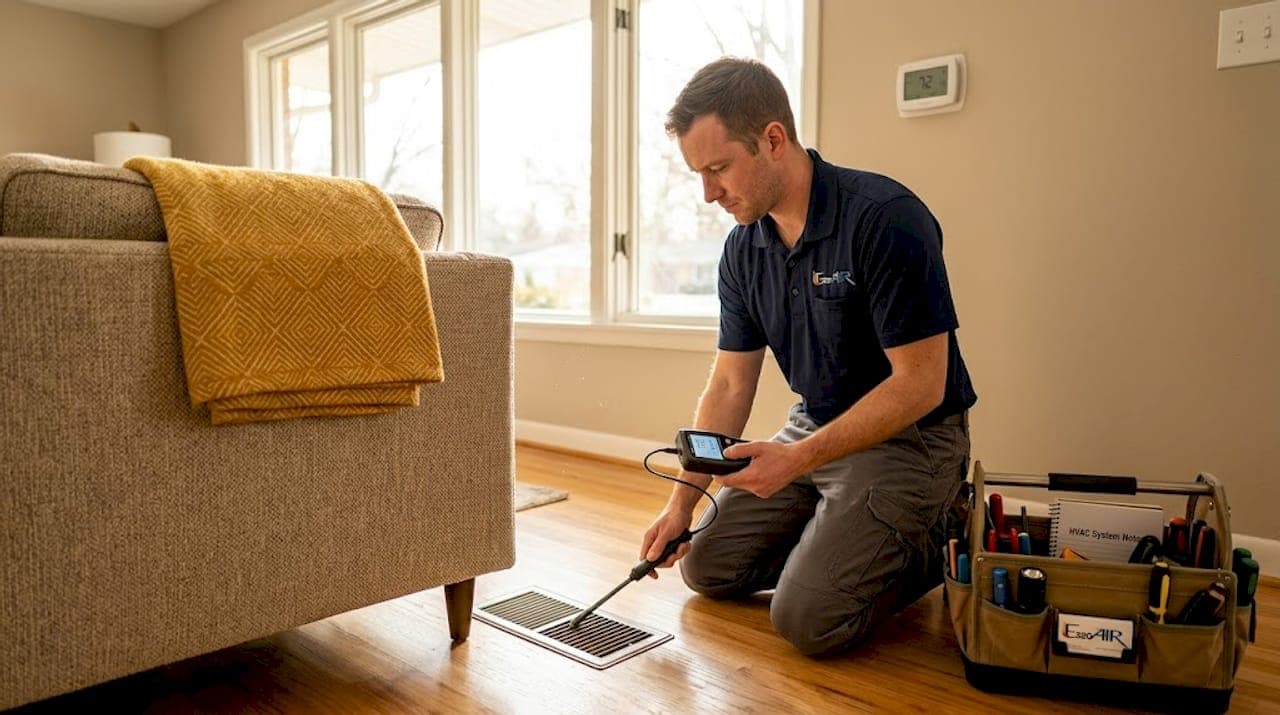
Maintenance requirements are non-negotiable. According to the HVAC Maintenance Guide, filters should be changed every 1 to 3 months using MERV 8 to 13 rated filters, and a professional tune-up covering coils, refrigerant levels, and electrical connections should happen annually. Skipping this routine reduces system efficiency by 20 to 30%. Good air quality and efficiency tips can help you stay on schedule between service visits.
Key factors to evaluate before you shop:
- Local climate demands (heat, humidity, cold snaps)
- Square footage and number of zones needed
- Existing ductwork condition or absence
- Upfront budget vs. 15-year operating cost
- Ease of access for filter changes and annual maintenance
Pro Tip: Look specifically for systems with high SEER2 ratings (18 or above) and variable-speed compressors. These two features together deliver better humidity control, quieter operation, and noticeably lower energy bills compared to single-stage units.
Central air conditioning systems
Central air conditioning is the system most Moreno Valley homeowners already know. It uses a network of ducts to distribute cooled or heated air from a central unit throughout the entire home. One thermostat controls the whole house, which keeps operation simple.
The advantages are real. Central air delivers consistent temperatures across every room, integrates easily with smart thermostats like Ecobee or Nest, and handles large square footage efficiently. Modern units also pair well with HVAC zoning systems that divide your home into independently controlled areas, so you're not cooling empty rooms.
Maintenance for central air follows a predictable schedule:
- Replace air filters every 1 to 3 months
- Schedule professional duct cleaning every 3 to 5 years
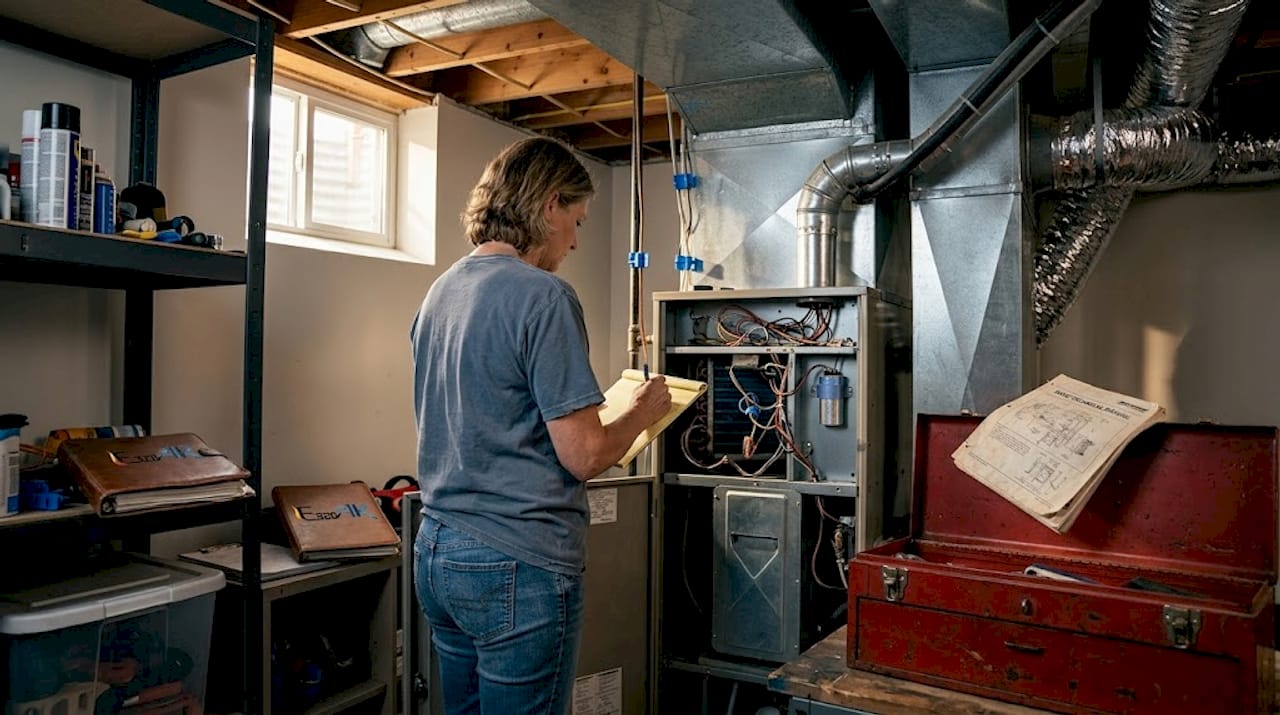
- Book an annual tune-up to check refrigerant charge, coil condition, and electrical connections
- Keep the outdoor condenser unit clear of debris and vegetation
Neglecting any of these steps, particularly filter changes and coil cleaning, can reduce efficiency by up to 30% over time. For a system you rely on during a 108°F Moreno Valley summer, that's a serious performance hit.
"Variable-speed compressors in high-SEER2 units run longer at low speed for better humidity control, crucial in variable SoCal temps." — Consumer Reports Central AC Buying Guide
This matters because single-stage systems blast cold air and shut off, leaving humidity behind. Variable-speed units run at 40 to 70% capacity most of the time, pulling moisture out of the air more effectively. If you're exploring HVAC replacement options, prioritize variable-speed models for the best long-term comfort.
Pro Tip: When replacing a central air system, don't just swap in the same capacity. Have a contractor perform a Manual J load calculation to confirm the right size for your current home configuration.
Ductless mini-split systems
Central air suits many homes, but what if you want targeted comfort without ducts? Ductless mini-split systems solve that problem elegantly.
Mini-split systems connect one outdoor compressor unit to multiple indoor air handlers through refrigerant lines, with no ductwork required. Each indoor unit controls its own zone independently, so you can keep the bedroom at 72°F while the living room runs at 76°F, without any conflict.
This setup is ideal for several common Moreno Valley situations:
- Older homes with no existing ductwork
- Room additions or converted garages that aren't connected to the central system
- Rental units where tenants pay their own utilities and want individual control
- Homes where duct installation would be too costly or disruptive
The efficiency numbers are impressive. Some mini-split models achieve up to 38 SEER efficiency ratings, which is among the highest available in residential HVAC. Compare that to a standard central air unit at 14 to 16 SEER, and the energy savings become obvious over a 10-year period.
Because there are no ducts, there's also no duct leakage. The U.S. Department of Energy estimates that duct losses account for 20 to 30% of energy consumption in a typical forced-air system. Mini-splits eliminate that waste entirely.
Zone-based comfort is where mini-splits really shine for property managers. If you own a multi-unit building or a home with a guest suite, each space can have its own air handler and its own control, making billing and comfort management far simpler.
The main trade-off is aesthetics. Wall-mounted air handlers are visible inside the room, which some homeowners dislike. Installation also requires a professional to run refrigerant lines and mount indoor units, so upfront costs can be higher than a simple central air swap.
Heat pumps and hybrid systems
Zoned ductless systems provide flexibility. Now let's see how versatile, energy-smart heat pumps and hybrid solutions stack up for Moreno Valley homeowners.
A heat pump does something that a standard air conditioner cannot: it both cools and heats your home using the same equipment. In summer, it pulls heat from inside your home and releases it outside. In winter, it reverses the process, extracting heat from outdoor air and moving it inside. Because it moves heat rather than generating it, the energy consumption is dramatically lower.
"Heat pumps lower bills 62 to 95% compared to fossil fuel systems per NREL, but require cold-climate models when temperatures drop below 20°F; hybrid systems resolve this for occasional cold snaps."
Moreno Valley's mild winters make heat pumps a particularly strong fit. The technology works most efficiently when outdoor temperatures stay above 35 to 40°F, which covers the vast majority of winter nights in the Inland Empire. For the rare cold snap that drops below that threshold, a hybrid system pairs the heat pump with a gas furnace as a backup. The system automatically switches between the two based on outdoor temperature and operating cost.
Benefits of heat pumps and hybrid systems include:
- Year-round heating and cooling from one system
- Lower monthly energy bills compared to separate AC and furnace setups
- Reduced carbon footprint, especially when paired with solar
- Hybrid models provide the efficiency of a heat pump with the reliability of gas backup
For homeowners thinking about seasonal needs in Riverside County, a heat pump or hybrid system is worth a serious look. California's incentive programs and utility rebates also make the upfront cost more manageable than it used to be.
Packaged and rooftop HVAC systems
Beyond residential standards, some situations call for more compact solutions. Packaged and rooftop systems fill that role well.
A packaged HVAC system houses all components, the compressor, coil, air handler, and sometimes a furnace, inside a single outdoor cabinet. That cabinet mounts on the roof or on a concrete slab beside the building. Conditioned air travels through short duct runs directly into the space.
This design is common in Moreno Valley for several reasons:
- Townhomes and condos with no attic or basement space for indoor equipment
- Light commercial properties like small offices, retail shops, and restaurants
- Homes built on concrete slabs where indoor unit placement is limited
- Situations where fast installation and minimal indoor disruption matter
| Feature | Packaged system | Split system |
|---|---|---|
| All components | Outdoors (one cabinet) | Split between indoors and outdoors |
| Installation speed | Faster | Longer |
| Indoor space needed | None | Yes (air handler/furnace) |
| Maintenance access | Easy (single location) | Two locations |
| Best for | Slab homes, commercial | Most residential homes |
| Efficiency range | Good (up to 16 SEER2) | Excellent (up to 38 SEER) |
Pro Tip: If your home has no attic, no basement, and limited indoor mechanical space, a packaged rooftop unit often costs less to install and maintain than trying to retrofit a split system into a tight space.
For property managers overseeing commercial spaces, commercial HVAC options extend well beyond basic packaged units and include variable refrigerant flow systems and dedicated outdoor air systems designed for larger footprints.
Compare your HVAC options: Which system fits your needs?
With all options reviewed, the next step is to compare at a glance and make the choice that fits your unique goals.
| System type | Efficiency | Ductwork needed | Best use case | Relative cost |
|---|---|---|---|---|
| Central AC | Good to excellent | Yes | Larger homes with existing ducts | Moderate |
| Ductless mini-split | Excellent | No | Additions, retrofits, zoning | Moderate to high |
| Heat pump | Excellent | Optional | Mild climates, year-round use | Moderate to high |
| Hybrid system | Excellent | Yes | Cold snap backup needed | High |
| Packaged/rooftop | Good | Minimal | Slab homes, commercial | Moderate |
Use this table as a starting point, not a final answer. Your specific home layout, duct condition, and budget will shift the rankings.
Here's a practical decision process to follow:
- Assess your existing ductwork. If it's in good shape, central air or a heat pump with ducts is your most cost-effective path.
- Identify rooms or zones with comfort problems. Those are strong candidates for mini-split additions.
- Calculate your heating needs. If you rarely use heat, a standard AC unit may be enough. If heating costs are high, a heat pump pays for itself faster.
- Check your indoor mechanical space. No room for an air handler? Look at packaged systems.
- Request a load calculation from a licensed contractor before signing anything.
Reviewing California replacement options can also help you understand what incentives and rebates apply to your situation in 2026, which can meaningfully change the cost comparison.
Insider advice: What most guides miss when choosing your HVAC
Now that you've seen your options side by side, it's worth considering what can make or break real-world satisfaction in Moreno Valley.
Most HVAC buying guides focus entirely on system type and brand. That's only half the story. In our experience working with homeowners and property managers across the Inland Empire, the biggest sources of long-term dissatisfaction come from three things that rarely appear in buying guides: improper sizing, skipped maintenance, and no plan for future upgrades.
Improper sizing is rampant. Contractors who skip the Manual J load calculation and just replace a system with the same tonnage as the old one are guessing. If the old system was already wrong for the home, the new one will be too. Oversized systems cycle on and off constantly, which wears out components faster and leaves humidity uncontrolled.
Skipped maintenance is the silent budget killer. As the HVAC Maintenance Guide makes clear, neglecting filter changes and annual tune-ups reduces efficiency by 20 to 30%. That's not a minor inconvenience. On a system that costs $200 per month to run, a 25% efficiency loss adds $600 per year to your bills. Over five years, that's $3,000 you didn't need to spend. Good filter practices are genuinely one of the highest-return habits a homeowner can build.
Future upgradeability is something almost nobody thinks about at purchase time. Will your system work with a smart thermostat? Can you add a zone later without replacing the whole unit? Is there room on your electrical panel for a heat pump if you want to switch from gas? These questions matter, especially as California continues pushing toward electrification.
Pro Tip: Before you finalize any HVAC purchase, ask your contractor specifically about filter access, smart thermostat compatibility, and whether the system can support zoning additions later. A few questions upfront can save you a major retrofit cost down the road.
Upgrade your comfort with local HVAC experts
Making the right HVAC choice is easier when you have a team that knows Moreno Valley's climate, building stock, and utility incentives inside and out.

Professional installation isn't just about getting the equipment in place. It's about proper sizing, correct refrigerant charge, sealed duct connections, and a system that performs the way the spec sheet promises from day one. Our HVAC installation services cover every system type discussed in this guide, from central air replacements to ductless mini-split retrofits and hybrid heat pump setups. If you want to see what real-world solutions look like before you commit, browse our real HVAC solutions gallery for examples from homes and businesses just like yours. Property managers looking for specialized support can explore our dedicated commercial HVAC services for multi-unit and light commercial properties across the Inland Empire.
Frequently asked questions
How often should I change my HVAC filter?
Replace your HVAC filter every 1 to 3 months depending on filter type and household conditions such as pets, dust levels, and occupancy. The HVAC Maintenance Guide recommends MERV 8 to 13 rated filters for the best balance of airflow and filtration.
Are ductless mini-split systems expensive to run?
No. Mini-split systems are among the most energy-efficient options available, with some models reaching up to 38 SEER efficiency ratings, which translates to significantly lower monthly energy bills compared to standard central air systems.
What makes heat pumps efficient compared to other HVAC systems?
Heat pumps move heat rather than generate it, which requires far less electricity. This mechanism lowers bills 62 to 95% compared to fossil fuel systems in many climates, making them an excellent fit for Moreno Valley's mostly mild winters.
Are packaged rooftop units only for businesses?
No. Packaged HVAC systems work well for homes built on concrete slabs or properties with limited indoor mechanical space, making them a practical residential choice in many Moreno Valley neighborhoods.
What's the risk if I skimp on yearly HVAC maintenance?
Skipping annual maintenance can reduce your system's efficiency by 20 to 30% and shorten its lifespan by several years, according to the HVAC Maintenance Guide. That efficiency loss shows up directly on your monthly energy bill every single month.