
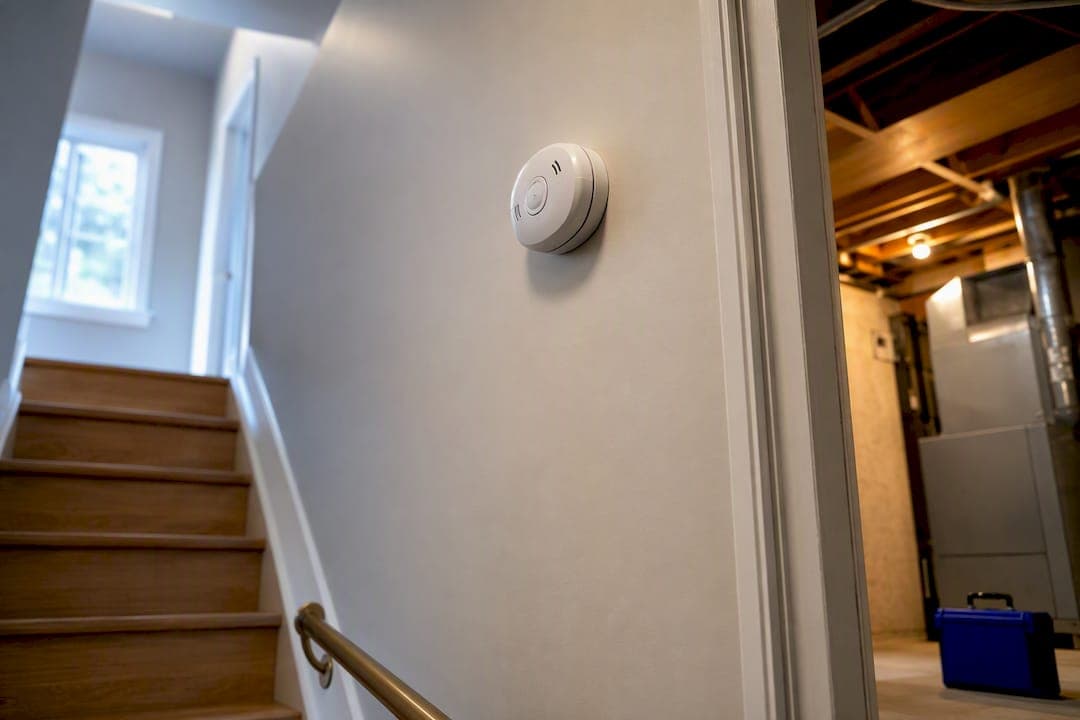
Install one carbon monoxide alarm on every level of your home, plus one outside each sleeping area. If you can only afford a single unit, put it near the bedrooms so it wakes sleeping occupants. Keep every alarm away from windows, doors, and fuel-burning appliances. The EPA and NFPA both back this layout, and similar recommendations are common among HVAC technicians.
TL;DR:
- Install at least one carbon monoxide alarm on each house level, especially outside bedrooms, and place them away from windows, doors, and fuel appliances.
- Keep alarms 5 to 20 feet from fuel-burning appliances to avoid nuisance alerts and install basement alarms where appliances like furnaces or water heaters are located.
- Position detectors in strategic locations such as near garage doors, above basements, and away from vents or inside the kitchen, based on specific source risks.
- Use interconnected alarms, preferably hardwired or wireless, to ensure all units sound simultaneously during a detection event.
Table of Contents
- Recommended Carbon Monoxide Detector Placement by Floor
- How Far Should a CO Detector Be From Appliances?
- Where to Put CO Alarms in Garages, Basements, and Kitchens
- Choosing the Right CO Alarm Type and Interconnection Setup
- Testing, Maintenance, and What to Do If the Alarm Sounds
- What Do the EPA, NFPA, and CPSC Actually Recommend?
- What Installers See Homeowners Get Wrong
- Get Your CO Detector Placement and HVAC System Checked by a Pro
- Sources
Recommended Carbon Monoxide Detector Placement by Floor
Every level of your house needs its own alarm, basement included. That's the baseline the EPA sets, and it exists because carbon monoxide can originate from a furnace in the basement, a water heater on the main floor, or an attached garage, and you want a detector close enough to whichever source acts up.
Bedrooms get special priority. Carbon monoxide poisoning is most dangerous while people sleep, since the early symptoms (headache, nausea, dizziness) are easy to miss when you're unconscious. That's why the NFPA calls for a central alarm outside each sleeping area, not just somewhere in the house.
How this plays out depends on your floor plan:
- Single-story home: one alarm in the hallway outside the bedrooms, one in the main living area.
- Two-story home: one per floor at minimum, plus one outside the upstairs sleeping area.
- Homes with widely separated bedrooms: if bedroom doors sit more than 30 feet apart or on opposite ends of the house, install a second alarm so both zones are covered.
- Apartments and multi-unit buildings: a hallway alarm outside the bedroom door usually suffices for a single unit, but larger apartments benefit from a second one near the kitchen or living space.
If your home has a finished basement used as a bedroom or den, that level counts as a separate floor and needs its own alarm, not just coverage from the unit above it.
How Far Should a CO Detector Be From Appliances?
Furnaces, water heaters, and fireplaces all produce trace carbon monoxide during normal startup, and mounting a detector too close triggers nuisance alarms that teach people to ignore the beeping. Too far away, and you lose early warning if something actually malfunctions.
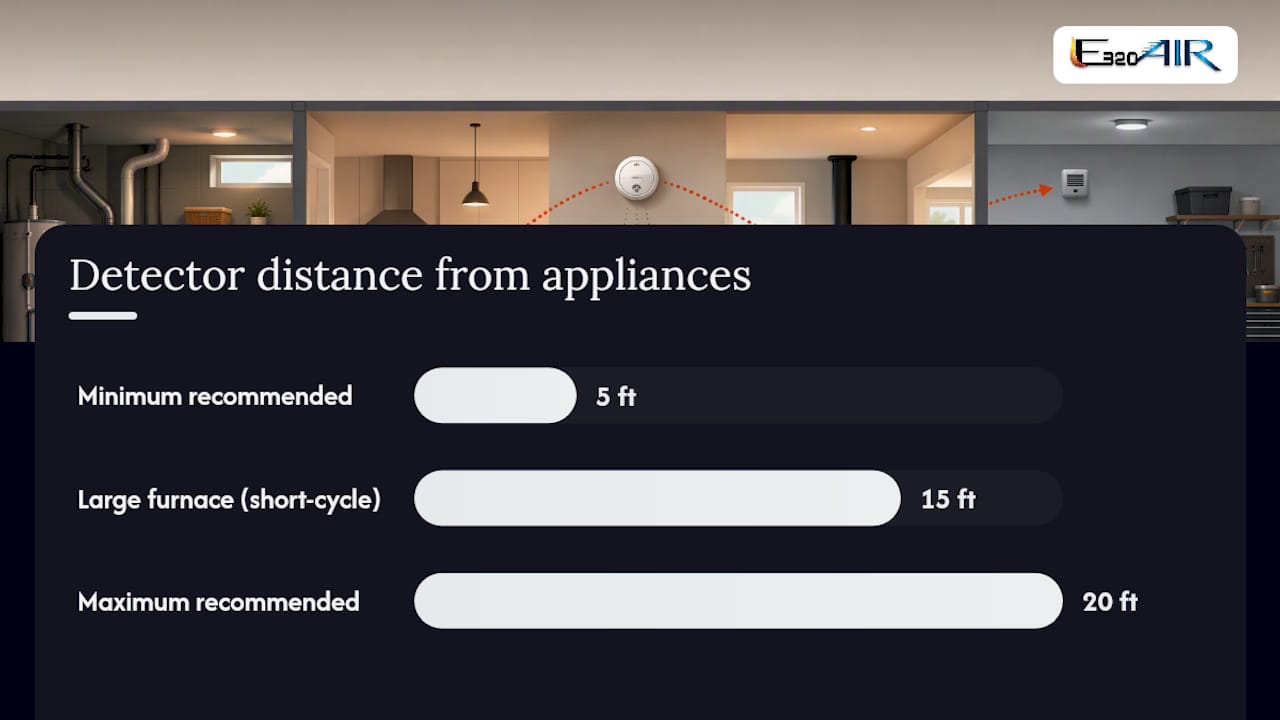
Kidde's placement guidance recommends keeping additional alarms 5 to 20 feet from fuel-burning appliances, a range that also shows up in EPA guidance. Some installers push that further out, closer to 15 feet, when the appliance is a large furnace with a history of short-cycling.
Pro Tip: A detector that keeps chirping isn't a false alarm you should silence and forget. It's usually telling you the appliance nearby needs a combustion check.
Mounting height, on the other hand, barely matters. Carbon monoxide mixes evenly with room air rather than settling near the floor or rising to the ceiling, so First Alert's own installation guidance confirms that height isn't a critical factor. Follow the model's manual, and don't stress over exact inches.
Avoid these spots entirely:
- Dead-air corners, behind curtains, or inside closets
- Directly above a stove or range
- Within a few feet of windows, doors, or return-air vents
- Bathrooms or laundry rooms, where humidity can degrade the sensor
Where to Put CO Alarms in Garages, Basements, and Kitchens
Rooms with a likely carbon monoxide source need a different approach than a plain hallway. Here's how to handle the trickiest zones in a typical house:
- Basements. If your furnace or water heater lives in the basement, place an alarm on the level directly above it, and add one in the basement itself if anyone uses it as living space.
- Attached garages. Don't mount the detector inside the garage. Vehicle exhaust and cold-start spikes will set it off constantly. Instead, put it just inside the house, near the door that connects to the garage.
- Kitchens with gas ranges. Keep the alarm a reasonable distance from the stove. A hallway or dining-area placement a few feet away captures leaks without tripping every time you sear a steak.
- HVAC and mechanical rooms. Avoid mounting directly beside vents, flues, or the appliance itself. Complex mechanical rooms with multiple gas appliances are worth a walkthrough with an HVAC contractor who can point out flue leaks or backdrafting risks you'd otherwise miss.
Choosing the Right CO Alarm Type and Interconnection Setup
Standalone carbon monoxide alarms do one job well. Combination smoke and CO units cover both threats from a single mounting point, which makes sense in bedrooms and hallways where you'd otherwise need two devices crowding the same wall.
Interconnection is where most homes fall short. When alarms are linked, either hardwired or wireless, every unit sounds the moment one detects a problem. That matters most in larger homes, where a basement alarm going off might otherwise never be heard from an upstairs bedroom with the door closed.
Power source affects long-term reliability:
- Battery-only units are the easiest retrofit but need consistent battery discipline.
- Plug-in models with battery backup stay powered without depending solely on batteries.
- Hardwired units with battery backup offer the most consistent protection and are standard in new construction.
Pro Tip: Whatever unit you buy, read the manual before you drill a single hole. Manufacturer instructions override general placement advice whenever the two conflict.
Testing, Maintenance, and What to Do If the Alarm Sounds
Carbon monoxide alarms only protect you if they're actually working, and that takes a little routine upkeep.
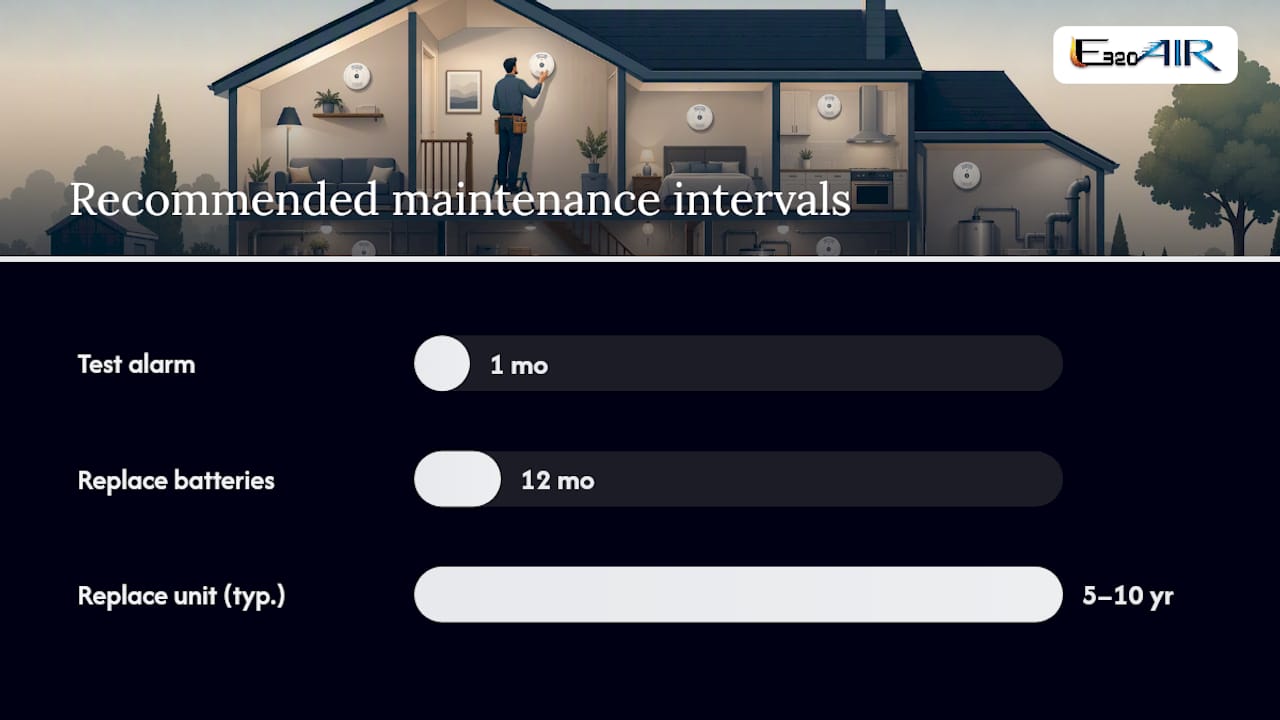
- Test every alarm monthly using the built-in test button.
- Replace batteries at least once a year, or immediately when you hear the low-battery chirp.
- Replace the entire unit at the end of its listed lifespan, typically five to ten years depending on the model.
- Wipe down each detector occasionally and keep it free of dust, paint overspray, or cobwebs that could block the sensor.
If an alarm actually sounds, treat it seriously. Get everyone outside into fresh air immediately. Call emergency services if anyone shows symptoms like headache, dizziness, or confusion, and don't re-enter until the home has been ventilated and checked. The CPSC recommends having your fuel-burning appliances and HVAC system inspected afterward, even if the alarm turns out to be a false positive.
Pro Tip: A single false alarm is worth investigating. A repeat false alarm from the same unit usually means it's near end of life or mounted too close to an appliance vent, not that carbon monoxide detectors are unreliable.
What Do the EPA, NFPA, and CPSC Actually Recommend?
The placement advice in this guide isn't a guess. It's built directly on national guidance:
- The EPA recommends one alarm per level and coverage outside sleeping areas.
- The NFPA adds the interconnection recommendation so every alarm sounds together.
- The CPSC emphasizes following manufacturer instructions for mounting and upkeep.
UL listing matters too. It confirms a unit has passed independent safety testing, but the manufacturer's manual is still the final word on mounting height and exact placement for that specific model. Some states also have their own statutory requirements for rentals and new construction, so it's worth a quick check of your local code before you finalize placement.
What Installers See Homeowners Get Wrong
The most common mistake isn't skipping a detector. It's mounting one a few feet from a return vent or directly beside a furnace closet, which guarantees nuisance alarms until someone rips it down out of frustration. A close second is buying standalone units and never interconnecting them, so a basement alarm never wakes anyone upstairs.
Call a professional when an alarm keeps tripping with no obvious cause, when you suspect a slow appliance leak, or when you're wiring interconnected units through a finished wall. Guesswork on gas appliances isn't worth the risk.
— Edward
Get Your CO Detector Placement and HVAC System Checked by a Pro
If your carbon monoxide alarm keeps false-triggering or you're not sure your furnace, water heater, or garage door setup is even placed to catch a real leak, that's a job worth handing to someone who works on combustion appliances daily instead of guessing with a stud finder.

Some HVAC contractors handle CO alarm installation, interconnection wiring, and full HVAC diagnostics, including inspecting furnaces and gas appliances for leaks that cause dangerous readings, as explained in this Air Conditioner Noise NSW guide. A typical service visit includes checking appliance venting, testing existing alarms, and recommending placement fixes based on your home's actual layout rather than a generic chart. Past diagnostic work is documented in E320air's problem-solving gallery, and homeowners considering a new system can review installation services directly. Ready to get your setup checked? Request a service visit and get your CO safety and HVAC system reviewed by someone who does this for a living.
Sources
- Where should I place a carbon monoxide detector? | US EPA
- Carbon monoxide safety | NFPA
- Where should I install carbon monoxide alarms and in particular, how high off the floor? | First Alert Support
- Placement of Carbon Monoxide Alarms | Kidde