
TL;DR:
- Many HVAC myths lead homeowners to waste money and damage their systems, such as believing lower thermostats cool faster or closing vents saves energy. Fixing these misconceptions through proper maintenance, correct sizing, and behavioral changes improves efficiency, prolongs equipment lifespan, and preserves warranties. Regular bi-annual service and informed practices linked to industry standards offer long-term savings and optimal comfort.
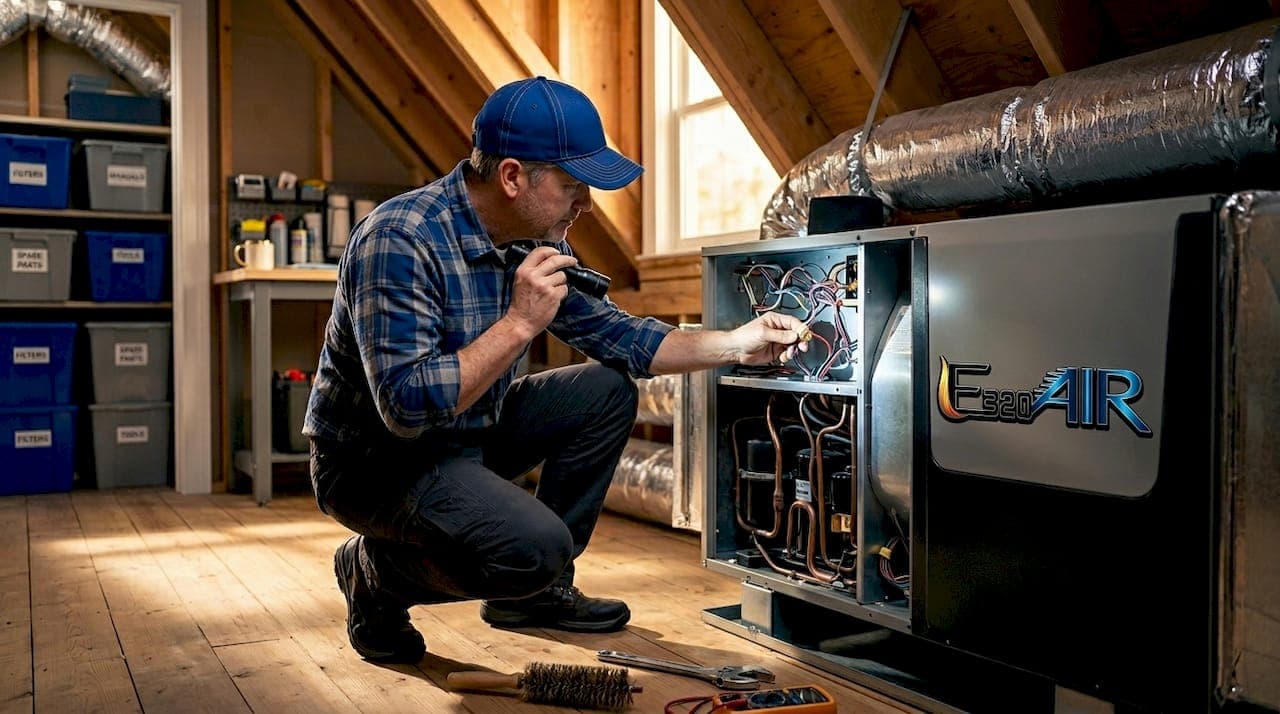
Many HVAC maintenance myths cost homeowners real money every year, and the gap between what people believe and what technicians actually see is wider than most expect. Trane, ACHR News, and independent HVAC professionals have all documented the same pattern: intuitive-sounding beliefs about thermostats, vents, and filters consistently lead to higher bills, shorter equipment life, and voided warranties. This article debunks the most persistent HVAC maintenance misconceptions so you can make smarter decisions about your heating and cooling system starting today.
1. The most common HVAC maintenance myths, ranked by cost
Before getting into each myth individually, it helps to understand why these misconceptions persist. Most of them feel logical on the surface. Turning a thermostat lower seems like it should cool faster. Closing a vent in an empty room seems like it should save energy. The problem is that HVAC systems don't operate the way our instincts suggest, and acting on bad information adds up fast. The sections below address each myth directly, with the facts technicians and manufacturers use to correct them.
2. Turning the thermostat lower cools your home faster
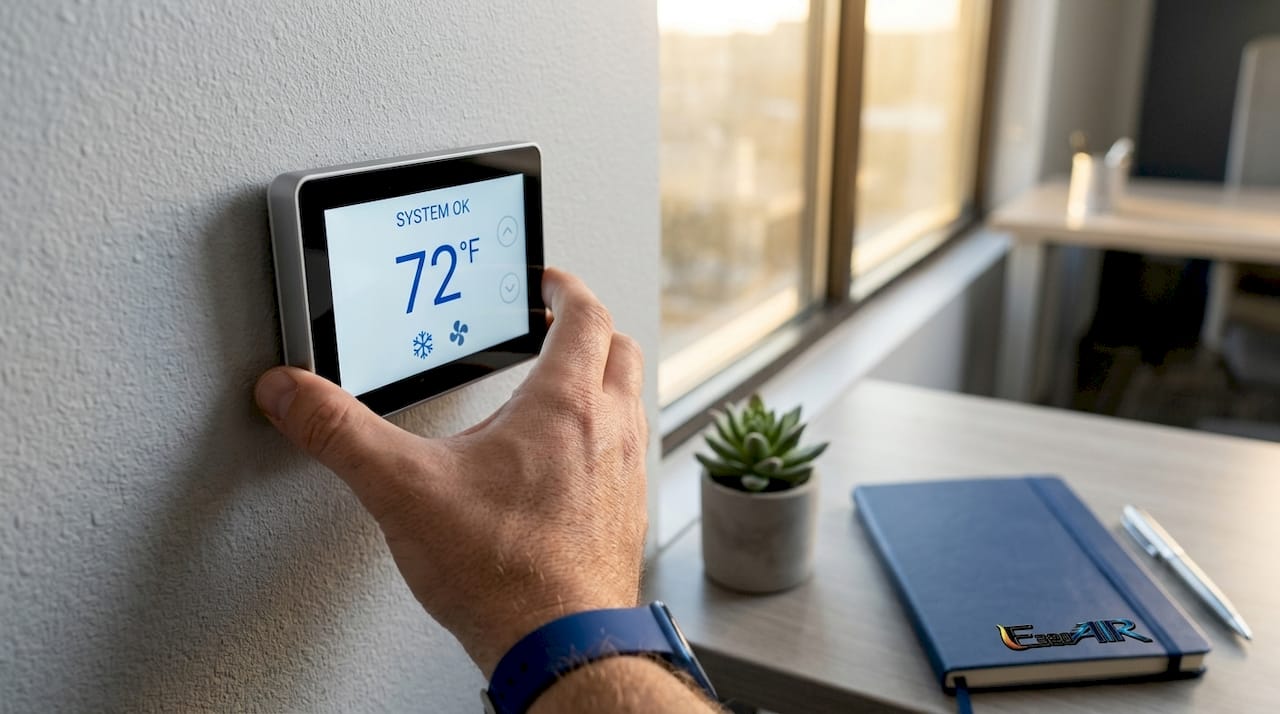
Setting lower temps does not speed up cooling. Trane confirms that HVAC systems run at a consistent output rate toward whatever setpoint you choose. Dropping the thermostat to 60°F when you want 72°F doesn't accelerate the process. It just means the system runs longer, overshoots the target, and burns more energy getting there.
Think of it like filling a bathtub. The faucet flows at one speed regardless of how full you want it. Cranking the dial past your target doesn't open a second faucet. It just means you have to watch it more carefully to avoid overflow.
Pro Tip: Install a programmable thermostat like a Honeywell Home T6 Pro or a smart thermostat like the Ecobee SmartThermostat. These devices hold your target temperature without manual guessing, cutting energy waste without sacrificing comfort.
3. Closing vents in unused rooms saves energy
This is one of the most widespread HVAC upkeep myths, and it actively damages your system. Your HVAC is calibrated for a specific number of open vents and a specific airflow volume. When you close vents, duct pressure increases and air leaks into walls, attics, and crawl spaces instead of reaching living areas. Popular Science reports this raises energy costs rather than reducing them.
Here is what actually happens when you close vents:
- System pressure builds beyond design limits, stressing the blower motor
- Air escapes through duct seams into unconditioned spaces like attics
- The rooms you are using receive uneven airflow and inconsistent temperatures
- The compressor and heat exchanger work harder to compensate
If you want to reduce conditioning in certain rooms, talk to an HVAC technician about zoning systems. Zoning uses dampers inside the ductwork itself, which is designed for variable airflow. Closing a register is not. Understanding how ductwork affects performance is one of the fastest ways to stop wasting money on a system that's fighting itself.
4. You only need HVAC service when something breaks
Homeowners who delay maintenance until a breakdown occurs consistently pay more and get less from their systems. This is the single most expensive HVAC maintenance misconception in practice. Post-failure repairs cost significantly more than preventive tune-ups, and the efficiency losses that accumulate in the meantime show up on every utility bill.
The industry standard is twice per year. Bi-annual service in spring for the air conditioning system and fall for the heating system aligns with manufacturer recommendations and protects warranty coverage. Skipping service doesn't just risk a breakdown. HVAC systems that go without maintenance lose roughly 5% efficiency annually, which means a system that was running at 95% efficiency three years ago may now be running at 80% if it hasn't been serviced. That difference shows up directly in your monthly energy bill.
A professional maintenance visit typically covers:
- Air filter inspection and replacement
- Refrigerant level check and leak detection
- Electrical connection tightening and voltage testing
- Coil cleaning (evaporator and condenser)
- Thermostat calibration and controls check
- Drain line flush to prevent water damage
- Safety switch and heat exchanger inspection
Clear maintenance records also protect your warranty. Documented bi-annual service gives you proof of compliance if a manufacturer dispute arises. The benefits of seasonal maintenance go well beyond the day of the visit.
5. A bigger HVAC unit performs better
Bigger is not better when it comes to HVAC equipment. Oversized units short-cycle, meaning they reach the set temperature too quickly, shut off, and then restart before the space has fully stabilized. ACHR News reports this leads to poor humidity control, uneven temperatures, and premature part failures.
Here is a direct comparison of what happens with each sizing scenario:
| Scenario | What you experience | Long-term result |
|---|---|---|
| Oversized unit | Short cycles, humid air, temperature swings | Premature compressor failure |
| Undersized unit | Constant running, never reaches setpoint | High energy bills, worn components |
| Correctly sized unit | Steady cycles, stable humidity, even temps | Maximum efficiency and lifespan |
Proper sizing requires a Manual J load calculation, which accounts for your home's square footage, insulation levels, window placement, local climate, and ceiling height. A technician who skips this step and just replaces your old unit with the same size (or bigger) is guessing. Understanding why sizing matters before you buy or replace a unit can save thousands over the life of the equipment.
6. Filters only need changing on a fixed schedule
The once-a-month or once-every-three-months filter rule is a starting point, not a hard standard. Pressure-based filter replacement is more accurate. Commercial HVAC systems use differential pressure thresholds to determine when a filter is actually loaded, not a calendar date. Homeowners can apply the same logic by checking filters visually every few weeks and replacing them when airflow feels restricted or the filter surface is visibly gray.
Several factors change how fast a filter loads:
- Homes with pets accumulate dander and hair that clog filters faster
- High-traffic households generate more dust and particulate matter
- Homes near construction zones or high-pollen areas see faster filter loading
- Higher-MERV-rated filters (MERV 11 to 13) capture more particles but restrict airflow sooner
Pro Tip: Hold your filter up to a light source. If you can't see light through it, replace it immediately regardless of when you last changed it. A clogged filter forces your blower to work harder, raises energy consumption, and degrades indoor air quality at the same time.
7. Ceiling fans keep rooms cool when you're not in them
Ceiling fans cool people, not rooms. Fans create a wind-chill effect on skin, which makes occupants feel cooler without actually lowering room temperature. The Department of Energy and University of California research both confirm that fans allow you to raise your thermostat setting by several degrees without reducing comfort. That's a real energy saving. But only when someone is in the room to feel it.
Running a ceiling fan in an empty room adds heat to the space (the motor generates warmth) and wastes electricity with zero benefit. The correct habit is simple: turn fans on when you enter a room, turn them off when you leave. This one behavioral change, applied consistently, reduces unnecessary energy draw without any equipment cost.
Key takeaways
Debunking HVAC maintenance myths reduces energy costs, prevents premature equipment failure, and protects manufacturer warranties through consistent, informed upkeep.
| Point | Details |
|---|---|
| Thermostat setting myth | Lowering the thermostat further does not speed cooling; it wastes energy and causes overshoot. |
| Vent closure myth | Closing vents raises duct pressure and increases leakage into walls and attics, raising costs. |
| Maintenance timing | Service twice per year, spring and fall, to prevent the 5% annual efficiency loss from skipped visits. |
| Sizing matters | Oversized units short-cycle and fail early; correct sizing requires a Manual J load calculation. |
| Filter and fan use | Replace filters by condition, not calendar, and run ceiling fans only in occupied rooms. |
What I've learned from watching homeowners repeat the same mistakes
I've been in this industry long enough to recognize a pattern. The homeowners who call us for emergency repairs in July are almost always the same ones who declined a spring tune-up in April. It's not negligence. It's a belief that a running system is a healthy system, and that belief costs them every time.
The thermostat myth is the one that surprises me most when I see it in practice. I've walked into homes where the thermostat was set to 60°F because the homeowner wanted to "get the house cold faster" before guests arrived. The system had been running for hours, the house was 58°F, and the family was wearing jackets indoors. That's not comfort. That's a myth in action.
What I tell every homeowner is this: your HVAC system is not a variable-speed machine that responds to urgency. It runs at one speed, toward one target. The smarter you are about that target, the less you spend. Twice-yearly maintenance, correctly sized equipment, and a basic understanding of how airflow works will outperform any shortcut every single time. The right maintenance schedule isn't a luxury. It's the cheapest repair you'll ever make.
— Edward
Stop paying for myths: let E320air handle your HVAC maintenance
E320air provides professional HVAC maintenance plans built around manufacturer-recommended bi-annual service schedules. Every visit includes diagnostic inspections, coil cleaning, refrigerant checks, filter service, and a full safety review so your system runs at peak efficiency year-round. Skipping these steps costs more in energy and repairs than the service itself. Whether you need a spring A/C tune-up or a fall heating check, E320air's technicians bring the tools and expertise to catch problems before they become emergencies. Explore E320air's full HVAC services and schedule your next maintenance visit today.
FAQ
Does turning the thermostat lower cool your home faster?
No. HVAC systems run at a consistent rate regardless of how low you set the thermostat. Setting it lower than your target wastes energy and causes the system to overshoot, leaving your home colder than intended.
How often should an HVAC system be serviced?
Twice per year is the industry standard: spring for the air conditioning system and fall for the heating system. Skipping service causes systems to lose approximately 5% efficiency annually and can void manufacturer warranties.
Does closing vents in empty rooms reduce energy use?
No. Closing vents increases duct pressure and forces air to leak into walls and attics, which raises energy costs. HVAC systems are designed to operate with all supply vents open.
Is a bigger HVAC unit always better for performance?
No. Oversized units short-cycle, fail to control humidity properly, and wear out components faster. Correct sizing based on a Manual J load calculation delivers better comfort and longer equipment life.
How do I know when to change my air filter?
Check your filter visually every few weeks. Replace it when it appears gray or when airflow feels reduced, regardless of the calendar date. Homes with pets, high traffic, or nearby construction may need more frequent changes.