
TL;DR:
- Regular seasonal HVAC maintenance ensures efficiency, extends system lifespan, and prevents costly breakdowns.
- Dirty coils, clogged filters, and electrical issues significantly reduce efficiency and increase energy bills.
- Biannual professional service is essential, especially in demanding climates like Moreno Valley.
A neglected HVAC system can quietly lose up to 30% of its efficiency before you ever notice a problem on a hot Moreno Valley afternoon. Most homeowners assume their system is fine as long as cool air comes out, but the real damage happens behind the scenes: dirty coils, clogged filters, and worn electrical contacts quietly drive up your energy bills and shorten your system's life. Seasonal HVAC maintenance changes that story. This guide explains exactly what a professional seasonal service includes, why the data behind it is so compelling, and how to apply these insights to protect your home comfort and your wallet.
Table of Contents
- What is seasonal HVAC maintenance?
- Major benefits: Efficiency, savings, and system life
- What to expect during a professional service visit
- Special cases: When should you adjust your maintenance schedule?
- Why the 'just once a year' approach puts your comfort at risk
- Ready for peace of mind? Choose reliable local HVAC service
- Frequently asked questions
Key Takeaways
| Point | Details |
|---|---|
| Boosts efficiency | Seasonal HVAC maintenance can improve energy efficiency by 10-30% and lower utility bills. |
| Prevents breakdowns | Biannual service significantly reduces the risk and cost of unexpected HVAC failures. |
| Protects air quality | Regular filter changes and cleaning help keep your home's air safe and clean, especially important for families with pets or allergies. |
| Extends system life | Routine check-ups and tune-ups extend the lifespan of your HVAC equipment and help honor manufacturer warranties. |
| Customization matters | Homes with special needs like pets, older equipment, or high dust require more frequent maintenance for optimal results. |
What is seasonal HVAC maintenance?
Now that you see the stakes, let's break down exactly what "seasonal HVAC maintenance" means. It's not a quick filter swap and a visual check. Seasonal HVAC maintenance involves structured inspections, cleaning, adjustments, and testing twice yearly, with spring focused on cooling and fall focused on heating, to ensure safety and efficiency throughout the year.
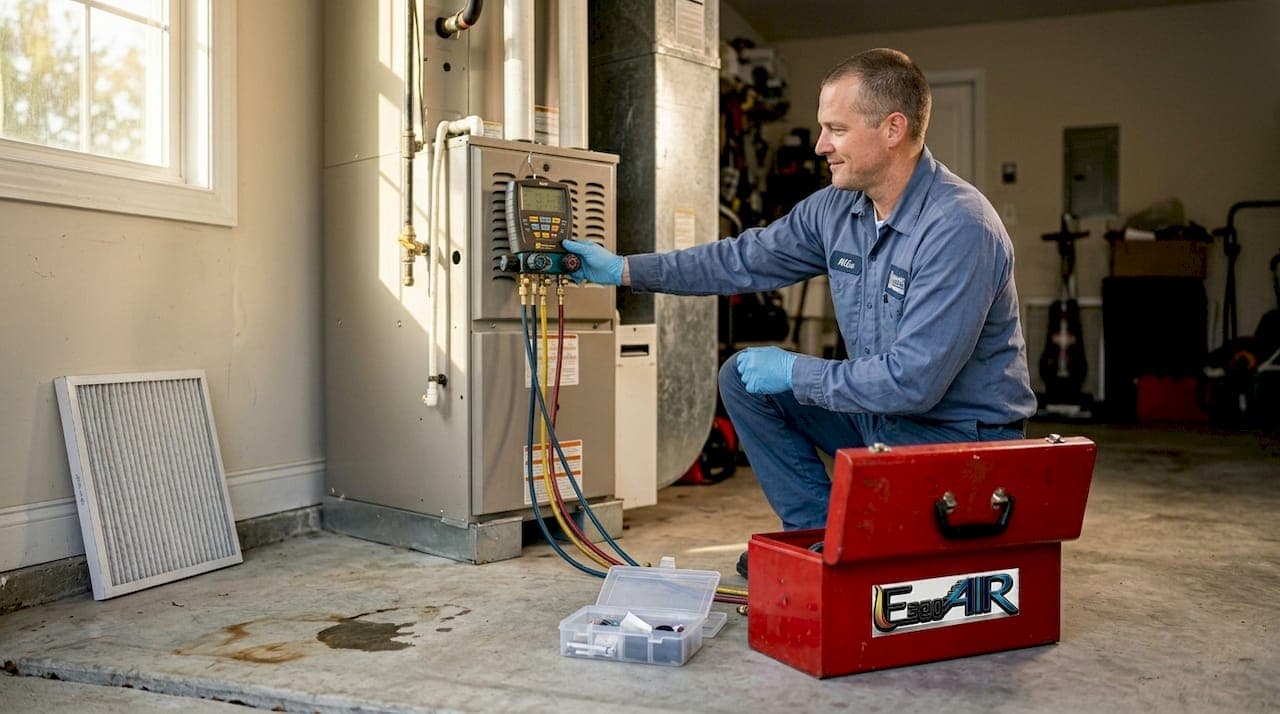
Think of it like a biannual physical for your home's most important mechanical system. Each visit follows a structured protocol, not a loose checklist. Here's what a thorough seasonal appointment typically covers:
- Filter replacement or inspection (every 30 to 90 days is the standard, but your tech confirms the right interval)
- Evaporator and condenser coil cleaning to restore heat transfer efficiency
- Refrigerant level verification to confirm your AC can actually cool effectively
- Electrical connection tightening and voltage testing to prevent fire hazards and compressor failure
- Thermostat calibration so your settings match actual temperatures
- Airflow measurement to catch duct leaks or blockages early
- Safety control testing including limit switches and pressure cutoffs
For Moreno Valley homeowners, the spring appointment carries extra weight. Summers here regularly push past 100°F, and your AC will run almost continuously for months. Catching a low refrigerant charge or a dirty condenser coil in April is far cheaper than discovering it when your system fails on a 108°F July afternoon.
Certified technicians trained to EPA and ASHRAE standards follow documented procedures, not guesswork. That distinction matters because it means you get consistent, verifiable results rather than a rushed visit that misses critical items. If you're curious about your seasonal HVAC needs specific to Riverside County, the climate patterns here genuinely shape what your system faces each season.
"A seasonal maintenance visit is not a luxury add-on. It is the minimum responsible standard for any system expected to perform reliably in a demanding climate."
If your system has ever struggled to keep up on a hot day, a troubleshooting guide can help you identify early warning signs before your next scheduled appointment.
Major benefits: Efficiency, savings, and system life
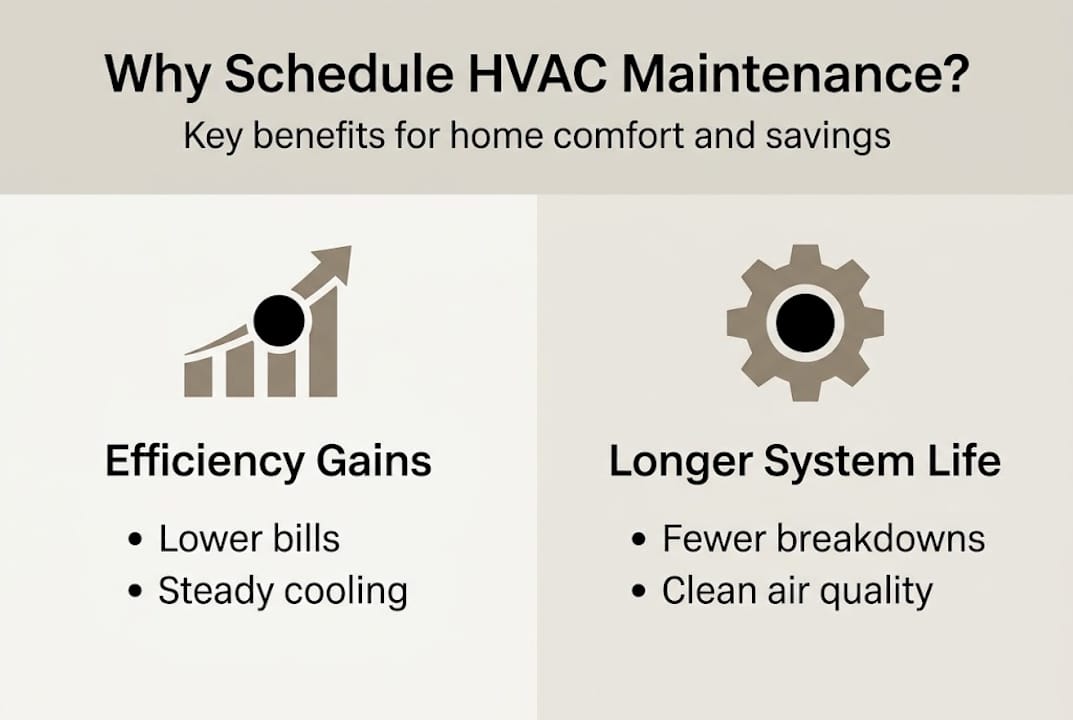
Understanding what happens during maintenance, let's examine why it truly pays off. The numbers are hard to argue with. Fouled coils degrade efficiency by 10 to 30%, a clean filter alone can cut energy use by 15%, and consistent seasonal attention can deliver up to 20% lower energy bills annually.
That's not a marginal improvement. On a typical Moreno Valley household running AC for six or more months a year, a 20% reduction in energy costs adds up to real money. Here's a snapshot of what the data shows:
| Maintenance factor | Potential impact |
|---|---|
| Dirty condenser coils | 10 to 30% efficiency loss |
| Clogged air filter | Up to 15% higher energy use |
| Biannual service plan | Up to 20% lower annual energy bills |
| Skipping maintenance | 2x higher breakdown risk |
| Well-maintained system lifespan | 15 to 20 years vs. 10 to 12 years neglected |
Beyond the bill savings, there are several other documented benefits worth knowing:
- Fewer breakdowns. Systems that receive regular attention are far less likely to fail during peak demand. Emergency repair calls in summer cost significantly more than scheduled maintenance.
- Extended equipment life. A well-maintained system routinely lasts 15 to 20 years. A neglected one may need replacement in 10 to 12 years, costing you thousands ahead of schedule.
- Better indoor air quality. Clean filters and coils mean fewer allergens, dust particles, and pollutants circulating through your home. For families with pets or allergies, this is a genuine health benefit. Explore how air quality and efficiency are directly connected to your filter maintenance habits.
- Warranty protection. Many manufacturers require documented proof of professional maintenance to honor warranty claims. Skipping service can leave you paying full price for a compressor replacement that should have been covered.
For a deeper look at how your system affects what you breathe every day, the indoor air quality guide covers the connection between HVAC care and home health in practical terms.
What to expect during a professional service visit
So, what actually happens when you call a professional for a seasonal service? Here's what to expect. A quality visit is methodical, documented, and transparent. You should never be left guessing what was done or why.
Here's the typical sequence a certified technician follows:
- System inspection. The tech reviews the entire system, including the air handler, condenser unit, ductwork connections, and thermostat.
- Filter replacement. Key procedures include filter replacement every 30 to 90 days, coil cleaning, refrigerant verification, heat exchanger inspection, electrical checks, airflow testing, and safety control testing.
- Coil cleaning. Both evaporator and condenser coils are cleaned to restore full heat transfer capacity.
- Refrigerant check. The tech verifies charge levels and looks for signs of leaks, which are especially common in systems that work hard in hot climates.
- Electrical testing. All connections are checked for corrosion or looseness, and voltage and amperage are measured to confirm safe operation.
- Airflow and duct check. Weak airflow often points to blockages or leaks that waste energy and reduce comfort.
- Documentation. A professional will provide written proof of service, which you'll need for warranty claims.
For homes in Moreno Valley, coil condition and refrigerant levels deserve extra scrutiny. Systems running near capacity for months at a time degrade faster than those in milder climates. If your unit is older than 12 years, your technician should also discuss its overall condition and whether repairs still make financial sense compared to replacement.
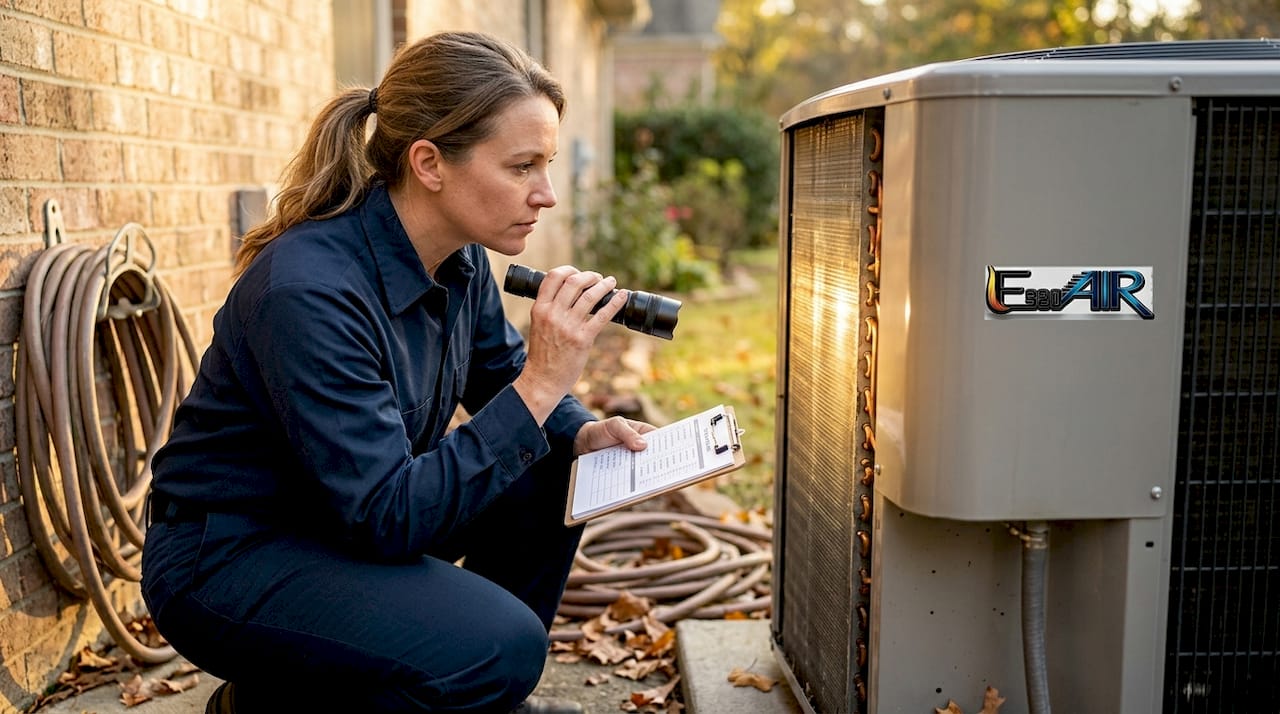
Pro Tip: Ask your technician to walk you through what they found and show you photos of any problem areas. A trustworthy professional welcomes that conversation. If they resist, that's a red flag.
Knowing common AC troubleshooting steps also helps you communicate more clearly with your tech about what you've noticed between visits. And if you want to understand how service visits connect to air quality improvements inside your home, the link between clean equipment and cleaner air is direct and well documented.
Special cases: When should you adjust your maintenance schedule?
Maintenance isn't one-size-fits-all. Here's how to know when your home needs more than the basics. Older systems, houses with pets, and heat pumps sometimes require more frequent checks and adjustments than the standard biannual schedule.
Here's a quick comparison to help you figure out where your home falls:
| Home situation | Recommended frequency | Key focus areas |
|---|---|---|
| Standard home, newer system | Twice yearly | Full seasonal checklist |
| Pets or allergy sufferers | Every 1 to 2 months (filters) | Filter changes, coil cleaning |
| High-dust environment | Every 30 to 45 days (filters) | Airflow, duct inspection |
| Heat pump system | Twice yearly plus defrost check | Defrost cycle, reversing valve |
| System older than 12 years | Twice yearly plus condition review | Full system evaluation |
Pet owners often underestimate how quickly fur and dander clog a filter. A filter that would normally last 60 days in a pet-free home may need replacement in 30 days or less when you have multiple animals. The same logic applies to homes near construction zones or unpaved roads, where dust infiltration is higher than average.
Heat pumps deserve a specific mention. Unlike standard AC units, heat pumps run in both heating and cooling modes, which means they accumulate wear year-round. The defrost cycle, which prevents ice buildup on the outdoor coil in winter, needs to be verified during fall service. A malfunctioning defrost cycle can damage the compressor silently over time.
Pro Tip: If your system is over 12 years old, ask your technician for an honest assessment of its remaining useful life. Knowing whether you have two years or seven years left helps you plan financially and avoid a surprise replacement during peak summer heat.
Understanding how your home's specific conditions affect HVAC and air quality can help you prioritize the right maintenance intervals. And if you're unsure how Moreno Valley's climate compares to neighboring areas, reviewing Riverside County HVAC needs puts your situation in useful regional context.
Why the 'just once a year' approach puts your comfort at risk
Here's an honest take from years of working in this climate: the "annual service is enough" idea is a legacy habit built for mild-weather markets. It does not apply to Moreno Valley. Twice-yearly service is superior to annual in every measurable way, including fewer repairs, better compliance with manufacturer standards, and real savings on energy costs.
ACCA, ASHRAE, and EPA guidelines all point toward biannual service as the correct standard for residential HVAC. Yet many homeowners still schedule once a year, often in the fall, and then wonder why their AC struggles in June. The spring appointment is not optional here. It's the checkpoint that catches refrigerant drift, coil fouling, and electrical wear before your system faces six months of near-continuous operation.
We've seen systems fail in the first week of a heat wave because the spring visit was skipped to save a few hundred dollars. The emergency repair, the hotel stay, the rushed part order: it costs far more. Protecting your seasonal needs perspective with a proper twice-yearly schedule is simply the smarter financial decision.
Ready for peace of mind? Choose reliable local HVAC service
With the facts in mind, here's how you can get expert support and avoid the headaches of neglect with Moreno Valley's trusted specialists.
E320 Air certified technicians follow current ASHRAE and EPA standards on every visit, and our biannual maintenance plans are built specifically for the demands of Moreno Valley's climate. We don't do rushed checkups. We do thorough, documented service with full transparency on what we found and what we fixed. Whether you need a seasonal tune-up, a full system replacement from our HVAC installation experts, or want to see real examples of what proper service looks like, our problem-solving gallery shows the work we stand behind. Schedule your visit today and go into summer with confidence.
Frequently asked questions
How often should HVAC maintenance be scheduled?
Twice-yearly service is the professional standard, with spring appointments for cooling and fall appointments for heating, to maintain optimal performance, efficiency, and warranty compliance.
Is seasonal maintenance really necessary if my system seems fine?
Yes, because neglected coils and filters reduce efficiency by 10 to 30%, driving up your bills and increasing breakdown risk long before any obvious symptoms appear.
Does seasonal maintenance improve indoor air quality?
Absolutely. Filter replacement and coil cleaning directly remove dust, allergens, and pollutants from your system, resulting in cleaner air circulating through your home.
Will missing seasonal service void my HVAC warranty?
Many manufacturers require proof of regular maintenance to honor warranty claims, so skipping professional service could leave you covering repair costs that should have been covered.
Are there cases where more frequent maintenance is needed?
Yes. High-dust, pet homes, and older systems need extra inspections and more frequent filter changes to maintain efficiency and prevent early system failure.