
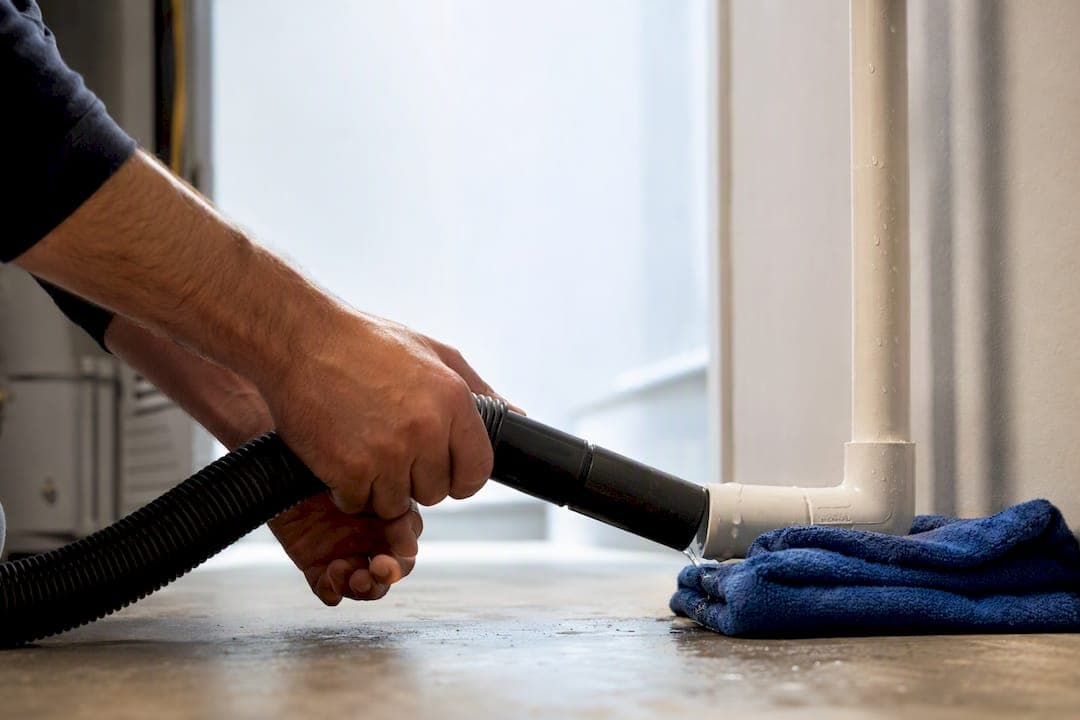
Most homeowners can safely clear an AC condensate drain clog using a wet/dry vacuum and a monthly vinegar or enzyme flush. That single move solves the majority of ordinary clogs without a service call. If the same drain backs up more than twice a year, the problem usually isn't dirt, it's the installation, and that calls for a licensed technician.
TL;DR:
- Performing a vacuum and vinegar or enzyme flush monthly can prevent most condensate drain clogs caused by algae, mold, and debris.
- Repeated clogging or visible damage to the drain line indicates improper installation needs professional correction, not just cleaning.
- Repairing a clogged drain typically costs between $75 and $200, while replacing the entire line can range from $150 to $800 depending on access and additional parts.
- Common homeowner mistakes include using bleach instead of vacuum-based cleaning and neglecting to check the slope or routing of the drain line.
- Routine maintenance can avoid water damage and mold growth, but persistent issues require a licensed technician to diagnose deeper installation or system faults.
Table of Contents
- Why the condensate drain matters and what causes clogs
- Tools and materials to gather before you start
- Step-by-step DIY drain cleaning procedure
- A maintenance schedule that keeps clogs from coming back
- Troubleshooting recurring clogs and when to call a pro
- Repair vs. replacement: what it actually costs
- Edward's field notes on common homeowner mistakes
- Why routine condensate care saves money and prevents damage
- When it's time to bring in E320 Air
- Sources
- FAQ
Why the condensate drain matters and what causes clogs
The condensate drain carries moisture pulled off the evaporator coil out of the house. When that path gets blocked, water backs up into the drain pan, and from there it can spill onto floors, drip through ceilings, or trip the safety switch that shuts the whole system down. Left alone, standing water grows mold and mildew, which is both a repair issue and an indoor air quality one.
Most clogs form from algae and mold feeding on the moisture inside the pipe, along with dust, insulation fibers, and general debris. Poor slope or degraded piping makes the buildup worse because slow-moving water gives organic growth more time to take hold.
Homeowners typically notice one or more of these signs first:
- Water pooling near the indoor air handler or on the floor beneath it
- A musty smell coming from vents or the unit itself
- The air conditioner shutting off unexpectedly during a cooling cycle
- Visible drips or staining on the ceiling below an attic-mounted unit
Tools and materials to gather before you start
A clean, safe job depends on having the right gear on hand before you touch the drain line.
- A wet/dry shop vacuum with a hose adapter that fits the drain pipe
- A flexible cleaning brush or a length of soft tubing for pushing debris
- A flashlight, an empty bucket, work gloves, and safety goggles
- Basic hand tools plus a spare PVC coupling in case a fitting needs resealing
For cleaning agents, plain white distilled vinegar is the accessible, low-risk choice for a monthly flush, while enzyme-based condensate tablets are formulated to break down organic film and hold up better for regular long-term use, according to professional cleaning guidance. Skip straight bleach or heavy chemical drain cleaners: they can corrode fittings over time and add an unnecessary chemical hazard to a line that already drains near living space.
Pro Tip: Wrap a rag around the vacuum hose where it meets the pipe to create an airtight seal, and slide a towel or small tray under the connection point so any backflow lands on fabric instead of your flooring.

Step-by-step DIY drain cleaning procedure
Clearing a clog is a short job when you work through it in order.
- Cut the power. Switch off the air handler and the outdoor condensing unit at the breaker before touching anything, then locate the drain cleanout, the pan, and the outdoor termination point.
- Vacuum from the outdoor end. Seal the wet/dry vacuum hose over the drain's outdoor termination and run it for 60 to 90 seconds. That suction pulls out the bulk of the clog without pushing debris back toward the air handler.
- Clear what's left by hand. Feed a flexible brush or soft tubing through the accessible cleanout to loosen anything the vacuum couldn't reach. Never force solid debris upward toward the coil.
- Flush the line. Pour 1 cup of distilled white vinegar into the indoor cleanout, or apply an enzyme tablet per its label instructions, and let it sit for 15 to 30 minutes before following with a cup of clean water to rinse it through.
- Restart and confirm flow. Power the system back on, watch for water moving cleanly through the pan, and check that the condensate pump or float switch cycles normally if the system uses one.
A 60 to 90 second vacuum pull at the outdoor termination is the range professional cleaning practice points to for clearing the bulk of a typical residential clog before any flush is applied. Never mix vinegar with bleach or ammonia-based products; combining chemicals in a confined pipe can produce fumes you don't want in your house.
A maintenance schedule that keeps clogs from coming back
Consistency beats intensity here. A few minutes each month does more than a deep clean once a year.
- Monthly during cooling season: run the vacuum suction step and a vinegar or enzyme flush, and glance at the drain pan and outdoor termination for standing water or slow drips.
- Each season: test the condensate pump and float switch if your system has one, check the trap for buildup, and inspect insulation around the line, especially after a stretch of extreme heat or humidity.
- As needed: drop in an enzyme tablet between flushes if you notice a musty smell returning faster than usual.
Routine care lowers the odds of a clog forming, but it can't compensate for a line that was installed with the wrong slope or routing in the first place.
Troubleshooting recurring clogs and when to call a pro
Some warning signs point past a simple cleaning job and toward the installation itself.
- The same section of line clogs again within a few months, more than twice a year overall
- The pipe shows visible cracks, sagging, or a section that's collapsed
- A persistent, widespread moldy smell that a flush doesn't clear
- The condensate pump or float switch fails to trigger or trips repeatedly
- A run of pipe that's buried, boxed in, or otherwise impossible to access with a vacuum or brush
According to Building America measure guidelines from the Department of Energy, a continuous downward slope and correct routing are the most reliable long-term prevention against repeat clogging, more effective than repeated cleaning alone. Manufacturer installation specs also cap how much vertical lift a line can handle before it needs a pump, a detail confirmed in guidance on installing air-source heat pumps. When any of these installer-level issues are in play, de-energize the system, avoid further chemical treatments, and bring in a licensed technician who can correct the slope, trap, or routing rather than just clearing the symptom again.
Repair vs. replacement: what it actually costs
A basic clearing and treatment visit costs far less than replacing the line outright. Typical repair or snaking work runs about $75 to $200, while a full condensate drain line replacement runs roughly $150 to $800 depending on linear footage, access difficulty, and whether a pump or float switch is added, according to cost data for AC drain line work.
- Repair makes sense when the line is intact, accessible, and clogging is an isolated event rather than a pattern.
- Replacement makes sense when clogs recur more than twice a year, the pipe is cracked or degraded, or the run needs to be rerouted for proper slope.
- Expect a diagnostic or trip fee on top of the repair cost, plus possible add-ons for a new condensate pump or float switch if the old one has failed.
Edward's field notes on common homeowner mistakes
The biggest mistake I see is homeowners reaching for bleach before they've even tried suction. Clear the bulk of the clog with a vacuum first, then flush, and you'll rarely need anything stronger than vinegar or an enzyme tablet.
Before booking a service call, check the obvious things yourself: run the vacuum, do the flush, and look at the pump or float switch. If you spot a pipe with almost no slope or a run that climbs higher than it should, snap a photo. It'll save the technician time and you money.

Why routine condensate care saves money and prevents damage
In the field, a drain that clogs once is normal. One that clogs three times in a year almost always traces back to how it was installed, not how it's cleaned. A simple monthly habit, vacuum and flush, catches most problems before they become water damage. When that habit stops working, it's time to call a licensed technician rather than keep fighting the same clog.
— Edward
When it's time to bring in E320 Air

When a clog keeps coming back, the line is damaged, or a condensate pump or float switch has failed, that's a job for E320 Air's residential HVAC services rather than another round of vinegar. Technicians diagnose the real cause, replace drain lines and pumps when needed, and offer maintenance plans that keep the whole system, not just the drain, running the way it should.
Sources
- Measure Guideline: Air Conditioner Diagnostics, Maintenance, and Replacement (Building America / DOE)
- Guide To Installing Air-Source Heat Pumps in Cold Climates
- AC Drain Line Replacement Cost and Typical Prices 2026 - Pick Comfort
- Cleaning Best Practices: Condensate Drain Lines and Pans - HVACR School
FAQ
How much does it cost to unclog a condensate drain line?
A basic repair or snaking service typically costs $75 to $200, while a full line replacement runs $150 to $800 depending on access and add-ons like a condensate pump. DIY clearing with a wet/dry vacuum and a vinegar flush costs little beyond the vacuum itself.
Should I pour vinegar down my condensate drain line?
Yes, distilled white vinegar is a widely recommended, low-risk option for a monthly preventive flush that helps limit organic growth inside the pipe. Enzyme-based tablets are a solid alternative for households that want a treatment formulated specifically for regular use.
What happens when a condensate drain line is clogged?
Water backs up into the drain pan and can overflow onto floors, ceilings, or the air handler itself, and many systems will shut down automatically once the float switch detects the rise. Left unresolved, the standing water encourages mold growth and can lead to real structural water damage.
Is it safe to pour bleach down my AC drain line?
Bleach isn't the recommended choice for regular condensate line care, since strong chemicals can corrode fittings and pose an unnecessary hazard so close to living space. Vinegar or enzyme-based treatments handle the same job with far less risk.