
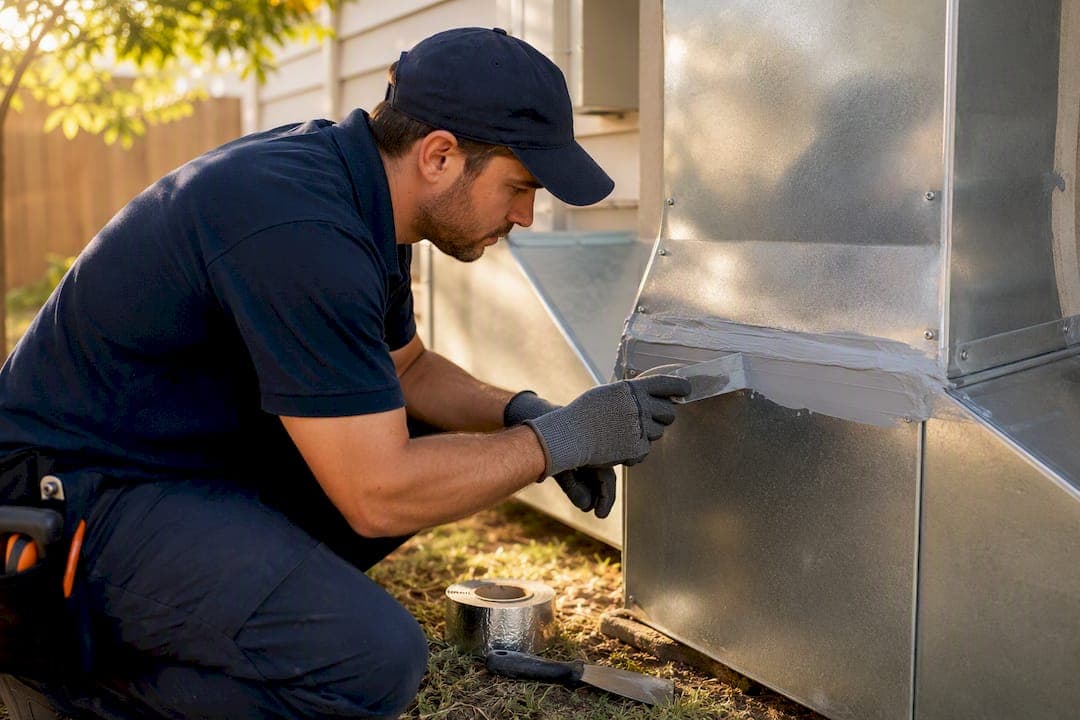
A leaky duct system typically loses [20% to 30%] of conditioned air(https://www.energystar.gov/saveathome/heating-cooling/duct-sealing) before it ever reaches a vent, and sealing that system can cut HVAC energy use by up to about 20%. The payoff shows up in four places: steadier room temperatures, lower utility bills, cleaner air, and reduced risk of combustion gases getting pulled back into the house. Before you sign off on any sealing job, insist on a professional duct leakage test with before-and-after numbers, not just a verbal promise that things feel tighter.
What you should expect from a properly sealed system:
- More even temperatures between rooms and floors
- Lower cooling and heating costs, often within the first billing cycle
- Fewer dust, insulation particles, and allergens circulating through vents
- Reduced backdrafting risk for homes with gas furnaces or water heaters
- Documented leakage test results (measured in CFM25) proving the work held
Key Takeaways
Duct sealing typically recovers 20% to 30% of lost conditioned air and can cut HVAC energy use by up to 20%, but only when verified with before-and-after leakage testing.
| Point | Details |
|---|---|
| Leakage is the baseline problem | Most homes lose 20% to 30% of conditioned air through duct leaks before sealing. |
| Comfort improves fast | Sealing restores delivered airflow, often fixing hot and cold rooms within days. |
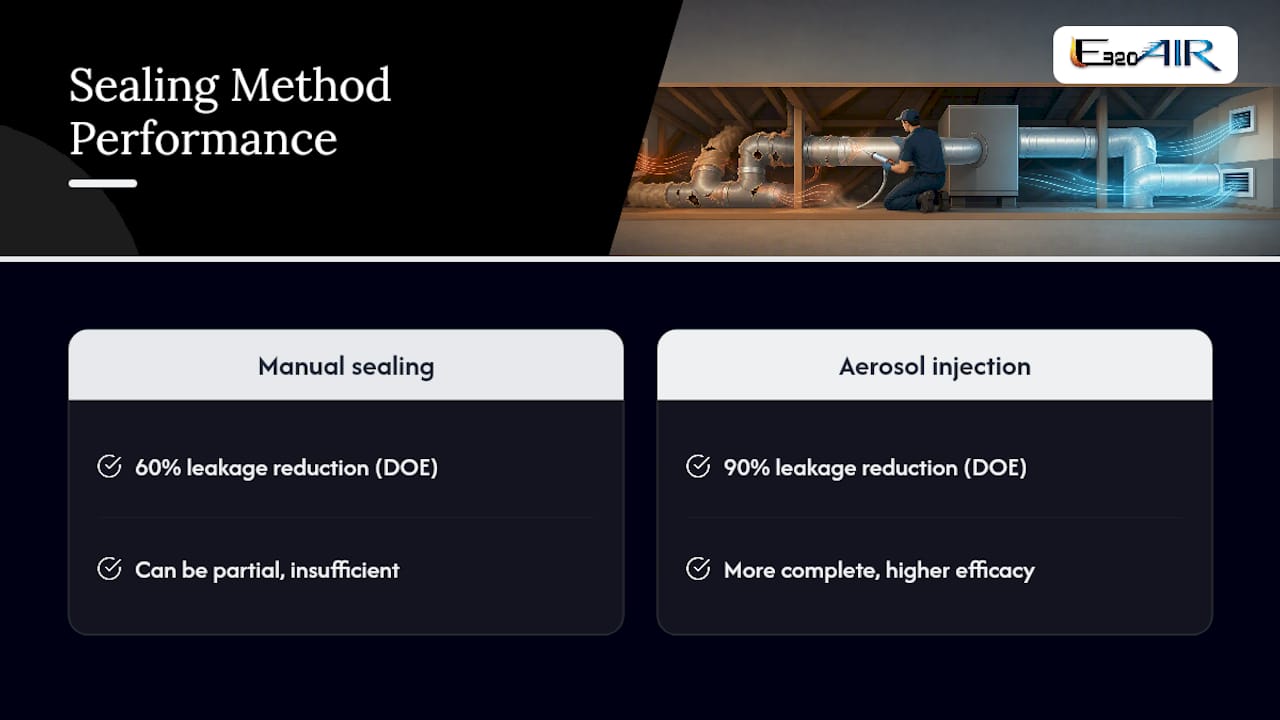
| Method affects results | Aerosol injection reduced leakage by about 90% in a Building America case study versus roughly 60% for manual sealing alone. |
| Combustion safety is non-optional | Homes with gas appliances need pre- and post-sealing testing to rule out backdrafting risk. |
| Verify before you pay | E320air performs CFM25 leakage testing and combustion safety checks as a standard part of every duct sealing job. |
Table of Contents
- How Duct Sealing Improves Comfort at Home
- How Much Can Duct Sealing Save on Energy Bills?
- Does Sealing Ducts Improve Indoor Air Quality?
- What Methods Do Contractors Use to Seal Ducts?
- What Does Duct Sealing Cost and How Long Does It Last?
- When Should You Hire a Professional for Duct Sealing?
- What Homeowners Get Wrong About Duct Sealing
- Get Your Ducts Tested and Sealed the Right Way
- Frequently Asked Questions
- Sources
How Duct Sealing Improves Comfort at Home
Every foot of duct running through an attic, crawlspace, or unconditioned garage is a chance for cooled or heated air to leak out before it reaches a register. That lost air doesn't just vanish. It shows up as a bedroom that never quite cools down in July or a home office that stays 10 degrees colder than the rest of the house in January.
Homeowners usually notice the pattern before they understand the cause: upstairs rooms running hot in summer, exterior rooms running cold in winter, and a thermostat that seems to short-cycle the system trying to compensate. Sealing the ducts restores the air volume the system was designed to deliver, which is why comfort improvements often show up before the first lower bill does. Better airflow can also improve dehumidification during cooling season, since the system runs longer, more consistent cycles instead of stopping and starting.
- Long duct runs in attics and crawlspaces lose the most conditioned air
- Short-cycling and uneven room temperatures are the classic symptoms
- Sealing restores delivered airflow, which improves both temperature control and humidity removal
Pro Tip: If a big chunk of your duct leakage gets sealed at once, ask your technician to check dampers and register settings afterward. A system that was compensating for leaks for years can suddenly overcool or overheat specific rooms once that leak path closes, and a quick rebalance usually fixes it.
How Much Can Duct Sealing Save on Energy Bills?
The 20% to 30% leakage figure is the starting point for any savings estimate, and the ENERGY STAR benefits page puts the realistic ceiling on sealing's impact at roughly 20% off total HVAC energy use. Where your home lands on that range depends on a handful of variables that matter more than most homeowners expect.
- Duct location: attic ducts lose far more conditioned air than ducts running through conditioned space, so attic systems see bigger gains from sealing
- Climate severity: homes in hot or cold extremes get more value per dollar spent, since the system runs harder and longer
- Home size and system age: larger homes and older, less efficient equipment tend to show bigger absolute dollar savings
- Extent of manual repair needed: heavily damaged or disconnected duct sections cost more labor to access and fix than straightforward seam sealing
Building America modeling backs this up with real numbers: an attic-duct home in a hot climate saved $200 to $400 a year after sealing, while a basement-duct home in a milder climate saved far less. Utility rebate programs and ENERGY STAR-affiliated incentives can shorten the payback window considerably, so it's worth checking what's available before you budget the job as full out-of-pocket cost.
Does Sealing Ducts Improve Indoor Air Quality?
Leaky return ducts don't just lose air, they actively pull in whatever is sitting nearby: attic insulation fibers, crawlspace dust, and basement particulates get drawn into the airstream through gaps and cracks. That contaminated air then circulates through every room the system serves. Technicians who work on this daily point to the "vacuum effect" as one of the most overlooked benefits of a tight duct system, since homeowners tend to focus on bills and comfort first.
- Reduced dust and particulate circulation throughout the home
- Fewer irritants reaching rooms where allergy or asthma symptoms tend to flare
- Less unconditioned, potentially contaminated air mixing into the supply stream
Sealing changes how air moves through the whole house, and that includes pressure relationships around combustion appliances. A furnace or water heater relies on stable pressure to vent exhaust gases properly, and sealing the wrong section without checking that balance can occasionally increase backdrafting risk. That's exactly why combustion safety testing before and after the job is standard practice, not an upsell. Any contractor who skips it on a home with gas appliances is skipping a real safety step.
What Methods Do Contractors Use to Seal Ducts?
Contractors typically choose from three approaches, and which one fits your ducts depends on access, leak size, and location.
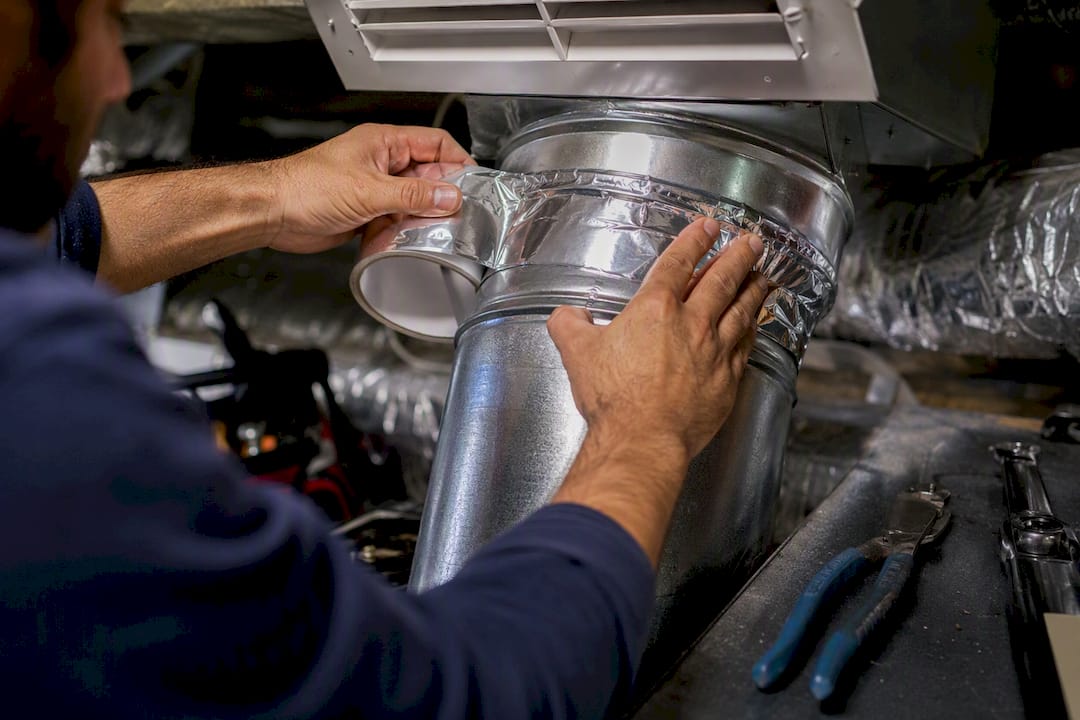
- Mastic and mesh for accessible seams and larger gaps. This is the most durable option when applied to clean, prepped surfaces, and NADCA's guidance lists it as an industry standard for visible joints.
- UL 181A or 181B-rated foil or metal tape for many standard joints. Ordinary fabric or rubber "duct tape" is not the same product. Its adhesive breaks down under thermal cycling, which is why that hardware-store roll fails within a year or two of attic heat.
- Injected aerosolized sealant for leaks that are physically impossible to reach, like joints buried inside walls or ceilings. The sealant travels through the duct under pressure and bonds around small gaps from the inside.
| Method | Best for | Limitation |
|---|---|---|
| Mastic and mesh | Accessible seams, large gaps | Requires surface prep and access |
| UL-rated tape | Standard joint connections | Not a fix for large gaps |
| Aerosol injection | Inaccessible or hidden leaks | Gaps over 5/8 inch need manual repair first |
Registers and air handler connections almost always need separate manual attention. Aerosol injection alone will not seal those junctions properly.
What Does Duct Sealing Cost and How Long Does It Last?
Costs vary by scope, but a Building America case study in Raleigh, North Carolina gives a useful reference point: manual sealing ran $300 to $500 per unit, while aerosol injection ran closer to $700. Labor dominates both numbers, since accessing ducts inside walls, attics, or crawlspaces takes time regardless of which sealant goes on.
Effectiveness tracked with cost in that same study. Manual sealing alone brought leakage down by roughly 60%, while injection projects in the study pushed leakage reduction closer to 90%. That gap matters when you're weighing sticker price against long-term savings, since a cheaper job that leaves substantial leakage behind delivers a slower payback.
- Mastic and UL-rated tape, applied correctly, commonly hold up for the life of the ductwork
- Ordinary duct tape fails well before that, often within a couple of years
- Always request duct leakage test numbers (CFM25 or equivalent) from before and after the job
- Insist on a combustion safety check if your home has gas appliances, regardless of which sealing method was used
When Should You Hire a Professional for Duct Sealing?
Small, easily reached leaks around a visible register boot are reasonable for a handy homeowner to tackle with mastic. Everything else, inaccessible runs, significant leakage, or any home with gas-fired equipment, calls for a professional with the right diagnostic tools.
- Ask whether the contractor performs pre- and post-sealing leakage testing, and get the actual numbers in writing.
- Ask which sealing method they plan to use and why it fits your duct configuration.
- Ask for references or documented before-and-after results from recent jobs.
- Confirm licensing and insurance before any work begins.
Watch for red flags: a crew that shows up with a roll of ordinary duct tape, refusal to run a combustion safety test, no willingness to share before-and-after leakage figures, or a vague scope with no warranty. A legitimate visit includes inspection, pressure testing, the sealing work itself, and a follow-up test confirming the leakage reduction actually happened. For more on identifying leak points yourself before that visit, E320air's guide to preventing HVAC leaks walks through the basics.
Where This Guidance Comes From
E320air handles residential and commercial HVAC repair, maintenance, and installation, and duct sealing is a routine part of that work. Edward's related guides on why ductwork matters for efficiency and comfort and what HVAC ductwork actually is cover the mechanical background behind this article's recommendations.
What Homeowners Get Wrong About Duct Sealing
Most homeowners treat duct sealing as a minor maintenance line item, something to bundle in when the technician is already there for a tune-up. That undersells it. The DOE case study data showing a 60% versus 90% leakage reduction gap between manual sealing and aerosol injection tells you the method matters as much as the decision to seal at all. A cheap, partial job can leave you disappointed with results that don't match the marketing.
The bigger blind spot is combustion safety. Homeowners fixate on bills and comfort and treat the pressure-testing requirement as bureaucratic box-checking. It isn't. Sealing changes how air moves through your whole house, and a system that vented safely before sealing can behave differently afterward if nobody checks the pressure relationships around a gas furnace or water heater.
My take: prioritize the verification step over the sales pitch. Any contractor who can show you real before-and-after leakage numbers from past jobs, and who insists on combustion testing without being asked, is worth more than one quoting the lowest price. The number on the leakage test is the only proof that actually matters once the crew has left.
Get Your Ducts Tested and Sealed the Right Way
E320air handles duct sealing the way this article describes it should be done: pressure testing before the work starts, the right method for your specific leak locations, and a verified leakage number when the job wraps up, not just a promise that it "feels tighter."

If your home has rooms that never quite hit the right temperature, or bills that seem high for your system's rated efficiency, that's usually a duct leakage problem before it's an equipment problem. E320air's technicians run the same CFM25 diagnostics referenced throughout this guide, and if sealing reveals that your system is oversized or undersized for your actual duct capacity, the team can also walk you through HVAC installation and upgrade options rather than just patching around a mismatched system. Past project results are documented in the problem-solving gallery, showing real before-and-after outcomes instead of vague claims. Schedule a duct inspection through E320air and get an actual leakage number before deciding what the job should cost.
Frequently Asked Questions
How much can duct sealing lower my energy bill? Savings vary by climate, duct location, and system age, but sealing can cut HVAC energy use by up to about 20% when a home has significant leakage in an attic or unconditioned space.
Is duct sealing worth it if my ducts run through conditioned space? The gains are usually smaller than for attic ducts, but sealing still improves comfort and indoor air quality even when the energy savings are more modest.
Can I seal my own ducts with regular duct tape? No. Ordinary fabric or rubber duct tape breaks down under heat cycling within a year or two. Mastic or UL 181 rated foil tape holds up for the life of the ductwork.
How do I know if the sealing job actually worked? Ask for a documented duct leakage test, measured in CFM25, from before and after the job. A legitimate contractor will have both numbers ready to share.
Does duct sealing affect my furnace or water heater's safety? It can change pressure relationships around combustion appliances, which is why testing for backdrafting risk before and after sealing is standard practice whenever gas equipment is present.
Sources
- Benefits of Duct Sealing | ENERGY STAR
- Ducts sealing using injected spray sealant, Raleigh, North Carolina (Building America case study)
- Injected spray sealant for existing HVAC ducts | Building America Solution Center
- BSC Information Sheet 602 - Duct sealing (Building America)
- A Beginner’s Guide to Duct Sealing | NADCA