
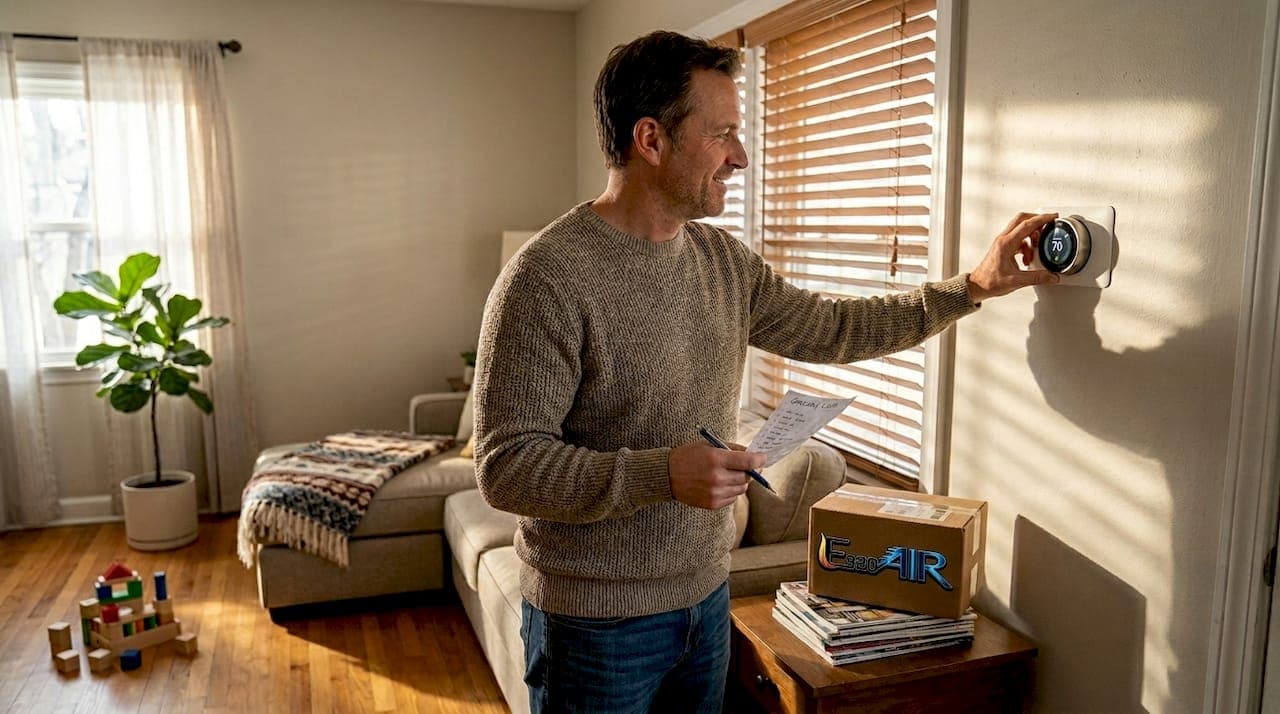
TL;DR:
- Most homes with programmable thermostats don't use their scheduled features. Smart thermostats, combined with HVAC upgrades, can significantly improve energy efficiency and comfort. Proper system sizing and maintenance are essential for maximizing savings and performance.
Your thermostat is probably doing a lot less than you think. According to the U.S. Energy Information Administration, only 12% of homes with programmable thermostats actually use the programmed schedules. That means most homeowners are paying for a feature they never activate. In the Inland Empire, where summer temperatures can push past 110°F, that wasted potential shows up directly on your energy bill. This article walks you through how thermostats really work, which type fits your home, and how pairing a smart thermostat with the right HVAC upgrades can genuinely transform your comfort and lower your costs.
Table of Contents
- Understanding the basics: What thermostats actually do
- Types of thermostats: Manual, programmable, and smart compared
- How smart thermostats drive HVAC efficiency
- Integrating thermostats for whole-home optimization
- Why focusing only on thermostat upgrades misses the bigger win
- Ready to boost your HVAC comfort and efficiency?
- Frequently asked questions
Key Takeaways
| Point | Details |
|---|---|
| Thermostats are system controllers | They act as the central hub, telling HVAC systems when and how to operate. |
| Smart models automate savings | Automated features in smart thermostats yield bigger energy savings than manual programming. |
| Efficiency needs a layered approach | Combining smart thermostats with zoning, ductwork, and maintenance multiplies results. |
| Upgrades work best with pro guidance | Consulting an HVAC expert ensures new thermostats truly boost comfort and savings. |
Understanding the basics: What thermostats actually do
Most homeowners treat a thermostat like a light switch: flip it to a number and walk away. In reality, the thermostat is the brain of your entire HVAC system. It reads the current temperature in your home, compares it to the temperature you set, and signals your heating or cooling equipment to run until those numbers match. It doesn't generate heat or cold air itself. It just tells your system when to start and stop.
This distinction matters more than people realize. A thermostat alone cannot save energy. What it can do is allow smarter operation of equipment that already exists. If your system is oversized, poorly maintained, or leaking conditioned air through gaps in the ductwork, no thermostat will fix that. Understanding HVAC zoning basics helps show why thermostat control becomes even more powerful when the rest of the system supports it.
Here are a few myths worth clearing up right away:
- Turning the thermostat way down cools your home faster. It doesn't. Your system runs at full capacity regardless of how low you set it.
- Leaving the thermostat at one temperature all day saves energy. In extreme heat, letting temperatures drift up while you're away and pre-cooling before you return is usually more efficient.
- Smart thermostats work the same in every home. Their actual performance depends heavily on how your HVAC system is set up.
Modern smart thermostats go well beyond switching your system on and off. They use occupancy sensors and AI that include passive infrared (PIR) detection, ultrasonic sensors, and geofencing to predict when you're home, when you're away, and when you need the system running before you even walk in the door.
"The thermostat's job is not to change the temperature. It's to tell your system what temperature to chase and when to chase it."
Types of thermostats: Manual, programmable, and smart compared
Knowing what thermostats control, let's compare the types available and see how each impacts everyday comfort and savings.
| Thermostat type | Automation | Best for | Main limitation |
|---|---|---|---|
| Manual | None | Simple, rarely changed setups | No scheduling, requires manual adjustment |
| Programmable | Schedule-based | Consistent daily routines | Only saves energy if actively programmed |
| Smart | AI, sensors, weather | Most homes seeking real savings | Higher upfront cost, needs Wi-Fi |
Manual thermostats are the simplest option. You set a temperature and it stays there until you change it. There's nothing wrong with them for very basic use, but they rely entirely on you remembering to adjust the setting before you leave the house or go to bed.
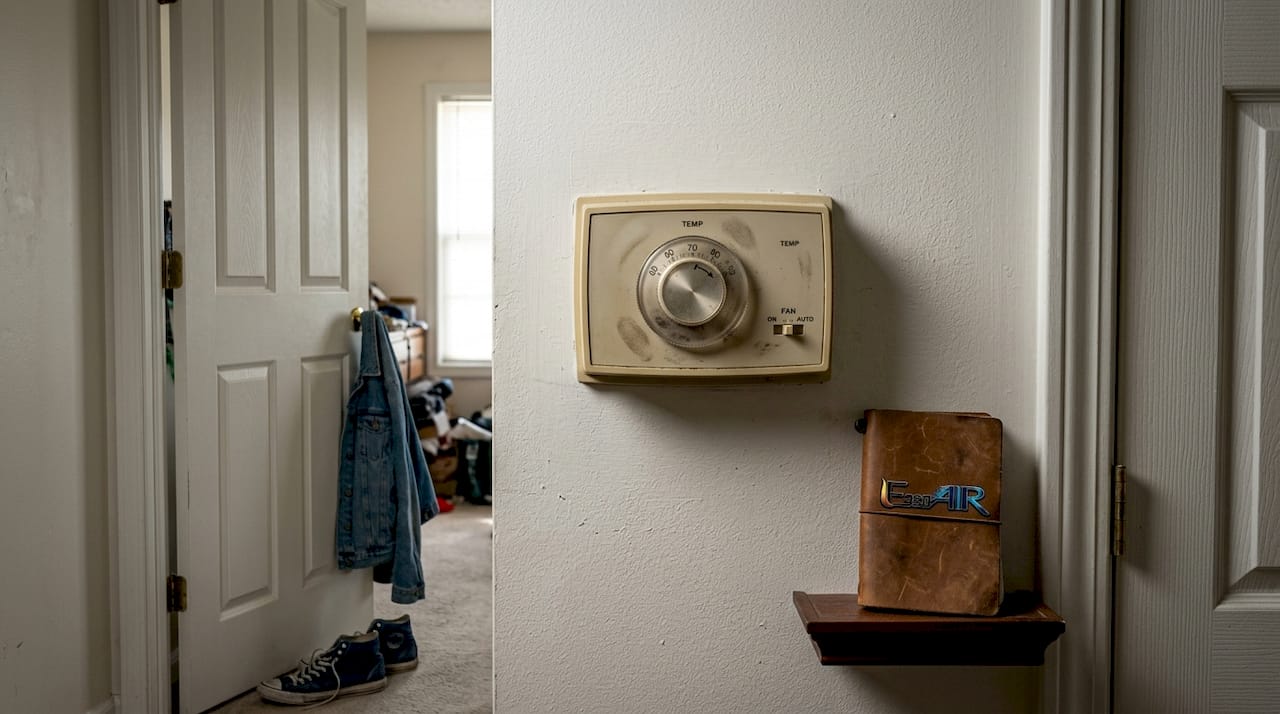
Programmable thermostats introduced scheduling. You can tell the system to ease off at 8 a.m. when everyone leaves and cool down again by 4 p.m. before the family returns. The problem is that the EIA data shows most households never get around to programming them. They become expensive manual thermostats.
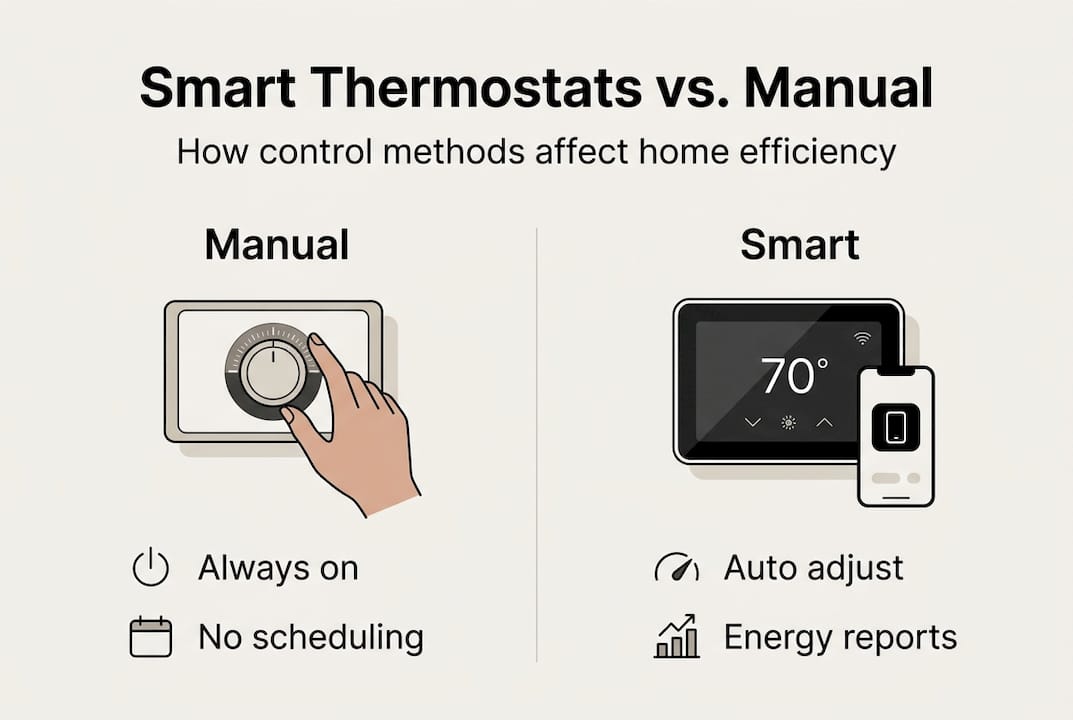
Smart thermostats remove that burden. They learn your schedule, respond to your location via your phone, and adjust automatically. In the Inland Empire, where cooling demand stays high from May through October, that automation is especially valuable. You're not relying on memory. The system handles it.
Key benefits of smart thermostats for Inland Empire homeowners:
- Automatic schedule adjustments without manual reprogramming
- Remote control via smartphone when plans change
- Energy reports showing exactly where your HVAC dollars go
- Compatibility with California HVAC upgrade options including zoned systems
Pro Tip: If you bought a programmable thermostat but have never set a schedule on it, you're getting zero benefit over a manual model. Either program it properly or consider upgrading to a smart thermostat that handles scheduling on its own.
How smart thermostats drive HVAC efficiency
Once you know the thermostat types, it's critical to see how smart models go beyond basic control to actively improve your home's energy use.
A smart thermostat isn't just connected to Wi-Fi. It's collecting data constantly. Using AI and occupancy sensors including PIR motion detection, geofencing, and real-time weather feeds, the system builds a picture of your daily patterns and adjusts your HVAC schedule to match.
In a hot Inland Empire summer, this matters a lot. A smart thermostat can check the morning forecast, see that temperatures will spike past 105°F by 2 p.m., and pre-cool your home between 11 a.m. and 1 p.m. during cheaper off-peak energy hours. It then lets the temperature ease up slightly during peak grid pricing and brings it back down before you return. You feel comfortable. Your bill reflects the strategy.
When paired with zoning and duct sealing, smart thermostats can contribute to 10 to 20% efficiency gains, according to energy performance data from ENERGY STAR-certified systems.
Features to look for when choosing a smart thermostat:
- Geofencing so the system knows when you're heading home
- Learning algorithms that adapt to your schedule over time
- Weather integration for proactive pre-cooling or heating
- Multi-stage compatibility if your system uses variable-speed equipment
- System health alerts that flag issues before they become costly repairs
- Humidity monitoring to manage comfort beyond just temperature
- Energy usage reports so you can track and compare monthly performance
That last feature, system health alerts, is underrated. A smart thermostat can detect unusual runtime patterns that signal a refrigerant issue, dirty filter, or failing component. Catching those problems early cuts down on emergency repair costs and protects equipment that matches your seasonal HVAC needs in Riverside County.
10 to 20% efficiency gains are achievable when smart thermostats are part of a well-maintained, properly sized system. That's not marketing language. That's the real-world result when automation, zoning, and equipment all work together.
Integrating thermostats for whole-home optimization
Now that you understand individual thermostat benefits, let's explore how thermostats fit into a bigger strategy for maximizing HVAC performance.
Upgrading your thermostat while ignoring your ductwork is like putting new tires on a car with a failing engine. You'll notice a small improvement, but you're leaving most of the benefit on the table. A smart thermostat talks to your HVAC system, but the system still has to be capable of responding effectively.
For Inland Empire homeowners, the most practical approach is layered. Start with the thermostat upgrade because it's the lowest cost entry point and gives you real data on how your system is performing. Then use that data to identify where the bigger issues are: duct leaks, an aging air handler, rooms that never cool properly.
Here's what a layered improvement plan typically looks like:
- Step 1: Install a smart thermostat and monitor energy reports for 30 days
- Step 2: Address duct leaks and gaps, which can account for up to 30% of wasted cooling
- Step 3: Evaluate HVAC zoning strategies if certain rooms stay too hot or cold
- Step 4: Replace aging equipment that's working against your smart controls
- Step 5: Maintain filters and coils regularly since improving energy efficiency through clean equipment multiplies the thermostat's effectiveness
Each step compounds the last. A smart thermostat in a sealed, zoned, well-maintained system doesn't just save 10 to 20%. It makes your entire home more comfortable with less effort from the equipment, which means longer system life and fewer unexpected repair bills.
Pro Tip: Don't wait until your system fails to start making upgrades. One well-timed investment in thermostat and duct improvements typically pays for itself in two to three cooling seasons in the Inland Empire's climate.
Why focusing only on thermostat upgrades misses the bigger win
We see it regularly: a homeowner installs a Nest or Ecobee, expects the electricity bill to drop dramatically, and then feels disappointed when the savings are modest. The thermostat isn't the problem. The problem is that thermostats are only as smart as the systems they control.
A smart thermostat installed on an undersized or oversized system will still struggle. The AI can optimize a schedule, but it can't fix a unit that was never matched to your home's actual cooling load. That's where proper HVAC sizing becomes the real foundation of comfort and savings.
Our honest take after working with hundreds of Inland Empire homeowners: the thermostat is the best starting point, not the finish line. It gives you visibility, automation, and data. But sustained comfort requires that every component, from the ductwork to the air handler to the refrigerant charge, supports the system's efficiency goals. That's why involving an experienced HVAC contractor early in your upgrade process prevents costly mismatches and keeps your investment working the way it should.
Ready to boost your HVAC comfort and efficiency?
If this article made you realize your thermostat isn't doing everything it could, you're already ahead of most homeowners. The next step is working with a team that knows how to design a system where the thermostat, equipment, and ductwork all pull in the same direction.
At E320 Air, we handle professional HVAC installation and full system assessments for homeowners across the Inland Empire. We size equipment correctly, seal ducts, and configure smart thermostats to work with your actual home. Want to see what a well-integrated system looks like? See real results from our past projects, then reach out to E320 Air for a consultation. Real efficiency starts with the right plan.
Frequently asked questions
How do smart thermostats actually save energy?
Smart thermostats use AI, sensors, and geofencing to automatically adjust your HVAC system based on your schedule, location, and outdoor weather, so the system only works hard when it needs to.
Do I need professional installation for a smart thermostat?
Professional installation ensures your thermostat is fully compatible with your HVAC equipment and configured correctly from day one, especially in homes with multi-stage or zoned systems.
What is the biggest mistake homeowners make with programmable thermostats?
The biggest mistake is never programming them. Because only 12% of homes use programmed schedules, most programmable thermostats deliver no real savings over a basic manual model.
How much can I really save by upgrading to a smart thermostat in the Inland Empire?
When paired with zoning and proper maintenance, homeowners can realistically see 10 to 20% efficiency gains, making smart thermostats one of the best low-cost starting points for whole-home energy improvement.