

TL;DR:
- Setting thermostats to 68°F during waking hours and 60–62°F when sleeping or away optimizes comfort and reduces energy costs in California homes. Lowering the temperature by 7–10°F for eight hours annually saves up to 10%, while maintaining indoor humidity enhances perceived warmth at lower temperatures. Proper system maintenance and programmable thermostats ensure these settings deliver maximum efficiency and health benefits all winter.
The ideal heating temperatures for California homes are 68°F while you are awake and at home, dropping to 60–62°F when you are asleep or away. The U.S. Department of Energy sets 68°F as the recommended winter thermostat setting, and lowering it by 7–10°F for eight hours a day saves up to 10% on annual heating costs. California's mild winters make these settings even more achievable than in colder states, yet most households still overpay on heating bills by holding temperatures too high throughout the day. This guide gives you the exact temperature settings for heating, the reasoning behind them, and the practical steps to apply them in your home.
What heating temperatures actually save you money
The relationship between thermostat settings and energy costs is direct and measurable. Lowering your thermostat by 7–10°F for eight hours each day delivers up to 10% in annual savings. That is not a rounding error. For a household spending $1,200 a year on heating, that is $120 back in your pocket without touching your insulation or replacing any equipment.
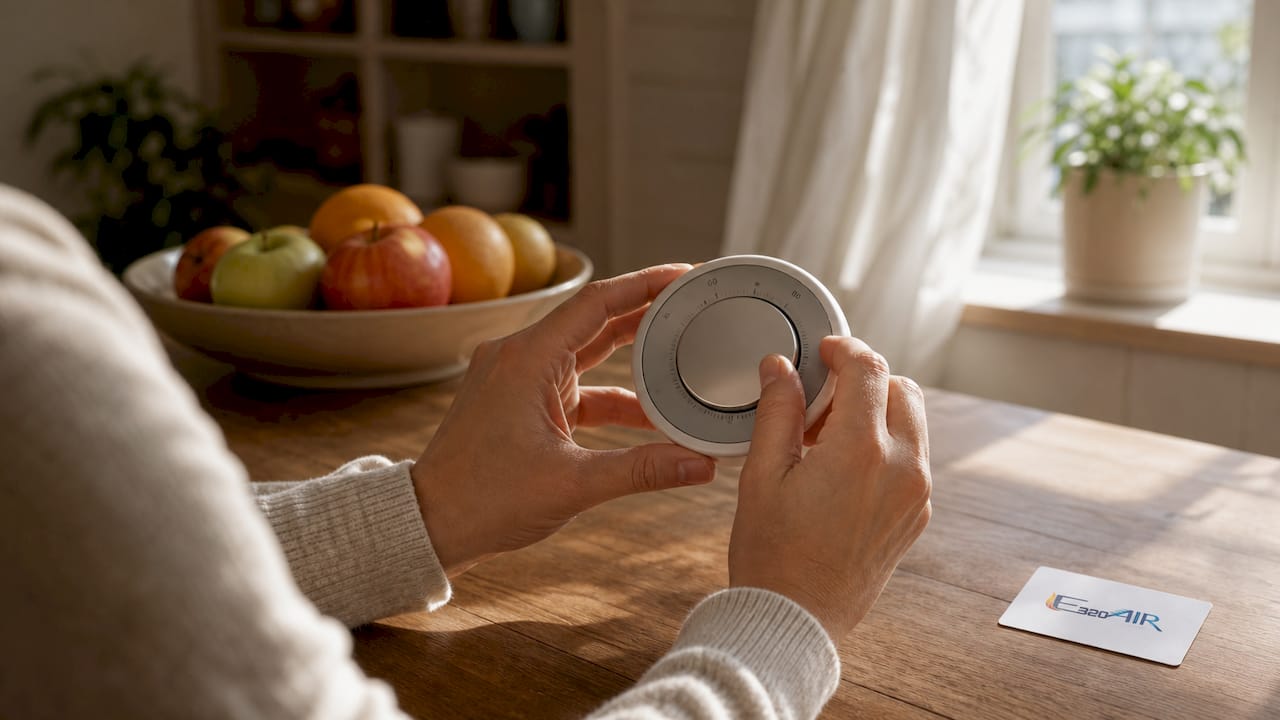
The savings compound when you understand what happens above 72°F. Every degree above 72°F increases your heating costs by 1–3%. Most California homeowners who keep their thermostat at 74°F or 76°F during winter are paying a meaningful premium for a comfort difference they often cannot detect. The optimal heating levels sit between 68°F and 72°F for living spaces during waking hours.
Small adjustments add up faster than most people expect. Dropping your thermostat by just 1.8°F cuts your heating bill by roughly 10%. In California, where heating seasons are shorter but utility rates are among the highest in the country, that math works strongly in your favor.
Here is how to structure your temperature settings for heating across a typical day:
- Waking hours at home: Set to 68°F. This is the sweet spot endorsed by the Department of Energy and health organizations alike.
- Sleeping: Drop to 64–66°F. Your body naturally cools during sleep, and a cooler room supports that process.
- Away from home: Set to 60–62°F. There is no reason to heat an empty house to comfort levels.
- Returning home: Program your thermostat to reach 68°F about 30 minutes before you arrive, not when you walk in the door.
Pro Tip: A programmable thermostat from brands like Honeywell, Ecobee, or Google Nest automates these setbacks so you never have to remember to adjust manually. E320air installs and configures these systems for California homeowners regularly, and the payback period is typically under two years.
Health and comfort considerations for home heating
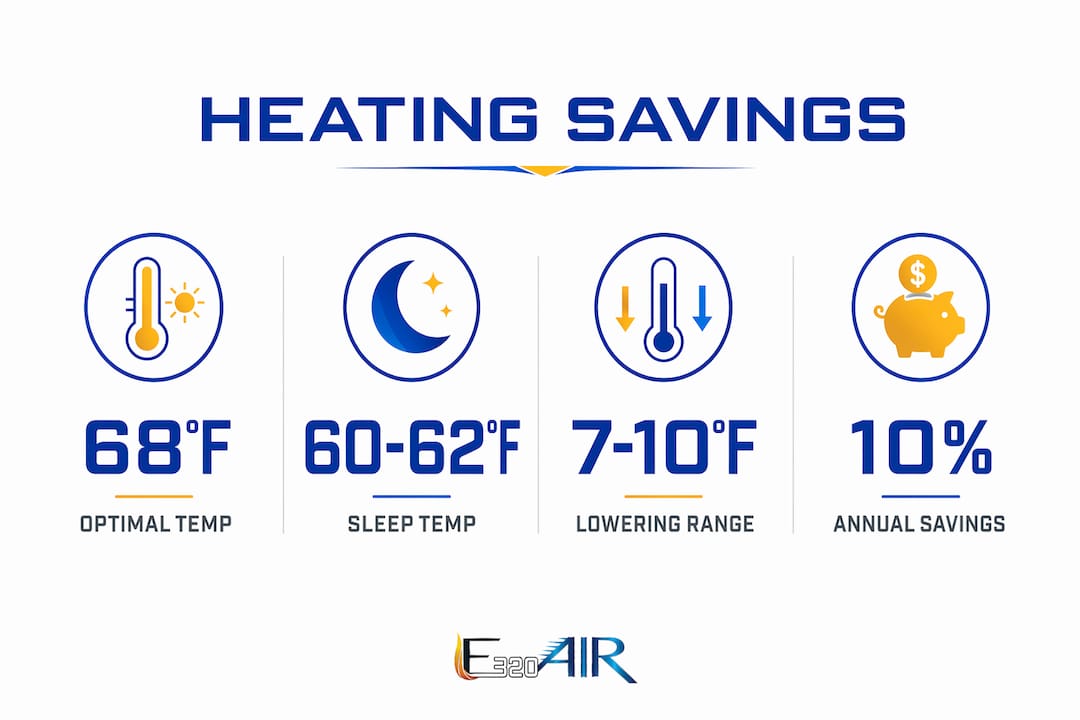
The best temperature for heating is not just about bills. It is also about keeping everyone in your household safe and comfortable. Health organizations recommend that indoor temperatures never fall below 68°F for vulnerable groups, including elderly residents, young children, and anyone managing a chronic health condition. Dropping below that threshold increases the risk of respiratory problems and cardiovascular stress.
Several factors shape how warm a room actually feels, regardless of what the thermostat reads:
- Humidity: Maintaining indoor humidity between 30–50% makes a room feel warmer without raising the thermostat. Dry air pulls heat away from your skin faster, which is why a 68°F room with 20% humidity feels colder than a 68°F room at 40% humidity.
- Airflow balance: Rooms with blocked vents or unbalanced duct systems feel colder even when the thermostat is set correctly. A well-maintained HVAC system at 68°F can feel warmer than a poorly maintained system running at 72°F.
- Drafts and insulation: California homes, especially older ones in the Bay Area or Los Angeles, often have single-pane windows and minimal wall insulation. These factors lower perceived warmth significantly.
- Bedroom temperature: The Sleep Foundation recommends bedroom settings near 64°F to support the body's natural temperature drop during sleep. Cooler bedrooms improve sleep quality and reduce nighttime heating costs simultaneously.
Pro Tip: If your home feels cold at 68°F, check your humidity levels before raising the thermostat. A whole-home humidifier, which E320air can integrate into your existing HVAC system, often solves the problem at a fraction of the cost of running your heater harder.
The impact of temperature on heating comfort is not purely numerical. A home with clean filters, sealed ducts, and balanced airflow will feel noticeably warmer at the same thermostat setting compared to a neglected system. Scheduling annual HVAC maintenance is one of the highest-return actions a California homeowner can take.
Common thermostat mistakes that cost you money
Most thermostat errors come from reasonable-sounding logic that does not match how heating systems actually work. Recognizing these mistakes is the fastest way to improve both comfort and efficiency.
- Cranking the thermostat higher to heat faster: This is the most widespread misconception in home heating. Your furnace or boiler runs at a fixed rate regardless of the target temperature. Setting your thermostat to 80°F when you want 68°F does not heat the room faster. It just runs the system longer and wastes energy. The room reaches 68°F at the same speed either way.
- Leaving the fan set to ON instead of AUTO: Setting the fan to AUTO means it only runs when the heating system is actively producing warm air. Setting it to ON runs the fan continuously, circulating unheated air through your ducts and creating a cold draft effect even when the thermostat reads a comfortable temperature.
- Ignoring heat pump behavior during setbacks: If your California home uses a heat pump, aggressive temperature setbacks can backfire. Heat pump setback strategies can trigger auxiliary electric heating strips when the system tries to recover quickly from a large temperature drop. Those strips use significantly more energy than the heat pump itself, erasing your savings. Use a thermostat designed specifically for heat pumps, or limit setbacks to no more than 4°F at a time.
- Skipping programmable scheduling: Manual thermostat adjustments rely on memory and habit. Most households forget to lower the temperature before bed or when leaving for work. Programmable thermostats store multiple daily schedules and execute them automatically, removing human error from the equation entirely.
A thermostat is only as smart as the schedule behind it. The hardware is the easy part. The settings are where most homeowners leave money on the table.
You can also explore common HVAC maintenance myths that affect how well your system responds to thermostat changes, since a dirty filter or blocked return vent changes the math on every temperature setting you make.
Practical thermostat strategies for California residents
California's climate varies significantly from San Diego to Sacramento to San Francisco. That said, the core thermostat strategy applies statewide, with minor adjustments for local conditions.
| Situation | Recommended temperature | Notes |
|---|---|---|
| Awake and at home | 68°F | Standard comfort and efficiency target |
| Sleeping | 64–66°F | Supports sleep quality; reduces overnight heating costs |
| Away from home | 60–62°F | Prevents pipes from cooling while minimizing energy use |
| Returning home | Program 30 min early | Avoids cranking thermostat; system reaches temp naturally |
| Vulnerable household members | Minimum 68°F at all times | Elderly, children, or chronic conditions require this floor |
For most California households, the heating season runs from November through March. That is roughly 150 days. Applying a consistent 7–10°F setback during sleep and absence hours across that period produces the full 10% annual savings the Department of Energy cites, without any sacrifice in daytime comfort.
Layering is an underused tool. Wearing a light sweater at home allows you to maintain 66°F instead of 68°F comfortably, which adds another small but real reduction to your bill. Space heaters can supplement heating in a single occupied room, but only when used instead of whole-home heating, not in addition to it.
Humidity management deserves a dedicated mention for California residents. The state's dry climate, particularly in Southern California and the Central Valley, means indoor humidity often drops below 30% in winter. At that level, humidity and airflow directly undermine perceived warmth. Raising humidity to 40–45% can make a 66°F room feel as warm as a 70°F room, which is a meaningful difference in heating costs over a season.
Pro Tip: Use the scheduling feature on your thermostat to create a "pre-wake" setting. Program it to reach 68°F about 20 minutes before your alarm goes off. You wake up to a warm home without heating it all night.
Learning how thermostats transform HVAC efficiency gives you a deeper foundation for making these settings work with your specific system, whether you have a gas furnace, heat pump, or mini-split.
Key takeaways
The single most effective action a California homeowner can take is setting the thermostat to 68°F during waking hours and 60–62°F during sleep or absence, then automating that schedule with a programmable thermostat.
| Point | Details |
|---|---|
| Standard waking temperature | Set to 68°F while home and awake for the best balance of comfort and efficiency. |
| Setback savings | Lowering by 7–10°F for 8 hours daily saves up to 10% on annual heating costs. |
| Humidity matters | Keeping indoor humidity at 40–45% makes lower temperatures feel warmer without extra heating. |
| Fan setting | Always use AUTO, not ON, to prevent cold drafts when the heating system is off. |
| Heat pump caution | Limit setbacks to 4°F or less with heat pumps to avoid triggering costly auxiliary heat strips. |
What I've learned from California homes and their thermostats
I have been inside hundreds of California homes as part of the E320air team, and the pattern is consistent. Homeowners in Sacramento set their thermostats to 74°F and complain about high bills. Homeowners in San Jose keep theirs at 70°F but feel cold because their ducts are leaking 20% of conditioned air into the attic. The number on the thermostat is only part of the story.
What I have found is that most California households are not getting the warmth they are paying for. The fix is rarely a higher thermostat setting. It is almost always a maintenance issue: dirty filters, unbalanced airflow, or a system that has not been serviced in three years. A clean, well-calibrated system at 68°F delivers more comfort than a neglected one at 72°F, and costs less to run.
The other thing I tell homeowners is to stop treating the thermostat as a dial and start treating it as a schedule. Your life is predictable. You wake up at roughly the same time, leave at roughly the same time, and go to bed at roughly the same time. A programmable thermostat mirrors that routine exactly. Once it is set up, you stop thinking about it, and your bill reflects that discipline every month.
California's mild winters are an advantage. You do not need to heat aggressively. You need to heat precisely. That distinction is worth real money over a full season.
— Edward
How E320air helps you get heating temperatures right
Getting your thermostat settings right is only half the equation. The other half is making sure your HVAC system can actually deliver on those settings efficiently. E320air provides professional HVAC installation across California, including programmable and smart thermostat setup, duct sealing, and full system maintenance that ensures your home reaches target temperatures without overworking the equipment. Whether you are upgrading an aging furnace, switching to a heat pump, or simply want a smart thermostat configured correctly, E320air's technicians bring the hands-on experience to do it right. Visit E320air to schedule a consultation and find out exactly what your system needs to perform at its best this heating season.
FAQ
What is the ideal heating temperature for a home?
The ideal heating temperature is 68°F while you are awake and at home, according to the U.S. Department of Energy. Dropping to 60–62°F when sleeping or away maximizes savings without sacrificing comfort.
How much can I save by lowering my thermostat?
Lowering your thermostat by 7–10°F for eight hours a day saves up to 10% annually on heating costs. Even a single degree reduction of 1.8°F cuts your bill by roughly 10%.
What temperature is safe for vulnerable household members?
Health organizations recommend a minimum of 68°F for elderly residents, young children, and anyone with a chronic health condition. Temperatures below this threshold increase health risks during winter months.
Should I set my thermostat fan to ON or AUTO?
Always set the fan to AUTO. The ON setting runs the fan continuously, circulating unheated air through your ducts and creating cold drafts even when the heating system is not actively running.
Does turning the thermostat up higher heat my home faster?
No. Your furnace or boiler runs at a fixed speed regardless of the target temperature. Setting it higher does not speed up heating. It only extends the runtime and increases your energy costs.