
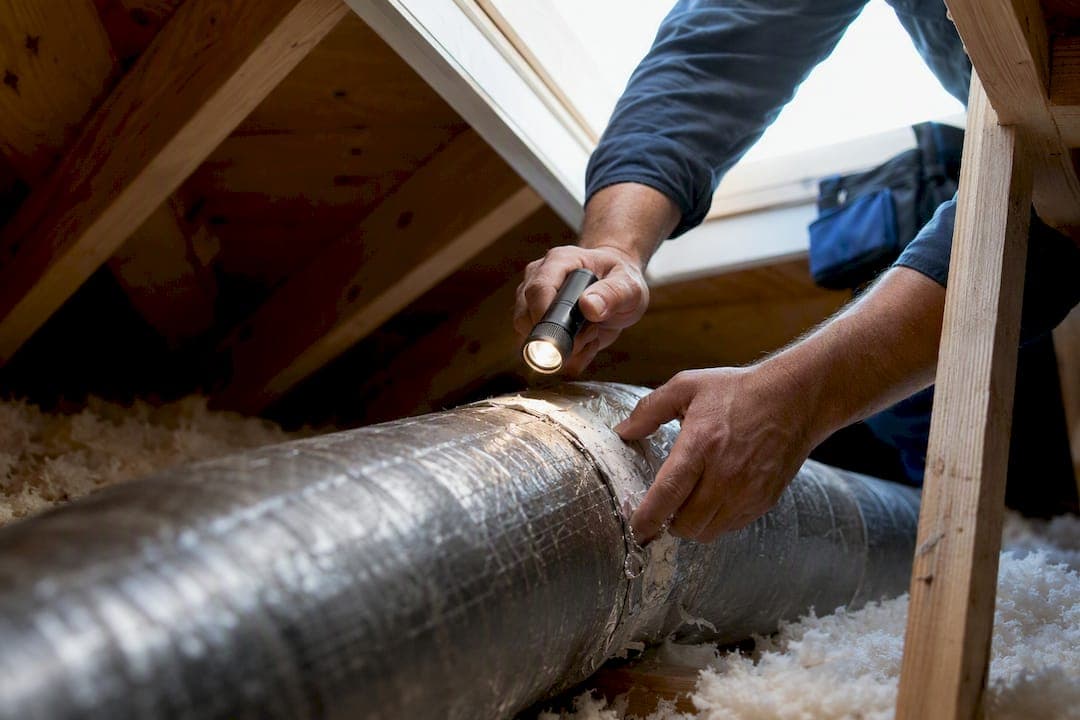
Most sudden spikes tied to your air conditioner or furnace come down to five usual suspects: longer AC runtime, a clogged filter, leaky ducts, low refrigerant, or an aging, undersized system working overtime. Start with a 10-minute check: pull the filter, look at the thermostat schedule, and glance at the outdoor unit for debris or ice. If nothing looks obviously wrong and the bill is still out of line with last year's usage, it's time to schedule a licensed diagnostic instead of guessing.
TL;DR:
- A clogged filter can increase HVAC energy use by approximately 15 percent, and duct leaks can raise costs by up to 20 percent if unsealed.
- System inefficiencies often result from low refrigerant, aging equipment, oversizing, or envelope issues like poor insulation and drafts, quietly raising energy bills.
- Comparing actual kWh usage month-to-month provides a more accurate picture than dollar bills alone, helping distinguish mechanical faults from billing errors.
- Upgrading the building envelope and ductwork before replacing the system can improve efficiency and maximize savings, with sealing and insulation offering the highest return.
- Emergency signs like refrigerant leaks or ice buildup require immediate professional diagnostics, including refrigerant tests and duct leakage assessments, to prevent costly repairs.
Table of Contents
- What's Actually Driving High Energy Bills From Your HVAC System
- Quick Checks You Can Run in the Next 30 Minutes
- When It's Time to Call a Licensed HVAC Pro
- Efficiency Upgrades Worth the Money (and Which to Skip For Now)
- Ruling Out Billing and Meter Errors Before You Spend a Dime
- Does Your Home's Size or Layout Change How Much Your HVAC Costs?
- How Weather and the Season Change What You Pay
- Do Your Habits Matter as Much as Your Equipment?
- A Technician's Take: Treat the Bill Like a Symptom, Not the Problem
- Get a Real Diagnosis Instead of Guessing at the Cause
- Where These Numbers Come From
- Sources
- FAQ
What's Actually Driving High Energy Bills From Your HVAC System
Several mechanical problems push HVAC energy use up quietly, long before anything actually breaks. Each one forces the system to run longer or work harder to deliver the same comfort, and that extra runtime is what shows up on the bill.
- Duct leaks and poor insulation let conditioned air escape before it reaches your rooms. Sealing and insulating can cut heating and cooling costs by up to 20%, which tells you how much a leaky system is losing right now.
- Low refrigerant or a strained compressor reduces cooling capacity, so the unit runs longer to hit the same temperature and pulls more power doing it.
- Oversized or aging equipment short-cycles, turning on and off in quick bursts that waste energy without ever reaching peak efficiency.
- Envelope problems — thin attic insulation, drafty windows, gaps around doors — force the HVAC system to fight a losing battle against outside air, amplifying every one of the issues above.
None of these show up as a single dramatic failure. They stack quietly, which is exactly why the bill jumps before anyone notices a mechanical symptom.
Quick Checks You Can Run in the Next 30 Minutes
Work through these in order. Several will either solve the problem outright or hand a technician exactly what they need to diagnose it fast.
- Pull two bills and compare kWh, not dollars. Look at this month against the same month last year. Rate changes and billing days skew dollar amounts, but kWh usage tells you if you're actually running the system more.
- Check the filter. If it's gray, matted, or you can't see light through it, replace it. This is the single most common fixable cause of inflated bills.
- Walk out to the outdoor unit. Look for leaves, grass clippings, or debris packed against the coils, bent fins, or ice buildup, and listen for grinding or buzzing from the fan motor.
- Review the thermostat. Confirm the schedule matches your actual routine and that it isn't mounted near a heat source or direct sunlight, which throws off readings and causes short-cycling.
- Inspect visible ducts and vents. Look for disconnected joints, heavy dust rings around return grilles, and registers someone closed to "save energy" (they usually do the opposite by unbalancing airflow).
- Write down anything odd — a noise, a smell, a room that never gets comfortable — so you have specifics ready if you call a contractor.
Pro Tip: Keep a simple log for a week: outdoor temperature, thermostat setting, and how often you hear the system cycle on. That pattern is often more useful to a technician than the bill itself.
When It's Time to Call a Licensed HVAC Pro
Some symptoms are past the DIY stage. Call a contractor if you notice a sharp kWh jump with no matching weather change, a hissing sound near the indoor or outdoor unit (a possible refrigerant leak), visible ice on the coils, or a system that short-cycles no matter what you do to the thermostat.
When you book the visit, ask for specific diagnostics rather than a vague "tune-up":
- A Manual J load calculation to confirm the system is even sized correctly for your home.
- A refrigerant pressure test to catch slow leaks before they cause a full compressor failure.
- A duct leakage test to quantify how much conditioned air you're actually losing.
- An airflow or static pressure reading to check whether the blower is fighting resistance somewhere in the system.
Technicians increasingly treat a high bill itself as a diagnostic clue. Hidden faults like a slow refrigerant leak or a separated duct joint can raise electricity draw by 15% to 25% well before the equipment fails outright. Catching that early usually means a repair measured in a few hundred dollars. Waiting until the system fails often means a full replacement instead, and improper installation on that replacement can erase up to 30% of the efficiency you paid for if it isn't sized and installed correctly.
Efficiency Upgrades Worth the Money (and Which to Skip For Now)
Fix the building first, then the equipment. Sealing ducts and adding insulation before replacing your system means the new unit isn't compensating for leaks you could have closed for far less money, a sequence energy efficiency guidance backs consistently.
- Seal and insulate the envelope and ducts first. This step alone can cut heating and cooling costs by up to 20%, and it makes every upgrade after it more effective.
- Repair and balance ductwork. Reconnecting loose joints and sealing seams recovers conditioned air that's currently escaping into your attic or crawl space, detailed further in why ductwork matters for HVAC efficiency.
- Upgrade to a higher-SEER2 air conditioner or heat pump, but only after the envelope is sealed. A more efficient unit installed on a leaky, oversized ductwork run won't deliver its rated savings.
- Add a smart or programmable thermostat. Used correctly, this can save about $180 a year, a meaningful chunk of the typical household energy bill.
- Combine weatherization with correctly sized equipment. That pairing consistently outperforms either fix done alone.
For a broader breakdown of which upgrades pay for themselves fastest, see HVAC energy efficiency upgrades that pay you back. Older homes often see compounding gains from simple envelope work like replacing worn interior doors, which reduces the air leakage HVAC systems are constantly fighting against.
Ruling Out Billing and Meter Errors Before You Spend a Dime
Before assuming your equipment is the problem, rule out the utility side. A bill can spike for reasons that have nothing to do with your HVAC system at all.
- Compare kWh, not the dollar total. Air conditioning is the largest electrical load in most homes during summer, but rate hikes and extra billing days inflate the dollar figure even when actual usage hasn't changed.
- Check for estimated reads. Utilities sometimes estimate a meter reading instead of taking an actual one, and that estimate can run high.
- Look for extra billed days or misapplied seasonal tiers. A billing period stretched a few extra days, or a summer demand charge applied incorrectly, skews the total without any change in your actual behavior.
- Request interval data from your utility. Most providers can show hourly or daily usage, which quickly shows whether the spike lines up with a heat wave or with something mechanical.
Collect two comparable billing periods with their kWh values before you dispute anything or call a contractor. That comparison is the fastest way to tell a billing hiccup from a real system fault.
Does Your Home's Size or Layout Change How Much Your HVAC Costs?
Square footage sets the baseline, but layout often matters more than raw size. A single-story, open-concept home with one central return usually cools and heats more evenly than a multi-story house with the same square footage split across separate zones.
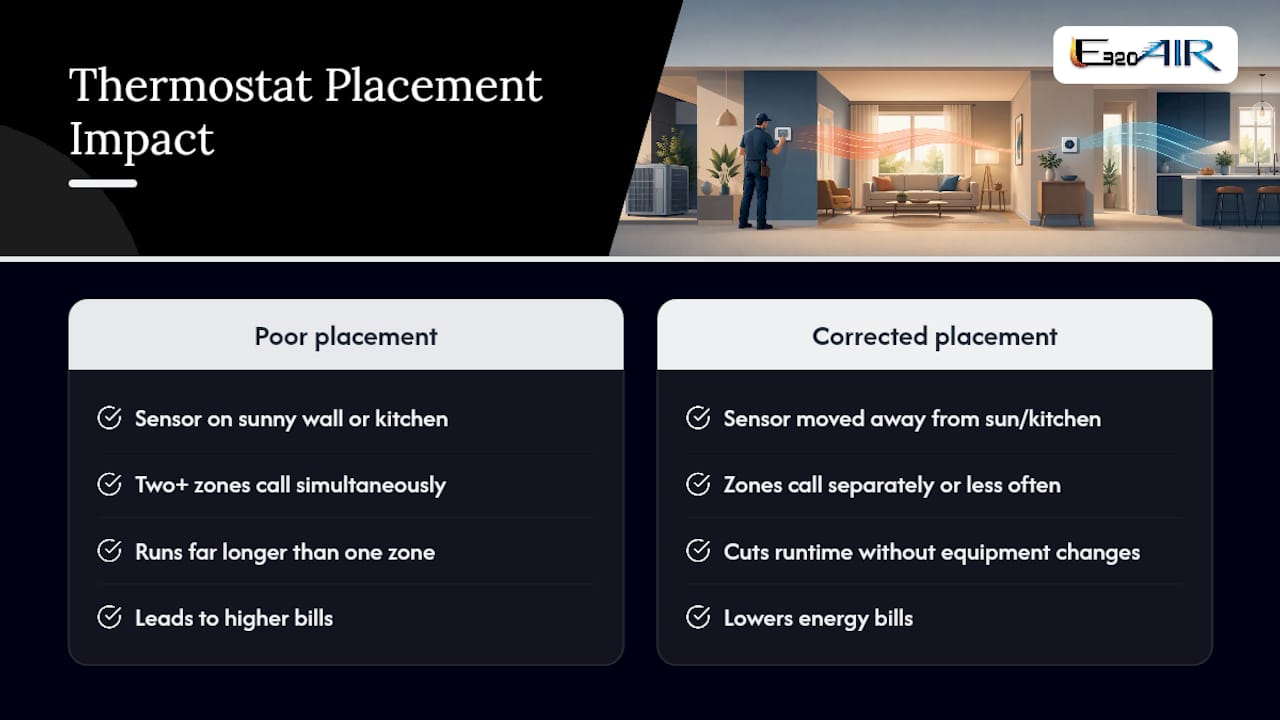
Multi-zone and multi-thermostat homes have a specific failure mode: simultaneous-zone overrun. That's when two or more zones call for conditioning at the same time and the system runs far longer than any single zone actually needs, often because of poor thermostat placement rather than a mechanical fault. Correcting the zoning setup or moving a sensor away from a sunny wall or a kitchen can cut runtime without touching the equipment at all.
Layout also affects duct length and complexity. A sprawling ranch with ductwork stretched across a long attic run loses more conditioned air to leakage than a compact two-story with short duct runs. That's part of why the same square footage can produce very different bills between two houses. Rooms far from the main unit, bonus rooms over garages, and finished attics all tend to run hotter or colder than the rest of the house, which pushes occupants to overcorrect at the thermostat and drives runtime up further.
If you've added square footage, converted a garage, or finished an attic without adjusting your HVAC sizing, that's often the real reason your bill crept up. The system is still sized for the house you had before.
How Weather and the Season Change What You Pay
Summer and winter don't just add running time. They compound every other issue on this list. A leaky duct that's a minor loss in mild spring weather becomes a major one in a July heat wave, because the system is running far more hours to fight the same leak.
Regional climate sets your baseline exposure. Homes in hot, humid climates run AC nearly continuously for months, while homes in mixed climates see two distinct spikes, one for summer cooling and one for winter heating. Either way, the months right after a season change are when hidden mechanical problems tend to surface on the bill first, because that's when runtime jumps from occasional to near-constant.
Setpoint choice interacts directly with the weather. Running a system at 70 to 72 degrees costs 12% to 22% more than running the same equipment at 76 degrees, and that gap widens further on the hottest or coldest days of the year, when the system is already working at its limit. A one or two degree adjustment during a heat wave can matter more than it would in mild weather, simply because the system has less headroom to spare.
Do Your Habits Matter as Much as Your Equipment?
Yes, and often more than homeowners expect. Two identical houses with identical HVAC systems can post very different bills purely based on how the occupants use the thermostat and the space.
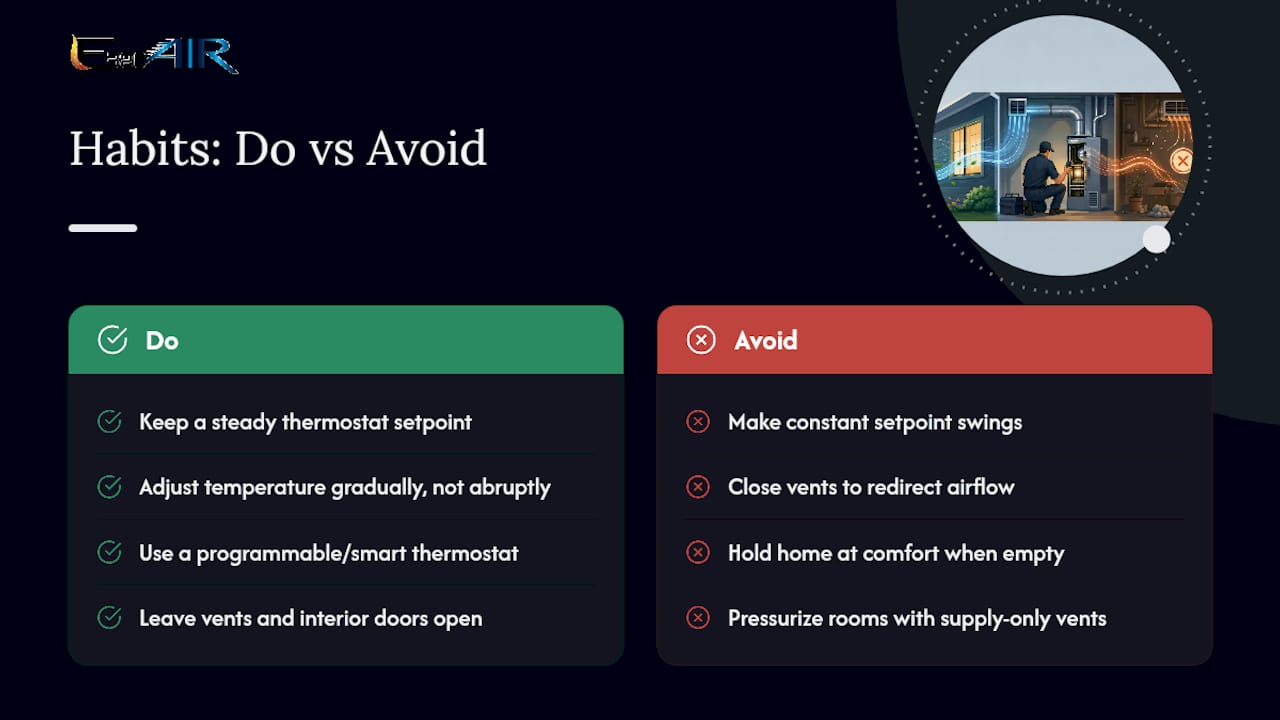
Constant setpoint changes are one of the biggest habit-driven costs. Cranking the thermostat down five degrees to cool a room faster doesn't actually speed up the process. It just means the system runs longer than it needed to, then overshoots the target. A steady setpoint, adjusted gradually, uses less energy than the same average temperature achieved through constant swings.
Closing vents to "direct" airflow toward favorite rooms is another common habit that backfires. It raises static pressure in the ductwork, which forces the blower to work harder and can shorten the life of the equipment. Leaving interior doors closed in rooms with a supply vent but no return does something similar: it pressurizes that room and starves airflow elsewhere in the house.
Occupancy patterns matter too. A home that's empty most weekdays but held at a tight comfort setpoint the entire time is paying for conditioning nobody's using. A programmable or smart thermostat that adjusts automatically for an empty house, without anyone remembering to do it manually, is usually where that $180 a year in savings actually comes from.
A Technician's Take: Treat the Bill Like a Symptom, Not the Problem
The checklist I use on a service call rarely starts with the thermostat. It starts with the filter, then airflow, then refrigerant charge, then ducts, and only then a Manual J calculation if replacement is on the table. That order matters because fixing a $15 filter before diagnosing refrigerant saves a homeowner an unnecessary diagnostic fee.
A high bill is data, not just an annoyance. Ignoring it because the system "still works" is how a small refrigerant leak turns into a compressor replacement. Always get findings and a written estimate before authorizing repair work, and be skeptical of anyone who wants to replace a unit without running the numbers first.
— Edward
Get a Real Diagnosis Instead of Guessing at the Cause
We fix the specific mechanical issues driving your bill, not just symptoms. Our technicians run diagnostics including refrigerant checks, duct leakage testing, and Manual J load calculations, so you get a written finding instead of a guess.
Before your visit, pull two comparable bills, note when the spike started, and write down any noises or comfort complaints you've noticed. That's enough for a technician to start narrowing the cause on arrival. We handle everything from duct sealing and repairs to full HVAC installation when replacement genuinely makes more sense than repair, with flexible payment options including financing and service available around the clock, including weekends and holidays. If you're dealing with heating-specific issues, heater repair is available on the same terms. Start with a diagnostic visit and get a clear answer before spending another month guessing.
Where These Numbers Come From
- ENERGY STAR heating and cooling guide — thermostat savings and installation quality standards.
- HUD USER insulation and air sealing guidance — envelope and duct sealing savings estimates.
- EPA / ENERGY STAR resources — average household energy spending and rebate programs.
Sources
- A Guide to Energy-Efficient Heating and Cooling | ENERGY STAR
- Insulation and air sealing guidance | HUD USER
- EPA / ENERGY STAR resources
FAQ
Why is my HVAC using so much electricity?
The most common causes are a clogged filter, duct leaks, low refrigerant, or an aging system that's short-cycling. A clogged filter alone can raise energy use by about 15%.
What is the $5,000 rule for HVAC?
It's a rule of thumb some contractors use to decide between repair and replacement: multiply the age of the unit by the estimated repair cost, and if the total exceeds a certain high cost threshold, replacement is usually the better financial call. It's a guideline, not a formal standard, so weigh it alongside a Manual J assessment before deciding.
Why is my electric bill suddenly so high?
Rule out billing errors first by comparing kWh (not dollars) to the same month last year, then check your filter, thermostat schedule, and outdoor unit for the mechanical causes covered above. If usage genuinely jumped and the basics check out fine, a licensed diagnostic covering refrigerant and duct leakage is the next step.
How much does it cost to run an AC for 12 hours a day?
It depends heavily on your unit's efficiency, local electricity rates, and outdoor temperature, so there's no single figure that applies everywhere. Comparing your own kWh usage across similar months is a more reliable way to judge whether your specific runtime is normal for your home.
How much can sealing ducts and adding insulation actually save?
Up to 20% on heating and cooling costs, since duct leakage commonly wastes a significant share of conditioned air before it reaches your rooms.