
Start with a home energy assessment, then seal your ducts and building envelope before you spend a dollar on new equipment. That sequence, not a shiny new heat pump, is what actually determines whether your upgrades pay off. Replace equipment only when the assessment justifies it. The U.S. Department of Energy and ENERGY STAR both back this order, and the IRS energy efficient home improvement credit rewards it directly by covering audits and qualifying upgrades alike.
Your next move: schedule an energy audit and ask for a Manual J load calculation along with an itemized bid before any equipment gets ordered.
While you wait on that appointment, a few things cost nothing and help immediately:
- Change or clean your air filter if it's been more than 90 days.
- Program your thermostat for setback hours when nobody's home.
- Pull the last 12 months of energy bills so you have a real baseline.
- Note any rooms that run hot, cold, or humid. Contractors will want that detail.
Key Takeaways
The upgrades that save the most money follow a strict order: assessment first, envelope and ducts second, equipment last, because skipping ahead wastes money on hardware the distribution system can't support.
| Point | Details |
|---|---|
| Start with assessment, not equipment | A home energy audit and Manual J calculation should come before any purchase decision. |
| Ducts often matter more than the unit | Sealing leaky ducts can improve efficiency by up to about 20%, sometimes more than a new unit alone. |
| Incentives change the payback math | The federal credit covers 30% of costs up to $2,000 for heat pumps, often shrinking payback to 3 to 5 years. |
| Documentation protects your rebate | Always secure the AHRI number and Manufacturer's Certification Statement before installation. |
| E320air covers the full sequence | E320air provides assessments, Manual J calculations, duct sealing, and installation with rebate documentation included. |
Where to Verify These Numbers Yourself
- IRS: federal tax credit rules and caps.
- ENERGY STAR: qualifying equipment and rating standards.
- Energy: audit guidance and upgrade sequencing.
- HVACDatabase: local rebate lookups and stacking rules.
Table of Contents
- Why HVAC Energy Efficiency Upgrades Actually Pay Off
- Which HVAC Upgrades Give You the Biggest Return?
- What Happens During a Professional Energy Assessment?
- How Do You Claim Tax Credits and Utility Rebates?
- What Do HVAC Upgrades Actually Cost, and When Do They Pay Back?
- What Installation Mistakes Ruin Efficient Equipment?
- Your Six-Step Starter Plan for This Month
- How E320air Helps You Capture These Savings
- Sources
Why HVAC Energy Efficiency Upgrades Actually Pay Off
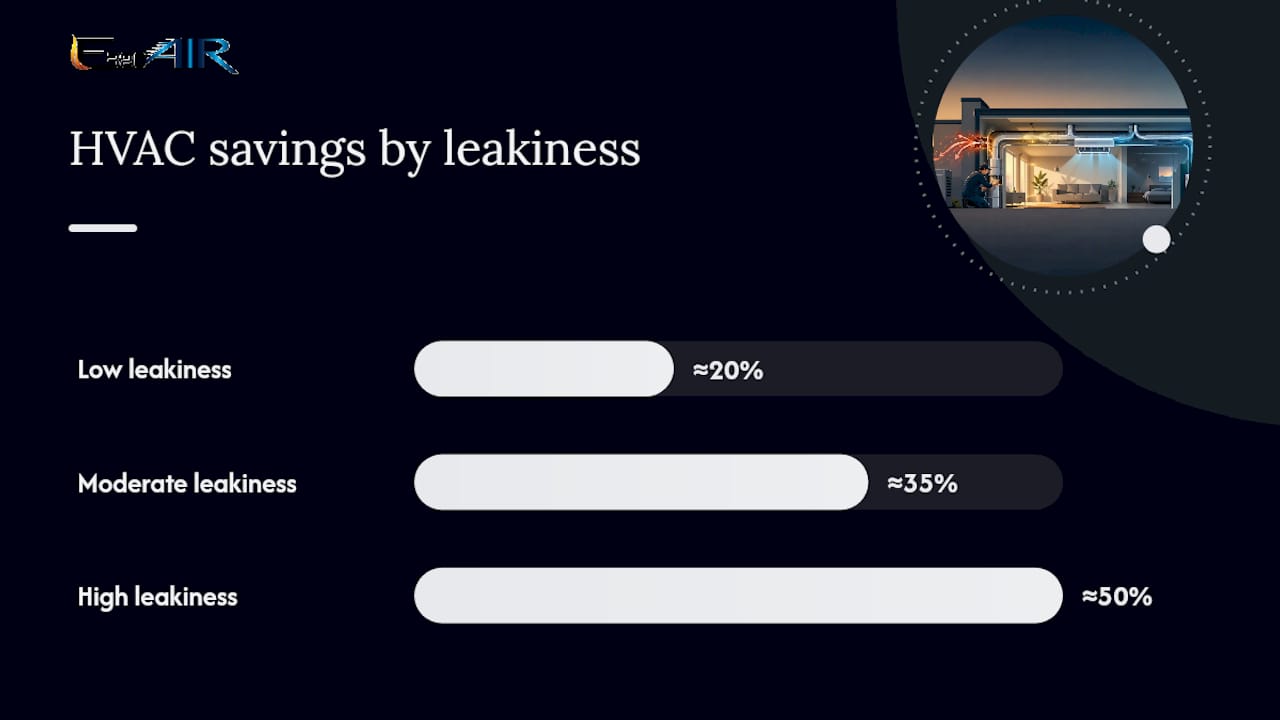
Combining equipment upgrades with duct sealing and weatherization can cut heating and cooling energy use by roughly 20% to 50%, depending on how leaky your ducts and envelope were to start. That's a wide range, and the size of your savings mostly comes down to how bad your starting point is. A home with a tight envelope and clean ducts might see modest single-digit gains from a new furnace.
The comfort payoff is just as real as the dollar savings. Sealed ducts and correctly sized equipment hold indoor humidity steadier, which means fewer clammy summer afternoons and less condensation fogging up windows in winter. Efficiency ratings matter here too: SEER2 and HSPF2 govern cooling and heat pump heating performance, while AFUE measures furnace efficiency. All three ratings also determine whether your equipment qualifies for rebates, so a contractor quoting you equipment without mentioning these numbers is skipping a step you shouldn't let slide.
Which HVAC Upgrades Give You the Biggest Return?
Rank these by impact and cost-effectiveness, not by what feels most exciting to install.
- Air sealing and insulation. Cheapest per-dollar impact of any measure on this list. Sets the ceiling for how much every later upgrade can save.
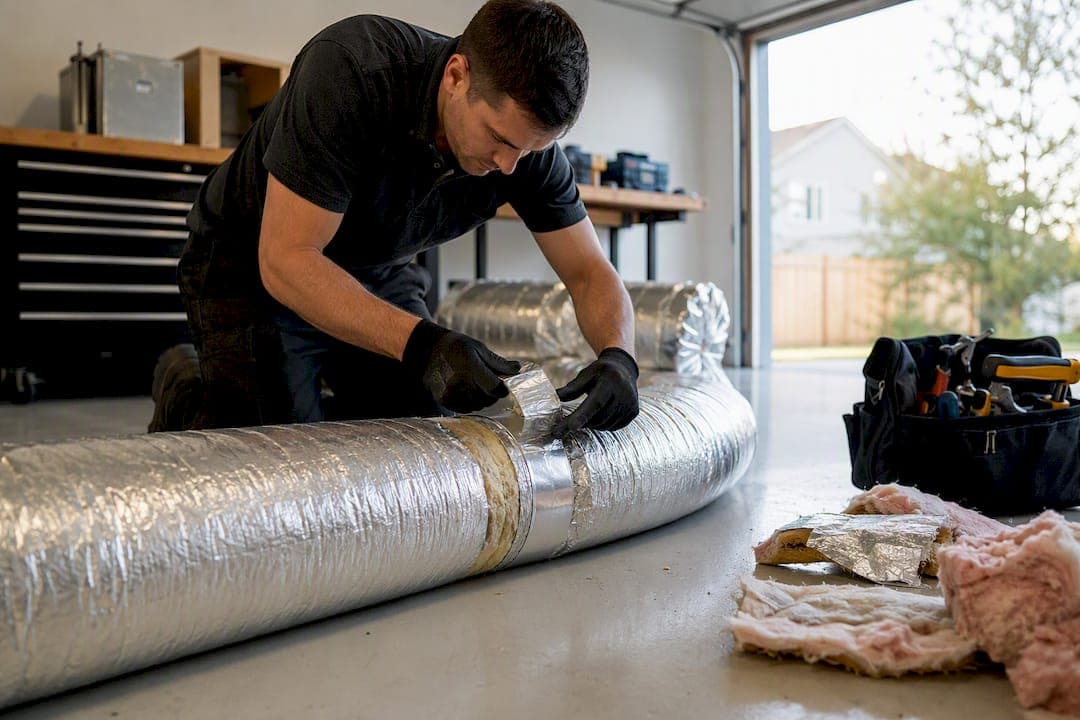
- Duct sealing and repair. Can improve heating and cooling efficiency by as much as 20 percent on its own. Costs typically run several thousand dollars depending on how much ductwork needs access or replacement.
- Professional tune-ups. A few hundred dollars a year keeps existing equipment running at its rated efficiency instead of quietly losing 5 to 10 percent to dirty coils and low refrigerant.
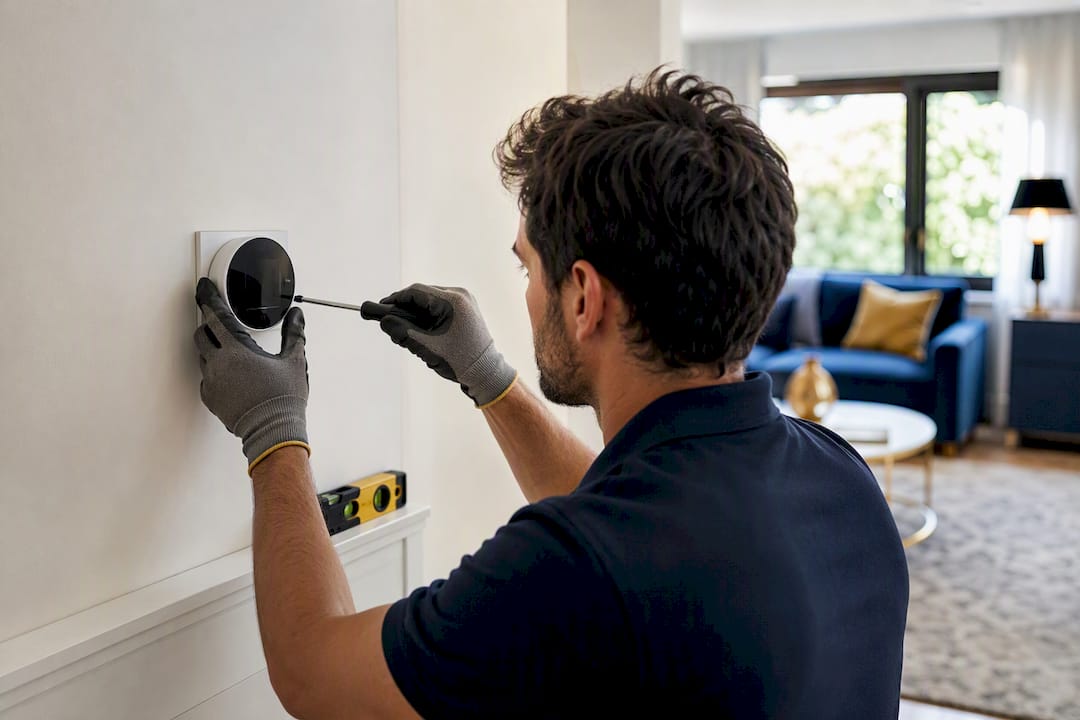
- Smart thermostats. Modest upfront cost, and the savings compound with proper setback scheduling. See our guide to thermostat efficiency for real-world setback strategy.
- High-AFUE furnace replacement. Worthwhile when your existing furnace is well past 15 years old or already showing AFUE well below 90%.
Pro Tip: A high-SEER2 unit bolted onto leaky, undersized ducts will underperform its rating every single month. Fix the distribution system first, or you're paying for efficiency you'll never actually collect.
What Happens During a Professional Energy Assessment?
A real assessment starts with your billing history, not a sales pitch. A contractor worth hiring wants 12 months of utility data before touching your system, because that baseline is what proves savings later.
From there, Manual J load calculation takes over. This industry-standard method typically takes 45 minutes to two hours and factors in square footage, ceiling height, insulation R-values, window orientation, and infiltration rates. Skip it, and you risk the oversizing problem that plagues a huge share of older American systems, oversized equipment short-cycles, struggles with humidity, and costs more upfront than a correctly sized unit would.
A thorough contractor will also check:
- Duct leakage with an actual pressure test, not a visual guess.
- Static pressure and return-air capacity.
- Electrical service capacity, especially relevant for heat pump conversions.
- Documentation: a Manufacturer's Certification Statement and AHRI number for any proposed equipment.
Request an itemized bid that separates line sets, condensate work, panel upgrades, and ductwork into their own line items. If a contractor won't break it down, that's information too. Our breakdown of Manual J versus Manual S covers how sizing flows into equipment selection.
How Do You Claim Tax Credits and Utility Rebates?
The federal Energy Efficient Home Improvement Credit covers 30% of qualifying costs, capped at a certain amount per year for general improvements and a higher limit per year specifically for heat pumps and qualifying heat-pump water heaters. Home energy audits qualify separately for a credit up to a modest capped amount. The program runs through December 31, 2032, so there's no rush, but earlier action means earlier savings.
Getting the paperwork right matters as much as picking the right equipment. Ask your contractor for the Manufacturer's Certification Statement and the AHRI number before you sign anything, and keep the itemized invoice. Missing documentation is the single most common reason rebate and credit claims get rejected.
To stack incentives:
- Look up your local utility rebate program by ZIP code before finalizing equipment choice.
- Confirm stacking rules, some utility rebates reduce dollar-for-dollar against federal credits, others don't.
- Compare financing paths: on-bill utility financing, a home equity line, or contractor-arranged financing.
- Document your existing bills and request pre-approval where the rebate program requires it.
What Do HVAC Upgrades Actually Cost, and When Do They Pay Back?
Duct sealing paired with a professional tune-up can cost a few thousand dollars and may pay back within a few years through reduced runtime alone. A heat pump replacement, after stacking the federal credit with a utility rebate, frequently lands in that same 3 to 5 year payback window despite the higher sticker price.
If your system is over 10 years old, repair costs exceed half of replacement cost, or it still runs on R-22 refrigerant, replacement usually wins the math once incentives are factored in. Well-installed systems typically last 15 to 20 years, so budget accordingly.
What Installation Mistakes Ruin Efficient Equipment?
Industry specialists consistently point to installation quality as the biggest gap between rated efficiency and real-world performance. The recurring failures: oversizing equipment instead of running Manual J, ignoring duct leakage entirely, mismatching indoor and outdoor components, and skipping pressure tests on refrigerant line sets.
Before you sign a contract, ask for:
- A completed Manual J calculation, not a rule-of-thumb estimate.
- The AHRI number and Manufacturer's Certification Statement for proposed equipment.
- NATE certification or the equivalent local HVAC license, plus proof of insurance.
- A sample itemized bid from a past job.
Red flags include vague line items, refusal to duct-test, and reluctance to hand over AHRI paperwork. After installation, track your bills for a full year and adjust for degree-days so you're comparing weather-normalized usage, not just raw numbers.
Your Six-Step Starter Plan for This Month
- Pull 12 months of energy bills and note your degree-day baseline.
- Schedule a home energy assessment.
- Prioritize envelope and duct fixes before equipment.
- Collect 2 to 3 itemized bids, each including Manual J.
- Confirm rebate and tax-credit eligibility with each contractor.
- Schedule installation for a shoulder season (spring or fall) to avoid peak pricing.
Expect 30 to 90 days from first call to finished install, depending on scope. E320air supports every step of this from audit through installation.
Why we recommend this sequence
Every job we've handled where equipment went in before the ducts got fixed ended with a customer wondering why their new system didn't save what the brochure promised. Envelope and distribution first isn't caution, it's just what the physics demands.
How E320air Helps You Capture These Savings
E320air runs the exact sequence this article recommends: home energy assessments, Manual J calculations, duct sealing, and full installations, so you don't have to coordinate separate contractors for each step.

Our team handles:
- Home energy assessments with baseline utility review
- Manual J load calculations and duct leakage testing
- Duct sealing, insulation coordination, and full system replacements
- Documentation for tax credits and utility rebates, including AHRI numbers and Manufacturer's Certification Statements
If your system is aging, your bills keep climbing, or you just want a straight answer on what upgrade actually pays off first, request an itemized bid through our HVAC installation page and we'll walk the priority order with you before recommending any equipment.
Sources
- Frequently asked questions about energy efficient home improvements and residential clean energy property credits – Energy Efficient Home Improvement Credit - Qualifying expenditures and credit amount | Internal Revenue Service
- Heat & Cool Efficiently | ENERGY STAR
- 2025 HVAC Rebates & Tax Credits: Save Up to $2,000 | HVACDatabase