
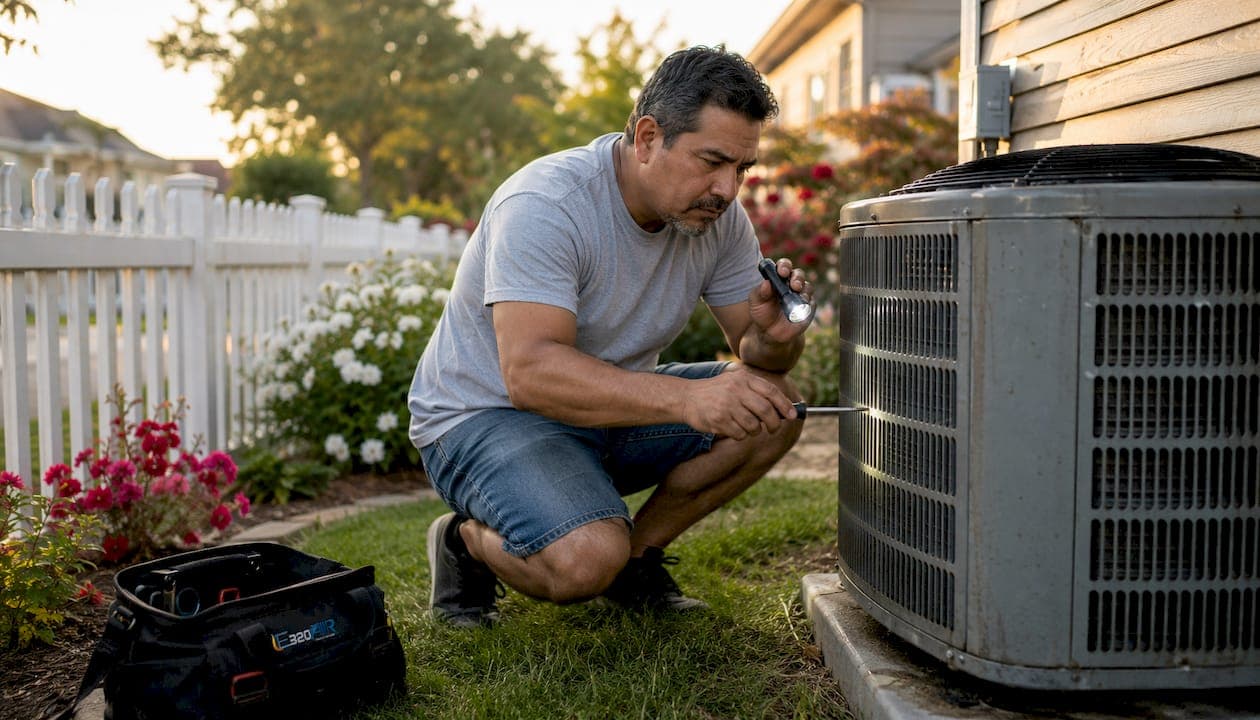
TL;DR:
- Your air conditioner communicates issues through various sounds, from buzzing to hissing, indicating electrical faults, refrigerant leaks, or worn parts.
- Early diagnosis and safe DIY checks can prevent costly repairs, but persistent or severe noises require professional intervention.
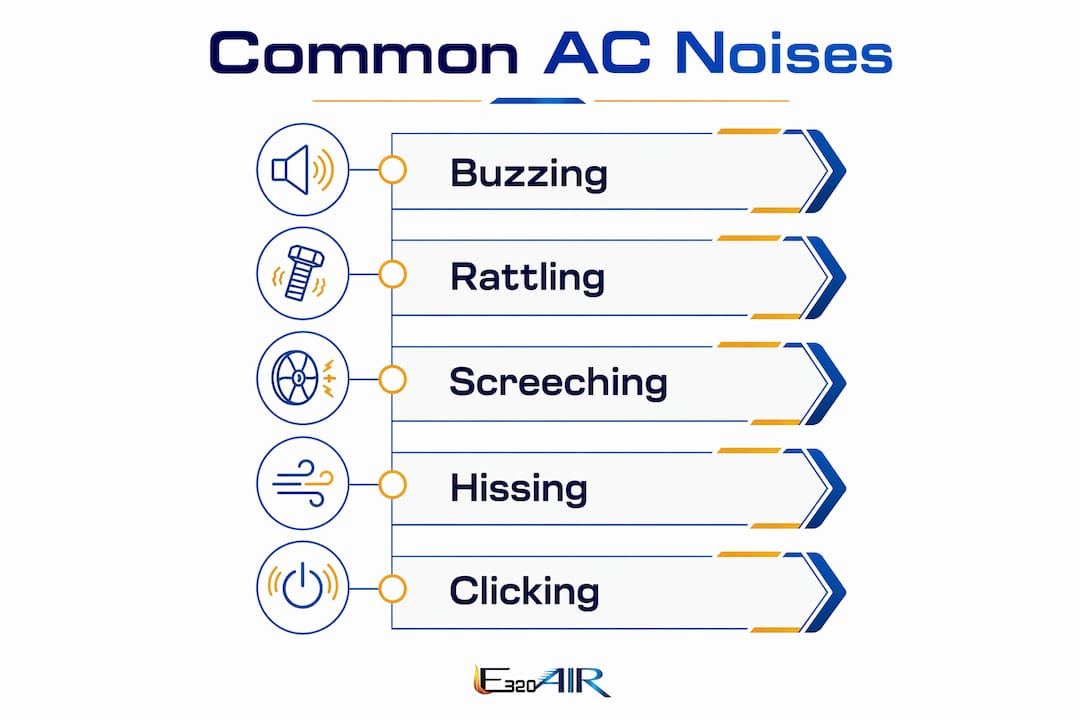
Your AC is telling you something every time it makes an unusual sound. The key is knowing which sounds are normal and which ones mean trouble. Buzzing points to electrical faults. Rattling usually means loose parts or debris. Screeching signals worn motor bearings. Hissing often means refrigerant is escaping. Clicking at startup is typically normal, but rapid or continuous clicking is not.
Here is a quick reference for the most common sounds:
- Buzzing or humming: Failing capacitor, loose wiring, or faulty contactor relay
- Rattling or clanking: Loose screws, debris inside the fan cage, shipping bolts left in, or failed compressor mounts
- Screeching or squealing: Fan motor bearing wear, fan blade contacting the housing
- Hissing or bubbling: Refrigerant leak at copper tubing joints or indoor coil; bubbling in the refrigerant line
- Clicking: Normal relay sound at startup and shutdown; rapid or continuous clicking signals control failure
- Grinding: Worn motor or compressor bearings requiring immediate professional service
Location matters too. A noise from the outdoor condenser unit often points to compressor, fan motor, or debris issues. A noise from the indoor air handler usually involves the blower fan, filter, or refrigerant lines running through the unit.
What each AC noise is actually telling you
Understanding the cause behind each sound is what separates a quick fix from an expensive repair. Some noises are harmless. Others, left alone, will destroy a compressor.
Buzzing
A low, continuous buzz from the outdoor unit almost always points to an electrical problem. Common culprits include a failing capacitor or contactor, loose wiring terminals, or a panel vibrating at the compressor's frequency. As compressor motor windings degrade over time, the hum grows louder and more persistent. Tightening visible screws on the outer casing sometimes resolves a panel vibration buzz, but if the sound is coming from the electrical box itself, stop there.
Pro Tip: If your lights flicker when the AC kicks on, that's a related electrical symptom worth investigating. A flickering lights connection to your AC often points to a weak capacitor or overloaded circuit.
Rattling and clanking
Rattling is the easiest noise to diagnose and often the easiest to fix. Loose screws, leftover shipping bolts, or debris vibrating inside the fan cage are the most frequent causes. A subtle bend in the refrigerant tubing can also cause a rattle if the line sits too close to the unit's frame. Clanking is a different story. When the compressor motor mounts fail, the motor shifts inside the sealed housing and produces a distinct metallic clank that no amount of screw-tightening will fix.
Screeching and squealing
A high-pitched screech during operation usually means the fan motor bearings are worn. Some compressors emit a brief squeal at startup as a normal characteristic, but that sound should disappear within seconds and should have been present since the unit was new. A squeal that develops over time, or one that persists while the unit runs, means something is wearing out. If the fan contacts the housing, the noise becomes a loud, rhythmic hitting sound rather than a squeal. That requires service.
Hissing and bubbling
A hissing sound with weaker cooling is a refrigerant leak until proven otherwise. The leak typically occurs at copper tubing joints, the indoor coil, or the outdoor condenser. Bubbling sounds in the refrigerant line indicate refrigerant gas traveling through liquid refrigerant, which happens when the system runs low. A clogged condensate drain line can also produce a bubbling sound, but that is far less urgent than a refrigerant leak. Running an AC low on refrigerant damages the compressor permanently.
Clicking and vibrating
A single click when the AC starts and another when it stops are normal relay sounds. The contactor relay opens and closes, and that click is simply the sound of it doing its job. Rapid or continuous clicking is different. It suggests the relay is failing, the thermostat is sending erratic signals, or debris has lodged in the fan blades and is getting struck with each rotation. Vibration that shakes the whole unit usually points to an unlevel installation or loose mounting hardware.
Pro Tip: Thermal expansion causes plastic components to snap or pop as temperatures shift inside the unit. This is normal operating behavior and is often mistaken for a mechanical failure. The tell is timing: expansion sounds happen as the unit heats up or cools down, not during steady operation.
Prolonged abnormal noises accelerate wear across the entire system. A dirty filter that causes the blower to strain, for example, can eventually loosen screws in the blower wheel and wear out compressor bearings. Catching a noise early is almost always cheaper than waiting.
How to safely diagnose AC noises yourself
Most homeowners can narrow down the source of an AC noise without touching a single electrical component. The goal is to observe, not disassemble.
Safety first, always:
- Turn off power at the thermostat, then at the disconnect box outside before touching anything on the unit
- Never open the electrical panel or attempt to access refrigerant lines yourself
- If you smell burning, see smoke, or hear sparking, stop immediately and call a professional
Step-by-step inspection process:
-
Check the air filter first. A clogged filter restricts airflow and forces the blower to work harder, producing whistling, humming, or vibrating sounds. Remove the filter, inspect it, and replace or clean it if it is visibly dirty.
-
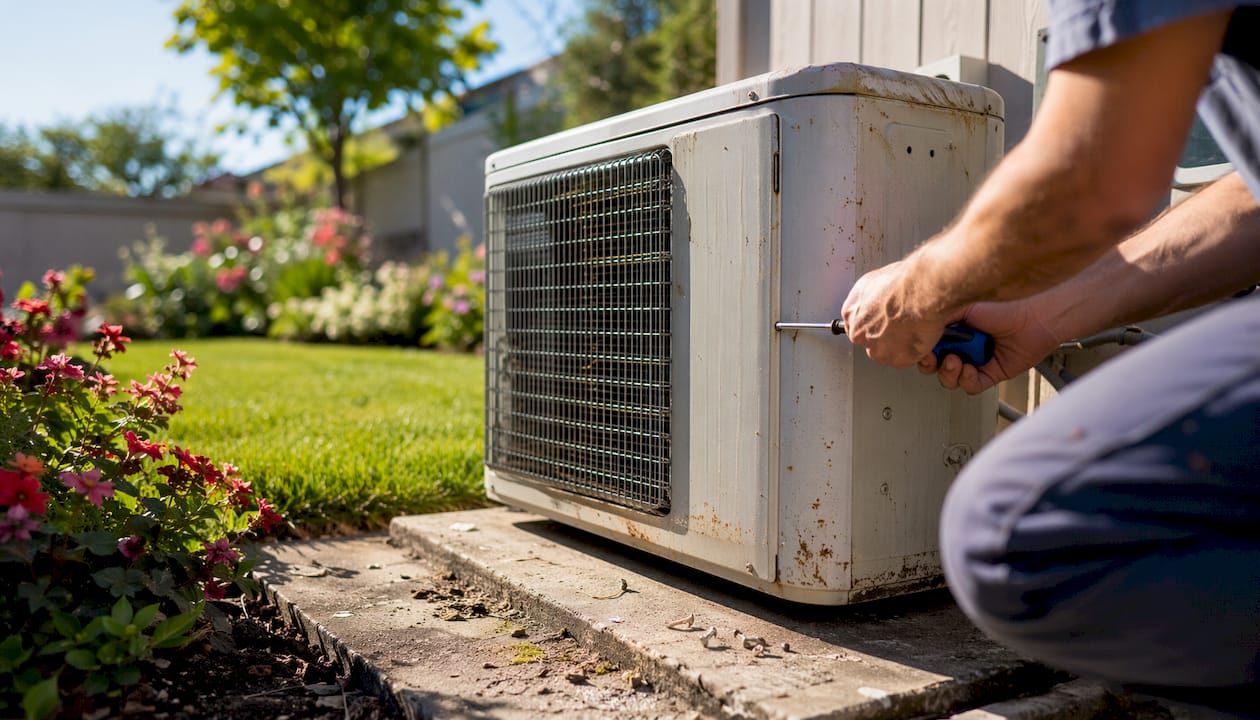
Inspect for loose screws and panels. Use a screwdriver to check every accessible screw on the outdoor unit casing, mounting bracket, and fan cage. Press firmly on indoor unit panels to confirm they are fully seated. A single loose screw can produce a rattle that sounds far worse than it is.
-
Check that the unit is level and stable. A window unit that has shifted in its frame, or an outdoor condenser on an uneven pad, will vibrate during operation. Confirm the unit sits flat and is properly supported.
-
Look for debris in the fan cage. Leaves, twigs, and small stones can fall into the outdoor unit and strike the spinning fan blade, creating a rhythmic clacking. Power off the unit completely, then look through the fan cage for visible obstructions. Clear anything you can reach by hand or with a soft brush.
-
Listen for timing patterns. Noise that appears immediately at startup often comes from loose parts shifting as the compressor engages. Noise that develops after the unit has been running for several minutes tends to relate to thermal expansion or pressure changes in the refrigerant system. That distinction helps narrow the cause before a technician arrives.
-
Reset the unit. Unplug the AC or switch off the breaker for five minutes, then restore power. A reset clears minor control glitches that cause repeated clicking or erratic cycling. For more detailed AC troubleshooting steps, this is often the first thing a technician will try remotely.
Useful tools for this process: a flashlight to inspect the fan cage and interior, a standard screwdriver for panel screws, and a level to check unit stability.
When you need to call a professional HVAC technician
Some noises are beyond what any homeowner should attempt to fix. Knowing where that line is protects both your safety and your equipment.
Call a technician immediately for any of these:
-
Continuous or loud buzzing with power problems. If the unit won't start, keeps shutting off, or the disconnect box feels warm to the touch alongside the buzzing, do not open the electrical box yourself. A failing contactor or capacitor in this state is a fire risk.
-
Grinding or metal-on-metal sounds. Grinding indicates worn motor or compressor bearings. This is irreversible damage in progress. Continuing to run the unit risks seizing the compressor entirely, which turns a repair into a full replacement.
-
Persistent hissing with reduced cooling. A refrigerant leak requires a pressure test, professional brazing to seal the leak, and a proper recharge. Refrigerant handling is federally regulated and cannot be done without EPA Section 608 certification.
-
Rapid or continuous clicking. When clicking does not stop after startup, the relay or control board is likely failing. This is an electrical diagnosis that requires a multimeter and component-level knowledge.
-
Fan striking internal parts or damaged blades. A fan blade that contacts the housing or is visibly bent creates both a noise problem and a safety hazard. Bent blades cause vibration that accelerates bearing wear throughout the motor.
-
Burning smell, smoke, or sparking. These are electrical emergencies. Turn the unit off at the breaker and do not restart it.
Pro Tip: Keep a note of when the noise started, what it sounds like, and whether it happens at startup, during operation, or at shutdown. That information cuts diagnostic time significantly when a technician arrives. You can also review common AC breakdown causes to understand what might be developing before the visit.
Professional servicing also catches problems that produce no noise at all until they fail catastrophically. Annual maintenance from a certified HVAC technician covers refrigerant levels, electrical connections, bearing lubrication, and coil cleaning, all of which prevent the noises described in this guide from developing in the first place.
If your AC is making a noise you cannot identify or one that persists after basic checks, the E320air team is ready to diagnose it. Schedule a service visit with a certified HVAC technician who can pinpoint the problem and fix it before it becomes a costly failure. E320air handles repairs, maintenance, and full system installations for residential and commercial properties.

Key Takeaways
Diagnosing AC noise correctly requires matching the sound type to its cause, acting on safe DIY checks first, and calling a professional before electrical or refrigerant problems escalate.
| Point | Details |
|---|---|
| Match sound to cause | Buzzing signals electrical faults; rattling means loose parts or debris; hissing indicates a refrigerant leak. |
| Safety before inspection | Always cut power at the thermostat and disconnect box before touching any part of the unit. |
| Start with simple checks | Inspect the air filter, tighten screws, check unit level, and clear debris before assuming a major fault. |
| Know when to stop | Grinding, persistent hissing with weak cooling, and burning smells all require a certified technician immediately. |
| Timing reveals the cause | Startup noises often mean loose parts; noises that develop after running suggest thermal or pressure issues. |
The noise you ignore is the repair you pay for later
There is a pattern E320air technicians see repeatedly: a homeowner notices a new sound, assumes it is nothing, and calls six weeks later when the unit stops cooling entirely. By that point, what started as a failing capacitor or a refrigerant leak has taken out the compressor.
The sounds an AC makes are not random. They are the system communicating a specific mechanical or electrical condition, and most of those conditions are cheap to fix early and expensive to fix late. A buzzing contactor costs a fraction of a compressor replacement. A refrigerant leak caught before the system runs dry saves the compressor from permanent damage.
What I find most homeowners underestimate is how useful their own observation is. You do not need technical training to notice that a noise started three days ago, gets louder after the unit has been running for twenty minutes, and comes from the outdoor unit rather than the indoor one. That information, handed to a technician, cuts diagnostic time in half and often leads directly to the right repair on the first visit.
The one thing I would push back on is the instinct to reset and ignore. A reset that silences a clicking relay for a day or two does not fix the relay. It just delays the diagnosis. If a noise comes back after a reset, treat that as confirmation that something needs attention, not as a reason to reset again.
Trust the sounds. Act on them early. The AC that gets attention at the first sign of trouble is the one that runs reliably for fifteen years.