
TL;DR:
- Only heat pumps can heat a room using an air conditioner because they reverse the refrigerant cycle to extract heat from outdoor air. Standard cooling-only AC units cannot provide heat unless equipped with resistance heating elements, which are less efficient and more costly. Proper system sizing, climate considerations, and maintaining the equipment are essential for effective AC-based heating solutions.
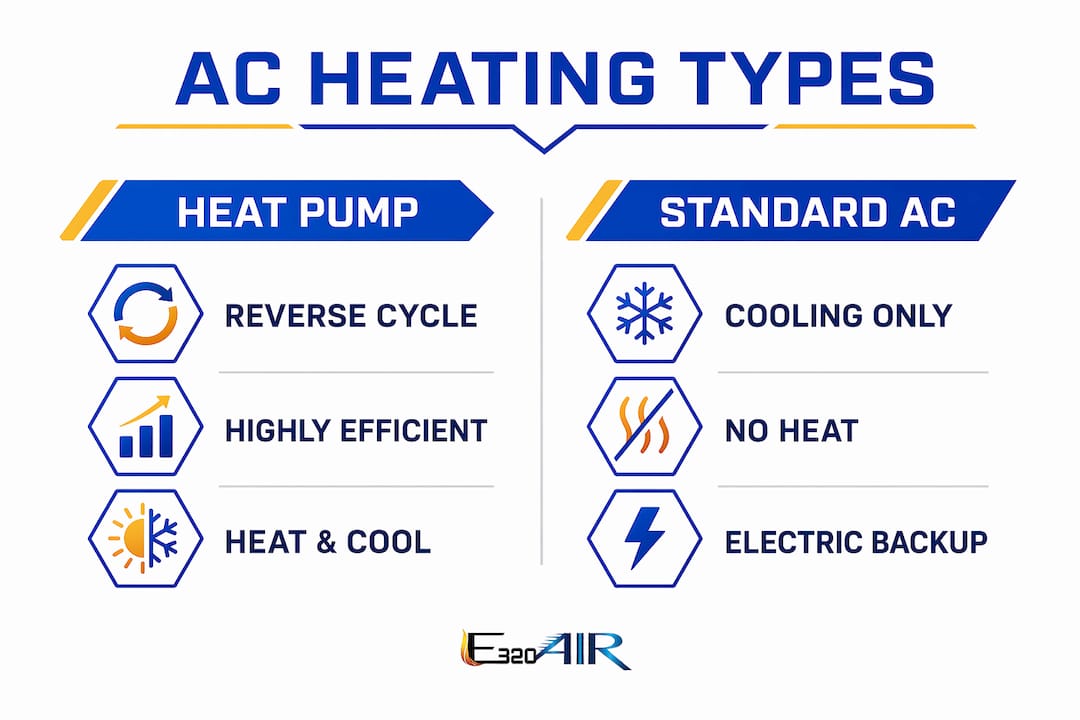
An air conditioner can heat a room only if it is a heat pump or reverse-cycle unit designed for heating. Standard cooling-only AC systems cannot switch to heating mode and require separate heating equipment entirely. Whether your system can warm your home depends on the hardware inside the unit, not the thermostat setting. This guide breaks down exactly how heating-capable AC systems work, what limits them, and what your options are if your current unit only cools.
Can AC heat a room, and how does that work?
The short answer is yes, but only with the right system. The industry term for an AC that heats is a heat pump, also called a reverse-cycle air conditioner. A standard AC cannot heat because it lacks the reversing valve and control logic that allow a heat pump to switch between cooling and heating modes.
Here is what actually happens inside a heat pump when you switch to heat mode:
- The refrigerant flow reverses direction through a component called the reversing valve.
- Instead of pulling heat out of your indoor air and dumping it outside, the system extracts heat from outdoor air and transfers it indoors.
- Even on a cold day, outdoor air contains usable heat energy down to temperatures well below freezing.
- The compressed refrigerant amplifies that extracted heat before releasing it inside your home.
The efficiency advantage is significant. Heat pumps deliver 2 to 4 units of heat energy for every unit of electricity consumed. That ratio makes them far more cost-effective than electric resistance heaters, which produce one unit of heat per unit of electricity at best. The U.S. Department of Energy recommends heat pumps as a single-system solution for year-round heating and cooling, particularly in moderate climates.
Pro Tip: If you are unsure whether your existing system is a heat pump, look for a reversing valve in the outdoor unit or check the model number on the manufacturer's spec sheet. Heat pumps are typically labeled "HP" in the model designation.
What limits AC heating capabilities in practice?
Knowing your system is a heat pump does not mean it will heat every room in every climate without issue. Several real-world factors affect how well an air conditioner can warm a room.
-
Outdoor temperature thresholds. Heat pump efficiency drops significantly when outdoor temperatures fall below about 35°F. At that point, the system struggles to extract enough heat from the air to keep up with demand.
-
Auxiliary heat requirements. In cold climates, most heat pump systems include electric resistance strips or a gas furnace as a backup. When the outdoor temperature drops too low, the system automatically switches to that supplemental heat source. If yours does not have backup heat, you will feel the gap on the coldest nights.
-
Room size and BTU capacity. A unit sized for a 500-square-foot room will not adequately heat a 1,200-square-foot open floor plan. Proper BTU sizing is just as critical for heating performance as it is for cooling.
-
Insulation and air sealing. Even the most efficient heat pump loses the battle against a poorly insulated room. Gaps around windows, doors, and attic access points bleed heat faster than any AC system can replace it.
-
System age and maintenance. Dirty coils, low refrigerant, and worn components reduce heating output. A system that cooled fine last summer may underperform in heating mode if it has not been serviced.
Pro Tip: Check your thermostat's "emergency heat" setting. If your heat pump is struggling and you switch to emergency heat, you are running on electric resistance strips only. That mode is expensive and should only be used when the heat pump itself is malfunctioning.
Does standard AC provide heat, or is that a myth?
Standard cooling-only air conditioners do not provide heat. Full stop. They move heat in one direction: out of your home. Without a reversing valve, there is no physical mechanism to run that process backward.
Some units blur this line in marketing, so the table below clarifies what you are actually getting:
| System type | Heating method | True heat pump? |
|---|---|---|
| Standard central AC | None. Cooling only. | No |
| AC with electric strips | Resistance heating coils | No |
| Reverse-cycle mini-split | Refrigerant cycle reversal | Yes |
| Heat pump central system | Refrigerant cycle reversal | Yes |
| Window unit with "heat" label | Confirm specs. May be resistance only. | Depends on model |
Some AC units carry electric heating elements but lack true reverse-cycle capability. Those units use resistance heating, which is less efficient and more expensive to operate than a genuine heat pump. A room heater AC combo only qualifies as a true heat pump if the product specifications explicitly state "reverse-cycle" technology. If the listing just says "heating and cooling," dig deeper before you buy.
You can also review the differences between AC and HVAC systems to understand which category your current equipment falls into before making any purchasing decisions.
What are your practical heating options if you want AC-based heat?
If you want to use an air conditioner as a heater, or supplement what you already have, these are the options worth considering:
- Ducted heat pump system. The most effective whole-home solution for moderate climates. A single system handles heating and cooling through your existing ductwork. The U.S. DOE frames heat pumps as a year-round solution that replaces both a furnace and a central AC.
- Mini-split heat pump. Ideal for heating one or two rooms without ductwork. Brands like Mitsubishi, Daikin, and LG offer wall-mounted units with strong heating performance down to very low outdoor temperatures. Some cold-climate models operate efficiently at temperatures as low as -13°F.
- Window or wall unit with reverse-cycle tech. A practical option for renters or homeowners who need heat in a single room. Confirm the spec sheet says "reverse-cycle" or "heat pump." A window unit labeled "heat/cool" may only use resistance heating, which costs more to run.
- Portable electric heater as a supplement. For rooms where your heat pump falls short, a portable heater from brands like Vornado or Dr. Infrared Heater can fill the gap without a major installation.
- SEER and HSPF ratings matter. When shopping for any heat pump, check both the SEER (cooling efficiency) and HSPF (heating efficiency) ratings. A higher HSPF means lower heating costs. The minimum federal HSPF standard as of 2023 is 8.8 for most regions.
For homeowners in California and similar mild climates, a heat pump is especially well-suited because outdoor temperatures rarely drop to the threshold where efficiency degrades.
How to troubleshoot when your AC isn't heating as expected
Before calling a technician, work through these steps in order:
- Check the thermostat mode. Thermostat setting errors are the most common reason an AC system fails to heat. Confirm the mode is set to "Heat," not "Cool" or "Fan Only." The fan-only mode circulates air without heating or cooling it.
- Verify your system is actually a heat pump. If the thermostat is correct but no heat comes out, your unit may not have heating capability at all. Check the model number against the manufacturer's spec sheet.
- Inspect the air filter. A clogged filter restricts airflow and reduces heating output. Replace it if it has been more than 90 days since the last change.
- Check the outdoor unit. In heating mode, the outdoor unit extracts heat from the air. If it is covered in ice or debris, the system cannot function properly. Clear any obstructions and check whether the defrost cycle is running.
- Call a professional. If the above steps do not resolve the issue, the problem is likely a refrigerant leak, a failed reversing valve, or a compressor issue. These require a licensed HVAC technician. The HVAC troubleshooting guide from E320air covers additional diagnostic steps for common heating failures.
Key takeaways
A heat pump is the only type of air conditioner that can heat a room. Efficiency, climate suitability, and correct system sizing determine how well it performs.
| Point | Details |
|---|---|
| Heat pump required for AC heating | Only reverse-cycle units can heat a room. Standard AC systems cool only. |
| Efficiency advantage is real | Heat pumps deliver 2 to 4 units of heat per unit of electricity consumed. |
| Cold climates need backup heat | Below about 35°F, heat pumps lose capacity and require auxiliary heating. |
| Sizing and ratings matter | Match BTU capacity to room size and check HSPF ratings before purchasing. |
| Thermostat errors are common | Incorrect mode settings are the leading cause of AC heating failure. |
What I've learned after years of diagnosing heating failures
I have walked into hundreds of homes where the homeowner was convinced their AC was broken because it would not heat. In the majority of those calls, the unit was a cooling-only system. Nobody told them at purchase that "air conditioner" and "heat pump" are not interchangeable terms, and the marketing on the box did nothing to clarify it.
The second most common scenario is a heat pump that works perfectly but is undersized for the space. A contractor installed a unit rated for a smaller home, the system runs constantly in winter, and the homeowner assumes the technology is flawed. It is not. The math just does not work when the equipment cannot keep up with the heat loss of the building.
My honest advice: before you buy any new system, have a licensed technician perform a Manual J load calculation for your home. That calculation accounts for square footage, insulation levels, window area, and local climate to determine the exact BTU capacity you need. Skipping that step is the single most expensive mistake homeowners make with HVAC purchases.
One more thing worth saying plainly. If your current system is a heat pump and it is more than 12 to 15 years old, its heating performance has degraded whether you notice it or not. Refrigerant charge drifts, coils foul, and compressor efficiency drops over time. A tune-up or replacement can cut your heating costs noticeably, not just marginally.
— Edward
Ready to find the right heating and cooling system?
At E320air, we assess your home's actual heating and cooling needs before recommending any equipment. Whether you need a new heat pump installation or want to know whether your existing AC can heat your space, our technicians give you a straight answer backed by a proper system evaluation.

We handle everything from initial assessment through installation and ongoing maintenance, so you are not left guessing about your system's capabilities. Visit E320air to schedule a consultation or get a quote on a heat pump system that fits your home and your budget.
FAQ
Can any air conditioner heat a room?
No. Only heat pump or reverse-cycle AC units can heat a room. Standard cooling-only air conditioners move heat in one direction and cannot reverse that process without a reversing valve.
How efficient is AC heating compared to a regular electric heater?
Heat pumps deliver 2 to 4 units of heat for every unit of electricity used, making them significantly more efficient than electric resistance heaters, which produce one unit of heat per unit of electricity.
At what temperature does AC heating stop working well?
Most standard heat pumps lose significant heating capacity when outdoor temperatures drop below approximately 35°F. Cold-climate heat pump models from brands like Mitsubishi and Daikin can operate efficiently at much lower temperatures.
Why is my heat pump AC blowing cool air in heat mode?
The most likely causes are an incorrect thermostat setting, a dirty air filter blocking airflow, a refrigerant issue, or a failed reversing valve. Start with the thermostat and filter before calling a technician.
Is a mini-split heat pump good for heating a single room?
Yes. A mini-split heat pump is one of the most effective ways to heat a single room without ductwork. Confirm the unit is rated as a reverse-cycle heat pump and that the BTU capacity matches your room size.