
TL;DR:
- The HVAC emergency shutoff procedure is a critical safety protocol that quickly and correctly stops your system to prevent harm or damage. Homeowners must follow a specific sequence starting from the thermostat to disconnect switches, circuit breakers, and gas valves, depending on their system type. Proper preparation, knowledge, and practice of this sequence reduce risks and help ensure safe, effective shutdowns during emergencies.
The HVAC emergency shutoff procedure is a defined safety protocol that stops your system's operation quickly and correctly to prevent injury, fire, or equipment damage. Most homeowners don't realize the thermostat is not a master power switch. Turning it off cuts only the low-voltage control signal. The unit stays fully powered until you reach the disconnect switch or main breaker. Knowing the correct emergency shutoff sequence — thermostat, local disconnect, dedicated circuit breaker, and gas valve for furnaces — is what separates a controlled shutdown from a dangerous one. California's dry climate and wildfire seasons make this knowledge non-negotiable for homeowners and property managers alike.
What is the HVAC emergency shutoff procedure and when do you need it?
The HVAC emergency shutoff procedure is the step-by-step process of safely cutting power and fuel to your heating and cooling system during a crisis. You need it when you detect burning smells, hear unusual electrical sounds, see water flooding near the unit, or suspect a refrigerant or gas leak. Acting fast and correctly protects both people and equipment.
California property managers face a specific challenge: multi-unit buildings mean one HVAC failure can affect many residents at once. A clear, practiced shutdown plan reduces that risk significantly. The procedure also applies after earthquake activity, which can shift gas lines and electrical connections in ways that aren't immediately visible.
The industry term for this process is "emergency system isolation." You may also hear it called an emergency HVAC shutoff or emergency disconnect procedure. Both refer to the same controlled sequence of actions. The goal is always the same: remove power and fuel from the system without creating a secondary hazard.
What you need before starting an emergency HVAC shutoff
Preparation is the difference between a safe shutdown and a dangerous one. Before any emergency, locate three things: your thermostat, the local disconnect switch near the outdoor unit, and your main electrical panel. For gas systems, also find the manual shutoff valve on the gas supply line feeding your furnace.
Safety equipment to have on hand:
- A flashlight (power outages often accompany HVAC emergencies)
- Insulated work gloves for handling electrical components
- A phone to call 911 or your HVAC technician
- A marker or label identifying your HVAC circuit breaker in the main panel
Know whether your system runs on electricity, natural gas, or both. A heat pump is fully electric. A gas furnace paired with a central AC uses both. That distinction changes your shutoff steps. Evacuate people and pets away from the affected area before touching any equipment if you suspect fire, gas, or electrical hazard.
Pro Tip: Walk your property once a year and photograph the location of your disconnect switch, main panel, and gas shutoff valve. Store the photos on your phone. In a real emergency, you won't have time to search.
If you smell gas at any point, do not touch any electrical switch, including the thermostat. Small sparks from switching can ignite gas and cause an explosion. Leave immediately and call 911 from outside the building.
Step-by-step HVAC emergency shutoff procedure: thermostat to breaker and gas valve
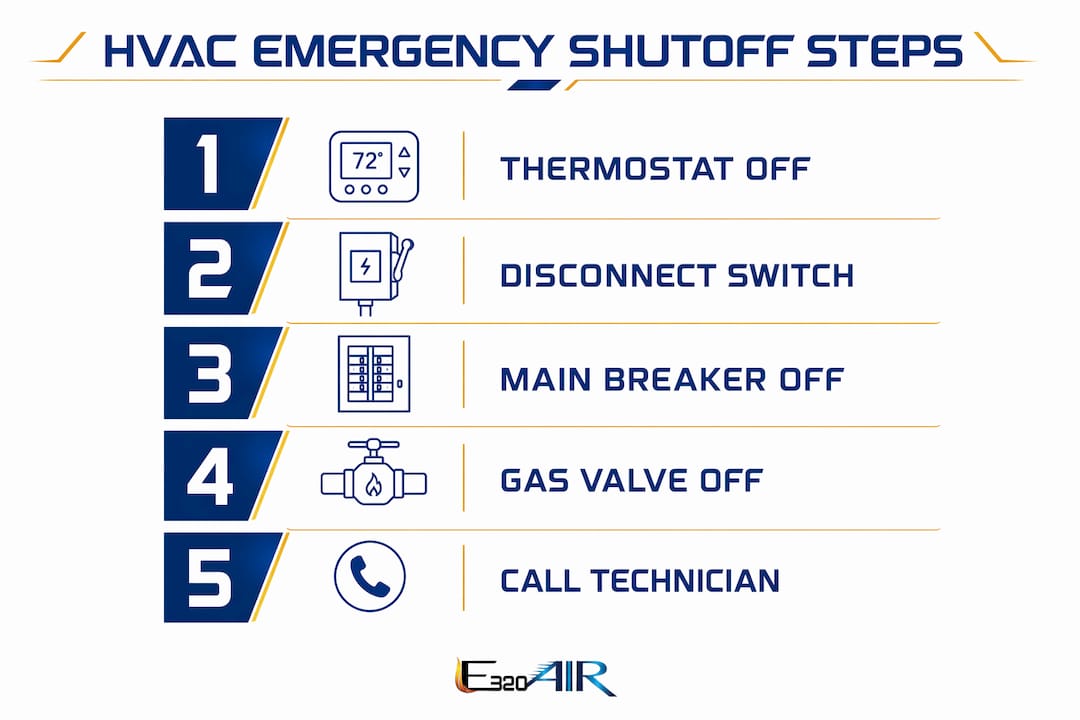
Follow this sequence in order. Skipping steps or reversing the order increases the risk of equipment damage and personal injury.
-
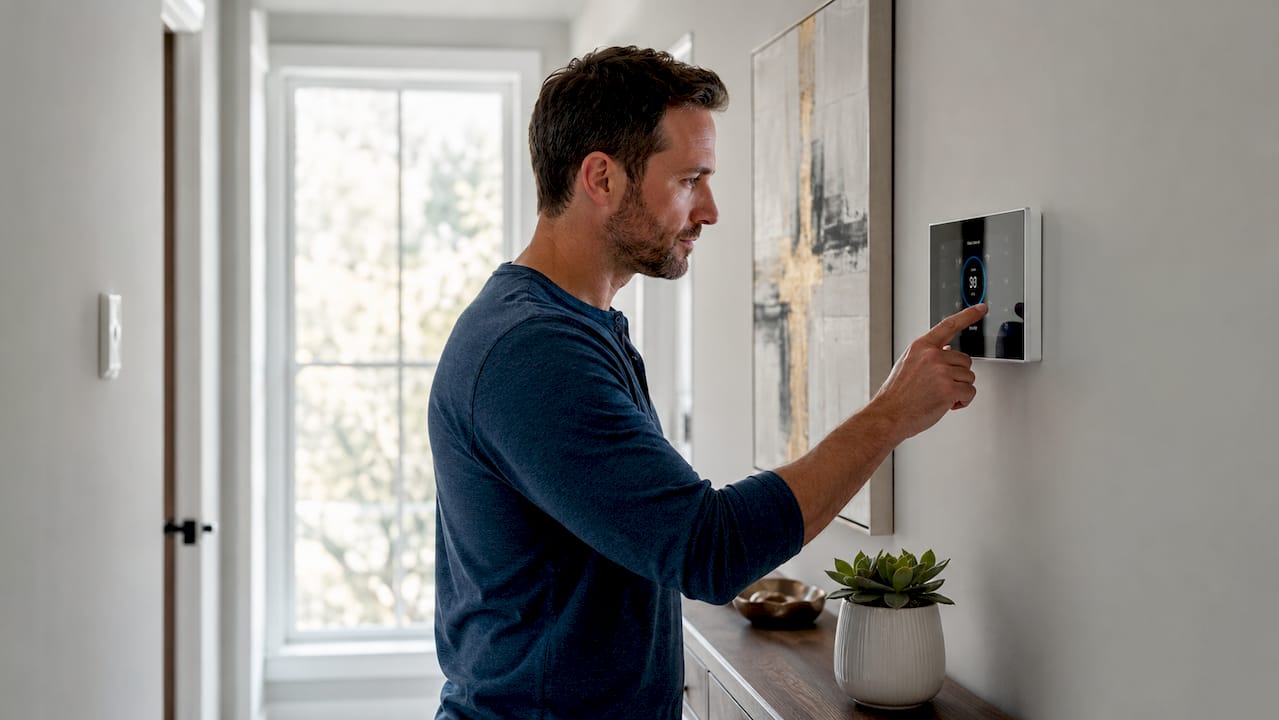
Turn the thermostat to "Off." This cuts the low-voltage control signal to the system. The unit stops calling for heating or cooling. The main power is still live at this point, so do not treat this as a complete shutdown.
-
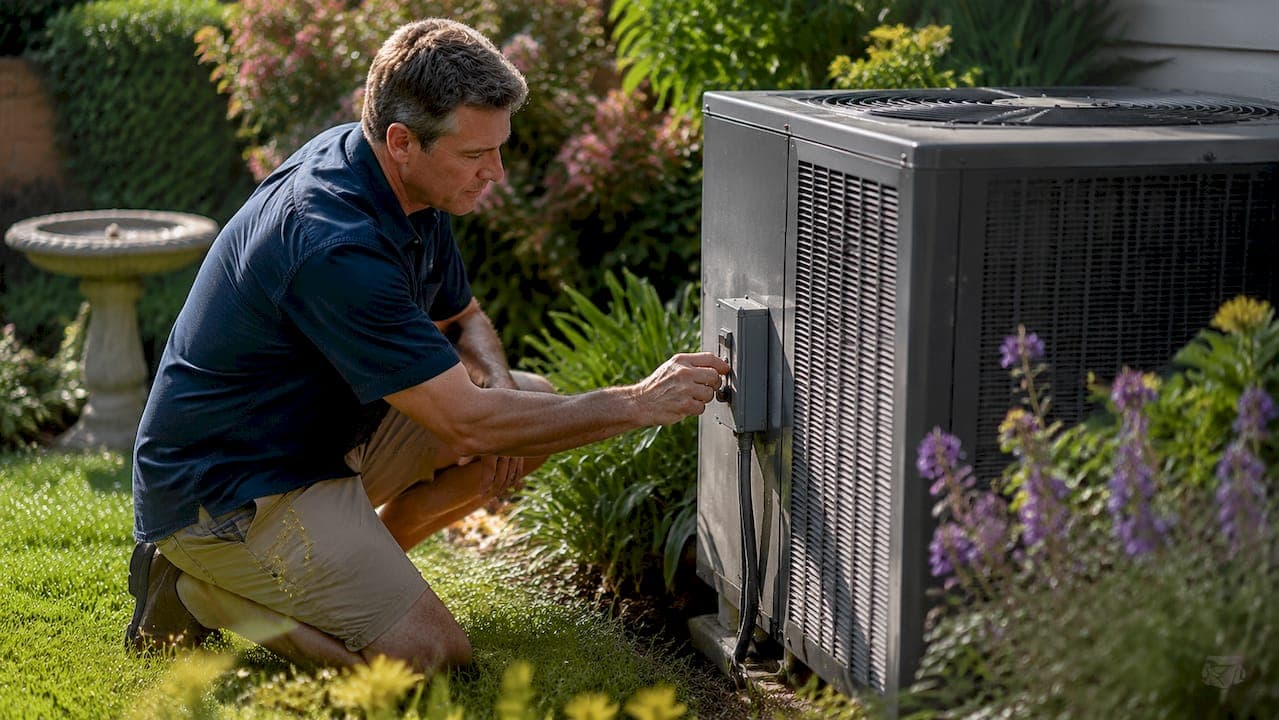
Locate and flip the local disconnect switch. Most outdoor HVAC units have a visible emergency shutoff switch or local disconnect within a few feet of the unit. It is often housed in a gray or red weatherproof box mounted to the exterior wall. Flip it to the "Off" position. This cuts power directly to the outdoor condenser or heat pump.
-
Shut off the dedicated circuit breaker. Go to your main electrical panel and find the breaker labeled for your HVAC system, air handler, or furnace. Flip it to the "Off" position. This isolates the system completely from your home's electrical supply.
-
For gas furnaces: close the manual gas shutoff valve. Gas shutoff valves sit on the incoming gas line, typically within 3 feet of the furnace. The valve handle runs parallel to the pipe when gas is flowing. Turn it 90 degrees so the handle sits perpendicular to the pipe. That position means the valve is closed and gas flow has stopped.
If you cannot safely reach the shutoff points because of fire, flooding, or heavy smoke, do not attempt the shutdown yourself. Leave the building immediately, call 911, and let emergency responders handle the isolation. No piece of equipment is worth your life.
Pro Tip: Label your HVAC breaker clearly in the main panel. Many panels have unlabeled or mislabeled breakers. A wrong flip during an emergency wastes critical seconds.
The table below shows which step applies to which system type.
| Shutoff step | Electric system (heat pump/AC) | Gas furnace system |
|---|---|---|
| Thermostat to "Off" | Required | Required |
| Local disconnect switch | Required | Required for AC/air handler |
| Main circuit breaker | Required | Required |
| Manual gas valve | Not applicable | Required |
Facilities management experts confirm that logical tiered shutoff sequencing prevents costly damage compared to rushing directly to the main breaker. That sequence matters because cutting main power abruptly can trap refrigerant in the wrong part of the system and stress compressor components.
Common mistakes and safety precautions during an HVAC emergency shutoff
The single most common mistake is treating the thermostat as a master power switch. The thermostat cuts only the control voltage. The main power stays live until you flip the disconnect or breaker. Homeowners who stop at the thermostat and walk away leave a powered system running in a potentially dangerous state.
Other mistakes that cause harm or equipment damage:
- Flipping electrical switches when a gas smell is present. Any spark can ignite accumulated gas.
- Skipping the local disconnect and going straight to the main panel. This bypasses the closest and fastest isolation point.
- Attempting to restart the system immediately after shutdown. Restoring power before a professional inspection risks further damage or injury, especially after a refrigerant leak or electrical fault.
- Panicking and pulling multiple breakers at once. This can cut power to smoke detectors or security systems at the worst possible moment.
Uncontrolled abrupt shutdowns cause equipment damage and delayed restarts. A controlled sequence minimizes those risks. Understanding the correct HVAC safety standards for your system type helps you act correctly under pressure.
Panic is the biggest safety variable in any emergency. Homeowners who have rehearsed the shutdown sequence make fewer errors. A printed card posted near the main panel with the four steps takes less than five minutes to make and can prevent thousands of dollars in damage.
What to do after the HVAC emergency shutoff
Once the system is off and everyone is safe, the next steps determine how quickly and safely you can return to normal operation.
Immediate actions after shutdown:
- Wait at least 10–15 minutes before resetting or restarting the system. This allows time to confirm the hazard has passed and the system has stabilized.
- Document what happened: the time, what you noticed (smell, sound, water, smoke), and every shutoff step you took. This information helps your technician diagnose the problem faster.
- Call a licensed HVAC technician before restoring power. Describe the symptoms and the steps you took. A professional needs to inspect the system before it runs again.
- If gas was involved, call your gas utility company and do not re-enter the building until they clear it.
- For California property managers: notify tenants of the shutdown and your timeline for professional inspection. California tenant law requires timely repair of heating and cooling systems.
Do not attempt to restart the system yourself after a major fault. The cause of the emergency may not be visible. A technician will check refrigerant levels, electrical connections, heat exchanger integrity, and gas line pressure before clearing the system for operation.
Planned maintenance reduces the frequency of these events. Addressing HVAC faults 4–6 weeks before peak seasonal demand prevents expensive emergency repairs that cost 3–5 times more than scheduled service. That cost difference is significant for property managers running multiple units. Reviewing the HVAC startup process each season also catches problems before they become emergencies.
Key Takeaways
A correct HVAC emergency shutoff follows a strict sequence: thermostat off, local disconnect off, main breaker off, and gas valve closed for furnace systems.
| Point | Details |
|---|---|
| Thermostat is not a master switch | Turning off the thermostat leaves the unit fully powered until you reach the disconnect or breaker. |
| Follow the four-step sequence | Thermostat, local disconnect, main breaker, and gas valve must be addressed in that order. |
| Gas leaks change the rules | Never touch any electrical switch if you smell gas. Leave and call 911 from outside. |
| Wait before restarting | Allow at least 10–15 minutes after shutdown, then call a licensed technician before restoring power. |
| Prevention cuts emergency risk | Scheduling maintenance 4–6 weeks before peak season reduces emergency repair costs by 3–5 times. |
What I've learned from watching homeowners handle HVAC emergencies
Most homeowners I've worked with do one of two things in an HVAC emergency: they freeze, or they move too fast. Both responses cause problems. Freezing means the system keeps running while a fault gets worse. Moving too fast usually means flipping the main breaker without following the sequence, which can trap refrigerant mid-cycle or leave a gas valve open.
The homeowners who handle emergencies well are the ones who've thought about it once before it happened. They know where their disconnect switch is. They've looked at their main panel. They've seen the gas valve on their furnace. That five minutes of preparation is worth more than any emergency guide read in the middle of a crisis.
I've also seen the aftermath of skipped steps. A property manager in the Central Valley once cut main power to a commercial unit without closing the gas valve first. The gas kept flowing to a system that had an electrical fault. It took the utility company two hours to clear the building. A proper AC troubleshooting approach and a practiced shutdown sequence would have resolved that situation in minutes.
My honest recommendation: treat the shutoff procedure the same way you treat a fire escape plan. Practice it once. Post the steps somewhere visible. The sequence is simple. The challenge is remembering it when adrenaline is running high.
— Edward
E320air is ready when your HVAC system needs professional attention
When an HVAC emergency leaves your system shut down, getting a qualified technician on-site fast is what protects your equipment and your property. E320air serves California homeowners and property managers with emergency repairs, preventive maintenance, and full system inspections.

Whether you need a post-shutdown safety inspection, a refrigerant check, or a full HVAC installation after a failed unit, E320air's certified technicians respond quickly and work to California safety standards. Property managers can also count on commercial HVAC services built around minimizing tenant disruption. Contact E320air to schedule an inspection or get emergency support today.
FAQ
What is the first step in an HVAC emergency shutoff?
Turn the thermostat to "Off" first to stop the system from calling for heating or cooling. Then proceed to the local disconnect switch and main circuit breaker to fully cut power.
Does turning off the thermostat shut off all power to the HVAC unit?
No. The thermostat only cuts the low-voltage control signal. The unit remains fully powered until you flip the local disconnect switch or the dedicated circuit breaker in your main panel.
What should I do if I smell gas during an HVAC emergency?
Leave the building immediately without touching any electrical switch, including the thermostat. Call 911 from outside. Small sparks from switching can ignite accumulated gas and cause an explosion.
How long should I wait before restarting my HVAC after an emergency shutoff?
Wait at least 10–15 minutes after shutdown, then call a licensed HVAC technician before restoring power. A professional inspection confirms the system is safe to operate again.
How do I find the gas shutoff valve on my furnace?
The manual gas shutoff valve sits on the incoming gas supply line, typically within 3 feet of the furnace. The handle runs parallel to the pipe when gas is on. Turn it 90 degrees to close it, so the handle sits perpendicular to the pipe.