
If your system is over 15 years old and you've called for repairs twice this season, plan replacement now. If you smell burning or see a yellow furnace flame, shut it down immediately.
Safety-critical signs that require immediate shutdown:
- Burning or electrical odor from vents
- Persistent yellow or flickering furnace pilot flame (carbon monoxide risk)
- Repeated circuit breaker trips
- Visible soot or scorching around the unit
- CO alarm activation
Any of these means: power off the system at the breaker, open windows, leave the house if you smell gas or combustion, call 911 for gas or CO, then call a licensed contractor. Do not reset and restart.
Common HVAC replacement indicators go beyond emergencies. Watch for these:
- Age: Central AC units last about 12–15 years, heat pumps about 15–18 years, and furnaces about 18–20 years. Past these ages, efficiency drops fast.
- Frequent repairs: Frequent significant service calls within a season signal that replacement is usually more cost-effective than continuing repairs.
- Rising energy bills: Unexplained spikes with no change in household usage often point to efficiency loss from aging equipment or duct leakage.
- Uneven temperatures: Rooms that won't cool or heat consistently mean the system can no longer distribute air effectively.
- Strange noises: Grinding, squealing, or banging are mechanical failure signals, not quirks to ignore.
- Refrigerant leaks or visible corrosion: Oil staining around service valves or corroded copper lines means the system is losing refrigerant and structural integrity.
The 50% Rule: If a repair estimate approaches or exceeds half the cost of a new system, replace. For units already past their expected lifespan, lower that threshold to 30%, because one repair rarely ends the failure cycle.
R-22 refrigerant alert: If your system still runs on R-22 (Freon), recharges now cost $150–$300 per pound and supply is scarce since the U.S. phased out new production. Replacement is almost always the only practical path forward.
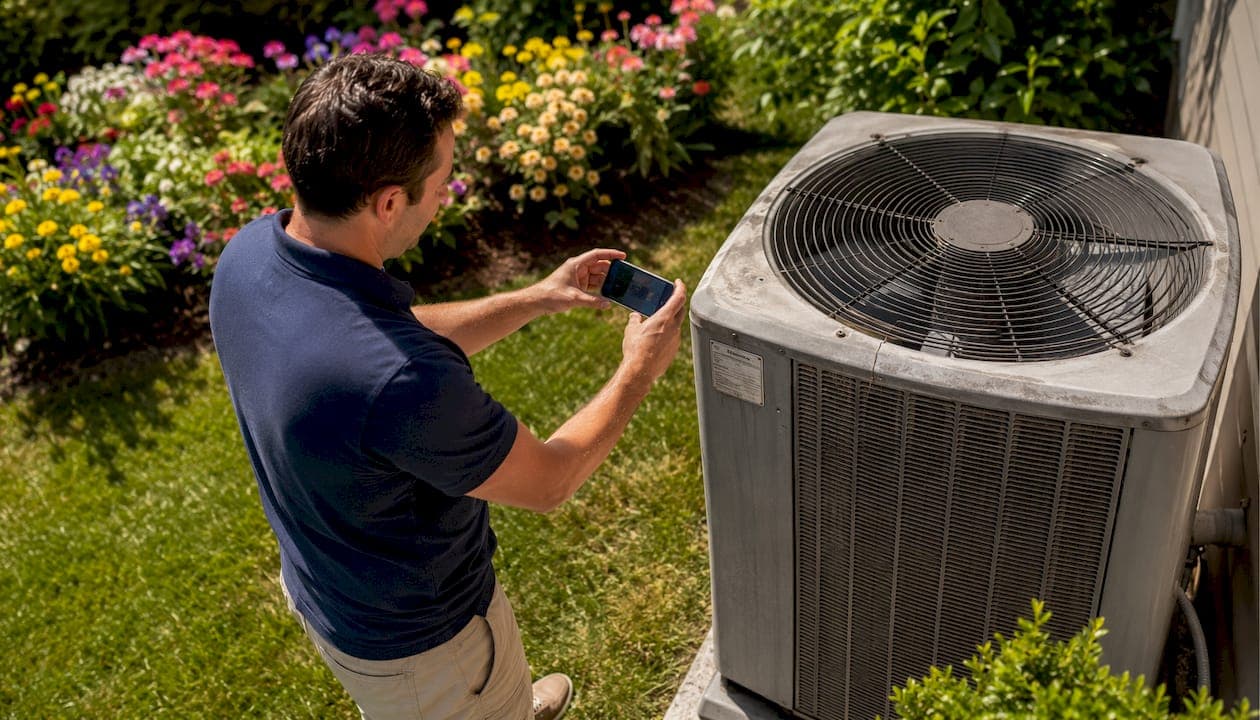
Pro Tip: Before calling a technician, photograph your unit's nameplate — model number, serial number, refrigerant type. A technician who arrives with that data can skip 20 minutes of discovery and give you a faster, more accurate estimate.
Short-term fixes that safely buy time: replace the air filter, switch the thermostat fan to AUTO, and clear debris from the outdoor condenser. These can stabilize a struggling system for a few weeks. Do not attempt DIY work on electrical components, refrigerant lines, or gas connections. Those require licensed HVAC repair and, in California, proper permits.
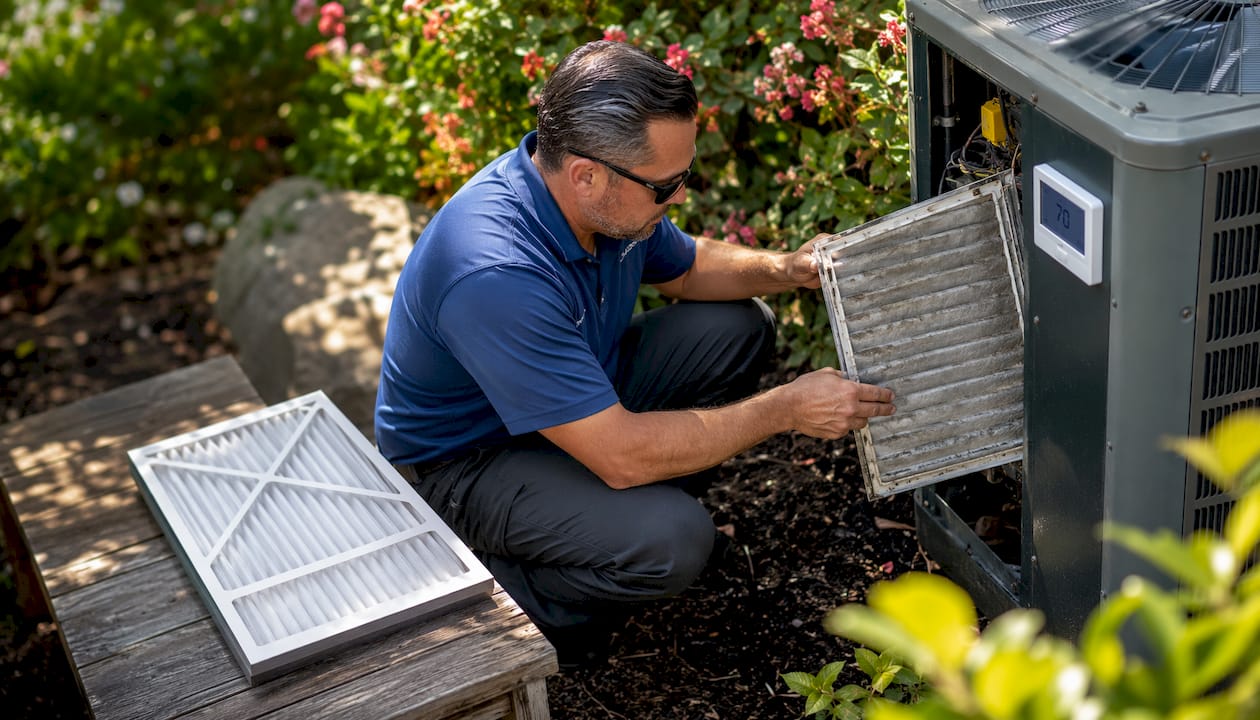
During a diagnostic visit, a technician should check: combustion flame color, heat exchanger condition, compressor amp draw versus nameplate ratings, refrigerant pressures, visible corrosion, duct leakage, and blower motor condition. If a contractor skips these steps and jumps straight to a quote, that's a red flag. Replacing interior doors and sealing the building envelope alongside an HVAC upgrade can also reduce the load your new system needs to handle.
Table of Contents
E320air is ready to inspect your Murrieta system today

E320air handles the full scope: same-day or next-day diagnostics, a written repair-versus-replacement estimate, permit coordination, and installation. Typical replacement in Murrieta runs 1–3 weeks from diagnostic to install, depending on equipment availability and permit timing. Scheduling in a shoulder season (spring or fall) gets you better lead times and avoids the mid-summer emergency premium.
Before your appointment, gather your last 12 months of energy bills, any past repair invoices, and that nameplate photo. It cuts diagnostic time and gets you to a decision faster. Browse E320air's problem-solving gallery to see real local repair and replacement work, then schedule your inspection to get a licensed technician on-site.
Key Takeaways
An HVAC system past its expected lifespan that triggers the 50% Rule or shows safety-critical signs needs replacement, not another repair.
| Point | Details |
|---|---|
| Safety signs mean shut down now | Burning smells, yellow furnace flame, or CO alarm require immediate shutdown and evacuation before calling a contractor. |
| Age thresholds matter | AC units last ~12–15 years, heat pumps ~15–18 years, furnaces ~18–20 years — past these, plan replacement. |
| Apply the 50% Rule | Replace when repair cost hits 50% of a new system; drop that to 30% for units already past their lifespan. |
| R-22 systems are effectively obsolete | Recharges cost $150–$300 per pound with scarce supply — replacement is the practical choice for any R-22 system. |
| E320air covers Murrieta end-to-end | Same-day diagnostics, permit handling, and full installation with a written repair-vs-replacement estimate. |