
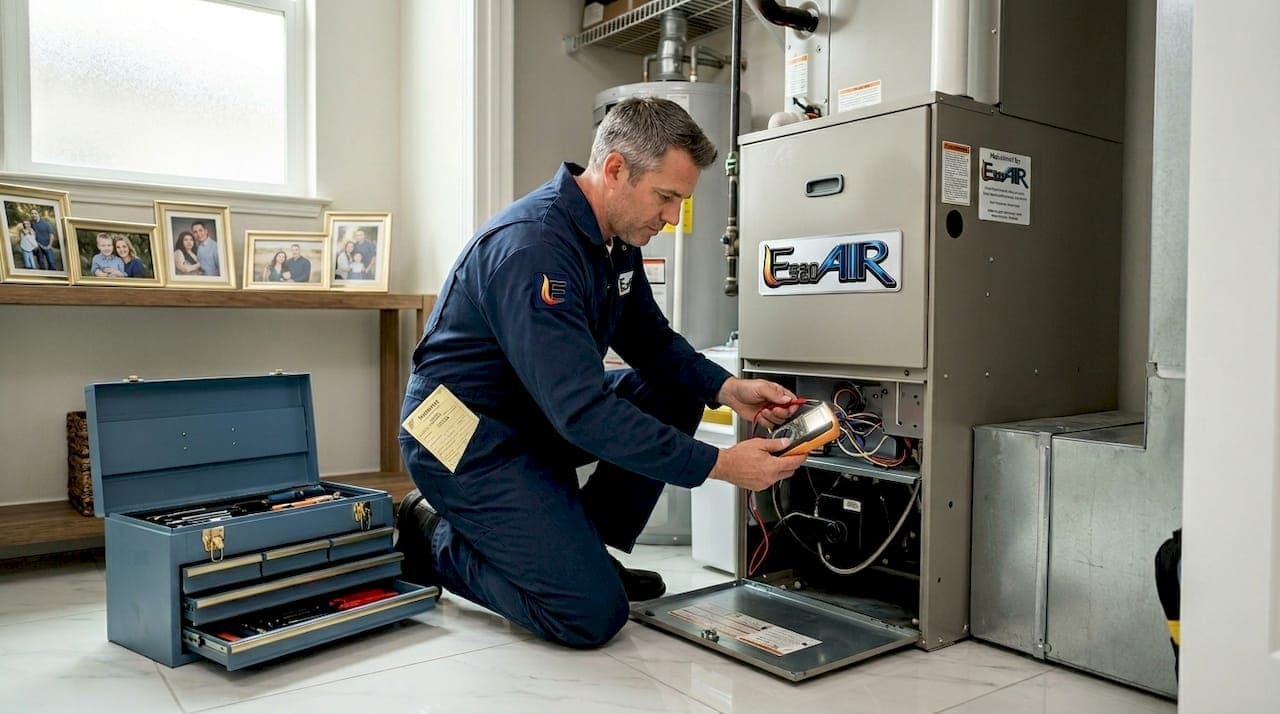
TL;DR:
- Getting a new furnace installed in Murrieta requires strict adherence to California's building codes and permit requirements to ensure legality, safety, and efficiency. Homeowners must obtain a mechanical permit, complete Manual J load calculations, and schedule HERS testing, all before and after installation, to pass city inspections and avoid fines. Proper planning, correct equipment, and professional oversight prevent costly mistakes, short cycling, and energy waste, ensuring long-term comfort and compliance.
Getting a new furnace installed in Murrieta is not as simple as swapping out old equipment for new. California's building code is among the strictest in the country, and Murrieta enforces mechanical permit requirements that catch many homeowners off guard. A mechanical permit is required for every furnace installation or replacement in the state, covering everything from Manual J load calculations to HERS (Home Energy Rating System) testing. Understanding what's involved before the work starts saves you time, money, and the headache of a failed inspection.
Table of Contents
- Before you begin: Murrieta-specific requirements and permits
- Tools, materials, and equipment checklist
- Step-by-step furnace installation in Murrieta
- Common mistakes, troubleshooting, and post-install verification
- What most homeowners miss: The hidden value of load calculations and code compliance
- Get expert furnace installation help in Murrieta
- Frequently asked questions
Key Takeaways
| Point | Details |
|---|---|
| Permits required | You must have a mechanical permit and meet Murrieta and California code for any furnace installation. |
| Correct sizing critical | Manual J and local code compliance ensure your new furnace is properly sized for efficiency and comfort. |
| Prepare all materials first | Having all tools, parts, and code documents in hand prevents costly mistakes and inspection delays. |
| High-efficiency special needs | If installing a 95%+ AFUE furnace, you must address condensate drainage and use PVC venting. |
| Experts save time | Hiring licensed professionals can help avoid costly errors, keep you compliant, and guarantee the job is done right. |
Before you begin: Murrieta-specific requirements and permits
With the stakes clear, let's start by addressing the legal and permit requirements unique to Murrieta homeowners.
California's Title 24 energy code changes how every furnace installation gets planned and executed. You can't simply buy a furnace, put it in, and call it done. The city requires documentation, verification, and sign-off from a licensed inspector before your system is considered legal and safe to operate.
What you'll need before installation begins:
- Mechanical permit from the City of Murrieta Building and Safety Department
- Manual J load calculation (confirms the right furnace size for your home)
- Equipment specification sheets for the new furnace
- Gas line diagrams showing routing and sizing
- Title 24 Part 6 compliance documentation
- HERS testing scheduled with a certified rater
California's code is clear: HERS testing is required for verification on all new furnace installs and replacements. This testing checks duct leakage, airflow, and refrigerant charge (when applicable) to confirm your system performs as designed. Skipping it isn't an option if you want your permit finalized.
| Requirement | Who provides it | When it's needed |
|---|---|---|
| Mechanical permit | City of Murrieta | Before work starts |
| Manual J calculation | Licensed HVAC contractor | Before permit submission |
| Equipment specs | Manufacturer/contractor | With permit application |
| Gas line diagram | Licensed contractor | With permit application |
| HERS testing | Certified HERS rater | After installation |
| Final inspection | City building inspector | After HERS testing |
Understanding the California HVAC installation workflow helps homeowners see why this isn't just paperwork. Each step protects you from an oversized furnace that short-cycles, an undersized one that can't heat your home, or a gas line that creates a safety hazard.
Important: Working without a permit in Murrieta can result in fines, forced removal of installed equipment, and serious complications when you sell your home. Insurance companies may also deny claims for fire or gas-related incidents if unpermitted work was involved.
California also follows strict energy efficiency standards. The 2026 HVAC efficiency standards affect which equipment qualifies for installation, so it's worth confirming your chosen furnace meets current minimum AFUE (Annual Fuel Utilization Efficiency) requirements before you purchase anything.
Tools, materials, and equipment checklist
Before moving forward, you need the right equipment and materials to ensure a smooth installation.
A furnace installation involves more components than most homeowners expect. Missing even one item can bring the whole job to a halt, especially when a city inspector is scheduled and you're not ready.
Core tools and materials:
- New furnace (verified AFUE rating, correct BTU output per Manual J)
- Flexible gas connector and shutoff valve
- Flue venting or PVC pipe (depending on furnace efficiency)
- Thermostat and low-voltage wiring
- Air filter and filter housing
- Condensate drain components (for high-efficiency models)
- Sheet metal screws, foil tape, and duct sealing mastic
- Electrical disconnect and appropriate wiring gauge
- Carbon monoxide detector (required near any fuel-burning appliance)
For how furnaces work at a fundamental level, it helps to understand that the combustion process, heat exchanger, and blower system all work together. Any one of those areas with the wrong parts will cause problems from day one.
Basic vs. advanced installation comparison:
| Component | Standard install (80% AFUE) | High-efficiency install (95%+ AFUE) |
|---|---|---|
| Venting material | Metal flue pipe | PVC pipe (plastic) |
| Condensate drain | Not required | Required (acidic, needs neutralizer) |
| Venting direction | Vertical through roof | Horizontal through wall possible |
| Filter type | Standard 1-inch | High-MERV or media filter |
| Freeze protection | Minimal concern | Needed in attic/crawlspace installs |
| Permit complexity | Standard | Higher, more HERS checkpoints |
A 95%+ AFUE furnace is a common choice in Murrieta because it lowers monthly gas bills significantly. However, the condensate drain requires a neutralizer or pump because the drainage is acidic and can corrode standard plumbing. This is a code-required item in California and not optional.
Pro Tip: Lay out every component, box, and tool before the installation day. Cross-check your list against the permit application so nothing is missing when the inspector shows up. A missing neutralizer or an incorrect pipe material will fail an inspection and delay your project by days.
The essential HVAC features worth investing in include a programmable or smart thermostat, a quality air filter, and proper zoning if your home has multiple levels. These decisions should be made before the new furnace goes in, not after.
Step-by-step furnace installation in Murrieta
Once you have the right tools and materials, follow this structured process for a smooth installation.
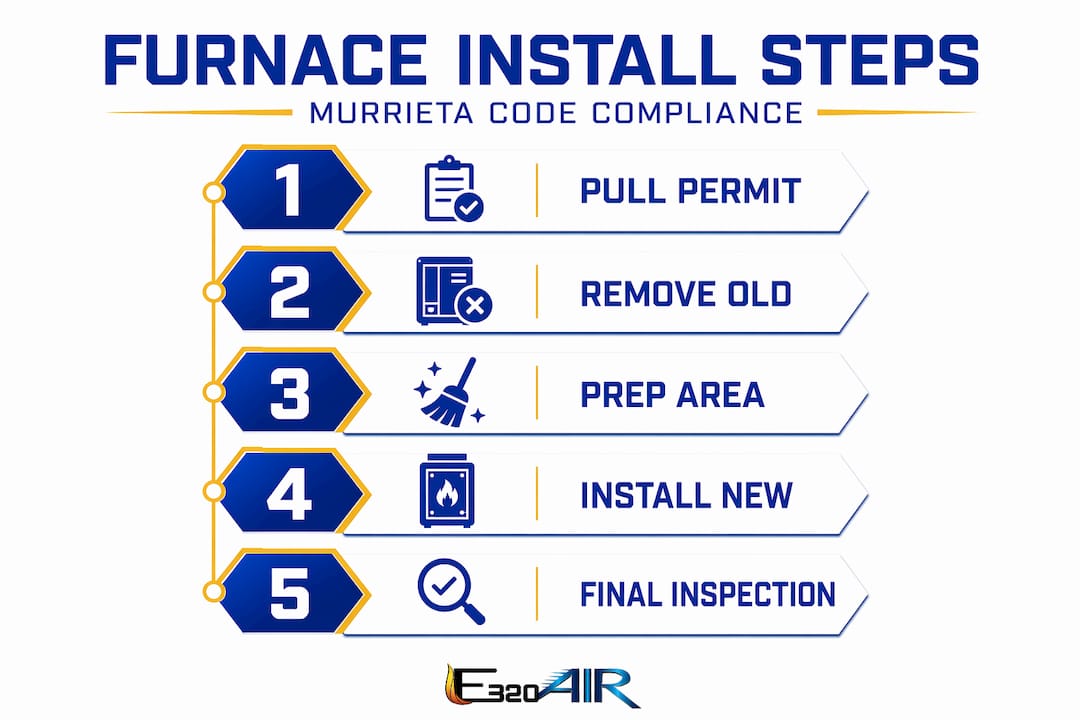
This is the heart of the project. Each step has code checkpoints attached to it, and skipping ahead can mean redoing work after an inspector flags it.
1. Pull your permit first. Submit your Manual J, equipment specs, and gas diagram to the City of Murrieta before touching any equipment. Work that starts before permit approval can result in a stop-work order.
2. Shut off utilities. Turn off the gas at the main shutoff and disconnect electrical power to the furnace at the breaker panel. Confirm both are off before proceeding.
3. Remove the old furnace. Disconnect the gas line, flue pipe, electrical connections, and duct connections. Cap the gas line immediately after removal. Dispose of the old unit through an approved HVAC recycler.
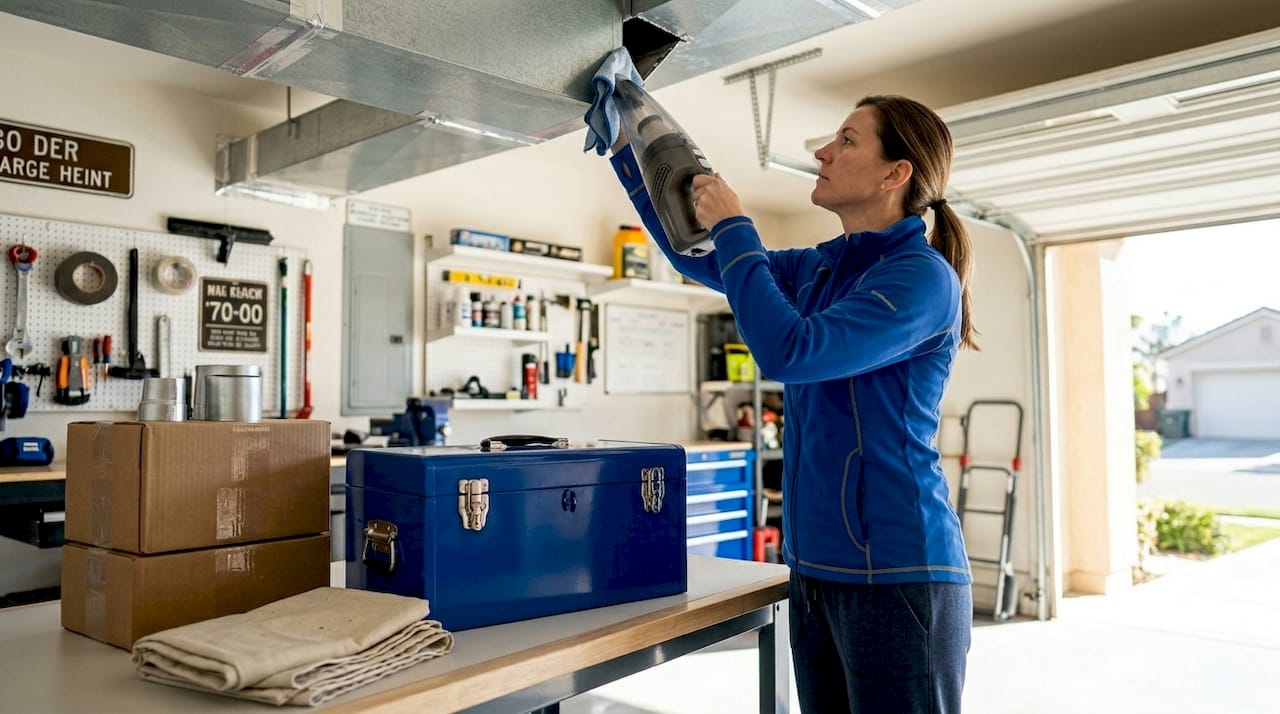
4. Prepare the installation area. Clean the plenum area, inspect ductwork for damage or leaks, and seal any gaps with mastic or foil tape. California code requires duct sealing as part of the Title 24 compliance process.
5. Position the new furnace. Place it according to manufacturer clearance requirements. Clearances from walls, combustibles, and the floor are code items. Confirm the unit is level.
6. Connect the ductwork. Attach supply and return plenums using sheet metal screws and mastic. Do not rely on duct tape alone. It fails over time and creates leakage that will show up during HERS testing.
7. Run the gas line. A licensed contractor must complete this step. Use the correct pipe material and sizing per the gas diagram in your permit. Install a new shutoff valve within reach of the unit.
8. Wire the electrical connections. Connect line voltage power and low-voltage thermostat wiring per the manufacturer's wiring diagram. Confirm the disconnect switch is accessible.
9. Install the venting. For high-efficiency furnaces, route PVC vent pipes horizontally through an exterior wall. For standard units, connect the metal flue to the existing chimney or flu pipe. All joints must be sealed.
10. Startup and testing. Restore gas and electrical power. Light the furnace and check for proper ignition, flame color (should be blue), and heat output. Check for gas leaks with a detector solution at every joint.
| Step | Time estimate | Permit/code checkpoint |
|---|---|---|
| Permit application | 1 to 3 days | Required before start |
| Removal of old unit | 1 to 2 hours | Gas cap required |
| Duct prep and sealing | 1 to 2 hours | Title 24 duct sealing |
| New furnace placement | 1 to 2 hours | Clearance requirements |
| Gas connection | 30 to 60 minutes | Licensed contractor only |
| Venting installation | 1 to 2 hours | Material type per AFUE |
| Startup and test | 30 to 60 minutes | Flame and leak check |
| HERS testing | 2 to 4 hours | Certified rater required |
Pro Tip: At every connection point, whether gas, duct, or vent, stop and verify before moving on. A California permit requirement flagged at the final inspection means rework. Checking as you go catches problems when they're easy to fix.
A detailed step-by-step HVAC install guide for nearby Southern California homes mirrors many of the same code requirements you'll follow in Murrieta. The HVAC replacement stages article also helps homeowners understand what to expect from start to finish.
Common mistakes, troubleshooting, and post-install verification
Even with careful installation, homeowners often run into common issues and verification steps that shouldn't be overlooked.
Top installation mistakes in Murrieta:
- Starting work without pulling a mechanical permit
- Skipping Manual J and guessing furnace size (usually leads to oversizing)
- Using metal flue pipe on a 95%+ AFUE furnace instead of PVC
- Forgetting the condensate neutralizer on high-efficiency models
- Inadequate duct sealing that fails HERS duct leakage testing
- Not installing freeze protection for attic or crawlspace runs
- Failing to schedule HERS testing before requesting a final inspection
Troubleshooting common post-install issues:
- Furnace won't start: Check thermostat settings, breaker, and gas valve position. Confirm the filter isn't clogged from debris left during install.
- No heat despite running: Possible airflow issue, incorrect gas pressure, or dirty flame sensor. A licensed tech should diagnose this.
- Strange noises on startup: Metal expansion is normal, but banging or scraping sounds indicate duct, burner, or blower problems.
- Condensate backup: The neutralizer or pump may be blocked. This is a common issue in the first weeks after a high-efficiency install.
Safety warning: Never ignore a condensate drain issue on a high-efficiency furnace. The acidic water can damage your furnace cabinet, flooring, and nearby materials. If you see water pooling near the unit, shut it down and call a licensed HVAC technician immediately.
Passing your city inspection and HERS testing:
Book your HERS rater before requesting the city's final inspection. The HERS rater will test duct leakage, confirm airflow, and document results. Once that report is in hand, the city inspector can finalize your permit. Many homeowners skip this sequence and end up waiting longer than necessary.
Pro Tip: Schedule HERS testing as early as possible since certified raters in the Temecula and Murrieta area book out, especially in spring and fall when installation volume is high. A delay in testing means a delay in your occupancy and system legality.
The common HVAC repair tips article is a useful resource once your system is running and you want to keep it performing well long after installation day.
What most homeowners miss: The hidden value of load calculations and code compliance
After covering process and pitfalls, let's look at why the technical details matter more than most people realize.
Here's an uncomfortable truth: many furnace installations in Southern California look fine on the surface but are quietly failing the homeowner every single month. The system runs, it produces heat, and nobody complains. Until the gas bill arrives. Or until a cold snap drops Murrieta into the low 30s overnight and the house can't keep up.
Manual J isn't red tape. It's the calculation that answers a specific question: how much heat does your home actually need, given your insulation, windows, ceiling height, and local climate? Without it, contractors guess. And contractors who guess tend to oversize because nobody complains when a furnace is too powerful. The problem is that an oversized furnace short-cycles, meaning it turns on and off too frequently. That wears out components faster, creates uneven temperatures room to room, and raises humidity issues in Murrieta's occasionally damp winters.
Title 24 compliance isn't just about the equipment you choose. It affects how your ducts are sealed, how your thermostat is programmed, and whether your system gets verified by a third-party HERS rater. Homeowners who work with contractors who skip these steps often find out the hard way, either at resale when a home inspection flags unpermitted work, or when the city requires remediation before a real estate transaction can close.
We've seen this situation play out in Murrieta neighborhoods where well-meaning homeowners hired the cheapest bid, got a furnace that sort of works, and then called us years later wondering why their bills are high and why the system is already having problems. The professional installation workflow exists for a reason. It's not bureaucracy. It's the result of decades of experience showing what happens when steps get skipped.
The California HVAC permit requirements aren't suggestions. They are the legal baseline. Treating them as optional is a financial and safety risk that no amount of initial savings is worth.
Get expert furnace installation help in Murrieta
Ready for professional results? Here's how local experts can make the whole process stress-free.
Installing a furnace in Murrieta involves more moving parts than most homeowners expect, from permits and load calculations to HERS testing and city inspections. That's exactly the kind of work our team at E320 Air handles every day for homeowners across the Murrieta area.
We manage the entire process: pulling permits, completing Manual J calculations, sourcing code-compliant equipment, and coordinating HERS testing so your installation is legal, efficient, and done right the first time. Our professional furnace installation service is built specifically for California's requirements. You can also browse our installation success stories to see real results from local homes just like yours. Contact us today to schedule a consultation and get a customized installation plan for your home.
Frequently asked questions
Do I need a permit to replace a furnace in Murrieta?
Yes, California law requires a mechanical permit for all furnace installations and replacements, including Manual J calculations and HERS testing as part of the verification process.
What is Manual J and why does it matter?
Manual J is an engineering calculation required by California to confirm that your new furnace is properly sized for your home's actual heating load, preventing comfort problems and energy waste.
Are there special install steps for high-efficiency furnaces (95%+ AFUE)?
Yes, these models require a condensate drain with a neutralizer or pump and must use PVC venting rather than a traditional metal flue pipe.
What are the most common installation mistakes?
Not pulling a permit, skipping load calculations, and using the wrong venting material are the most frequent issues, and all three can trigger a failed city inspection.
How do I ensure my new furnace passes city inspection?
Complete all required calculations, install HERS-verified equipment, seal ducts properly, and book your HERS testing appointment before scheduling the final city inspection.