
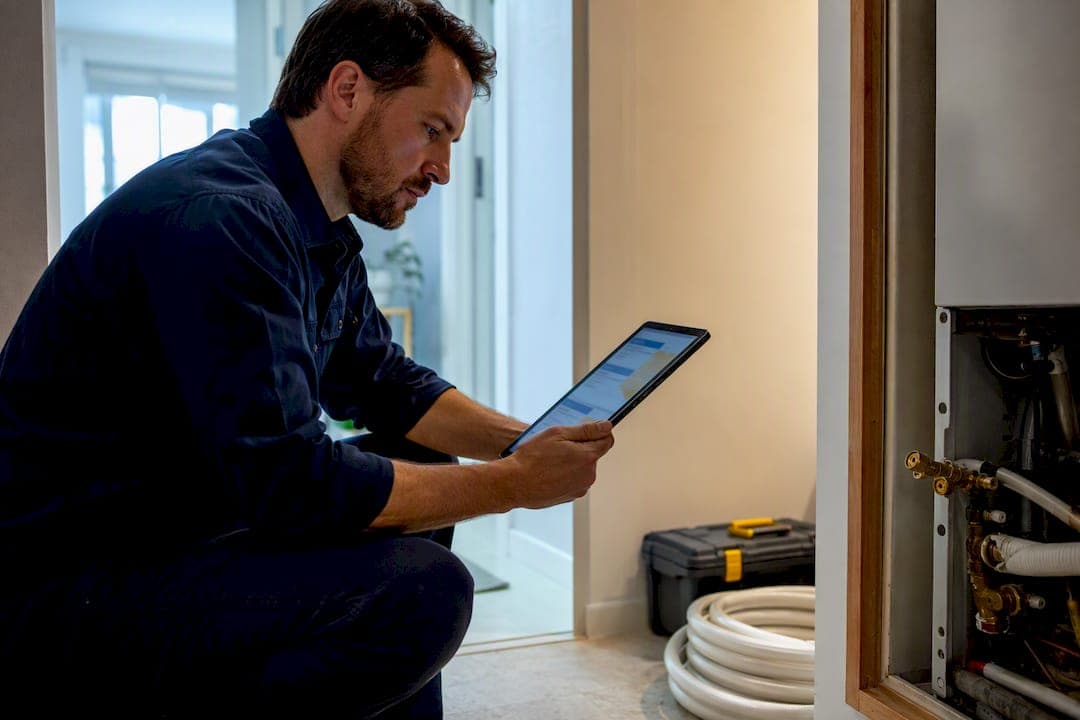
No, there is no federal tax credit for HVAC equipment placed in service in 2026. The Energy Efficient Home Improvement Credit and the Residential Clean Energy Credit both ended for equipment installed after December 31, 2025. If your new system goes in this year, your realistic options are state and utility rebate programs, not a federal tax break, though pre-2026 installs may still have unclaimed credit to file.
TL;DR:
- No federal tax credits are available for HVAC equipment placed in service after December 31, 2025; the cutoff applies to when the system is operational, not installed or contracted.
- Homeowners with unused 25D credits from 2025 or earlier can still apply them on their 2026 tax return using IRS Form 5695, but new installs don’t qualify.
- State and utility rebate programs funded through the Inflation Reduction Act offer point-of-sale rebates that can sometimes surpass the old federal tax credits, especially for lower-income households.
- To claim existing credits from 2025, homeowners must keep detailed documentation of the installation date, model number, and efficiency certifications, and file with proper IRS forms.
- Early application and verification of contractor eligibility, equipment qualification, and program availability are crucial to maximize rebates and avoid missed opportunities.
Table of Contents
- Are HVAC Tax Credits Available in 2026?
- How Did Sections 25C and 25D Work, and What's Left to Claim?
- Installed HVAC in 2025 or Earlier? Here's How to Claim It
- What HVAC Incentives Actually Exist in 2026?
- Your 2026 HVAC Upgrade Checklist
- How Contractors Document HVAC Installs for Rebate Claims
- How E320air Helps You Navigate HVAC Rebates and Installation
- Sources
Are HVAC Tax Credits Available in 2026?
The short answer sits above, but the "why" matters for anyone weighing a purchase this year. Congress set a hard cutoff at the end of 2025 for both major residential energy credits, and the Energy Efficient Home Improvement Credit page confirms it plainly: the credit covered qualifying property placed in service on or after January 1, 2023, and before December 31, 2025. Nothing after that date qualifies.
The phrase "placed in service" trips up more homeowners than any other part of this rule. It doesn't mean the date you signed a contract, put down a deposit, or even paid the final invoice. It means the date the equipment was installed and actually operational in your home. A furnace sitting in a contractor's warehouse isn't placed in service. A heat pump running your thermostat schedule is.
That distinction creates real gray zones for anyone who started a project near the deadline:
- You signed a contract in November 2025 but supply delays pushed installation to January 2026. That system is a 2026 install with no federal credit, regardless of when you paid.
- Your contractor finished the job on December 30, 2025, but didn't commission the system (first startup and testing) until January 2, 2026. The commissioning date typically governs, not the mechanical completion date.
- You paid a deposit in 2025 and financed the balance, with the full install wrapping up in 2025. That one qualifies, because the equipment was operational before the cutoff.
If your project straddled the new year, ask your contractor for the exact commissioning date in writing. That single piece of paper decides whether you have a credit to claim at all.
How Did Sections 25C and 25D Work, and What's Left to Claim?
Two separate credits covered residential HVAC and energy upgrades through 2025, and they worked very differently.
Section 25C, the Energy Efficient Home Improvement Credit, covered furnaces, air conditioners, and heat pumps at 30% of project cost, subject to annual caps. ENERGY STAR's summary put the heat pump cap at $2,000, with other qualifying items like AC units and water heaters sharing a separate $1,200 annual bucket, for a combined ceiling as high as $3,200 in some years. Claiming 25C for a 2025 install required the manufacturer's Qualified Manufacturer Identification Number (QMID) on the paperwork, a detail the IRS FAQ fact sheet spells out in detail.
Unused 25D credit could carry forward to future tax years, a rule the Residential Clean Energy Credit page still confirms applies to credits earned before the cutoff.
The number that matters: 30% was the credit rate for both 25C and 25D through 2025. That's the figure to check against any receipt from a pre-2026 install.
Here's the part people miss: both credits are dead for new installs now. But if you have unused 25D carryforward from a solar or geothermal project completed in 2025 or earlier, you can still apply it on a 2026 return. That's the one legitimate way "2026 HVAC tax credit" and "real money" belong in the same sentence.
Installed HVAC in 2025 or Earlier? Here's How to Claim It
If your system went in before the cutoff, you're not out of luck, but you do need to file correctly. Claim the credit for the tax year the equipment was placed in service, using IRS Form 5695, Residential Energy Credits. That's the only form for this.
Before you file, gather these four items:
- The itemized invoice showing the HVAC equipment cost separately from labor, since the credit is often calculated on equipment plus installation but caps apply per category.
- The manufacturer's model number and, for 2025 installs, the QMID that the Home energy tax credits guidance says the IRS may require.
- Written confirmation of the placed-in-service date, ideally on the same invoice or a signed completion certificate.
- Any manufacturer certification statement confirming the unit meets the efficiency tier required for that tax year.
Pro Tip: Don't rely on your memory of "when the AC guy came." Ask your contractor for a dated, signed statement that says exactly when the system was placed in service. That one document resolves most IRS disputes before they start.
The most common filing mistakes: missing QMID documentation, listing the contract date instead of the commissioning date, and assuming the credit is refundable. It isn't. A nonrefundable credit only offsets tax you actually owe; it won't generate a refund beyond your liability. If your project involved multiple credit categories or a large 25D carryforward, a tax professional is worth the fee.
What HVAC Incentives Actually Exist in 2026?
With federal credits gone, the money moves to state-administered rebate programs funded through the Inflation Reduction Act, plus utility offers that never depended on federal tax law in the first place.
HOMES (Home Efficiency Rebates) and HEAR (Home Electrification and Appliance Rebates) are the two IRA-funded programs states are rolling out. They work nothing like a tax credit: rebates apply at the point of sale or shortly after, not on next year's tax return. According to the HVAC Base guide to 2026 incentives, HEAR rebates tend to prioritize lower-income households, with meaningfully larger rebates available for homes at or below 80% of area median income, while HOMES casts a wider eligibility net. It has different caps depending on the efficiency gain achieved.
Rebates aren't a consolation prize for losing the tax credit. For a moderate-income household replacing a failing heat pump, a point-of-sale HEAR rebate can beat the old 25C credit outright, because you don't have to wait until April to see the money.
Beyond HOMES and HEAR, state energy offices and utility companies run their own rebate programs, often layered on top. The DSIRE database is the standard place to check what's active in your state, and most programs require equipment that meets ENERGY STAR or CEE efficiency tiers as a minimum qualifying standard. California homeowners in particular have a deep bench of options worth checking against current efficiency standards.
Three things separate rebates from the credits you may be used to:
- Timing: rebates often pay out at purchase or within weeks; credits paid out only when you filed taxes the following year.
- Refundability: many rebates are cash-back regardless of tax liability; tax credits like 25C and 25D never were.
- Funding limits: state rebate pools are frequently first-come, first-served, and can run dry mid-year, unlike a tax credit with no funding cap.
Before assuming you'll get a rebate, confirm the program is currently open and funded in your state, and check whether it can stack with a utility rebate from the same project.
Your 2026 HVAC Upgrade Checklist
If you're planning HVAC work this year, a few steps up front save you from disappointment at filing time or a denied rebate application later.
- Confirm the install date and model eligibility before signing anything. Ask your contractor for the exact projected placed-in-service date and whether the specific model qualifies for any active state or utility program.
- Check your state energy office and utility rebate portals directly. Program details change throughout the year, and not every contractor stays current on every local offer.
- Confirm your contractor is registered with the rebate program you're targeting. Some state and utility rebates only pay out through participating contractors, so this matters before, not after, the install.
- Get a written placed-in-service statement on your final invoice. This protects you whether you're claiming a 2025 carryforward credit or documenting eligibility for a state rebate audit.
- Talk to your tax preparer about any leftover 25D carryforward. If you installed solar or geothermal before 2026 and didn't use the full credit, that balance may still apply to this year's return.
Pro Tip: Rebate funding often runs out well before the calendar year does. If a program is first-come, first-served, apply as soon as your install is scheduled, not after it's finished. A well-timed energy efficiency upgrade can pay for itself faster once you're stacking a rebate against lower utility bills.
How Contractors Document HVAC Installs for Rebate Claims
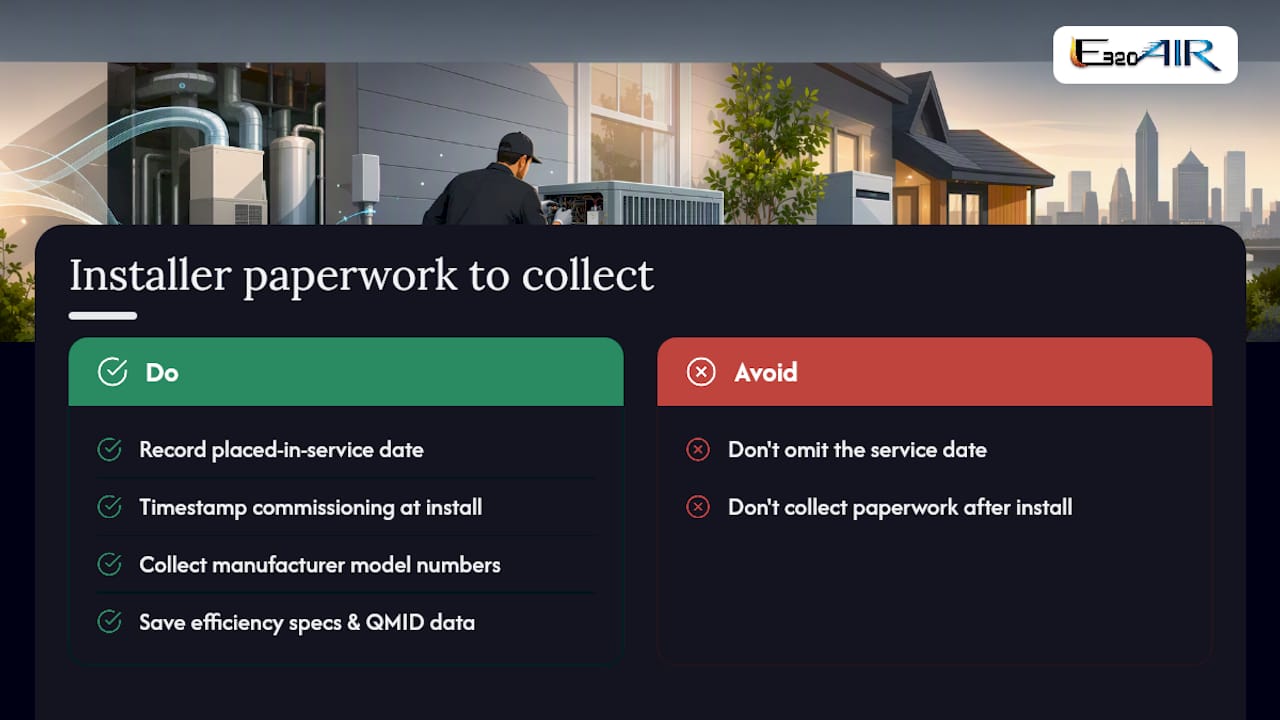
Missing the placed-in-service date is the single most common reason a credit claim gets denied or delayed, which is why documentation matters more now than ever. A contractor who timestamps commissioning and records model numbers and QMID data at the time of install gives you a paper trail that holds up whether you're filing a 2025 carryforward or applying for a 2026 state rebate.
Ask for manufacturer model numbers and efficiency specs at quote time, not after the job is done. That's also the moment to ask whether your contractor has handled paperwork for your state's rebate program before, since familiarity with the forms often speeds up approval.
How E320air Helps You Navigate HVAC Rebates and Installation
Some HVAC contractors handle the part most homeowners find confusing: getting the paperwork right the first time. Proper installs come with clear model and specification documentation and a dated placed-in-service record, the exact combination that state and utility rebate reviewers, and any tax preparer handling a carryforward claim, want to see.
If you're weighing a heat pump or furnace replacement this year, start with a written quote that spells out equipment model numbers, efficiency ratings, and a signed placed-in-service statement. That single document is what separates a smooth rebate application from a rejected one. E320air's HVAC installation service covers residential and commercial systems across the Inland Empire, and past projects are visible in the problem-solving gallery if you want a sense of the documentation and workmanship involved. For commercial properties, the commercial HVAC services page covers system upgrades and equipment sales as well. Request a quote through E320air's site and get the specifics in writing before your next system goes in.
This article is general information, not a substitute for advice from a qualified financial advisor. Consult a qualified financial professional about your own circumstances before acting on anything here.
Sources
- Energy Efficient Home Improvement Credit
- Federal Tax Credits for Energy Efficiency (ENERGY STAR)
- HVAC Tax Credits 2026: Complete Guide to Federal Credits, IRA Rebates & State Incentives | HVAC Base