

TL;DR:
- The SEER2 rating, updated in 2023 with stricter testing standards, provides a more accurate measure of an air conditioner's efficiency by accounting for real-world duct resistance.
- However, actual performance heavily depends on proper installation, ductwork, and system matching, making professional installation essential for maximizing energy savings and comfort.
If you've been shopping for a new air conditioner, you've run into the SEER rating on every spec sheet and sales brochure. Most people assume it's simple: higher number, better unit. Buy the biggest number you can afford. But understanding what is SEER rating really means, and especially how the 2023 switch to SEER2 changes the picture, could save you from overspending on equipment that doesn't match your home or climate. This article breaks it all down without the technical fog.
Table of Contents
- Key Takeaways
- What is SEER rating and how is SEER2 different?
- SEER2 vs. EER2: which metric actually matters?
- What is a good SEER2 rating for your home?
- Installation and ductwork: the variables that change everything
- How to choose the right AC system using SEER2
- My take on SEER2 after years in the field
- Get the full benefit of your SEER2 investment with E320air
- FAQ
Key Takeaways
| Point | Details |
|---|---|
| SEER2 replaced SEER in 2023 | The new standard uses stricter testing, making ratings about 4.7% lower but more accurate to real-world performance. |
| Regional minimums vary | Northern states require 13.4 SEER2 minimum; Southeast and Southwest require 14.3 SEER2 or higher. |
| Higher SEER2 brings comfort benefits | Variable-speed units with higher ratings also deliver better humidity control and more consistent temperatures. |
| Installation matters more than the number | A high SEER2 unit installed poorly will underperform a mid-range unit installed correctly. |
| Match efficiency to your climate | Buying the highest SEER2 available rarely pays off in mild climates due to longer payback periods. |
What is SEER rating and how is SEER2 different?
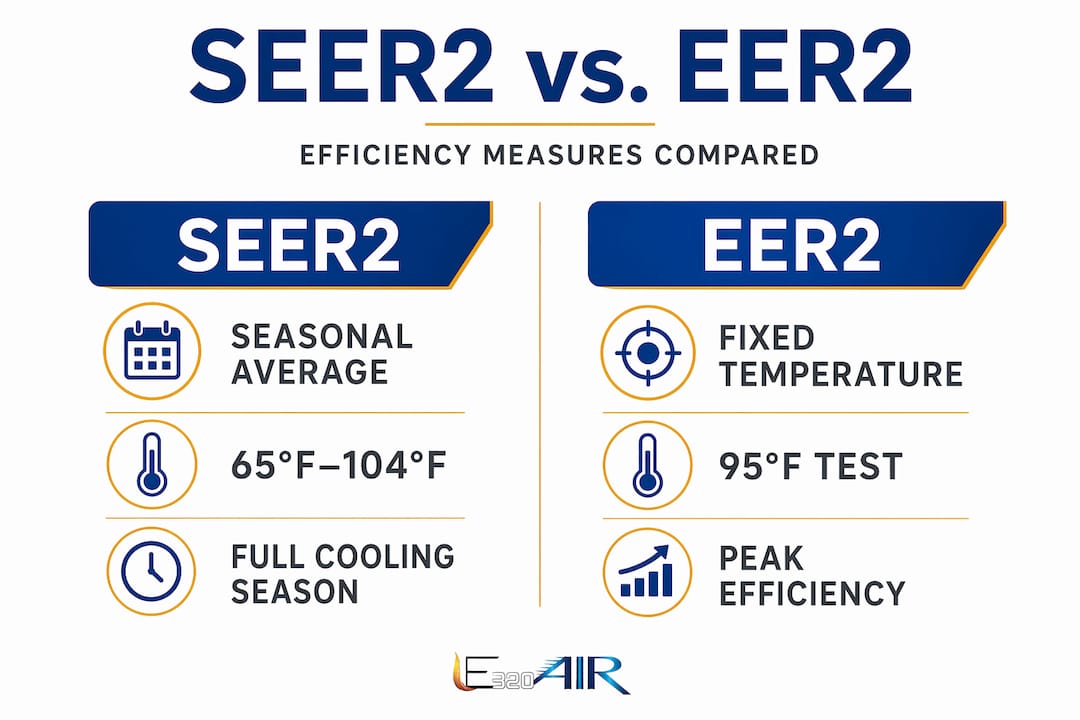
SEER stands for Seasonal Energy Efficiency Ratio. It measures how efficiently your air conditioner cools your home over an entire cooling season, not just on a single hot afternoon. Think of it like the MPG rating on a car. MPG tells you average fuel economy across different driving conditions, not just highway cruising at 65 mph. SEER works the same way, calculating the total cooling output of a system divided by the total electrical energy it consumed across a range of temperatures, typically from 65°F to 104°F.
A higher SEER means the unit produces more cooling for every dollar of electricity it uses. A 20 SEER unit is more efficient than a 15 SEER unit running the same amount of time. That difference shows up directly on your monthly utility bill.
Then came SEER2. In January 2023, the U.S. Department of Energy updated its testing standard. The original SEER rating was calculated under lab conditions that didn't fully reflect how a real home's ductwork affects a system. The new SEER2 rating uses the M1 test procedure, which adds external static pressure to the testing setup, simulating the resistance that actual duct systems create. As a result, SEER2 ratings are about 4.7% lower than their SEER equivalents. A system that would have been rated 15 SEER might now carry a 14.3 SEER2 label.
This doesn't mean the equipment got worse. It means the rating is finally honest.
Here's what the SEER2 shift means for you as a buyer:
- The number on a new unit is SEER2, not the old SEER. Don't compare them directly.
- A unit marketed as "15 SEER" before 2023 and a unit marketed as "14.3 SEER2" today are roughly equivalent in real-world performance.
- Older units still carry their original SEER label, so comparisons require a conversion.
- All units manufactured and sold in the U.S. after January 2023 must display SEER2 ratings.
Pro Tip: When comparing an older unit to a new one, multiply the old SEER by 0.953 to get the approximate SEER2 equivalent. That gives you an apples-to-apples comparison.
SEER2 vs. EER2: which metric actually matters?
Once you start reading spec sheets, you'll also see EER and EER2. These are related but measure something different, and the distinction matters depending on where you live.
SEER2 is a seasonal average calculated across a range of temperatures. EER2, the Energy Efficiency Ratio, measures efficiency at a fixed peak condition: specifically 95°F outdoor temperature, 80°F indoor temperature, and 50% indoor humidity. It's a snapshot of how the unit performs on your hottest day of the year, not an average across the season.
The table below shows how these metrics compare:
| Metric | Test Conditions | What it measures | Best for |
|---|---|---|---|
| SEER2 | 65°F to 104°F range | Seasonal average efficiency | Most U.S. climates |
| EER2 | Fixed 95°F outdoor temp | Peak-day performance | Hot, dry regions |
| SEER | 65°F to 104°F (old test) | Seasonal average (legacy) | Comparing older units |
If you're in Phoenix, Las Vegas, or the Inland Empire of Southern California, EER2 deserves serious attention. When temperatures regularly spike past 100°F for weeks at a time, peak-day performance directly affects your comfort and your electric bill during the most demanding stretch of the year. In very hot climates, balancing SEER2 and EER2 is critical to avoid sacrificing peak-day cooling capacity while maintaining good seasonal efficiency. The Southwest also has minimum EER2 requirements layered on top of the SEER2 minimum, so both numbers matter when you're buying a replacement system in that region.
For most homeowners in the Midwest or Northeast, SEER2 is the number to focus on. EER2 is a bonus consideration, not the primary driver.
What is a good SEER2 rating for your home?
This is where most homeowners get steered wrong by marketing. The "best" SEER2 rating is not the highest one. It's the one that makes financial sense for your climate, your home, and your budget.
Regional minimum SEER2 standards reflect this reality directly. Northern states require a minimum of 13.4 SEER2. The Southeast and Southwest require 14.3 SEER2, with the Southwest adding EER2 minimums on top of that. These minimums exist because regulators have already determined the baseline efficiency that makes economic sense for each climate zone.
Here's a practical breakdown by efficiency tier:
- 13.4 to 14.3 SEER2 (baseline): Meets minimum legal requirements. Works well for mild climates or properties where the system runs infrequently. Lowest upfront cost.
- 15 to 17 SEER2 (mid-range): Good balance of upfront cost and monthly savings for most homeowners. Often the sweet spot in moderate climates.
- 18 to 21+ SEER2 (high efficiency): Variable-speed systems can be up to 43% more efficient than entry-level units, with payback periods often within 3 to 5 years in hot climates.
- 22+ SEER2 (premium): Appropriate for very hot climates with long cooling seasons or homeowners prioritizing the best comfort technology available.
One concept worth understanding here is what professionals call "efficiency fatigue." Units that meet regional SEER2 minimums often represent the best cost-effectiveness in moderate climates because the energy savings from ultra-high efficiency units take so long to offset the higher purchase price. If your cooling season is four months long and mild, a 22 SEER2 unit might take 12 to 15 years to pay for the cost difference over a 15 SEER2 unit.
There's also a comfort angle that's easy to overlook. Higher SEER2 systems are mostly variable or multi-stage, which means they run longer at lower speeds instead of cycling on and off hard. That behavior removes humidity more effectively and keeps temperatures more consistent throughout your home. For someone who struggles with humidity or hot and cold spots, a higher SEER2 unit may be worth the cost even if the pure energy math is marginal. You can explore long-term energy savings data from real Southern California homes to see how this plays out in practice.
Pro Tip: If you're replacing an old system in a hot climate, calculate what you currently spend on cooling per year. A qualified HVAC contractor can model the savings from a higher SEER2 unit against the cost difference to give you an actual payback timeline.
Installation and ductwork: the variables that change everything
Here's the part of the SEER2 story that almost no one talks about at the point of sale. The rating on the equipment is a lab result. Your home is not a lab. What happens between the factory and your living room determines whether you ever see those efficiency numbers in real life.
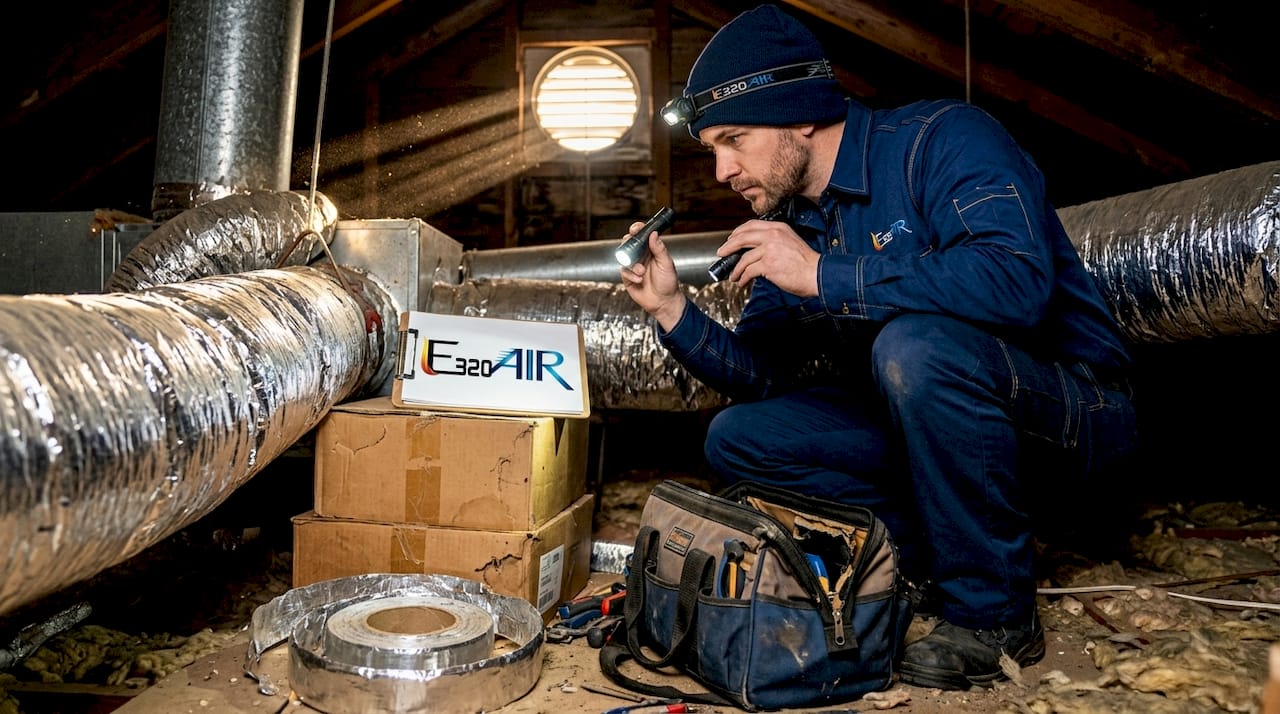
Ductwork is the biggest variable. Leaky, undersized, or poorly designed ducts often negate the benefits gained by high SEER2 rated equipment. When ducts leak, conditioned air escapes into your attic or crawlspace before it reaches your living areas. When ducts are undersized, static pressure increases and the system has to work harder to move air, which consumes more energy and stresses components.
Improper installation leads to premature equipment failure and higher costs regardless of the efficiency rating on the box. A 20 SEER2 unit connected to leaky ducts by an undertrained technician will run less efficiently than a 15 SEER2 unit installed correctly in a well-sealed duct system.
Watch for these installation factors before you finalize any purchase:
- Duct inspection: Any reputable contractor should evaluate your existing ducts before recommending equipment. Leaks, kinks, and sizing issues should be addressed as part of the project.
- Matched system components: The outdoor unit, air handler, and coil must be matched system components from compatible manufacturers to achieve the rated SEER2 efficiency. Mixing brands or generations can reduce performance.
- Proper refrigerant charge: Incorrect refrigerant levels during installation are one of the most common efficiency killers. This requires a licensed technician with proper equipment to verify.
- Load calculation: The system must be correctly sized for your home's square footage, insulation, window area, and local climate. Oversized units short-cycle and undersized units run constantly. Both outcomes hurt efficiency and comfort. Read about why right-sizing matters before you agree to any equipment recommendation.
- Contractor credentials: Look for NATE-certified technicians and licensed contractors. Ask specifically whether they will verify the system's operation against the rated specifications after installation.
The bottom line: choosing a qualified installer is often more important than chasing the highest SEER2 rating. The best unit in the world won't perform as advertised without a skilled installation behind it.
How to choose the right AC system using SEER2
When you're ready to buy, use this process to cut through the sales noise and make a decision grounded in your actual situation.
- Know your region's minimum. Check whether you're in a Northern, Southeast, or Southwest climate zone. The California 2026 efficiency standards provide a useful example of how state-level requirements can exceed federal minimums. Understanding your baseline is step one.
- Estimate your annual cooling hours. In Phoenix, you might run your AC for 2,000 hours per year. In Minnesota, maybe 600. The longer your cooling season, the faster a higher SEER2 unit pays off.
- Get a real load calculation. Ask any contractor you interview to perform a Manual J load calculation. If they quote a system size without one, walk away.
- Ask for matched system specs. Request the AHRI certificate showing the outdoor unit, air handler, and coil combination that achieves the rated SEER2. Marketing claims use "up to" SEER2 numbers. The installed efficiency depends strongly on the actual combination of components.
- Evaluate the comfort features alongside the efficiency number. Variable-speed compressors, two-stage operation, and advanced humidity control all tend to appear in units rated 17 SEER2 and above. These features can matter as much as the energy savings.
- Compare total cost of ownership, not just sticker price. Get quotes at two or three SEER2 levels and model the payback period honestly before committing to the premium tier. You can also find the best unit for your home using a structured comparison that accounts for these variables.
My take on SEER2 after years in the field
Every week I see homeowners walk into a purchase focused entirely on the SEER2 number. They've done their research, they've compared units online, and they're ready to spend more for the highest efficiency they can find. I get it. The logic seems airtight. More efficient equals lower bills equals money back in your pocket.
But in my experience, the number on the equipment is only about half the story. I've seen brand-new 20 SEER2 systems underperform a decade-old unit because the ductwork was never addressed and the refrigerant charge was off from day one. I've seen property managers spend significantly more on premium equipment and never see the payback because their buildings weren't sealed well enough to justify it.
What I've learned is that a good SEER2 rating is a ceiling, not a guarantee. It tells you what the equipment can do under ideal conditions. Whether it actually does that in your home comes down to installation quality, duct condition, system matching, and how well the unit is sized for your specific load.
My honest advice: spend as much time vetting your installer as you spend comparing units. Ask hard questions. Demand documentation. And don't let a salesperson convince you that the most expensive unit on the lot is automatically the right answer for your home. The SEER2 standard is better and more accurate than what came before it, but it still requires the right professional to bring those numbers to life.
— Edward
Get the full benefit of your SEER2 investment with E320air
Understanding SEER2 ratings is only the first step. Making sure your system actually delivers on those numbers requires the right installation, correctly matched components, and duct work that doesn't undo everything.

E320air handles professional HVAC installation for homeowners and property managers throughout Southern California, with a process built around load calculations, matched system specs, and verified performance after installation. If you manage commercial properties, the E320air commercial HVAC services team handles large-scale efficiency upgrades with the same attention to real-world performance. Browse the problem-solving gallery to see how common HVAC issues get resolved, or visit E320air to get started with a system that performs as promised.
FAQ
What does SEER rating mean for an air conditioner?
SEER stands for Seasonal Energy Efficiency Ratio. It measures how much cooling a unit delivers per unit of electricity consumed across an entire cooling season, calculated over a temperature range from 65°F to 104°F.
What is a high SEER2 rating?
A SEER2 rating of 18 or above is considered high efficiency. Variable-speed systems in this range can be up to 43% more efficient than baseline units and typically include advanced comfort features like humidity control and consistent temperature management.
How is SEER2 different from the original SEER?
SEER2 uses a more rigorous M1 testing procedure that includes external static pressure, making it more representative of real-world duct conditions. SEER2 ratings are approximately 4.7% lower than equivalent SEER ratings, but the actual equipment performance is unchanged.
What is the difference between SEER2 and EER2?
SEER2 measures average efficiency across the full cooling season, while EER2 measures efficiency only at a fixed peak condition of 95°F outdoor temperature. EER2 is most relevant for homeowners in very hot climates like the Southwest where extreme heat is sustained for long periods.
Does a higher SEER2 rating always mean lower energy bills?
Not automatically. A high SEER2 rating indicates what a system can achieve under ideal conditions. Real-world savings depend on installation quality, duct condition, system sizing, and how well components are matched. Poor installation can erase the efficiency advantage of even the highest-rated equipment.