
TL;DR:
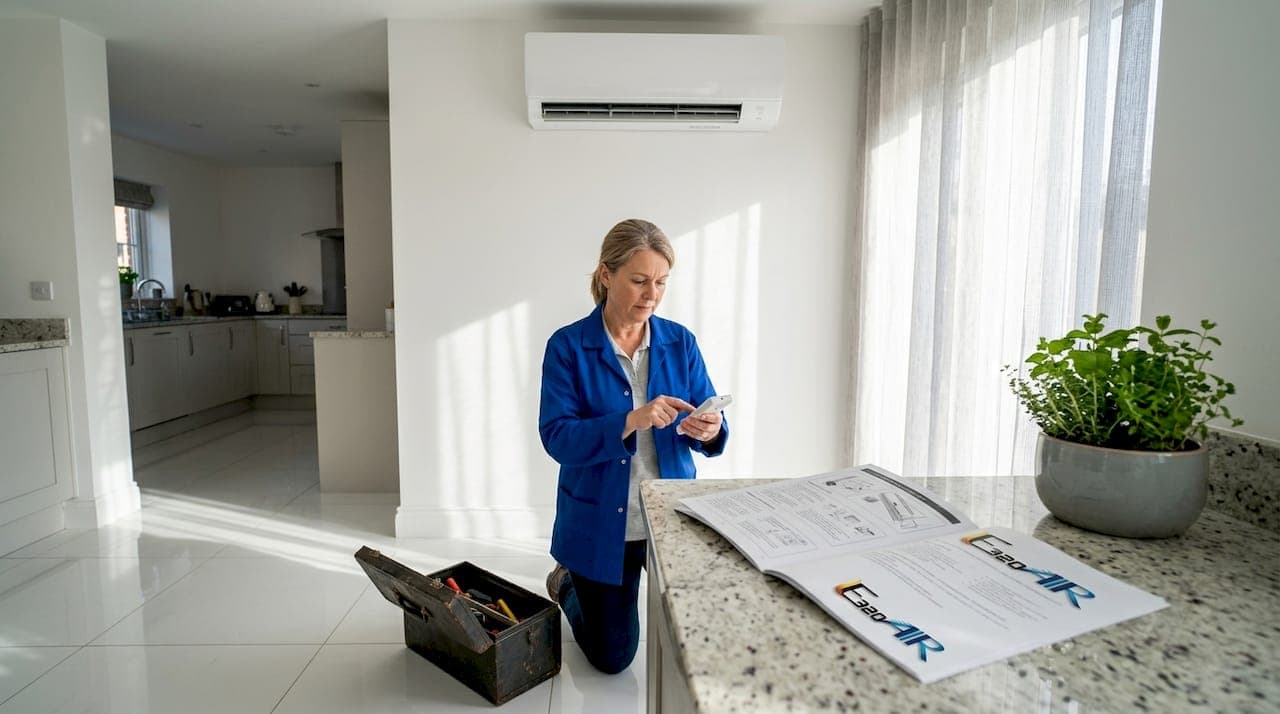
- A ductless mini split system connects indoor and outdoor units via refrigerant lines, eliminating the need for ductwork. It offers efficient, zone-based heating and cooling, reducing energy losses and preserving home architecture. Proper planning and installation are essential for maximizing performance and avoiding common issues.
Most homeowners assume heating and cooling their home means either a central forced-air system with ductwork or a window unit collecting dust every winter. A ductless mini split is neither of those things, and it solves problems both options create. If you've been told your home addition "can't be heated efficiently" or that you need to tear into walls to run new duct lines, this guide will change how you think about your options.
Table of Contents
- Key takeaways
- What is a ductless mini split and how does it work
- Energy efficiency and real savings
- Installation process and what to expect
- Ideal uses and real limitations
- My honest take after years in the field
- Ready to explore ductless mini splits for your home?
- FAQ
Key takeaways
| Point | Details |
|---|---|
| No ductwork required | Ductless mini splits connect indoor and outdoor units through a small refrigerant line, not air ducts. |
| Heating and cooling in one | A built-in heat pump reverses operation seasonally, replacing the need for separate heating and cooling systems. |
| Duct losses avoided | Traditional ducted systems lose over 30% of energy through ducts; ductless systems eliminate that waste entirely. |
| Zoned comfort control | Each indoor unit controls its own zone independently, so you're not heating or cooling empty rooms. |
| Installation is minimally invasive | A roughly 3-inch wall penetration is all that's needed to connect indoor and outdoor components. |
What is a ductless mini split and how does it work
A ductless mini split system is made up of two main components: an outdoor unit that houses the compressor, condenser, and heat pump, and one or more indoor air handlers mounted inside your living space. The two are connected by refrigerant lines instead of ductwork, which is what makes the system "ductless." Electrical wiring and a condensate drain line also run through the same small conduit.
The indoor unit pulls air from the room, conditions it by passing it over a refrigerant coil, and circulates it back into the space. In cooling mode, the system absorbs heat from inside your home and transfers it to the outdoor unit. In heating mode, the heat pump reverses that process, extracting heat from outdoor air and moving it inside. This works even in cold weather because heat exists in air down to surprisingly low temperatures.
Indoor units come in several styles to fit different rooms and layouts:
- Wall-mounted units are the most common. They install high on a wall and distribute conditioned air across the room.
- Ceiling cassette units recess into the ceiling for a cleaner look, ideal for living areas or offices.
- Floor-mounted units sit low on a wall, similar to a baseboard, and work well in rooms with sloped ceilings or limited wall space.
- Ducted mini split air handlers are installed inside a ceiling or wall cavity and distribute air through short duct runs, making them useful when you want the look of a central system without full ductwork.
What separates ductless mini split systems from window units or portable ACs is the zoning capability. Multi-zone systems connect multiple indoor units to a single outdoor unit, letting you control the temperature in each room or zone independently. The bedroom can be 68°F while the living room holds at 72°F, all from the same system.
Energy efficiency and real savings
The efficiency story behind ductless mini splits is straightforward once you understand where traditional systems lose energy. In a standard central forced-air setup, air travels from the furnace or air handler through ductwork before it ever reaches a room. That ductwork runs through unconditioned spaces like attics, crawl spaces, and wall cavities, and duct losses account for over 30% of air conditioning energy use. That's not a rounding error. That's nearly a third of what you're paying for, going nowhere useful.
Ductless systems skip that entirely. Refrigerant travels directly between the outdoor and indoor units with minimal energy loss. Combine that with the efficient heat transfer that heat pump technology provides, and you're looking at a system that moves heat rather than generating it, which is fundamentally more efficient than electric resistance heating.
Zoning compounds the savings further. With central systems, you condition the entire house even when half the rooms are empty. With a multi-zone mini split, you're only running the units in occupied spaces. That flexibility directly cuts how long the system runs each day.
Pro Tip: Before sizing a mini split system, map out which rooms you actually occupy throughout the day. Homeowners who match zone coverage to real usage patterns instead of square footage alone consistently see lower monthly utility bills.
You can also pair a mini split with HVAC automation strategies to push efficiency further, using smart thermostats and scheduling to run units only when and where you need them. The ductless cooling advantages go beyond just skipping ducts. The combination of heat pump operation, zoning, and precise room-level control adds up to meaningful reductions on your energy bill across every season.
Installation process and what to expect
One of the biggest surprises for homeowners researching mini splits is how little the installation disrupts their home. The physical connection between your indoor and outdoor units requires a roughly 3-inch wall penetration for the refrigerant lines, electrical wiring, and condensate drain. That's it. No tearing out ceilings, no cutting new duct chases through floors.
Here's what a typical single-zone installation looks like from start to finish:
- Site assessment: A technician evaluates the best location for both the indoor and outdoor units, accounting for airflow, sun exposure, and line routing.
- Outdoor unit placement: The condenser is mounted on a pad or wall bracket outside, positioned for good airflow and easy service access.
- Indoor unit mounting: The air handler is mounted on the wall or ceiling, with the installer drilling the conduit hole to the outside.
- Line set connection: Refrigerant lines, electrical wiring, and the condensate drain are run through the conduit hole and connected to both units.
- Sealing and testing: The wall penetration is properly sealed to prevent moisture intrusion and air infiltration, and the system is pressure tested and charged before startup.
Most single-zone installations are completed in one day. Multi-zone systems with three or four indoor heads may take two days depending on the home layout.
Pro Tip: Ask your installer specifically how the condensate drain will be routed before the job starts. Proper sealing and routing of drain lines is one of the most overlooked aspects of mini split installation, and a poorly routed drain line leads to water damage inside walls months later.
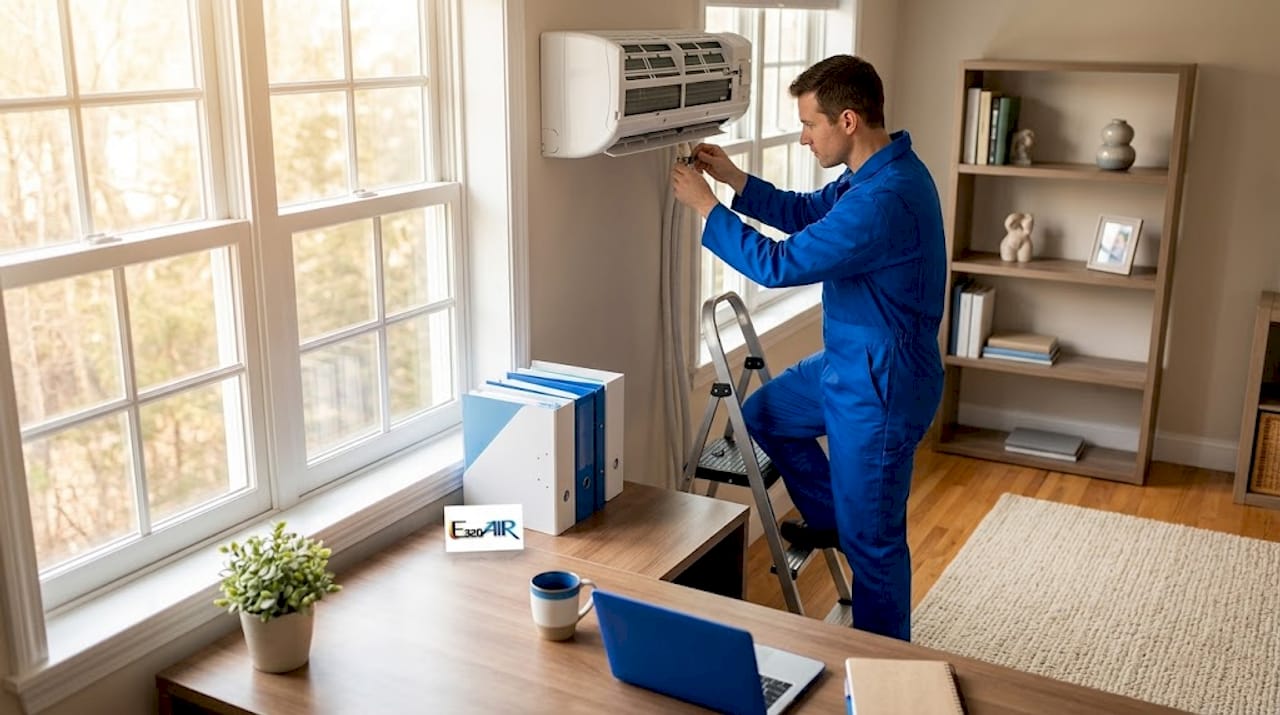
Placement of the indoor unit matters more than most homeowners expect. A unit installed too close to a doorway or in a corner with poor air circulation won't condition the room evenly, regardless of its BTU rating. You want the airflow to sweep across the room, not dump directly on a couch or bed.
Ideal uses and real limitations
Ductless mini splits solve specific problems exceptionally well. Understanding where they shine and where they fall short saves you from buying the wrong system for your situation.
| Situation | Ductless mini split | Central ducted system |
|---|---|---|
| Room addition or garage conversion | Excellent fit, no duct extension needed | Expensive and invasive to extend existing ducts |
| Home without existing ductwork | Best option to avoid full duct installation | Requires full duct installation, significant cost |
| Supplemental zone in a large home | Works well for targeted comfort control | Possible but requires duct modifications |
| Whole-home primary system, large house | Better suited to multi-zone configurations | More practical for uniform whole-home coverage |
| Historic home or older construction | Ideal to preserve walls and architecture | Major renovation required for duct installation |
The most common misunderstanding is that one mini split unit handles an entire home. A single indoor head conditions one zone effectively, but it won't reach three bedrooms around a corner and down a hallway. For whole-home coverage, you need a properly designed multi-zone HVAC system with indoor heads placed in every area that needs conditioning.
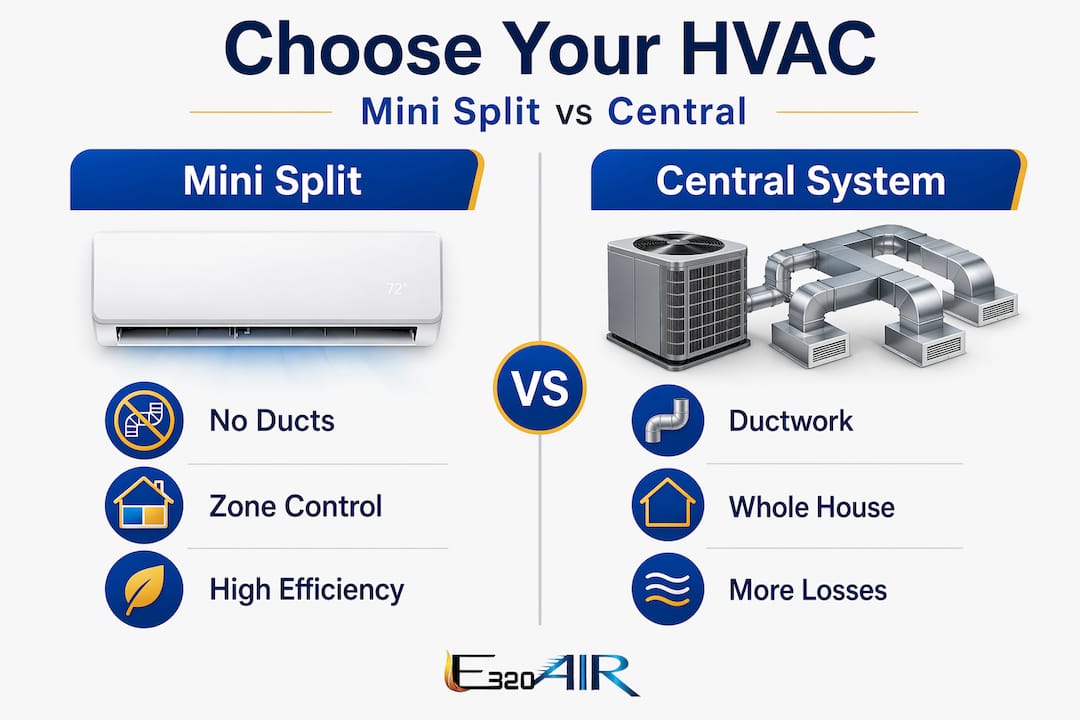
Ductless systems are also most effective as zoned or supplemental systems rather than drop-in replacements for central air in large homes. A 2,500-square-foot home with an open floor plan and good room-to-room airflow may be a fine candidate for a well-designed multi-zone setup. A sprawling two-story with lots of closed-off rooms is a different conversation.
Thoughtful planning before purchase is not optional. The number of zones, the BTU capacity of each head, and the exact placement of indoor units determines whether your system performs at its rated efficiency or leaves half the house uncomfortable.
My honest take after years in the field
I've been in homes where a ductless mini split was the single best decision the homeowner ever made. A converted garage, a sunroom that used to be unusable in July, a basement office that was always either freezing or stuffy. These systems fix real problems cleanly when they're matched to the right application.
But I've also seen installations go sideways. Not because the equipment failed, but because nobody asked the right questions upfront. Poor indoor head placement is the number one issue I see after the fact. A unit positioned against the wrong wall or above a door simply doesn't distribute air the way it needs to, and the homeowner ends up with one warm corner and cold spots everywhere else.
The other myth worth debunking: "ductless" does not mean "no installation impact." There's still a hole in your wall, electrical work, and a refrigerant line running to the outside. Done right, it's minimal and clean. Done carelessly, you get moisture problems and efficiency losses that nobody sees until something goes wrong.
My advice is this. Treat the planning phase as seriously as you treat the equipment purchase. Know which rooms you need covered, confirm your installer designs the system around those specific zones, and ask about condensate drainage before the job starts. A well-planned ductless system will outperform central air on efficiency and comfort. A rushed one will frustrate you for years.
— Edward
Ready to explore ductless mini splits for your home?
If you're weighing ductless heating and cooling options for a room addition, a home without existing ductwork, or a zone that your current system simply can't reach, E320air can help you figure out what actually makes sense for your specific situation.

E320air's team handles everything from initial system design to full installation, with real attention to unit placement and zone planning. You won't get a one-size-fits-all recommendation. Browse the problem-solving gallery to see how E320air has handled real-world installs for homeowners like you, then reach out to get a quote tailored to your home.
FAQ
What is a ductless mini split system?
A ductless mini split is a heating and cooling system made up of an outdoor compressor unit and one or more indoor air handlers, connected by refrigerant lines instead of ductwork. It provides zoned comfort control for individual rooms or areas of a home.
How do ductless mini splits work?
In cooling mode, the system pulls heat from indoor air and transfers it outside through refrigerant lines. In heating mode, the heat pump reverses that process and extracts heat from outdoor air to warm the space inside.
Are ductless mini splits more energy efficient?
Yes. Traditional ducted systems lose more than 30% of energy through duct leakage. Ductless systems eliminate duct losses entirely and use heat pump technology to move heat rather than generate it, making them significantly more efficient.
Can a single mini split cool an entire house?
A single indoor unit conditions one zone effectively, not an entire home. Whole-home coverage requires a multi-zone system with multiple indoor heads properly sized and positioned throughout the house.
How long does mini split installation take?
A single-zone installation typically takes one day. Multi-zone systems with multiple indoor heads may take two days depending on the complexity of the home layout and line routing.