
TL;DR:
- Ductless mini-splits eliminate duct-related energy loss and provide customizable room-by-room control. They are ideal for older homes, room additions, and spaces where ductwork is costly or impractical, offering high efficiency and easy installation. Proper sizing, expert installation, and regular maintenance are essential for maximizing comfort, savings, and system longevity.
Most homeowners assume that effective air conditioning requires a network of ducts running through the walls and ceiling. That assumption is costing many families real money and comfort. Ductless air conditioning systems, often called mini-splits, avoid duct-related losses while giving you room-by-room control that traditional systems simply cannot match. If you live in Moreno Valley or anywhere in the Inland Empire and you're tired of uneven temperatures and climbing energy bills, this guide will show you exactly how ductless systems work, where they shine, and how to make the smartest choice for your home.
Table of Contents
- What is ductless air conditioning and how does it work?
- Key benefits of ductless systems: Energy savings and customization
- Are ductless systems always better? Comfort, sizing, and installation realities
- Maintenance tips: Keeping your ductless AC running efficiently
- Why choosing the right approach matters more than system type
- Ready to upgrade your comfort? Discover your options with E320 Air
- Frequently asked questions
Key Takeaways
| Point | Details |
|---|---|
| Ductless systems explained | Ductless air conditioners use indoor units to cool or heat rooms directly without traditional ducts. |
| Major energy savings | They avoid ductwork energy loss and allow room-by-room temperature control, reducing waste. |
| Sizing and install matter | Efficient operation relies on proper sizing, expert installation, and routine maintenance. |
| Ideal for many homes | Ductless solutions are often best for older, remodeled, or multi-zone homes needing targeted comfort. |
What is ductless air conditioning and how does it work?
A ductless air conditioner, also called a mini-split, delivers cooled or heated air directly into a specific room or zone without using any ductwork at all. The system has two main parts: an outdoor compressor unit that sits on a pad or bracket outside your home, and one or more indoor air-handling units that mount high on a wall inside each room you want to condition.
These two parts connect through a small conduit, usually about three inches in diameter, that runs through a hole in the wall. That conduit carries refrigerant lines, electrical wiring, and a condensate drain line. That's it. No major renovation, no cutting open ceilings, and no large mechanical room needed.
Here's how the cooling process works in simple terms:
- The outdoor compressor circulates refrigerant between the outdoor and indoor units.
- The indoor unit absorbs heat from the room air and transfers it to the refrigerant.
- The refrigerant carries that heat outside, where the compressor releases it into the outdoor air.
- The now-cooled air blows back into the room directly from the indoor unit.
Because cooled air goes directly from the indoor unit into the room with no duct distribution, there are zero duct leakage or thermal losses involved. That's a significant difference from central systems, where the conditioned air travels through potentially leaky ducts in unconditioned attic or crawl space areas before it ever reaches you.
Understanding how ductless vs. central AC compares in real-world conditions helps clarify why so many homeowners are making the switch. Most indoor units are slim and wall-mounted, measuring roughly seven to eight inches deep. They have adjustable louvers to direct airflow and a simple remote control or smartphone app for temperature settings.
Pro Tip: Ductless systems are a perfect fit for room additions, garage conversions, older homes that never had ductwork, and any space where extending existing ducts would be too costly or disruptive.
Key benefits of ductless systems: Energy savings and customization
After understanding the basics, it's crucial to see how ductless systems can deliver comfort and savings for your home. The benefits go well beyond novelty. They address real problems that central air conditioning systems struggle with, especially in homes with diverse layouts or uneven sun exposure.
No energy lost to ductwork. In a standard ducted system, the U.S. Department of Energy estimates that 20 to 30 percent of conditioned air can be lost through duct leaks and thermal transfer in hot attic spaces. In Moreno Valley, where summer attic temperatures can exceed 150 degrees Fahrenheit, this is a serious issue. Ductless systems eliminate that loss entirely.
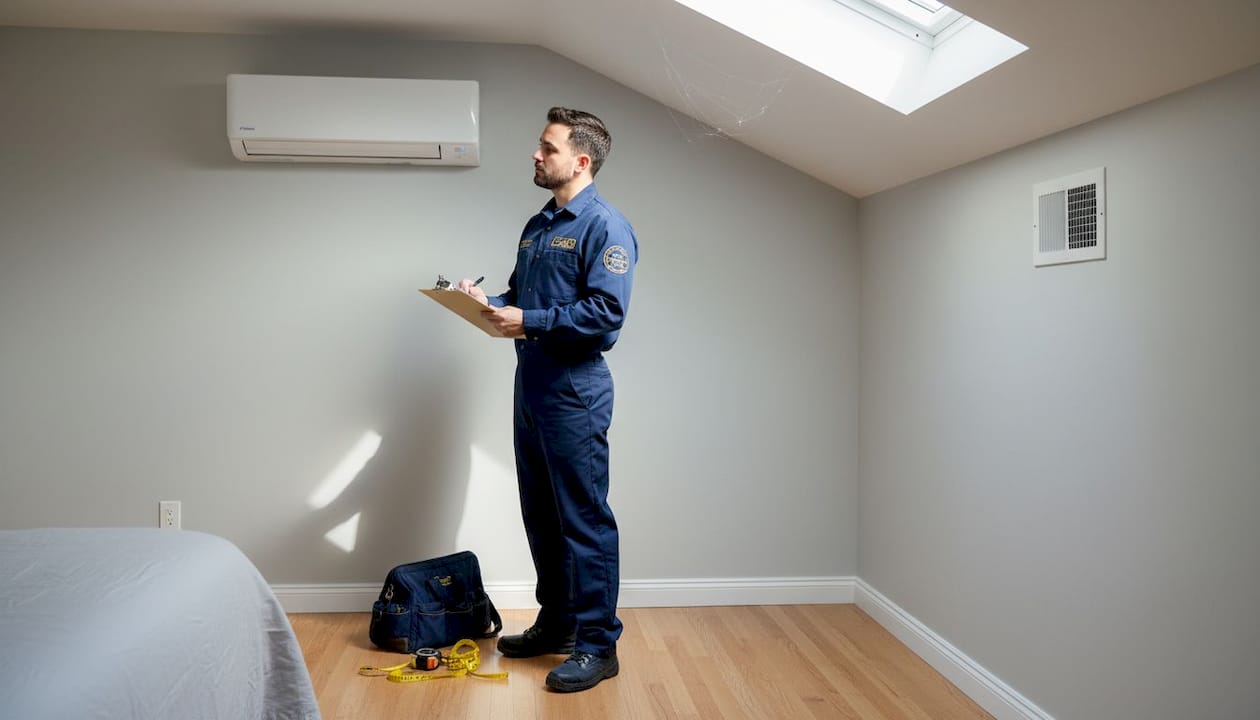
Zone-by-zone temperature control. This is one of the most practical advantages you can get. Zoning control benefits every member of your household differently. One family member can keep their bedroom at 68 degrees while another keeps the living room at 72, and you're not conditioning unoccupied rooms at all. That targeted approach directly reduces how hard your system works and how much electricity it uses.
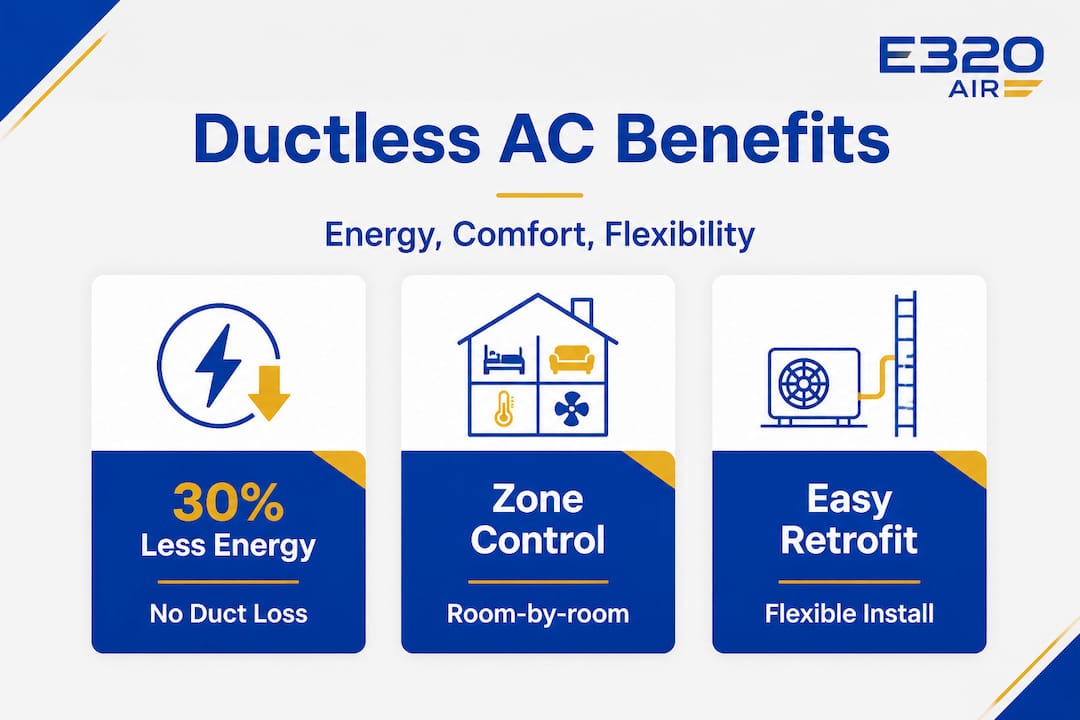
Flexible installation for any home layout. Whether you're dealing with a historic craftsman home, a mobile home addition, or a standalone casita on your property, ductless systems can be placed almost anywhere. You're not constrained by where ducts can be routed.
Room-by-room zoning control and the elimination of duct energy loss are two headline advantages that make ductless systems genuinely compelling for Inland Empire homeowners. Many modern ductless units carry SEER (Seasonal Energy Efficiency Ratio) ratings of 20 or higher, compared to the minimum 14 SEER required for new central systems in California. The energy-efficient HVAC advantages stack up quickly over a full cooling season.
| Feature | Ducted central AC | Ductless mini-split |
|---|---|---|
| Energy loss via ducts | 20 to 30% typical | None |
| Zone temperature control | Limited without add-ons | Built-in, per room |
| Best install scenario | New construction, already ducted homes | Additions, older homes, targeted zones |
| Average SEER rating | 14 to 18 | 18 to 30+ |
| Renovation disruption | High if ducts need rerouting | Minimal (small conduit only) |
Key benefits at a glance:
- Eliminates energy waste from duct leaks and attic heat gain
- Lets every person control their own comfort level
- Works in spaces where ductwork is impossible or too expensive
- Qualifies for energy rebates and tax credits in California
- Heats and cools with a single system (heat pump models)
The financial case is strong. When you factor in lower monthly bills, potential rebates from Southern California Edison, and reduced wear from running only the zones you need, the investment tends to pay back faster than most homeowners expect.
Are ductless systems always better? Comfort, sizing, and installation realities
While the benefits are compelling, it's important to examine the practical realities of selecting and installing ductless systems. Not every home is a perfect candidate, and not every installation goes smoothly.
Real-world performance depends on correct sizing and quality installation, not just the efficiency rating printed on the spec sheet. An oversized indoor unit will cool a room too quickly, cycle off before it removes enough humidity, and leave you feeling cold but clammy. An undersized unit will run constantly and still struggle on the hottest Moreno Valley afternoons.
Here's what goes into making a ductless system work correctly:
- Load calculation. A qualified HVAC contractor performs a Manual J calculation to determine how much cooling capacity each room actually needs based on square footage, ceiling height, insulation levels, window placement, and local climate data.
- Indoor unit placement. The unit needs to be positioned so airflow reaches the entire room without being blocked by furniture, ceiling fans, or architectural features.
- Outdoor unit location. The compressor needs adequate airflow, shade from direct afternoon sun when possible, and clearance from fences and landscaping.
- Refrigerant line length. Long line sets between indoor and outdoor units can reduce system efficiency. Most residential installations keep this under 50 feet for best results.
| Factor | Ductless mini-split | Ducted central AC |
|---|---|---|
| Noise level (indoor) | 19 to 30 dB (whisper quiet) | 45 to 65 dB at vents |
| Maintenance effort | Per-unit filter cleaning needed | Central filter plus duct inspection |
| Upfront install cost | Higher per zone | Lower for whole-home coverage |
| Temperature consistency | Excellent per zone, variable between zones | Even throughout if ducts are balanced |
| Aesthetic impact | Visible wall unit per room | No visible hardware in rooms |
Correct sizing best practices are not optional. They're the difference between a system you love and one that drives you crazy with short cycling or insufficient cooling. Before you commit to a specific model or capacity, choosing your best AC requires an honest look at your home's unique characteristics, not just a room measurement.
One more real consideration: in a larger home, you may need four to six indoor units to cover every space. While each unit is relatively affordable on its own, the combined cost of multiple units plus installation labor can be significant. For homes that already have functional ductwork in good condition, a high-efficiency central system might actually be more cost-effective. The honest answer is: it depends on your specific situation.
Pro Tip: Before signing any contract, ask your HVAC contractor about Moreno Valley's specific climate zones and how they affect sizing decisions. Our summers are hot and dry with occasional humidity spikes, and a contractor who accounts for those local factors will set your system up for long-term success.
Maintenance tips: Keeping your ductless AC running efficiently
Having covered installation and performance considerations, let's make sure your ductless system stays in top shape year after year. The good news is that ductless systems are genuinely easier to maintain than most homeowners expect.
Ductless AC maintenance is surprisingly simple when you stay consistent. A few minutes of filter cleaning each month during summer can prevent hundreds of dollars in repair bills and keep your system running at peak efficiency all season long.
Here are the core maintenance tasks to stay on top of:
- Clean indoor unit filters monthly during peak season. Most ductless indoor units have slide-out filters that rinse clean under running water. Let them dry fully before reinstalling. Dirty filters are the single most common cause of reduced efficiency and ice buildup on the coil.
- Check the condensate drain line every season. The drain line carries moisture from the indoor unit to the outside. Algae and debris can block it, causing water to back up and drip inside your home.
- Keep the outdoor compressor clear. Trim back any shrubs or vines within two feet of the unit. Clear away leaves, dirt, and debris from the fins regularly. A blocked compressor works harder and wears out faster.
- Listen for unusual sounds. Clicking, rattling, or grinding noises from either the indoor or outdoor unit are early warnings that something needs attention before it becomes a major repair.
- Schedule an annual professional tune-up. A licensed technician checks refrigerant levels, inspects electrical connections, cleans the indoor coil, tests the thermostat sensors, and verifies that all system components are functioning within spec.
Each indoor unit requires its own maintenance attention, which is worth factoring in if you have a multi-zone system. A home with five indoor units means five sets of filters to clean. That said, the task itself is quick and straightforward. Most homeowners handle monthly filter cleaning in under ten minutes per unit.
Staying current on must-do ductless maintenance also protects your manufacturer warranty. Many warranties require documented annual professional service. Skipping that annual check-up can void coverage right when you need it most. Following solid maintenance schedules extends the life of your system well beyond the average 15-year lifespan and keeps efficiency high throughout.
Why choosing the right approach matters more than system type
Here's something that often gets lost in the ductless vs. central debate: the technology itself is rarely the deciding factor in whether a homeowner ends up comfortable and satisfied. We've seen beautifully engineered ductless systems underperform because they were oversized, installed in the wrong location, or never properly maintained. We've also seen well-designed central systems that homeowners love because they were sized correctly, installed by someone who took the time to balance the airflow, and tuned up every year.
The honest truth is this: a mediocre installation of a great system beats a great installation of the wrong system. Every time. Technology is only as good as the hands that put it in and the ongoing care it receives.
Our perspective, after working with homes across Moreno Valley and the Inland Empire, is that homeowners should be skeptical of any contractor who leads with "you need ductless" or "you need central" before doing a thorough assessment. The right question isn't "which system type is best?" It's "which system fits this specific home, these specific usage patterns, and this specific family's needs?"
A small single-story home with no existing ductwork is probably a great ductless candidate. A large two-story home with brand new ductwork in great condition might be better served by a high-efficiency central system. A home with both central air for the main living spaces and a ductless unit for a converted garage hits the sweet spot for many Inland Empire families.
Don't chase trends. Chase fit. Before any purchase decision, get a full-home assessment from a contractor who looks at insulation, window efficiency, sun exposure, and how your family actually uses different rooms throughout the day. That assessment is the foundation of a decision you'll be happy with for the next 15 to 20 years. Contractors with deep ductless installation expertise know how to match the solution to the home rather than pushing a single product line.
Ready to upgrade your comfort? Discover your options with E320 Air
If everything you've read here has you thinking seriously about ductless AC for your Moreno Valley home, the next step is a conversation with a local expert who knows your climate, your neighborhood, and the specific challenges that come with Inland Empire homes.
At E320 Air, we start every project with a full-home assessment before we ever recommend a system. We size every installation using proper load calculations, and we stand behind our work with ongoing support. Whether you're adding a zone to an existing home or replacing an outdated system entirely, our team has the experience to get it right. Check out our professional ductless installation services or browse our real customer results to see how we've helped families across the region find their ideal comfort solution. Reach out today and let's build a system that actually fits your home.
Frequently asked questions
Is a ductless air conditioner right for older homes?
Yes, ductless systems are often the best fit for older homes without existing ductwork because installation requires only a small hole in the wall rather than major structural work. Ductless systems avoid duct-related challenges entirely, making them flexible for homes where adding ducts would be cost-prohibitive.
How much maintenance does a ductless system require?
Ductless systems need monthly filter cleaning during peak season and a professional annual service check, but the routine tasks are straightforward enough for most homeowners to handle themselves. Each indoor unit requires its own filter and coil care, so multi-zone homes have proportionally more filters to manage.
Can ductless AC also heat my home?
Most ductless systems sold today are heat pump models, meaning they reverse the refrigerant cycle to deliver heat during cooler months, making them a true year-round comfort solution for Moreno Valley's mild winters and hot summers.
What are the main drawbacks of ductless AC?
The most common drawbacks include visible wall-mounted indoor units in each room, higher upfront costs when multiple zones are needed, and the fact that comfort can suffer significantly if the system is poorly sized or installed without proper load calculations.
How do I know if ductless is more efficient than my current system?
Look up your current system's SEER rating and compare it to modern ductless models, then factor in any energy lost to duct leaks in your attic or crawl space. Ductless systems can reduce energy loss substantially by eliminating ductwork and allowing you to condition only the zones you're actively using.